

Regeneration Devices and Recovery Tools: What Really Helps and What's Worth It
In short:
- Sleep and nutrition are still the best ways to recover—tools are a supplement, not a substitute.
- In a large meta-analysis (Dupuy et al., 2018), massage was found to be the most effective treatment for muscle soreness and perceived fatigue.
- Affordable option: foam roller and massage ball. Mid-range option: massage gun. Higher-end option: compression boots, ice bath, or sauna.
- Choose the tool based on your main goal—not on the hype.
Which recovery tool is truly worth it depends on your goal and budget: For muscle soreness and fatigue, massage is the most well-documented method; for flexibility, a foam roller is often enough; and those who train hard on a regular basis benefit from compression or cold therapy. This overview ranks the most important recovery devices by effectiveness, usage, and cost—so you can invest your money in the right tool.
First, it’s important to note: In a systematic review with a meta-analysis, Dupuy and colleagues (2018) evaluated 99 studies and found that massage was the most effective method for reducing muscle soreness and perceived fatigue after exercise. Cold baths and compression also showed positive results. However, no single method can replace the basics: adequate sleep and proper nutrition.
An Overview of the Most Important Recovery Tools
Fascia Roller and Massage Ball
The most affordable way to get started. Foam rolling relieves tension, improves short-term flexibility, and has been shown in many studies to help with muscle soreness. A massage ball is a great addition for targeting specific trigger points. Learn more in our foam rolling guide and in the section on massage balls.
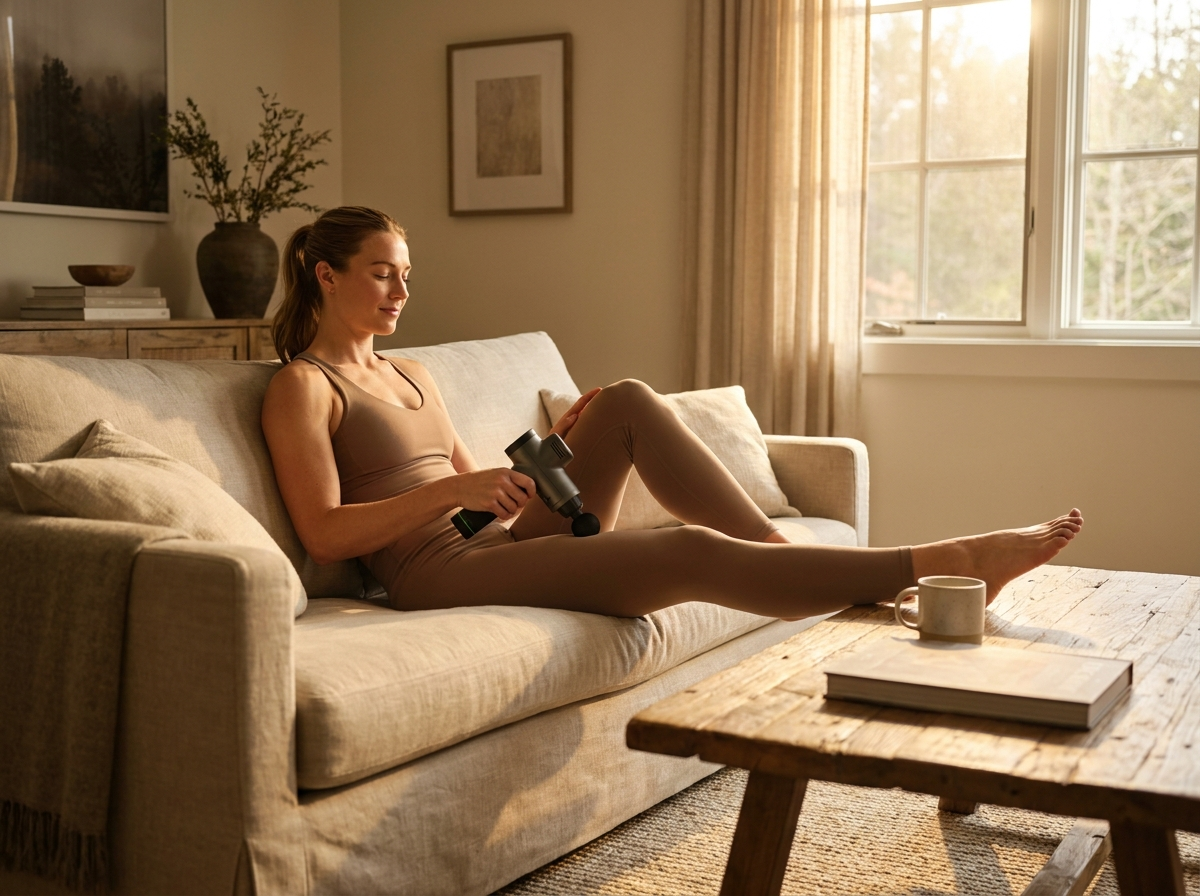
Massage Gun
The massage gun (percussion device) delivers targeted vibrations to specific muscle groups and is faster and more convenient than a foam roller. It’s ideal for warming up and for cooling down after a workout. For more details, see our massage gun buying guide and the comparison between massage guns and foam rollers.
Compression Boots (Recovery Boots)
Pneumatic compression massages the legs with varying pressure and is used by many endurance and strength athletes for recovery. It’s ideal for anyone with a high training volume who spends a lot of time on their feet. Learn more in the Recovery Boots Buying Guide.
Cold Therapy: Ice Bath and Cold Chamber
Cold water immersion can reduce muscle soreness and fatigue. A note for strength athletes: when used immediately after strength training, intense cold can dampen the muscle-building stimulus—timing is crucial. Find out all about it in the Ice Bath Guide.
Heat: Sauna
The sauna helps you relax, boosts blood circulation, and is often used as a way to unwind and recover. It’s ideal as a supplement after a workout or on rest days. For more details, see our article “Sauna After Exercise.”
For studios and practices: massage chairs and recovery equipment.
A Comparison of Recovery Tools: Impact, Objectives, and Budget
| Tool | Key Benefits | Budget | Ideal for |
|---|---|---|---|
| Fascia Roller / Ball | Mobility, Tension | Low | Beginners, every day |
| Massage Gun | Targeted Stretching, Warm-up | Medium | For those who like things fast and convenient |
| Compression Boots | Leg Recovery, Blood Circulation | High | High training volume |
| Ice Bath / Cold | Muscle soreness, exhaustion | Medium to high | Stamina, tough blocks |
| Sauna | Relaxation, blood circulation | High | Wellness Recovery, Rest Days |
Which tool is best suited for which goal?
- Small budget, greater flexibility: A foam roller and a massage ball are all you need to get started.
- Quick recovery after a workout: A massage gun is convenient and versatile.
- Swollen legs, tired legs: Compression boots provide targeted relief for the legs.
- Sore muscles after intense workouts: Massage and cold therapy are well-documented—just be mindful of the timing of cold therapy when building strength.
- Relaxation and Ritual: A sauna is perfect on rest days and after light workouts.
Buying Guide: What to Look for in Recovery Equipment
Start small and add items as needed: Most people get great results with a foam roller and a massage gun, and can later add compression gear or cold therapy as needed. Look for high-quality construction, sufficient battery life for electric devices, and a reliable return and warranty policy. You can find our entire selection in the Recovery category.
At Kraftathlet , you can shop with a 30-day return policy and optional 0% financing through Klarna —so you can test out larger recovery investments, such as compression or ice baths, at your own pace and finance them conveniently.
Common Mistakes When Buying Recovery Tools
- Viewing tools as a miracle cure: They complement sleep and nutrition, but they do not replace them.
- Starting out too expensive: A 400-euro device is useless if you don't use the affordable reel. Start small.
- Cold at the wrong time: Immediately after strength training, intense cold can dampen the muscle-building stimulus—use it at a later time or on endurance training days.
- Don't buy based on hype instead of your actual goal: Choose the tool that solves your real problem.
Frequently Asked Questions
Which recovery tool is the best?
There is no one-size-fits-all solution. According to a meta-analysis (Dupuy et al., 2018), massage is the most effective treatment for muscle soreness and fatigue. If you’re just starting out on a tight budget, a foam roller offers the best value for the money.
Is a massage gun really worth it?
For many people, yes: It’s comfortable, fast, and great for targeted stretching and warming up. But if you don’t work out very often, an inexpensive foam roller will often do just as well.
Is cold or heat better for recovery?
Both have their place. Cold can reduce muscle soreness and fatigue, but after strength training, it may dampen the muscle-building stimulus. Heat relaxes and promotes blood circulation. After a hard endurance workout, cold is often beneficial; on rest days, the sauna is a good choice.
Do I even need recovery tools?
Not necessarily. The most important factors are sleep, nutrition, and training management. Tools are a useful addition if you have a solid foundation and train frequently.
Where should I start?
Use a foam roller or a massage ball—they’re affordable, versatile, and can be used every day. Depending on your goals, you can then supplement your routine with a massage gun, compression gear, or cold therapy.
Conclusion
Recovery tools can help—but only as a supplement to sleep, nutrition, and smart training management. Massage is the most scientifically proven method for relieving muscle soreness; foam rollers and massage balls are the most affordable ways to get started; and compression, cold therapy, or saunas are especially worthwhile when you’re training at a high volume. Choose based on your goals, not on what’s trendy, and it’s best to start small.
Not sure which recovery tool is right for your workout? Our team will be happy to advise you —honestly and without any sales pressure.
Source: Dupuy, O., Douzi, W., Theurot, D., Bosquet, L., Dugué, B. (2018). An Evidence-Based Approach for Choosing Post-Exercise Recovery Techniques. Frontiers in Physiology, 9:403.