

Abstract
- Foam rolling is effective—but only to a moderate degree: Before a workout, it improves flexibility by about 4% in the short term; after a workout, it reduces the perception of muscle soreness by about 6% (meta-analysis by Wiewelhove et al., 2019).
- Technique is key: roll slowly, 30–60 seconds per muscle group, 2–3 sets—you should feel the pressure, but it should be manageable.
- Areas to Avoid: Do not roll over the lumbar spine, joints, or acute injuries—instead, roll over the muscles above and below them.
- The 8 most important exercises target the calves, thighs, glutes, thoracic spine, and lats—as a 10–15-minute routine before or after your workout.
Fascia Roller: The Best Exercises for Recovery and Flexibility
Using a foam roller improves your flexibility by about 4 percent immediately before a workout and measurably reduces the perception of muscle soreness after a workout—as shown by the meta-analysis by Wiewelhove et al. (2019) in *Frontiers in Physiology*. More important than whether you do it, however, is how you do it: a slow pace, 30 to 60 seconds per muscle group, controlled pressure—and avoid the lumbar spine. This guide provides an honest assessment of the research and shows you the 8 most effective exercises, including technique, duration, and common mistakes.
The Real Benefits of Foam Rolling – What the Studies Show
Self-massage with a foam roller is one of the most thoroughly researched recovery trends out there—and the results are encouragingly concrete. The meta-analysis by Wiewelhove and colleagues clearly distinguishes between rolling before exercise (pre-rolling, as part of the warm-up) and after exercise (post-rolling, as a recovery measure):
| Deployment | Measured effect (Wiewelhove et al. 2019) | Classification |
|---|---|---|
| Before the workout (Pre-Rolling) | Agility +4.0%, Sprint Performance +0.7% | A small but consistent effect—ideal as part of the warm-up, but it doesn't replace it |
| After practice (post-rolling) | Perceived muscle soreness reduced by 6.0%; recovery in sprint performance +3.1%, and in strength performance up to +5.6% | Most noticeable effect: reduced pain, a faster sense of readiness |
Two important caveats should be noted. First, the effects are moderate—the roller is a useful tool, not a miracle cure, and it does not replace exercise or sleep. Second, part of the effect is neurophysiological—the pressure stimulus temporarily alters the perception of pain and tension; the tissue is not mechanically “rolled out.” In practice, this doesn’t matter: a greater range of motion and reduced pain perception are genuinely beneficial. A systematic review in *Sports Medicine* (Konrad et al. 2022) also suggests that regular rolling over several weeks can improve mobility in the long term.
The Right Technique
Pace, Duration, Sets
Roll slowly—as a general guideline, it should take several breaths to cover the length of your calf, not just one second. For each muscle group, 30 to 60 seconds in 2 to 3 sets has proven effective. A complete routine takes 10 to 15 minutes—short enough to do it regularly.
Apply the Right Amount of Pressure
The pressure should be clearly noticeable but remain controllable: You should be able to keep breathing without grimacing. On pressure-sensitive points, you can gently hold the pressure for 20 to 30 seconds and exhale consciously, rather than rolling over them frantically. More pain doesn’t mean more effectiveness—if you tense up, you’ll achieve the opposite effect.
What You Don't Roll
The roller has no place directly on the lumbar spine: There is no protective layer of muscle there, and the extensor muscles tense up reflexively. Also off-limits: joints, bony prominences, acute injuries, inflammation, and varicose veins. If you have pre-existing conditions or unexplained pain, the rule is: consult a doctor first, then use the roller.
The 8 Best Foam Roller Exercises
1. Calves
Sit on the floor with one calf on the roller and your hands supporting your body from behind. Slowly roll from your Achilles tendon down to just below your knee, gently rotating your leg inward and outward as you do so. For more pressure, place your other leg on the roller. 30–60 seconds per side.
2. Back of the Thigh (Hamstrings)
As with the calves, move the foam roller to the back of the thighs. Roll from the base of the buttocks to the back of the knee—do not roll past the back of the knee. 30–60 seconds per side.
3. Front of the Thigh (Quadriceps)
Lie on your stomach with your forearms supporting your body and the roll placed under your thighs. Roll from your hips to just past your knees, keeping your pelvis stable and your core engaged. This is one of the most important exercises for anyone who sits a lot or works out their legs. 30–60 seconds per side.
4. Outer Thigh and Hip (TFL)
Lie on your side on the roller, with the roller positioned from your hip bone to the upper third of your thigh—that’s where the tensor fasciae latae is located, which causes tension on the outer hip. The infamous “IT band roll” along the entire outer side, on the other hand, is often just painful: The band itself cannot be stretched; instead, work on the muscles around the hip and thigh. 30–45 seconds per side.
5. Adductors (inner thighs)
Lie on your stomach with one leg bent to the side; place the roller parallel to your body under the inner thigh. Work in small strokes from the groin toward the knee. This is the most commonly overlooked area—noticeable for anyone who does squats or lunges. 30–45 seconds per side.
6. Glutes and Piriformis
Sit on the roller with one ankle resting on the opposite knee, shifting your weight onto the buttock of the crossed leg. Roll slowly in small movements. This is beneficial for those with sedentary lifestyles and for sciatic-like pulling sensations caused by tight glutes. 30–60 seconds per side.
7. Thoracic Spine
Lie on your back with the roll positioned crosswise under your shoulder blades; support your head with your hands, with your elbows pointing forward. Slowly roll the roll between the lower edge of your shoulder blades and your shoulders—do not roll it any lower toward your lumbar spine. This is the best exercise for a rounded “desk back”: it mobilizes precisely the area that tends to stiffen up during daily life. 45–60 seconds.
8. Latissimus
Lie on your side with your arm extended overhead and the roll positioned under your armpit. Roll in small circles along the side of your torso. This exercise is invaluable for anyone who does pull-ups, swims, or participates in overhead sports. 30–45 seconds per side.
Should you roll before or after your workout?
Both make sense—with different goals and different dosages:
| Objective | Timing | Dosage |
|---|---|---|
| Mobility exercises for the session (e.g., deep squats) | Before practice, before the dynamic warm-up | In short: 30 seconds per target muscle, at a brisk pace, without getting tired |
| Less muscle soreness, faster perceived recovery | Immediately after your workout or the next day | Longer: 60 seconds per muscle group, slowly and in a controlled manner |
| General Mobility and Relaxation | Days off from training, in the evening | 10–15-Minute Full-Body Workout |
Important for pre-rolling: Rolling doesn’t replace warming up—it complements it. Rolling is followed by dynamic exercises that get your body up to temperature. Our daily plan for true recovery shows you how to combine rolling, the sauna, and sleep into a complete routine.
Which Role for Whom? The Buying Guide
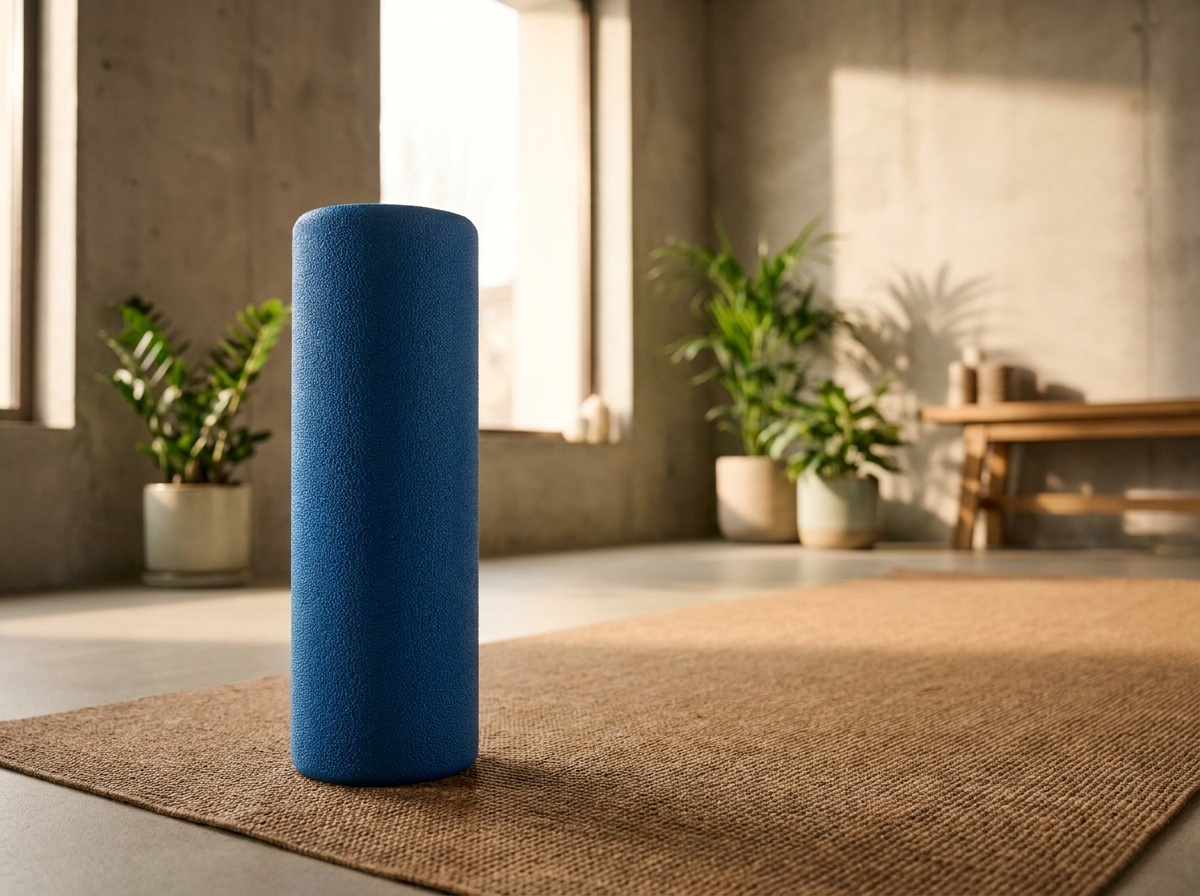
Three features determine the right model. Firmness: Beginners and users sensitive to pain should start with medium density—a roll that’s too firm can cause muscle cramps, which is exactly the opposite of the goal. Surface: Smooth rolls distribute pressure evenly (ideal for beginners and large areas), while textured surfaces provide targeted stimulation for advanced users. Size: The standard roller (approx. 30–45 cm) covers everything; mini rollers and fascia balls reach the soles of the feet, chest muscles, and areas that the large roller misses; vibration rollers combine pressure with frequency stimulation—a comfort upgrade for frequent users.
In our Foam Rollers & Massage Rollers collection, you’ll find tested models for every use; you’ll also find additional recovery tools—from compression to cold therapy—in the Recovery collection. Over 5,000 customers trust Kraftathlet —with carbon-neutral shipping and honest advice instead of promises of miracle cures. If you prefer to enjoy self-massage while seated, our massage chair guide compares options for everyday use.
Common Mistakes
Rolling too fast. If you race across your thigh in two seconds, you don't give your nervous system time to react. Slowing down is half the battle.
Roll on the lumbar spine. The most common and riskiest mistake—not rolling on the lumbar spine, but instead working on the buttocks and thoracic spine.
Maximum pain as a goal. “The more it hurts, the better” is a myth: Tension negates the benefits. Noticeable, yes; agonizing, no.
Hold your breath. Breathing calmly is essential for tension to ease.
Rolling instead of working out. Rolling improves the way you move and recover—but building strength and flexibility over the long term still requires actual training.
Frequently Asked Questions
How long should you roll with a foam roller?
30 to 60 seconds per muscle group, in 2 to 3 sets. A complete full-body routine takes about 10 to 15 minutes.
How many times a week is foam rolling recommended?
You can do this every day, but 3 to 4 sessions per week is a realistic and effective schedule for most people—for example, after a workout and on a day off from training.
Is it okay for foam rolling to hurt?
A clearly noticeable, “soothing” aching pain is normal. Stabbing pain, numbness, or tingling are warning signs—as is pain that prevents you from continuing to breathe calmly.
Why shouldn't you roll your lumbar spine?
In the lower back, the protective layer of muscle over the spine is missing, and the back extensors reflexively tense up under the roller—which increases tension instead of releasing it. Instead, focus on the glutes, hip flexors, and thoracic spine.
Does a foam roller replace stretching or massage?
No—it complements both. For flexibility training, stretching and, above all, strength training through the full range of motion remain essential; the roller is a versatile tool for in-between sessions, and self-massage is for every day.
Conclusion
The foam roller delivers what it promises—if you interpret that promise realistically: a few percent more flexibility exactly when you need it, and noticeably less muscle soreness after tough workouts. With the 8 exercises in this guide, a slow pace, and a 10- to 15-minute routine, you’ll reliably achieve exactly that result. Questions about which roller is right for your needs? Our team will be happy to advise you.