

Abstract
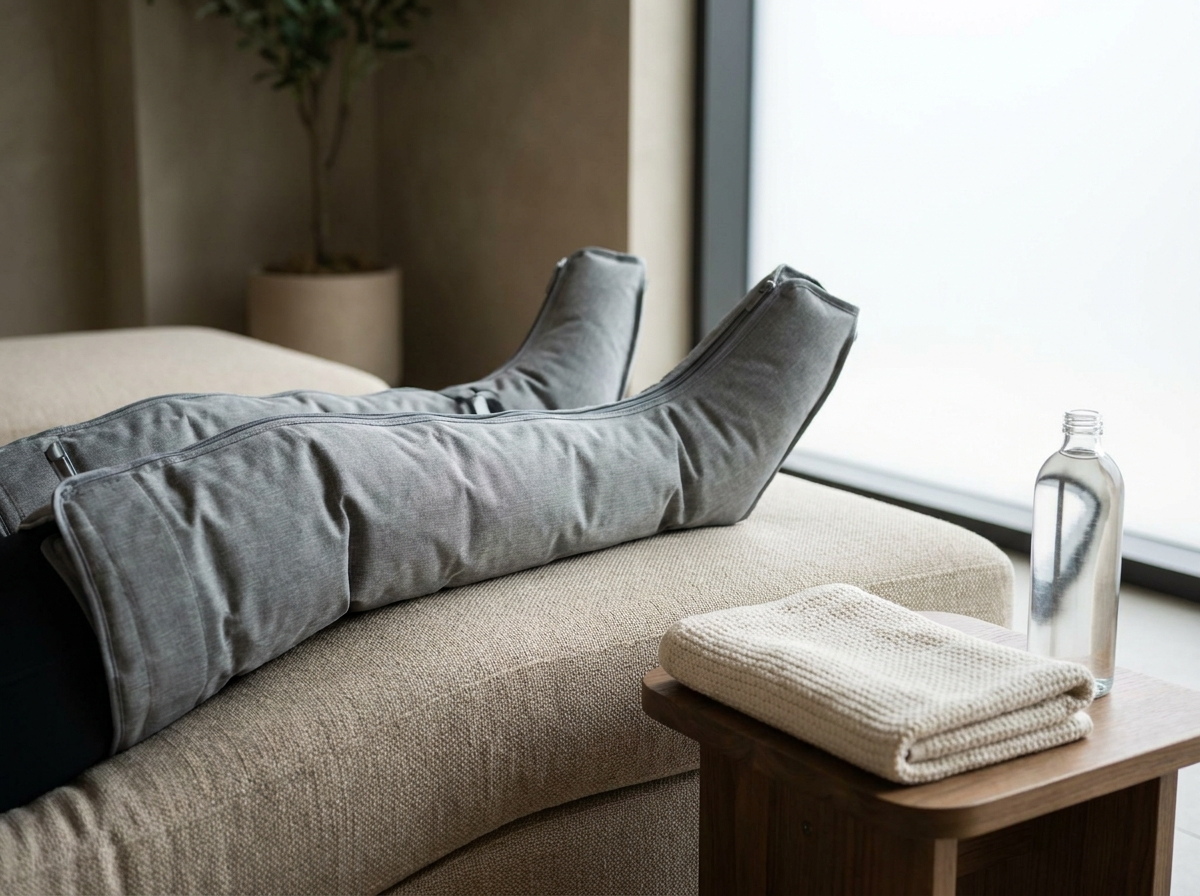
- Compression boots (recovery boots) are leg sleeves with air chambers that inflate in waves, thereby stimulating blood and lymph flow in the legs.
- The research findings are mixed: Several studies show reduced muscle soreness, lower blood lactate levels, and increased flexibility—but they do not demonstrate any miraculous effects.
- People who train intensively, have long days on their feet, or face a heavy competition schedule benefit the most: runners, strength athletes, team sports players, and patients in rehabilitation.
- When making a purchase, consider the pressure range (mmHg), number of chambers, programs, battery life, and size—reliable devices start in the mid-three-digit range.
Compression Boots: Benefits, Uses, and an Honest Buying Guide for 2026
Compression boots—usually called recovery boots —are inflatable leg sleeves that massage your legs in waves, which is supposed to promote blood circulation and lymphatic drainage. Let’s get the honest answer out of the way first: Research shows moderate but inconsistent effects—recovery boots are a comfortable, low-risk recovery tool, but they’re no substitute for sleep, nutrition, and sensible training management.
In this guide, you'll get the straight facts: how the devices work, what studies actually measure, who should consider buying one—and what to look for when making a purchase so you don't end up paying for marketing hype.
What are compression boots, and how do they work?
Technically, this principle is called intermittent pneumatic compression (IPC). The boots contain several overlapping air chambers. A pump fills them one after another—typically starting from the feet or calves and moving upward toward the thighs. This creates a pressure wave that pushes venous blood and lymph toward the heart. When the pressure subsides, fresh, oxygen-rich blood flows back.
The idea behind it: After intense workouts, metabolic byproducts and fluid accumulate in the tissues. The rhythmic compression is designed to speed up the removal of these substances, thereby reducing the feeling of heaviness and tension in the legs. Unlike a foam roller, this is a completely passive process—you simply lie down while the device does the work for 20 to 40 minutes.
For studios and practices: massage chairs and recovery equipment.
What Science Really Says
Here, honesty is more important than any sales pitch. A systematic review with meta-analysis from 2024 on leg compression and athletic recovery reaches a nuanced conclusion: IPC can improve perceived recovery and certain markers, but the effects are heterogeneous and protocol-dependent. Several individual studies found lower blood lactate levels, greater knee mobility, and increased pain tolerance following use. Others—such as those involving long-distance runners—showed no significant difference in subjective muscle soreness compared to the control group.
In other words: The plausible mechanism (increased blood flow, faster removal of waste products) is real, but the measurable benefit compared to simply elevating your legs is often small and not detectable in everyone. Recovery boots do not reduce actual muscle damage and are no substitute for sleep. What they reliably provide is a pleasant sensation of reduced swelling and 30 minutes of enforced rest—which can be more valuable in everyday life than the research alone suggests. The current meta-analysis on NCBI/PMC provides a good overview of the evidence.
Who Really Benefits from Recovery Boots
The benefits increase with the level of exertion. They are particularly useful for:
- Endurance athletes with a high weekly training volume (running, cycling, triathlon) who experience many days of "heavy legs."
- Strength and team athletes during intensive training periods or tournament phases with little time for recovery.
- People who spend long days standing or walking (in the healthcare, food service, or retail industries) and experience swollen legs in the evening.
- Rehabilitation and physical therapy settings where gentle decongestive therapy is part of a medically supervised treatment plan.
On the other hand, people who exercise moderately two to three times a week usually get better value for their money by getting enough sleep, going for walks, and using a foam roller.
Buying Guide: What to Look for in 2026
The promotional images all look the same—the differences lie in the details. These five criteria determine whether a product is suitable for everyday use:
- Pressure range (mmHg): Good devices can be adjusted from about 20 to 200+ mmHg. It’s not the maximum pressure that matters, but the ability to make fine, low-pressure adjustments—decongestion is often achieved even at moderate pressures.
- Chambers / Segments: More chambers (4 instead of 2) produce a smoother, more precise wave from the foot to the hip.
- Programs & Modes: Sequential, pulsating, zones can be turned off individually—useful if you only want to treat your calves or specifically target your thighs.
- Battery vs. Cord: Wireless devices with built-in batteries have a clear advantage in the studio and when traveling; pay attention to the actual battery life per charge.
- Size & Noise Level: The leg length and circumference must be a good fit; otherwise, the wave won't feel right. A quiet pump makes all the difference in whether you can truly relax.
A Comparison of Recovery Boot Methods
Recovery boots are just one tool in the recovery toolkit. Here's how they fit into the picture:
| Method | Strength | Effort | Price Range |
|---|---|---|---|
| Compression Boots | Passive Decongestion, "Light Legs" | Very low (are) | approx. 300–1,500 € |
| Massage Gun | Occasionally, as needed, before or after a workout | Low–medium | approx. 80–400 € |
| Fascia Roller | Mobility, affordable, everywhere | Funds (active) | approx. 20–80 € |
| Ice Bath / Cold Therapy | Immediate Recovery, Freshness | Medium–high | starting at about 800 € |
For more information, see our guides on ice baths and buying a massage chair. A well-thought-out routine often combines several elements rather than relying on a single device.
Buying Advice & Selection at Kraftathlet
In our Compression Therapy collection, you’ll find Recovery Boot systems in various pressure and chamber classes; complementary devices for holistic recovery are available in the “Aerify ” “Recovery,” and “Regeneration” collections. Not sure which size and pressure range are right for your sport? Then let us give you a quick consultation—it’ll help you avoid buying the wrong product. At Kraftathlet , you can shop with 0% Klarna financing and a 30-day return policy, so you can try out the device at your leisure.
Common Mistakes
- Too much pressure. A higher mmHg reading isn't automatically better. Decongestion is often achieved with moderate pressure—too much pressure can be uncomfortable and offers no additional benefit.
- Recovery boots as a substitute for sleep. They support recovery, but they do not replace sleep, adequate protein intake, or proper training management.
- Wrong size. If the cuffs are too loose or too short, the pressure wave will dissipate into thin air.
- Use despite contraindications. If you have deep vein thrombosis, acute inflammation, open wounds, or severe vascular disease, consult a doctor first.
- Maximum daily dose. Wearing it for 20–30 minutes right after intense workouts is more effective than wearing it aimlessly for hours on end.
Frequently Asked Questions
Do compression boots really make a difference?
They measurably improve blood circulation and provide a sense of relief from congestion, and individual studies show benefits in terms of lactate levels, flexibility, and pain tolerance. However, there is no evidence of a significant, guaranteed increase in performance—the effects are moderate and vary from person to person.
How long and how often should I use it?
It’s common to do this 20 to 40 minutes after intense workouts or in the evening. You can do it daily; it makes more sense on tough days than on rest days. Listen to how your body feels rather than sticking to a rigid maximum dose.
Are recovery boots better than a foam roller?
They serve different purposes: Boots provide passive decongestion, while the roller actively improves mobility and tissue tension. For most recreational athletes, the roller is the more affordable all-around tool; Boots are worth the investment for high-volume use.
Who are they not suitable for?
If you have thrombosis, acute inflammation, open wounds, or severe vascular or heart disease, you should consult a doctor before use.
How much does a good device cost?
High-quality systems with multiple chambers and precise pressure control start in the mid-three-digit range; studio and professional models with rechargeable batteries and more zones are priced higher.
Compression Garments vs. Recovery Boots—They're Not the Same Thing
A common misconception: Recovery boots are not the same as compression socks or pants. Compression garments apply constant, static pressure and are often worn for hours—during exercise, on long trips, or overnight. Recovery boots, on the other hand, work dynamically: They pump in waves and are specifically designed for short, intense sessions. Both approaches have their merits, but they serve different purposes. Static compression supports venous return over long periods of time; the boots’ pneumatic waves are designed to actively promote blood flow in 20 to 40 minutes. Anyone using both should do so consciously—not under the assumption that they are the same tool. Clothing is more practical for continuous use on the go, while the boots are superior for focused recovery after intense workouts.
How to Effectively Incorporate Recovery Boots Into Your Weekly Routine
The biggest mistake is wearing them constantly without a plan. Use the boots specifically where the strain was greatest—that way, you’ll get the greatest perceived benefit per minute. A practical example of a schedule for an intensive training week might look like this:
- After the toughest workout of the week (long run, intense leg day, race): 25 to 30 minutes at a moderate intensity.
- On days with two training sessions: a short session between the two to start the second one with fresher legs.
- The evening before an important competition: 20 minutes of relaxation—more to calm down and unwind than to directly improve performance.
- On regular rest days: optional, but not a must. Sleep, light exercise, and fresh air are often more beneficial than any piece of equipment.
So treat these boots as the icing on the cake of a solid foundation of sleep, adequate protein, and smart training management—not as a substitute for them. Used exactly this way, they’re a tool that pays off for ambitious athletes throughout the season because it makes recovery convenient and predictable. On the other hand, anyone who neglects the basics and relies solely on the device will be disappointed—no recovery tool can compensate for a chronic lack of sleep or poor nutrition.
Conclusion
Compression boots are a comfortable, low-risk recovery tool with a plausible mechanism of action and a moderate but mixed body of research. They are no substitute for the basics, but can noticeably contribute to your well-being when you have a high volume of training or time spent standing. The key factors are the right size, precise pressure control, and enough chambers—not the highest mmHg rating. Get in touch with us, and we’ll help you find the right system for your sport and your budget.