

In short:
- Hyrox combines eight 1-km runs with eight strength stations—this dual challenge of endurance and strength puts a greater strain on your recovery than running alone or strength training alone.
- According to a meta-analysis (Dupuy et al. 2018), massage provides the most evidence-based recovery, followed by cold therapy, compression, and active recovery.
- Sleep is your most important recovery tool: 7–9 hours a night beat any app or gadget.
- Plan your week in blocks of training and recovery, and make sure to taper intentionally before the competition.
Hyrox Recovery: How to Recover Properly Between Workouts and Competitions
When you train for Hyrox, it’s not just your training that determines your time—it’s primarily your recovery: Only a well-rested body can handle the dual demands of running and strength stations week after week. The best scientific review currently available—a meta-analysis by Dupuy and colleagues (2018, Frontiers in Physiology) covering 99 studies—shows that massage, cold therapy, compression, and active recovery measurably reduce muscle soreness and fatigue. Hyrox is no longer a niche event: By 2026, the series expects around 1.3 million participants across 85 cities. That’s exactly why it’s worth taking recovery just as seriously as the training itself.
Why Hyrox Requires Special Regeneration
A Hyrox race consists of eight 1-km runs, each separated by a functional station—SkiErg, Sled Push and Pull, Burpee Broad Jumps, rowing, Farmer's Carry, sandbag lunges, and wall balls. This mix creates two recovery challenges:
- Metabolic fatigue caused by the endurance intervals and the persistently high heart rate.
- Muscle micro-damage caused by the eccentric, strength-focused exercises (lunges, sled pulls, wall balls), which trigger typical muscle soreness (DOMS).
If you recover only like a runner or only like a strength athlete, you’re only addressing half the strain. Hyrox-Recovery must address both. Our overview of recovery methods provides a good foundation for this.
The Most Effective Recovery Methods for Hyrox Athletes
The meta-analysis by Dupuy et al. (2018) compared various methods based on their effectiveness in reducing muscle soreness, inflammatory markers, and perceived fatigue. Here’s how to apply this to your Hyrox training:
| Method | Effect | When to Use It |
|---|---|---|
| Massage / Foam Roller | Greatest Reduction in DOMS & Fatigue | After tough training sessions, on a rest day |
| Cold Therapy / Ice Bath | Reduces Inflammation & Muscle Soreness | After very intense physical exertion |
| Compression / Recovery Boots | Promotes blood circulation, relieves heavy legs | After running sessions, in the evening |
| Active Recreation | Maintains Blood Circulation & Mobility | The day after the competition |
Important for everyday life: Taking an ice bath immediately after every strength training session can slightly slow down your adaptation to strength training. During the build-up phase, you should therefore use cold therapy specifically after particularly intense sessions, not automatically after every workout. To learn how to use cold therapy properly, read our guide “How to Use an Ice Bath Correctly.”
Sleep: Your Most Important Recovery Tool
No massage or gadget can replace a good night’s sleep. While you sleep, your body releases growth hormone, repairs muscle fibers, and replenishes energy stores. Studies of athletes show that extended sleep improves sprinting and reaction times (Mah et al. 2011). Goal for Hyrox athletes during intense training phases: 7–9 hours per night, consistent sleep times, and a dark, cool bedroom. Learn more in our Guide to Sleep & Recovery.
Nutrition & Hydration
The dual demands of endurance and strength training deplete your carbohydrate stores and put a strain on your muscles. Your recovery nutrition should therefore address both:
- Carbohydrates to replenish glycogen stores after long or intense workouts.
- Protein (about 1.6–2.0 g per kg of body weight daily) for muscle repair, spread out throughout the day.
- Fluids & Electrolytes – You lose a lot of water and sodium over the course of many kilometers of running.
An Overview of Recovery Tools
You don't have to buy everything—but having the right tools makes it easier to plan your downtime:
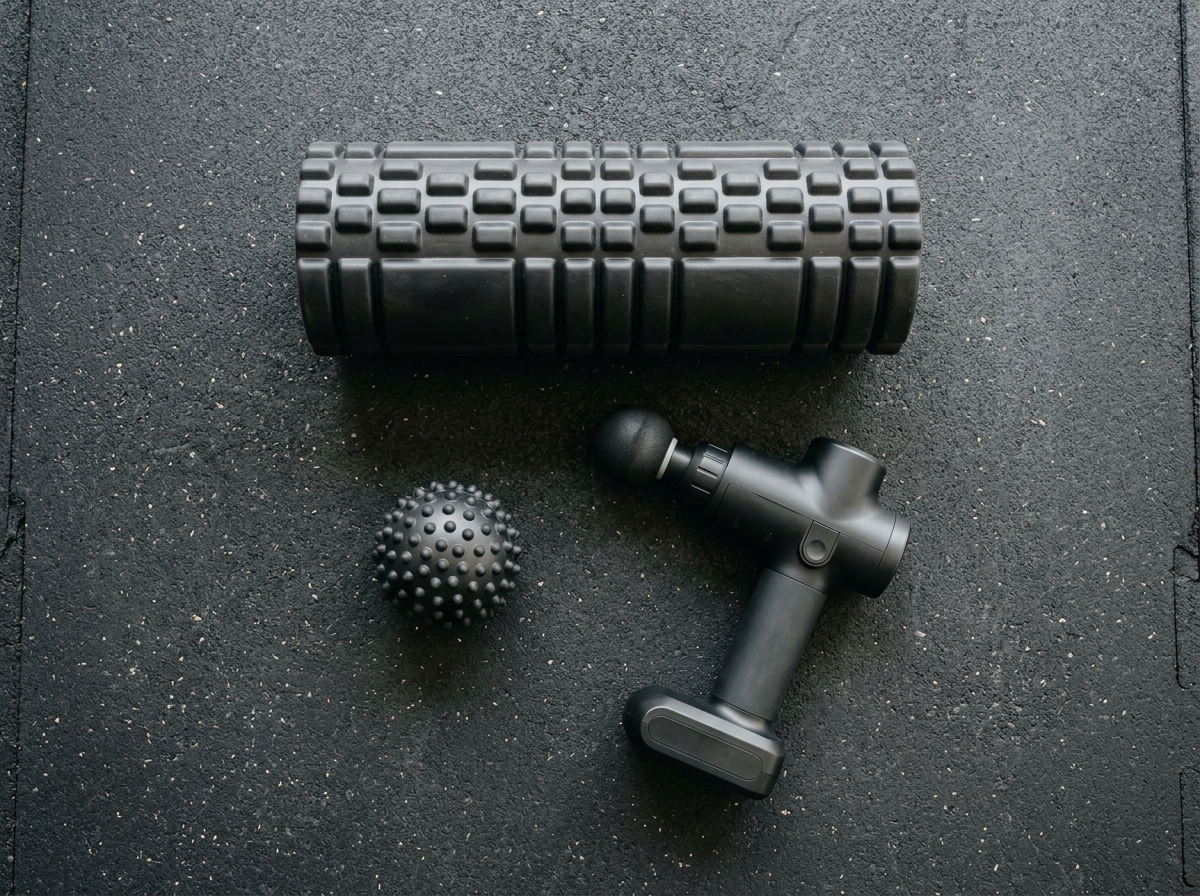
- Fascia roller & massage ball for targeted self-massage—affordable, effective, and portable. Part of our Foam Rollers & Massage Rollers collection.
- Recovery Boots / Compression Boots for the Legs After Long Runs – see the Recovery Boots Buying Guide and the Compression Therapy Collection.
- Massage gun for quick, targeted relief of tired muscles.
You'll find the right gear in our Regeneration collection and in the Functional Training section.
Why choose Kraftathlet? Over 5,000 satisfied customers, a 30-day return policy, and carbon-neutral shipping. That way, you can try out your recovery tools at your leisure at home.
Weekly Planning & Tapering Before the Competition
Recovery isn't a matter of chance—it's a matter of planning. Break your week down into hard and easy days, and consciously reduce your training volume before the race:
| Phase | Focus |
|---|---|
| Tough Training Days | Interval training + strength training stations, followed by a massage or foam rolling |
| Easy Days | Light Running, Mobility, Compression |
| Day Off | Active Rest, Prioritize Sleep |
| Competition Week (Tapering) | Volume: -40% to -60%; keep intensity low; get plenty of sleep |
Common Mistakes with Hyrox Recovery
- Just focus on running to recover: The multi-gym machines cause the most muscle soreness—don't forget your legs, shoulders, and core.
- Ice bath after every session: Slows down strength adaptation over the long term. Use cold strategically.
- Sacrificing sleep for more training: Extra workouts without sleep lead to more fatigue than progress.
- No tapering: If you go full throttle right up until race day, you'll start the race tired instead of fresh.
- Not enough protein: Without sufficient protein, the muscles cannot repair themselves fully.
Frequently Asked Questions
How long should I rest after a Hyrox race?
Plan for 3–7 days of reduced activity. Start with active recovery (walks, light cycling) before resuming intense training.
Do Hyrox recovery boots actually work?
They promote blood circulation and relieve the feeling of heaviness in the legs after running many kilometers. As a complement to sleep and nutrition, they are a useful tool.
Should I take an ice bath after every workout?
No. Regular exposure to cold immediately after strength training sessions can hinder adaptation. Use ice baths specifically after particularly intense workouts or competitions.
How much sleep do I need when training for Hyrox?
During periods of high activity, 7–9 hours per night. Consistent sleep schedules are more important than individual long nights.
Which is better: foam rolling or massage?
Both are effective. Foam rolling is an affordable, always-available form of self-massage; a professional massage can be more effective for stubborn tension. The combination is ideal.
Conclusion
Hyrox challenges both endurance and strength at the same time—your recovery must address both. Rely on evidence-based tools like massage, cold therapy, compression, and active recovery; make sleep a priority; and plan your week in blocks of training and recovery. Before the race, remember: starting well-rested is better than starting overtrained.
Want to put together your recovery gear? Talk to our team —we'll help you find the right gear for your workout.
Sources: Dupuy O et al. (2018), “An Evidence-Based Approach for Choosing Post-exercise Recovery Techniques, ” Frontiers in Physiology 9:403; Mah CD et al. (2011), “Sleep & Performance,” Sleep; Number of participants: HYROX. Note: If you have any health concerns or injuries, consult a doctor.