

Abstract
- The foundation of recovery is sleep, nutrition, and hydration —no recovery method can replace these three.
- A meta-analysis found that massage was the most effective method for treating muscle soreness, followed by active recovery, compression, cold therapy, and contrast baths (Dupuy et al., 2018).
- Choose the method based on your goal: cold & compression for sore muscles, heat & a foam roller for relaxation, and active recovery to boost circulation.
- Keep timing in mind: very cold water immediately after strength training can hinder adaptation—on strength training days, it’s better to use it later or at a milder temperature.
The most effective way to recover after exercise is unspectacular: enough sleep, adequate protein, and plenty of fluids—everything else builds on that. Among active recovery methods, a large meta-analysis found that massage was most effective at reducing muscle soreness, ahead of active recovery, compression, cold therapy, and contrast baths (Dupuy et al., 2018).
This overview categorizes the most important recovery methods by effect and intended use—based on the available research—and provides links to detailed guides for each method so you can find the one that’s right for your goal.
What does recovery after exercise mean?
Training provides a stimulus—but you only get stronger during the recovery that follows. During this phase, the body repairs muscle fibers, replenishes energy stores, and adapts to the strain (supercompensation). If you don’t recover enough, fatigue builds up, and you risk a drop in performance or overtraining. Recovery methods can support this process—but only if the basics are in place.
First, the basics: sleep, nutrition, and hydration
Before you even think about an ice bath or a massage gun, three factors determine the majority of your recovery:
- Sleep is the most powerful tool for recovery: During deep sleep, the body repairs itself and regulates hormone levels. Learn more in the guide “Sleep & Recovery.”
- Nutrition: Get enough protein throughout the day and carbohydrates to replenish your glycogen stores. Magnesium also plays a role in muscle function.
- Fluids: Even mild dehydration impairs performance and recovery—drink throughout the day, not just when you're thirsty.
Active vs. Passive Recovery
With active recovery, you help your circulation through light exercise (easy cycling, walking, mobility exercises) to flush out metabolic waste products. With passive recovery, you focus on rest and external stimuli such as heat, cold, or massage. Both have their place—the guide “Active vs. Passive Recovery” explains the details.
An Overview of Regeneration Methods
The following table ranks common methods based on their effect on delayed-onset muscle soreness (DOMS). The effect sizes are taken from the meta-analysis by Dupuy et al. (2018, Frontiers in Physiology); the higher the value, the greater the reduction in muscle soreness.
| Method | Effect on Muscle Soreness | When Is It Appropriate? |
|---|---|---|
| Massage / Foam Roller | Strongest (greatest effect) | After a hard workout, when you're feeling tense |
| Active Recreation | Clearly | The day after, light exercise |
| Compression | Clearly | After a competition, prolonged physical exertion, or travel |
| Cold / Ice Bath | Moderate | After endurance/competition; use sparingly on strength training days |
| Contrast Bath (Hot/Cold) | Moderate | As an alternative to a plain ice bath |
| Heat / Sauna | Relaxing, indirect | For relaxation, on days off from training |
| Sleep | Foundation (non-replaceable) | Every Night—The Most Important Step |
It's important to keep in mind: These effects primarily affect how you feel muscle soreness and fatigue. They don't automatically make you faster or stronger—they help you feel more refreshed and complete your next workout with better form.
Which method for which goal?
Instead of doing everything at once, choose based on your goal:
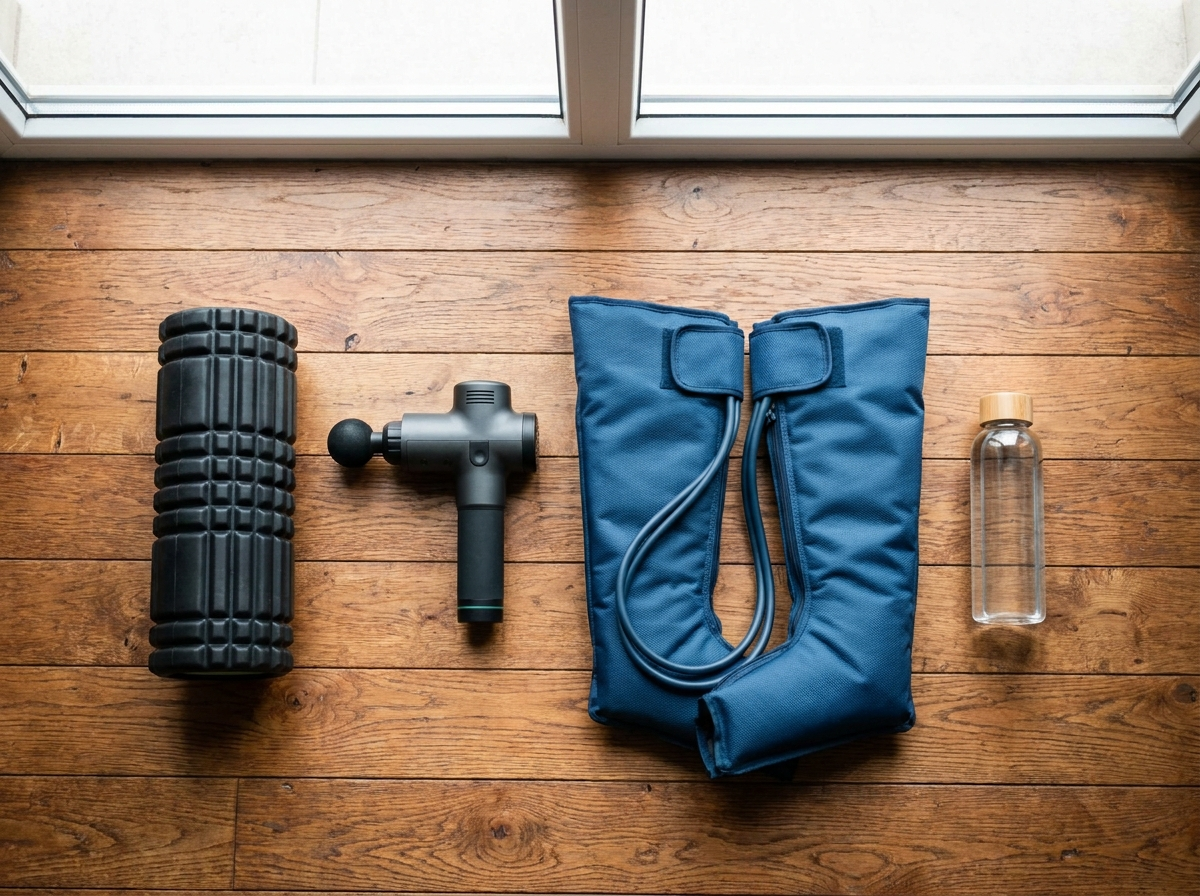
- Relieving Muscle Soreness: Massage Gun or Foam Roller —According to Research, the Most Effective Option.
- After prolonged exertion or a competition: compression boots or an ice bath.
- Relaxation & Well-Being: A sauna after exercising or a contrast bath.
You’ll find all the right tools bundled together in our Recovery category, as well as under Fascia Rolls & Massage Rolls. For larger recovery purchases, we’ll discuss product selection, delivery, and setup with you in advance. Our team will help you tailor your setup to your training volume.
Common Mistakes in Regeneration
- Tools instead of basics. Even the most expensive massage gun can't make up for a poor night's sleep. First, sleep, nutrition, and hydration—then supplementary methods.
- An ice bath immediately after every strength training session. Very cold water right after strength training can hinder muscle adaptation. On strength training days, it’s better to do it later, use lukewarm water, or skip it altogether.
- That's too much at once. Using all the methods at the same time doesn't provide any bonus. One targeted action per goal is enough.
- Eliminate rest days. Without real breaks, there’s no supercompensation—make sure to schedule deload weeks intentionally.
- Ignore the warning signs. Persistent fatigue, poor sleep, or a decline in performance are warning signs—if you experience them, scale back your activities.
Frequently Asked Questions
What is the best way to recover after exercising?
There is no single best method. The foundation is sleep, nutrition, and hydration. According to a meta-analysis, massage is the most effective treatment for muscle soreness, followed by active recovery and compression.
Is an ice bath better than a sauna?
They serve different purposes. Cold can reduce muscle soreness and swelling after intense exercise, while heat relaxes the body and promotes a sense of well-being. After strength training, use very cold water with caution.
How quickly do muscles recover?
That depends on the intensity, volume, and your fitness level—often 24 to 72 hours per muscle group. Good sleep and enough protein noticeably shorten the perceived recovery time.
Do I need expensive equipment for recovery?
No. The most effective strategies—sleep, nutrition, and active recovery—cost nothing. Tools like foam rollers, massage guns, or compression gear are useful supplements, not substitutes for the basics.
Should I do a recovery workout every day?
Recovery is a daily process—especially through sleep and nutrition. You should use targeted supplementary methods in moderation after intense workouts, not randomly every day.
Conclusion
Recovery after exercise follows a clear order of priority: first, sleep, nutrition, and hydration; then active recovery; and—depending on your goals—massage, compression, cold, or heat. Research shows real but limited effects; those who take the basics seriously and use methods in a targeted rather than haphazard way recover faster and train more consistently.
Would you like a recovery plan tailored to your workout routine? Contact our team —we'll put together the right tools for your goals and budget.