

Abstract
- A large systematic review shows that yoga can slightly reduce pain and improve mobility in the short term for people with chronic nonspecific back pain.
- The benefits come from the combination of flexibility, core strengthening, relaxation, and body awareness.
- Five gentle exercises—from Cat-Cow to Child's Pose—are a great way to get started.
- If you experience acute, severe, or radiating pain, consult a doctor first.
Yoga can provide slight short-term pain relief and improve mobility in cases of chronic, nonspecific back pain. A recent Cochrane review (Wieland et al., 2022) analyzed 21 randomized trials involving 2,223 participants and found that yoga led to a small but measurable improvement in pain and function in the short to medium term. In this guide, you’ll learn why yoga helps your back, which five exercises are best for beginners, and what you should definitely keep in mind.
An important note before we begin: This article is not a substitute for medical advice. If you experience acute, severe pain—especially pain that radiates into your leg or arm—or numbness, or if you’ve been in an accident, you should first seek evaluation from a doctor or physical therapist.
What does the research say?
Back pain is one of the most common complaints of all, and most cases are “nonspecific”—meaning there is no single, clearly treatable cause behind them. This is exactly where exercise comes in. The Cochrane review mentioned above concludes that, compared to no exercise, yoga brings about a slight improvement in pain and function and has a similar effect to other forms of back-friendly exercise. The effect isn’t a miracle cure, but it’s real—and yoga has the advantage of combining strength, flexibility, and relaxation all at once.
The key is proper execution: In the studies, the programs were led by experienced instructors and specifically tailored to the back. In practice, this means: start gently, perform the exercises correctly, and seek expert guidance if needed.
Why Yoga Is Good for Your Back
The benefits stem from several key elements. First, flexibility: Gentle stretches keep the spine, hips, and posterior muscle chain supple. Second, strengthening: Many yoga poses engage the deep core muscles that stabilize the spine. Third, relaxation: Conscious breathing reduces underlying muscle tension, which often manifests in the neck and back during times of stress. Fourth, body awareness: Yoga helps you develop a better sense of your own posture in everyday life—and that is often the key to managing back pain.
Five Gentle Exercises for Your Back
These five poses are a great way to get started. Perform each one slowly and without straining, breathe calmly, and hold each pose for a few breaths.
| Exercise | Effect | Description (short) |
|---|---|---|
| Cat-Cow (Marjaryasana) | Mobilizes the Spine | While on all fours, alternately round your back and gently lower it |
| Child's Pose (Balasana) | Stretches the lower back, relaxes | Sit on your heels, lean your upper body forward |
| Reclining Swivel Seat | Relieves tension, gentle rotation | While lying on your back, slowly lower your bent knees to the side |
| Sphinx | Gently strengthens the back | Lie on your stomach, resting on your forearms, and lift your chest slightly |
| Pelvic Tilt | Activates the deep core muscles | While lying on your back, tilt your pelvis slightly so that your lower back is against the mat |
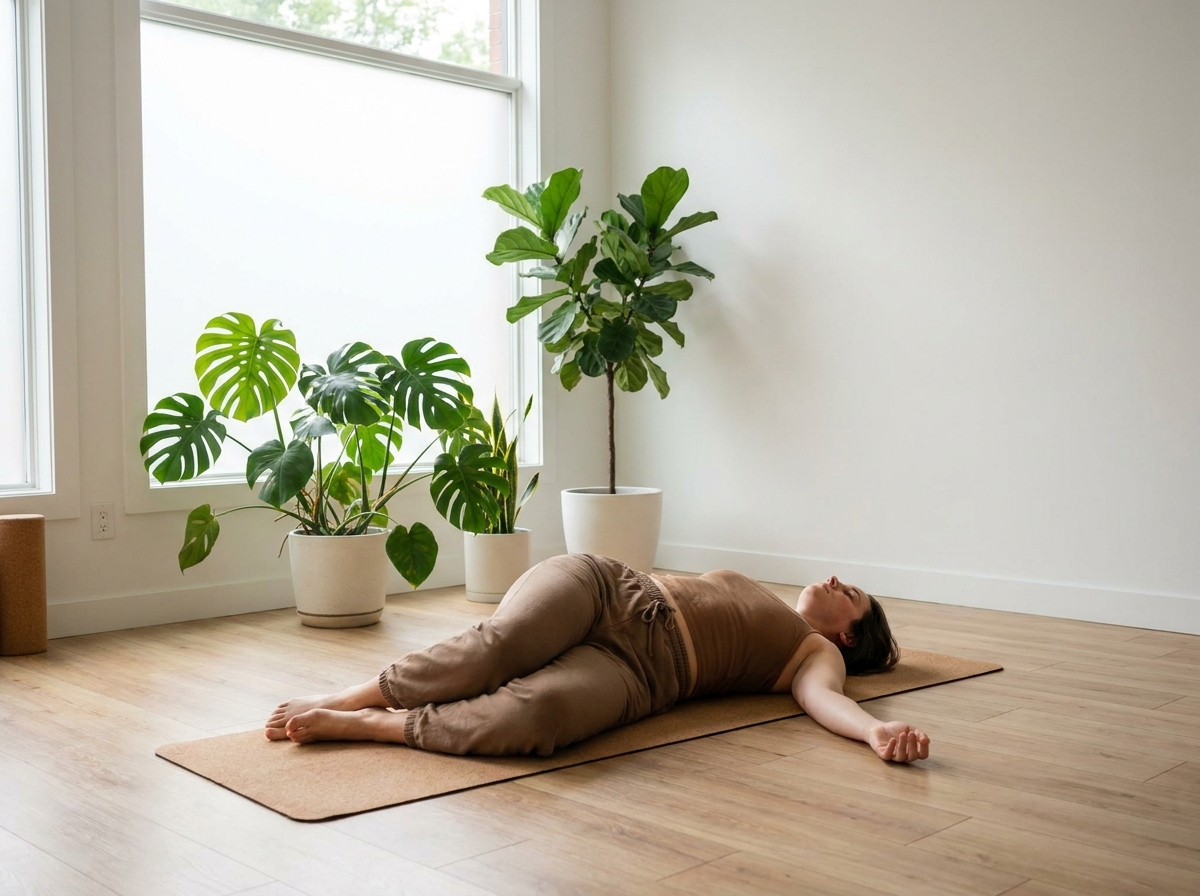
For a quick routine, string the exercises together: two minutes of Cat-Cow, followed by Child’s Pose, Sphinx, pelvic tilts, and, to finish, the Reclining Twisted Seat on each side. Doing this three to four times a week is enough to feel a difference.
Who It's Suitable For—and When to Exercise Caution
Gentle back yoga is well-suited for most people with nonspecific, recurring muscle tension. Caution is advised in cases of acute herniated discs, recent injuries, osteoporosis, pregnancy, or radiating pain—in these cases, you should consult a specialist beforehand and avoid intense forward and backward bends or sharp twists. Basic rule: Yoga should be challenging, but it should never cause pain.
The Right Gear to Get Started
You don’t need much—but having the right gear helps. A non-slip yoga mat that’s thick enough protects your joints and spine; a yoga block and a strap make poses more accessible if you’re still working on your flexibility. You’ll find suitable mats and floor protection in our “Training Mats & Floor Protection” collection, and complementary small equipment like balls under “Pilates & Fitness Balls.” If you also want to relieve muscle tension, it’s a good idea to combine yoga with a foam roller. Our recovery and yoga products have an average rating of ★ 4.88/5 from over 5,000 customers and are shipped carbon-neutrally. Not sure which mat is right for you? Ask our team via the contact page.
Common Mistakes
Don't start out too ambitiously. Deep forward bends or headstands aren't appropriate for beginners. Start with gentle, mobility-building poses.
"Pushing through" pain. Pain is a warning sign, not a sign of progress. Return to a comfortable position.
Don't forget to breathe. Without calm breathing, much of the relaxing effect is lost. Breathe mindfully in every pose.
Practice irregularly. A one-time workout doesn't do much good. A short, regular routine is better than a rare, long session.
Frequently Asked Questions
Does yoga really help with back pain?
For chronic, nonspecific back pain, yes—to a small but measurable extent. The Cochrane review (2022), which included 21 studies, found a slight improvement in pain and function. Yoga is about as effective as other forms of exercise designed for back health.
How often should I practice?
A short session of 10 to 20 minutes, three to four times a week, is a good guideline. Consistency is more important than the length of each individual session.
Which style of yoga is best for back pain?
Gentle, slow styles such as Hatha or a back-focused, guided program are more suitable than fast, strength-focused variations. It is important to perform the exercises without pain and with proper technique.
Can I do yoga if I have acute back pain?
If you’re experiencing acute, severe, or radiating pain, you should first consult a doctor rather than starting treatment on your own. Once the acute phase subsides, gentle exercise can be part of your recovery—ideally under professional supervision.
Do I need a special mat?
A non-slip mat that's thick enough is a good idea because it protects your knees, wrists, and spine. A yoga block and a strap are helpful additions if your flexibility is still limited.
Conclusion
Yoga is one of the most enjoyable ways to take care of your back: It combines flexibility, gentle strengthening, and relaxation—and research supports a small but real benefit for chronic, nonspecific back pain. Start with these five gentle exercises, stick with them regularly, and listen to your body. If you have severe or persistent symptoms, get a medical evaluation first, then practice. Want to get started with the right mat or the right accessories? Our team will be happy to advise you.
Sources: Wieland et al. (2022), Cochrane Database of Systematic Reviews; NHS: A Guide to Yoga.