

Pilates Chairs for the Studio: Wunda Chair, Combo Chair, and Buying Criteria
The Pilates Chair is the most compact of the classic Pilates machines and takes up barely more space than an office chair—yet it offers a complete full-body workout via a spring-loaded pedal system. For studios, personal trainers, and physical therapy practices, it’s the most efficient way to expand their exercise offerings beyond the Reformer without sacrificing valuable floor space.
- The Pilates Chair (also known as the Wunda Chair) was developed by Joseph Pilates and remains an integral part of professional studios and rehabilitation programs to this day.
- It helps build strength, balance, and posture through a spring-pedal system—whether sitting, standing, or lying down—for beginners through advanced users.
- For studios, the key factors are frame stability, a spring system that can be precisely adjusted, and a small footprint per training station.
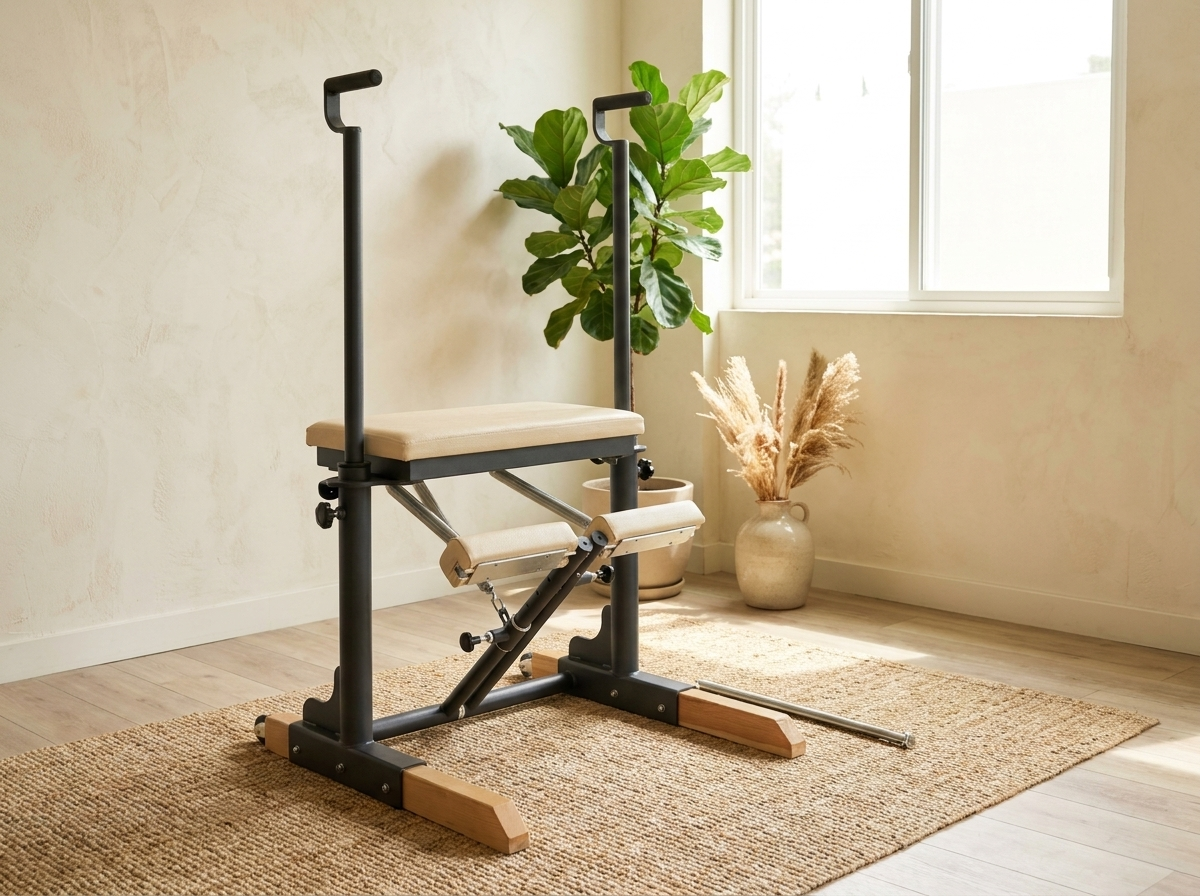
- As a sturdy studio chair with a steel frame, we recommend the Hegren TALMA 62CH—based on specific criteria, because durability in continuous use reduces overall costs.
What is a Pilates Chair?
The Pilates Chair consists of a sturdy, padded seat and one or two spring-loaded pedals, as well as—depending on the model—adjustable handles or handrails. The adjustable spring resistance allows you to perform concentric and eccentric movements against controlled resistance without putting excessive strain on your joints. It is precisely this combination of compactness and versatility that makes it so valuable in everyday studio use.
Its origins date back to the early 20th century: Joseph Pilates originally developed the Chair as a space-saving exercise machine for his clients at his New York studio. From the very beginning, it was also used by physical therapists in rehabilitation—an area of application that remains important to this day.
For Studios and Practices: Pilates Studio Equipment.
Wunda Chair, Combo Chair, Baby Chair: the designs
Several different designs have become established for the Pilates Chair. The terms are not always used consistently, so here is an overview of the most important differences:
| Design | Characteristic | Typical Applications |
|---|---|---|
| Wunda Chair | Classic, compact, a split or one-piece pedal | Core Workouts, Group and Individual Training |
| Combo Chair | With handles/grip bars, more exercise variations | Versatile Gym, Personal Training |
| Chair with double pedal | Two independently load-bearing pedals | Unilateral Training, Rehabilitation, Symmetry Work |
| Baby Chair | Additional Accessories for Arm and Back Exercises | Specialized exercises, classical repertoire |
For most studios, a combo chair with a double pedal is the most versatile choice: It covers the classic repertoire and also allows for unilateral exercises, which are in demand in rehabilitation and personal training. In our Pilates Chairs category, you’ll find an overview of the available models.
Which Muscles and Skills the Chair Works
The Pilates Chair is significantly more challenging than its compact design might suggest. Because the support surface is smaller than that of the Reformer, the body must constantly stabilize itself. This places particularly high demands on the deep core muscles.
- Trunk and Core: Every exercise requires active stabilization—the Chair is an excellent core training tool.
- Leg and Glute Strength: Using the pedal, you can do push and balance exercises while standing.
- Shoulder and Arm Strength: Handles can be used to perform support and pulling exercises.
- Balance and Proprioception: The small surface area helps develop balance and body control—valuable for sports and everyday life.
According to several clinical studies, Pilates programs using equipment improve posture and strength and can help with nonspecific back pain—typically with measurable results after 8 to 12 weeks of regular practice. This is precisely why many physical therapy practices use the Chair during the functional training phase.
Criteria for Buying a Studio Apartment: What Really Matters
A Pilates chair is in daily use at the studio and is used by a variety of clients with different weights and strength levels. This constant strain determines whether a piece of equipment will still function precisely after years of use or begin to wobble. Therefore, pay attention to the following criteria:
- Frame Stability: A steel frame remains free of play even after years of use. Models made of softer materials can lose stiffness over time under repeated stress—which can lead to repairs or downtime later on.
- Spring System: The springs must be adjustable with precision and speed so you don't waste any time between clients. Well-graded resistance levels make the chair suitable for everyone from beginners to professionals.
- Pedal mechanism: A double pedal allows for unilateral training and symmetry exercises—a real advantage in rehabilitation.
- Stability and Slip Resistance: The chair must not move at all when under load. Non-slip feet and a well-crafted seat are essential.
- Spare Parts and Support: The availability of springs and pedal pads, along with an accessible point of contact, are key factors in determining the lifespan of the equipment in a studio setting.
Our recommendation: Hegren TALMA 62CH
If you’re looking for a chair designed for professional, continuous use, we recommend the Hegren Pilates Chair TALMA 62CH with a dual-pedal system. This recommendation is intentionally based on specific criteria: The chair features a steel frame and a graduated spring system—features that make a difference in day-to-day studio use over the years, because a durable piece of equipment requires less frequent maintenance or replacement.
The double pedal enables unilateral exercises, which are in high demand in rehabilitation and personal training. You can find matching accessories and other Hegren studio equipment in the "Hegren " "Pilates," and " Premium Pilates Accessories" categories. Rated ★ 4.88/5 by our customers and available with 0% Klarna financing upon request, the Chair integrates well into a growing studio setup.
We also show you how a Chair fits into the overall concept in our guide to opening a Pilates studio.
Common Mistakes When Buying a Chair
- Don't just look at the price: A cheap chair that breaks down during continuous use ends up costing more than a sturdy model.
- Underestimating the spring system: Springs that are difficult to adjust slow down the flow of group classes.
- Misjudging the space required: The chair takes up little space, but there must be room to move around it.
- Ignoring rehabilitation potential: Anyone serving physical therapy clients should look for a dual pedal system and fine resistance adjustments.
Frequently Asked Questions
What is the difference between the Wunda Chair and the Combo Chair?
The Wunda Chair is the classic, compact basic model with a pedal. The Combo Chair adds handles or grab bars, thereby allowing for a wider variety of exercises—especially in the support and pull exercises.
Is a Pilates chair suitable for beginners?
Yes. The adjustable springs allow you to fine-tune the resistance, so beginners can get started safely and advanced users can get a challenging workout. This adjustability is a major advantage, especially during rehabilitation.
How much space does a chair take up in the studio?
The Chair itself takes up barely more space than an armchair. What’s important is the space around it to allow for safe performance of exercises while standing and lying down. This makes it one of the most space-saving pieces of gym equipment.
Why choose a steel frame instead of wood or aluminum?
In day-to-day studio operations, frame rigidity determines precision and service life. A steel frame remains free of play over the long term, while softer materials are more likely to lose stability under repeated loads. This is a criteria-based decision, not a blanket dismissal of other construction methods.
Can the Chair replace the Reformer?
No, it complements it. The Reformer remains the most versatile piece of equipment, while the Chair enables compact, stable strength and balance training. In many studios, the two pieces of equipment work hand in hand.
Conclusion
The Pilates Chair is the most efficient addition to any studio: compact, versatile, and proven in rehabilitation. When making a purchase, look for frame stability, a precise spring system, and—for physical therapy applications—a double pedal. The Hegren TALMA 62CH meets these criteria for professional, continuous use. Want to know which chair and studio setup best fits your space and concept? Talk to our team —we’ll provide personalized advice based on your specific needs.