

Abstract
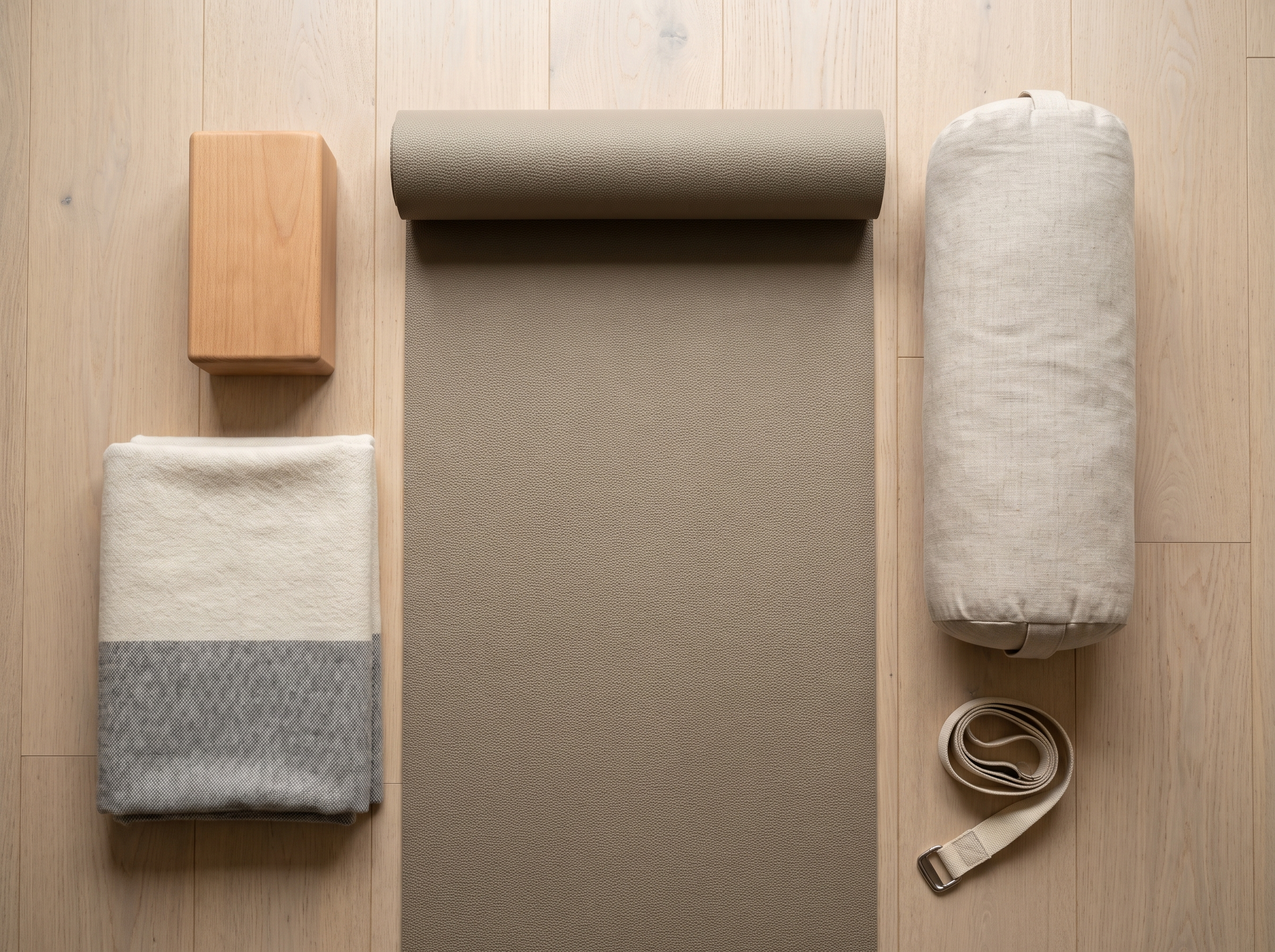
- To get started, you'll need just three things: a non-slip mat, a block, and a strap.
- The material of the mat determines its grip, hygiene, and sustainability: TPE is a good all-around choice, while natural rubber and cork offer particularly good grip.
- Blocks and straps make poses accessible when flexibility or strength are still lacking—this isn't a sign of weakness, but rather a smart way to practice.
- Optional for added comfort: a bolster, a blanket, and a soft ball for gentle rolling and restorative yoga.
Yoga Gear for Beginners: How to Choose the Right Mat, Block, Strap, and More
As a beginner in yoga, you really only need three things: a non-slip mat, a block, and a strap—everything else is just for comfort. This basic equipment makes poses safer and more accessible, especially while your flexibility and strength are still developing. Research shows that regular yoga is worthwhile: In a study by Polsgrove and colleagues (2016), flexibility and balance improved significantly after ten weeks of regular practice—and that’s exactly what props like blocks and straps are for: They help you get into the poses safely until your body adapts to them on its own.
The good news: Yoga is one of the most affordable forms of exercise there is. You don’t need expensive equipment—just a few well-chosen basics that will last you for years. In this guide, you’ll learn what really matters when it comes to each piece of equipment—and what you can skip.
The Basics: The Yoga Mat
Your mat is your most important piece of equipment. It determines your stability, joint protection, and hygiene. Three factors matter: material, thickness, and grip.
The Material
When it comes to materials, the key factors are grip, durability, and environmental sustainability. Here’s an overview of the most common options:
| Material | Grip | Features | For whom |
|---|---|---|---|
| TPE | Good | Lightweight, shock-absorbing, PVC-free, affordable | All-Arounders & Beginners |
| Natural rubber | Very good | Excellent grip, durable, natural-looking | Dynamic Vinyasa, Experienced Practitioners |
| Cork | Very good (better when wet) | Antibacterial, sustainable, comfortable | Sweaty, Hot Yoga |
| PVC | Good | Very durable, inexpensive, less environmentally friendly | Budget-conscious, heavy-duty use |
The Thick One
The standard thickness is about 4–6 mm: enough cushioning for the joints, but enough contact with the floor for stability in standing poses. Very thin travel mats (2–3 mm) offer good stability but little cushioning. Very thick mats (8 mm+) are gentle on the knees and spine, but make balance poses more wobbly. If you have sensitive joints, combine a medium-thick mat with an extra blanket under your knees.
Pulleys and Straps: Small Tools with a Big Impact
The Yoga Block
A block “brings the floor closer to you.” Are you still unable to reach the floor cleanly in forward bends, the triangle pose, or the half-moon pose? The block gives you those missing centimeters—without forcing you into an improper posture. Blocks are available in cork (heavy, stable, sustainable), wood (very firm), and EVA foam (light, soft). For beginners, a pair of blocks is more useful than a single one.
The Yoga Strap
The strap extends your arms. In poses where you can't yet reach your feet or hands, it bridges the gap and keeps your spine long instead of letting you round your back. A simple cotton strap with a D-ring or buckle is all you need.
Optional, but nice to have: a bolster, a blanket, and a ball
Once you start practicing regularly, these three additions will make your practice more comfortable:
The bolster is a firm support pillow for restorative and Yin yoga. It supports your weight in passive poses, allowing you to truly let go. The blanket cushions your knees and sitting bones, keeps you warm during final relaxation (Savasana), and, when folded, serves as a flat seat booster. A soft ball (about 20–24 cm) is ideal for gentle rolling, fascia work, and core exercises—a versatile companion for both yoga and Pilates.
How much does a basic set of essentials cost?
| Equipment | Price Range | Priority |
|---|---|---|
| Yoga mat | approx. 30–60 € | Requirement |
| Block (pair) | approx. 20–40 € | Requirement |
| Belt | about 10–20 € | Requirement |
| Bolster / Blanket / Ball | Approx. 15–50 € per item | Optional |
For about 60–120 €, you’ll be fully equipped—an investment that will last you for many years. At Kraftathlet , thousands of customers trust the brand , giving it a rating of ★ 4.88/5, and thanks to the 30-day return policy, you can take your time to figure out which mat feels right for you.
Buying Guide: How to Put Together Your Gear
Start with a mat that suits your yoga style: For dynamic, sweat-inducing Vinyasa or hot yoga, a material with excellent grip—such as natural rubber or cork—is worth the investment; for calmer Hatha or restorative yoga, a good TPE mat will suffice. Add a pair of blocks and a strap—that’ll cover 90% of all situations a beginner might encounter. As your practice grows, you can add a bolster, a blanket, and a ball.
In our Training Mats & Floor Protection collection, you’ll find yoga and exercise mats in a variety of materials and thicknesses, such as the non-slip “ tiguar ” yoga mat. You’ll find blocks, straps, bolsters, and soft balls in the Premium Pilates Accessories and Pilates & Fitness Balls sections—many of these items can be used for both yoga and Pilates. If you run a studio and are considering high-quality Reformers, you’ll find durable steel studio equipment at Hegren Pilates; we select our products based solely on criteria such as durability and capacity.
Common Mistakes with Yoga Equipment
A mat that's too thin or too thick. If it's too thin, it hurts your knees; if it's too thick, it makes balance poses wobbly. 4–6 mm is the best compromise for most people.
Buy a non-slip mat. A mat without traction is a safety hazard. Pay attention to the material and how it handles sweat—some mats actually become more grippy when wet.
Don't skip the block and strap. Many beginners see props as "cheating." The opposite is true: they protect your joints and help you learn the poses correctly.
Don't forget about hygiene. A mat that's never cleaned collects sweat and germs. Wipe it down regularly and let it dry before rolling it up.
Buy everything at once. Start with the three basics. You can add a bolster, blanket, and ball once you know which style you prefer.
Frequently Asked Questions
Which yoga mat is best for beginners?
A TPE mat that’s about 5 mm thick is a great all-around option: it offers good grip, is shock-absorbing, lightweight, and PVC-free. If you sweat a lot or practice hot yoga, natural rubber or cork is the better choice for grip.
As a beginner, do I really need a pad?
Yes. The block makes many poses accessible in the first place and prevents you from compensating with other movements. It's one of the most useful and affordable props there is.
How thick should a yoga mat be?
For most people, 4–6 mm is ideal. Very thin mats provide more stability, while thicker ones are easier on the joints but make balance poses more difficult.
How do I clean my yoga mat?
After practicing, wipe them down with a damp cloth and mild cleaner, and let them dry flat. Natural materials such as cork and rubber cannot tolerate harsh cleaners.
Can I use yoga and Pilates equipment together?
There is a lot of overlap: mats, blocks, straps, bolsters, and soft balls are used in both disciplines. Pure Pilates equipment, such as the Reformer, is specific to one discipline, however.
Conclusion
Yoga doesn't require much—but what you do have should be good. A non-slip mat of the right thickness, a pair of blocks, and a strap will get you through the first few months and grow with your practice. Choose your mat material based on your style, pay attention to grip and hygiene, and wait to add comfort accessories until you know what you really need.
Not sure which mat or accessory is right for you—or are you setting up an entire studio? Get in touch with us; we’ll give you personalized and honest advice.
Sources: Polsgrove et al. (2016), “Impact of 10 Weeks of Yoga Practice on Flexibility and Balance in College Athletes,” International Journal of Yoga. Additional references: Yoga (Wikipedia).