

Abstract
- Morning yoga gently stimulates your circulation and joints and relieves the stiffness that builds up overnight—just 10 to 15 minutes is enough.
- It's important to focus on slow, breath-guided movement rather than intense stretching: The body is still cool in the morning and less flexible.
- A simple sequence—Cat-Cow, Downward-Facing Dog, gentle twist, standing pose—works the spine, hips, and shoulders.
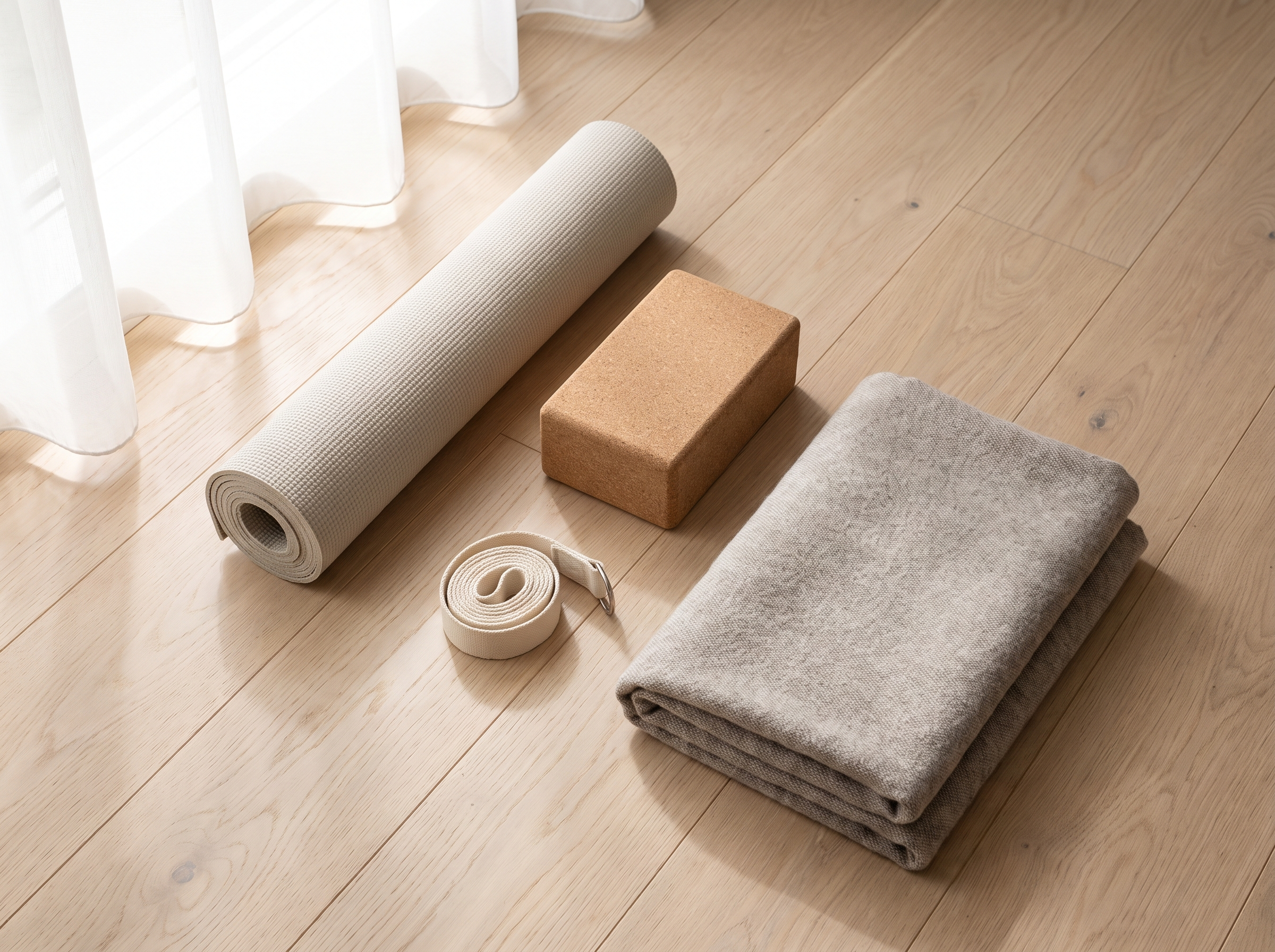
- All you need is a non-slip mat. A block and a strap can help if you're having trouble getting into the poses in the morning.
Morning Yoga: Your Morning Routine for Energy and Flexibility
Morning yoga is the fastest way to wake your body up: gentle, breath-led movements get your circulation going and release the stiffness that has built up in your spine and hips overnight. A study by Polsgrove et al. (2016, International Journal of Yoga) shows that regular yoga measurably increases flexibility: After ten weeks of practice, the participants’ flexibility and balance improved significantly.
The benefit of a morning routine lies less in the specific workout and more in its regularity: What you do right after getting up is rarely skipped. This guide explains why morning yoga works so well, what a simple sequence looks like, and what mistakes to avoid.
Why Morning Yoga Works So Well
You hardly move at all overnight. Joint fluid doesn’t circulate as much, the intervertebral discs absorb water, and your muscles are relaxed but immobile. That’s exactly why you feel stiff in the morning. Gentle mobilization helps redistribute the joint fluid, increases blood flow, and signals to the nervous system: The day is beginning.
The second effect is mental. A few minutes of mindful breathing before your smartphone takes over sets a calmer tone for the day. You don’t have to meditate to do this—the combination of movement and calm breathing is enough.
The Right Intensity: In the Morning, Less Is More
The main difference from evening yoga: In the morning, your muscles and ligaments are cooler and less flexible. If you force yourself into a deep forward bend right after getting out of bed, you risk straining your back instead of getting an energy boost. So use your breath to set the pace and only go as far as the stretch feels comfortable. The depth will come naturally as the minutes pass, once your body warms up.
A simple morning routine (10–15 minutes)
This sequence takes you from lying down to standing up—exactly the path your circulatory system naturally wants to follow in the morning.
| Posture | Effect | Duration |
|---|---|---|
| Cat-Cow (Marjaryasana) | mobilizes the spine | 6–8 breaths |
| Downward-Facing Dog | Stretches the back and shoulders | 5–8 breaths |
| Deep Lunge | stretches the hip flexors | 5 breaths per side |
| Gentle Twist While Seated | mobilizes the thoracic spine | 5 breaths per side |
| Mountain Pose with Arm Stretch | Enabled & Aligned | 5 breaths |
Breath as a Pacing Mechanism
Coordinate each movement with a breath: Inhale as you open up (Cow Pose, standing up straight), and exhale as you contract (Cat Pose, forward bend). This coordination is at the heart of flowing yoga and the reason why you’ll feel alert rather than tired at the end. Breathe through your nose, calmly and evenly.
Yoga in the Morning vs. in the Evening
| Aspect | In the morning | In the evening |
|---|---|---|
| Objective | activate, mobilize | relax, unwind |
| Tempo | fluid, more dynamic | slow, holding (Yin) |
| Mobility | less – stretch gently | Higher – Lower Stances |
The Sun Salutation: The Heart of Your Morning Routine
If you want to expand your routine beyond the basic sequence, the Sun Salutation (Surya Namaskar) is the classic building block. It combines several poses into a flowing sequence in which each movement is linked to a breath—exactly what you need to wake up in the morning. One round takes you from a standing position through a forward bend, a lunge, and Plank, back into Downward-Facing Dog, and then back up again. Because it engages the legs, core, shoulders, and spine in sequence, the Sun Salutation warms up your entire body in just a few minutes.
The same rule applies here for the morning: start slowly. For the first two to three rounds, keep the movements deliberate and restrained—smaller ranges of motion, more breathing pauses. Only once your body is warmed up should you increase your range of motion. Three to five gentle rounds are a great way to start your morning. If you have more time, follow up with the basic sequence from the section above.
Who Can Benefit Most from Morning Yoga
People who sit a lot benefit the most: After a night in bed and a day at a desk, the hip flexors and chest muscles tighten, and the shoulders roll forward. A short morning routine with hip-opening and chest-opening exercises counteracts this before you settle into your office chair. Morning yoga is also valuable for strength and endurance athletes: gentle mobility work on a non-training morning supports flexibility without causing additional fatigue.
A word of caution: If you’re experiencing acute symptoms—such as a herniated disc or a recent injury—talk to your doctor or physical therapist first to determine which poses are appropriate for you. Yoga is not a substitute for medical treatment, but rather a complement to it. When in doubt, listen to your body and skip any pose that triggers sharp pain.
Gear: What You Really Need
Morning yoga is simple. The only thing that matters is a non-slip mat with enough cushioning for your wrists in Downward-Facing Dog. You can find one that fits your needs in our Exercise Mats & Floor Protection category. If you’re not quite able to get into the poses in the morning, a block and a strap from our Pilates & Yoga Accessories section will make the exercises much more accessible right away: The block brings the floor closer to you, and the strap extends your reach during forward bends.
Many customers eventually turn their morning routine into a regular practice—and those who eventually make the switch from their living room floor to a studio setup, such as at Pilates and fitness studios, look for sturdy, durable equipment like the steel-framed Reformers from our “Hegren ” Pilates collection. For your daily morning routine at home, however, a mat is more than enough.
Why shop at Kraftathlet? Our customers rate us ★ 4.88 out of 5 —and you’ll enjoy carbon-neutral shipping and a 30-day return policy.
Short on time? The 5-minute version
On hectic mornings, you don’t have to skip your routine—just shorten it. Five minutes is enough to relieve the worst stiffness and start your day feeling more alert. Try these three poses: one minute in Cat-Cow to wake up your spine; one minute in Downward-Facing Dog with gentle “bicycle” movements of the legs to stretch your back; and one minute standing with long arm stretches and a few deep breaths to straighten up. The rest is all about breathing.
The trick to making sure you actually do your routine every day: Lay out your mat the night before. If something’s already set out, you’ll do it—but if you have to go looking for it, it’s the first thing to get skipped amid the stress of everyday life. A mat clearly rolled out next to your bed is the simplest way to commit to the practice. And even on days when you only manage the three basic poses, you’re keeping the habit alive—and in the end, that’s more important than a perfect, long session.
Common Mistakes in Your Morning Routine
Too deep, too fast. The classic mistake: going straight into a deep forward bend without warming up. Start with small movements and let the depth come naturally.
Forget to breathe. Without conscious breathing, the sequence becomes a mechanical stretching exercise, and the invigorating effect is lost.
Planning for too long. If you set aside 45 minutes, you won’t get anything done on the third morning. Ten minutes that you actually do every day are better than the perfect hour that never happens.
Too intense on an empty stomach. Gentle movement is ideal in the morning; for a challenging power yoga session, you should have eaten something or at least had a drink.
Frequently Asked Questions
How long should morning yoga last?
Ten to fifteen minutes are enough to get your circulation and joints moving. The key factor isn't the length of time, but consistency—a short daily routine is more effective than a long one that's done only rarely.
Isn't doing yoga right after getting out of bed too early for a cold body?
No, as long as you start gently. Begin with small, mobilizing movements like Cat-Cow, and only increase the range of motion once your body is warmed up. Avoid deep stretches at first.
Do I need any prior experience for morning yoga?
No. The sequence shown here is beginner-friendly. A block and a strap can help if you're still stiff in the morning, and they make every pose accessible.
Yoga in the morning or in the evening—which is better?
Both have their purpose. In the morning, you energize your body and mind with flowing movements; in the evening, you wind down with slow, held poses. Choose the time of day when you’re most likely to stick with it.
Does doing yoga every day really make you more flexible?
Yes. In the study by Polsgrove et al. (2016), the participants’ flexibility and balance improved significantly after ten weeks of regular practice. Flexibility develops through consistency.
Conclusion
Morning yoga isn’t a fitness program—it’s a small daily habit: ten minutes of gentle, breath-led movement that wakes up the body and helps you start the day more calmly. Start slowly, let the depth come naturally, and aim for short, regular sessions rather than long, infrequent ones. Want to equip your practice with the right mat, blocks, or straps? Get in touch via our contact page —we’d be happy to advise you.