

Abstract
- The best training split depends on how many days a week you work out and your level of experience—not on your favorite influencer's plan.
- 2 to 3 days: Full-body workout or 2-part split (upper/lower body). 4 days: 2-part or 4-part split. 5 to 6 days: 3-part split (push/pull/legs).
- The key is to work each muscle about twice a week—this promotes muscle growth more effectively than working them just once a week.
- Beginners are best off using a full-body routine or a 2-part split; 3-part and 4-part splits are only worthwhile once training volume increases.
Workout Splits: Comparing 2-Day, 3-Day, and 4-Day Splits—Which Plan Is Right for You?
The right training split depends primarily on how many days a week you work out: For two to three sessions, a full-body routine or a 2-day split is the best choice; for five or more sessions, a 3-day split (push/pull/legs) really shines. More important than the name of the split is ensuring that each muscle group is trained about twice a week—a meta-analysis by Schoenfeld, Ogborn, and Krieger (2016) shows that a higher frequency improves muscle growth compared to training once a week, provided the total volume is adequate.
In this guide, we objectively compare the most common workout splits based on target audience, time commitment, and frequency, so you can plan based on structure rather than gut feeling. By the end, you’ll know which split fits your daily routine—and how to implement it with the right equipment.
What exactly is a training split?
A training split describes how you distribute your training volume throughout the week. With full-body training, you work out your entire body in each session. With a split, you break your workout down into blocks—such as upper and lower body, or pushing, pulling, and leg exercises—and spread them out over several days. No split is “better” per se: they’re simply different tools for achieving the same goal—a reasonable volume per muscle group with sufficient recovery.
The three key factors that really matter are volume (how many hard sets per muscle group per week), frequency (how often a muscle group is worked per week), and progression (the gradual increase in load). The split is simply the organizational framework within which these factors operate. We explain in detail how to manage progression in our article “Progressive Overload Explained.”
A Comparison of the Most Important Training Splits
The following table summarizes the four most common approaches. It helps you find, at a glance, the split that fits your available time.
| Split | Training Days per Week | Frequency per muscle | Ideal for |
|---|---|---|---|
| Full body | 2–3 | 2–3 times a week | Beginners, limited time |
| 2-Part Split (Upper/Lower) | 4 | twice a week | Advanced Beginners |
| 3-Part Split (Push/Pull/Legs) | 3 or 6 | 1× (for 3) to 2× (for 6) | Ambitious, with plenty of time |
| 4-way split | 4–5 | 1–2 times a week | Advanced, Focus on Details |
The 2-Part Split: Upper and Lower Body
With a 2-day split—often referred to as upper/lower—you train your upper body one day and your lower body the next. With four workouts per week, you’ll work each muscle group twice, which aligns very well with the recommended training frequency. The 2-day split is the ideal next step if full-body workouts are starting to feel too long for you, but you can’t make it to the gym six times a week yet. You can find the details and a ready-made plan in the article “Upper/Lower Body Workout Plan.”
The 3-Part Split: Push, Pull, Legs
The Push/Pull/Legs split (PPL) divides your workout into pushing exercises (chest, shoulders, triceps), pulling exercises (back, biceps), and legs. If you work out three times a week, each muscle group gets one workout—if you work out six times, each gets two. It’s exactly this flexibility that makes PPL so popular. For beginners, however, the basic 3-day version is less effective in terms of training frequency, because each muscle group is worked only once a week. The detailed Push/Pull/Legs training plan lists all the exercises and provides a weekly schedule.
The 4-Way Split
With a 4-day split, you divide your workout into four specialized days, such as chest/triceps, back/biceps, legs, and shoulders/core. The advantage is the higher volume of work per muscle group within a single session; the disadvantage is that you’ll often only train each group once a week unless you strategically incorporate additional sets. The 4-day split is particularly beneficial for advanced trainees who want to target specific muscle groups and can already handle the necessary training volume.
Which split works best for your week?
The most honest answer is: the split that you can stick with in the long run. The following overview categorizes the splits based on the number of training days realistically available.
| Training Days | Recommendation | Why |
|---|---|---|
| 2 days | Full body | Maximum Frequency per Muscle When Time Is Limited |
| 3 days | Full-body or PPL | Full-body for frequency, PPL for more volume per unit |
| 4 days | 2-Part Split (Upper/Lower) | Each group twice—the ideal balance |
| 5–6 days | 3-way split (PPL, 2×) or 4-way | High volume with good frequency response |
If you're just starting out, make a conscious effort to keep it simple. A solid full-body routine or the classic 5x5 training program will get you further in the first few months than any elaborate 4-split routine, because you can focus on proper form and steady progression. You can find a complete beginner's plan in the full-body workout plan for three times a week.
Frequency and Volume: The Real Leverage Points
Splits are a means to an end, and that end is volume at an appropriate frequency. The meta-analysis by Schoenfeld and colleagues (2016) mentioned earlier concluded that training a muscle group twice a week is superior to training it just once—provided the weekly volume remains the same. In practical terms, this means that a split that targets your muscles twice a week has an advantage over one that works them only once. That’s why full-body workouts and 2-day splits often perform better than a 4-day split when training time is limited.
Be sure to choose a realistic training volume: For most exercisers, about 10 to 20 intense sets per muscle group per week is a good range, as outlined in the training recommendations of professional organizations such as the American College of Sports Medicine. More isn’t automatically better—recovery and sleep are part of your training.
Buying Guide: Everything You Need to Do Every Split at Home
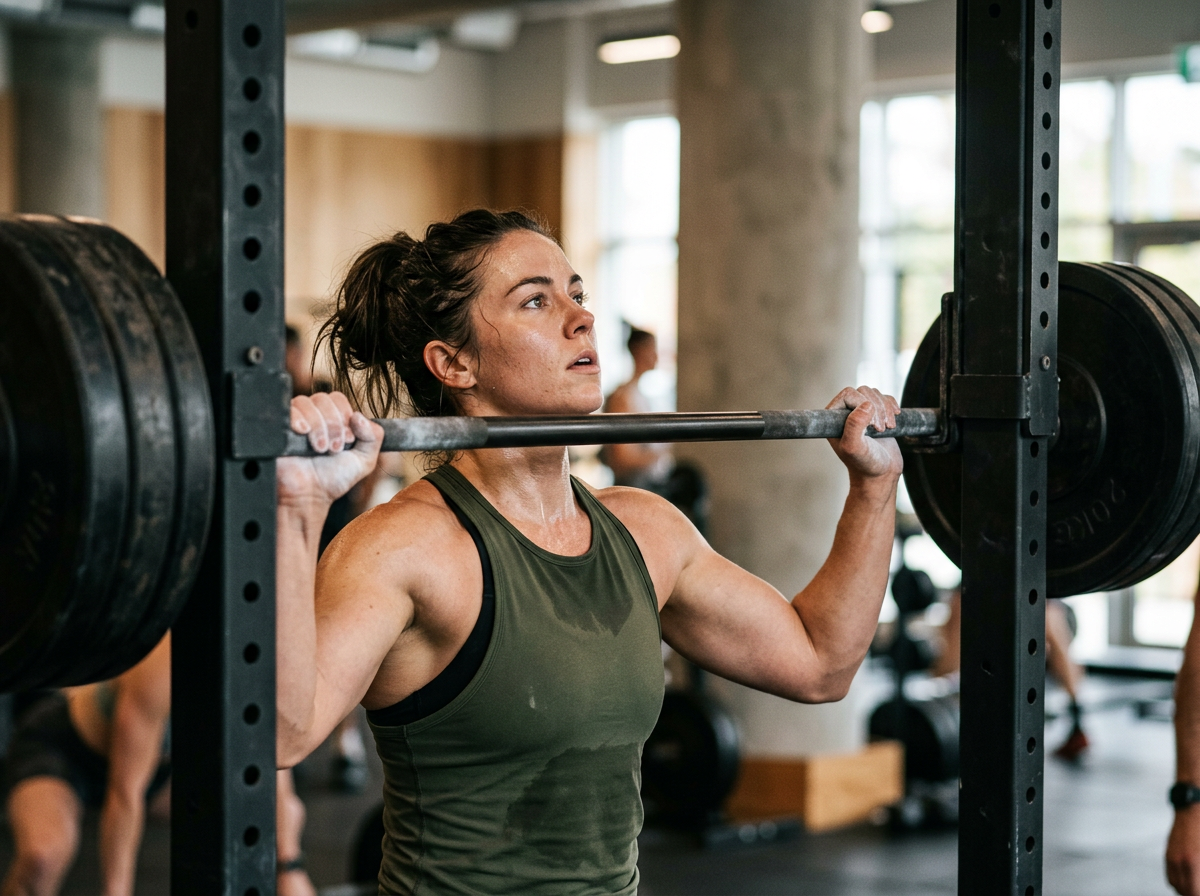
No matter which split you choose—the foundation is always adjustable weights and a sturdy frame for the basic exercises. A set of dumbbells and kettlebells reliably covers both the upper and lower body, while a power rack safely combines squats, bench presses, and pull-ups in one place. For beginners, a combination of adjustable dumbbells and a sturdy bench is often sufficient; those planning for the long term should invest directly in a rack with a barbell.
At Kraftathlet , you can count on certified studio-quality products—over 5,000 satisfied customers already trust our advice. If you’re unsure which equipment is right for your split and space, our team will be happy to assist you personally.
Common Mistakes When Choosing a Split
- Too much, too soon: Beginners often jump straight into a 4- or 5-split routine, even though their training volume isn't sufficient for it yet. The result: many days of training, but little stimulation per muscle.
- Ignoring frequency: A split that targets each group only once a week wastes potential—especially when weekly volume is limited.
- Don't forget about progression: Even the best split won't do you any good if you train with the same weights for weeks on end. Without progression, there's no progress.
- Don't change your plan constantly: If you switch up your split every two weeks, you won't be able to measure your progress. Stick with one approach for at least eight to twelve weeks.
- Underestimating the Importance of Recovery: More training days don't automatically mean more progress if you don't get enough sleep and recovery time.
Frequently Asked Questions
Which split is best for building muscle?
There’s no one-size-fits-all best split. When it comes to building muscle, the most important thing is to work each muscle group about twice a week with sufficient volume. If you’re working out three to four days a week, the easiest way to achieve this is with a full-body workout or a 2-day split.
Is a 3-day split good for beginners?
A pure 3-day split (PPL on three days) only works each muscle group once a week, so it’s not ideal for beginners in terms of training frequency. A full-body routine on three days usually helps beginners make faster progress.
Can I combine or switch between splits?
Yes. Many exercisers start with a full-body routine, switch to a 2-day split later on, and then move to PPL as they add more training days. It’s important to stick with each approach for at least eight to twelve weeks to track your progress accurately.
How many sets per muscle group do I need?
For most people, about 10 to 20 intense sets per muscle group per week is a good range. Beginners should start at the lower end and increase gradually, while paying attention to form and recovery.
Do I need a lot of equipment for a split routine?
No. Adjustable dumbbells and a sturdy bench are enough for a two-day or full-body workout plan. A power rack expands your repertoire to include heavy compound exercises, but it's not a must-have when you're just starting out.
Conclusion
The right training split isn’t a secret trick—it’s a matter of time, experience, and consistency. Two to three days are ideal for a full-body routine, four days for a 2-day split, and five to six days for PPL or a 4-day split. Make sure each muscle group is worked about twice a week, stick with a plan long enough, and gradually increase the intensity—then any of these splits will deliver results.
Want to know which features are right for your split, your goals, and the space you have available? Talk to our team —we’ll give you honest advice with no obligation.