

- Push Pull Legs (PPL) divides your workout into push, pull, and leg days—with this 6-day split, you'll train each muscle group twice a week.
- That is precisely the scientific advantage: A meta-analysis by Schoenfeld et al. (2016) shows that, for the same volume of training, two sessions per muscle group per week result in greater muscle growth than one.
- Target volume: about 10–20 intense sets per muscle group per week, each brought close to muscle failure.
- You don't need a gym: A power rack, a barbell, and a set of dumbbells are all you need to complete the entire workout at home.
Push-Pull Legs: The Workout Plan for Predictable Muscle Growth
Push-Pull-Legs is arguably the most effective workout split for anyone who trains three to six times a week and wants to build muscle in a structured way. You group all exercises by movement pattern—pushing, pulling, and legs—and, in the 6-day version, train each muscle group twice a week without the workouts interfering with one another.
In this guide, you’ll get the complete weekly schedule, the correct number of sets and reps, an honest comparison between the 3-rep and 6-rep variations, and buying advice on what equipment you need to properly perform PPL at home. All written in the informal “you” form, free of myths, and backed by sources.
What is the push-pull-legs split?
The name gives away the logic: You organize your exercises by the primary movement rather than by individual muscles. On Push Day, you work everything that involves pushing—chest, front delts, and triceps. On Pull Day, you work everything that involves pulling—back, rear delts, and biceps. On Leg Day, the focus is on the thighs, glutes, and calves.
The key: Muscles that work together are trained on the same day and recover together afterward. Your triceps are worked on push days and get a rest on pull days—so they don’t interfere with your pull-ups. This clear separation is why PPL scales so well: from a 3-day beginner program to a 6-day program for advanced trainees.
Why Push-Pull Legs Work for Building Muscle
Frequency Beats the Marathon Session
The most important advantage of PPL as a 6-day split is training frequency. A widely cited meta-analysis by Brad Schoenfeld and colleagues (2016) reached a clear conclusion: If a muscle group is trained at least twice a week, muscle growth is greater than with just one session—even when the total weekly volume is identical. In other words: It’s better to spread your chest sets over two days than to cram everything into a single grueling session.
That's exactly what the 6-Day PPL delivers: two push, two pull, and two leg workouts per week. This way, each muscle group automatically gets its two workouts—without you having to artificially pad out the plan.
The Right Volume
Frequency is only half the battle—what really matters is volume, that is, the number of hard sets. The research (including the work of Schoenfeld and Krieger) shows a dose-response relationship: About 10 sets per muscle group per week are significantly more effective than 5 sets, and for most people, the optimal range is around 10 to 20 intense sets per week. More isn’t automatically better—at a certain point, the additional benefit decreases and recovery suffers.
In practice, this means: Plan for about 12–16 sets per muscle group per week, spread out over your two workouts. Each set should be challenging—one to three reps short of muscle failure. Half-hearted sets hardly count.
The 6-Day Push-Pull-Legs Plan
Here's what a proven training week looks like. Sunday is a rest day—be sure to schedule it, because muscles grow during recovery, not during training.
| Tag | Focus | Main Exercises |
|---|---|---|
| Monday | Push A (hard) | Bench press, shoulder press, incline dumbbell press, triceps press |
| Tuesday | Pull A (difficult) | Deadlifts, pull-ups, bent-over rows, bicep curls |
| Wednesday | Legs A (hard) | Squats, Romanian deadlifts, leg press, calf raises |
| Thursday | Push B (Volume) | Incline bench press, lateral raises, dips, overhead triceps extensions |
| Friday | Pull B (Volume) | Lat Pulldowns, Cable Rows, Face Pulls, Hammer Curls |
| Saturday | Legs B (Volume) | Front squats, lunges, leg curls, calf raises |
| Sunday | Day Off | Walking, Mobility, Sleep |
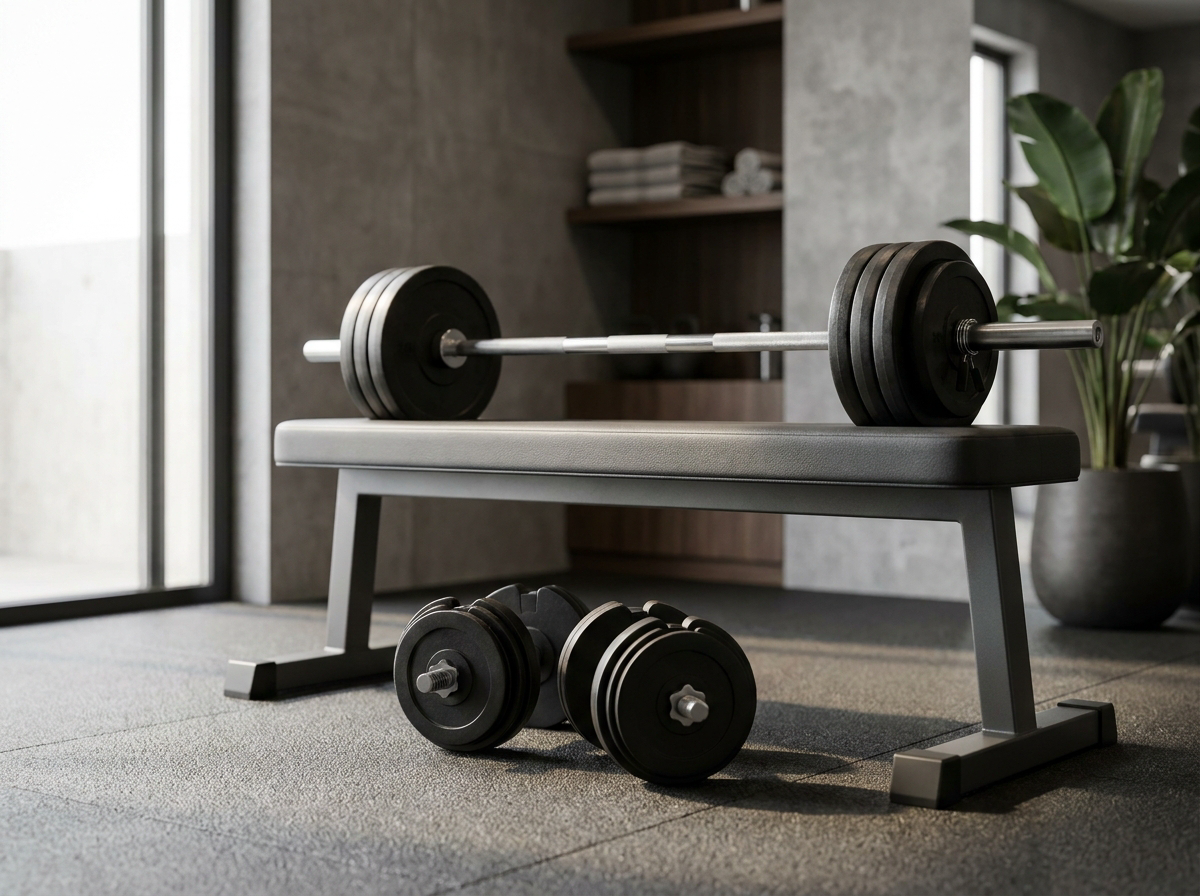
Push Day
Start with a heavy pressing exercise for 3–4 sets of 5–8 reps, followed by two to three辅助 exercises with 8–12 reps. The “heavy” push day focuses on the bench press, while the “volume” day focuses on shoulders and clean reps.
The Pull Tag
This routine focuses on your back and biceps. Because of the high intensity, deadlifts belong on the “heavy” day; on Day B, replace them with controlled cable rows and more reps. Don’t forget your rear delts—face pulls keep your shoulders healthy in the long run.
Leg Day
Squats and Romanian deadlifts are the cornerstones. If you perform them correctly and regularly, you’ll build not only your legs but your entire body, because these exercises engage a huge amount of muscle mass at the same time.
A 3-way or 6-way split? An honest assessment
Six days of training isn't realistic for everyone. The good news is that PPL also works as a 3-day plan—in which case, you'll train push, pull, and legs once a week. While this doesn't give you the ideal frequency of twice per muscle group, you'll still build solid muscle as long as the volume per session is high enough.
| Criterion | 3-Day PPL | 6-Day PPL |
|---|---|---|
| Frequency per muscle | Once a week | twice a week |
| Time required | 3 sessions, 60–75 minutes each | 6 sessions, 45–60 minutes each |
| Ideal for | Beginners, Busy People | Advanced learners with time to spare |
| Tempo Muscle Building | solid | faster (higher frequency) |
Our tip: Start with the 3-day plan and extend it to six days once working out becomes a regular part of your daily routine. A well-executed 3-day plan is better than any haphazard 6-day plan that you end up giving up on after three weeks.
Progression: How to Really Get Stronger
A plan is only as good as its progression. The principle is called progressive overload: You have to continuously push your muscles harder over the course of weeks; otherwise, you’ll plateau. The easiest ways to do this are by adding more weight, doing more reps, or increasing the number of sets.
Keep track of your numbers in a workout log. If you can complete all sets cleanly at the upper end of your rep range, increase the weight in small increments next time. In the long run, this kind of tracking separates those who make progress from those who lift the same weight for years on end.
Buying Guide: What Equipment You Need for Push-Pull Legs
The great thing about PPL: You need surprisingly little to complete the entire program at home. Just three components are enough for 90 percent of all exercises.
1. A power rack as the centerpiece. It allows you to perform squats, bench presses, and shoulder presses with safety racks—the foundation of all heavy pressing and leg exercises. You’ll find a selection of sturdy models in our Power Racks & Weight Racks category.
2. Barbells and weights. Deadlifts, rows, and squats are best performed with a barbell. If you prefer a more compact setup, combine them with adjustable dumbbells for the auxiliary exercises.
3. A multi-station for pull exercises. Lat pulldowns, cable rows, and face pulls round out the pull workout. You’ll find complete solutions under “Multi-Trainers & All-in-One” —ideal when space is limited. We’ve grouped our entire strength training lineup in the “Strength Training” category.
What to look for when buying: Stability, durability, and a well-designed hole pattern are more important than any marketing statistic. As an authorized dealer offering a full manufacturer’s warranty, we’ll give you honest advice on which setup truly fits your space and your training goals—including installment payments via PayPal or leasing for business customers, so your budget won’t hold you back. And if you want to optimize your nutrition at the same time, our guide to nutrition for strength training—protein, macros, and timing —will help you out.
Common Mistakes in Push-Pull-Legs Training
Too much, too fast. Many people start right off with six days and burn out after two weeks. Start with what you can actually stick with.
Ignore the rest day. Without rest, there’s no growth. Sleep and at least one real day off aren’t a luxury—they’re part of the plan.
Change your routine every week. If you’re constantly switching up your exercises, you won’t be able to measure progressive overload. Stick with your basic exercises for at least 8–12 weeks.
Neglecting your legs. Leg day is grueling, and people often skip it. But it’s precisely this workout that provides the greatest stimulus for growth throughout the entire body.
Frequently Asked Questions
How often should you work out per week to build muscle?
For optimal muscle growth, a general guideline is to train each muscle group twice a week—which is consistent with the meta-analysis by Schoenfeld et al. (2016). With the 6-Day PPL, you’ll achieve this automatically. However, three well-planned sessions per week will also yield solid results.
Is the Push-Pull Legs routine suitable for beginners?
Yes, the 3-day version is actually ideal. Beginners benefit from the clear structure and the basic exercises. Start with a lower volume and gradually increase it once you've mastered the technique.
How long should a PPL session last?
Plan for 45 to 75 minutes of pure training. Longer isn't usually better—your concentration and strength will start to fade over time. Keep the rest periods between heavy sets at two to three minutes.
Can I do push-pull legs at home?
Absolutely. With a power rack, a barbell, weights, and a pull-up bar, you can do just about any exercise. That's exactly what a well-designed home gym is for.
How soon will I see results?
You'll often start to notice the first gains in strength after just three to four weeks. Visible changes in muscle mass usually take eight to twelve weeks with consistent training and a proper diet.
Conclusion
Push-Pull Legs isn’t some insider secret—it’s proven training science put into practice: clearly separate movement patterns, target each muscle group twice a week, keep the volume within a reasonable range, and consistently increase it. If you follow these four principles, you’ll build muscle in a predictable way—whether at the gym or at home.
Want to design your home gym so that you can follow the entire PPL plan? Talk to our team —we'll put together a setup that fits your space, your budget, and your goals.
Sources: Schoenfeld BJ, Ogborn D, Krieger JW – Meta-analysis on training frequency and muscle hypertrophy, Sports Medicine 2016; Schoenfeld – Review on training frequency and hypertrophy, Journal of Science and Medicine in Sport.