

Abstract
- A full-body workout plan with 3 sessions per week targets each muscle group 3 times a week—the most efficient way to build muscle when your time is limited.
- The frequency meta-analysis by Schoenfeld and colleagues shows that training each muscle group at least twice a week maximizes growth when the training volume is the same.
- Focus on 6 basic exercises (squats, deadlifts, bench press, rowing, shoulder press, pull-ups) and systematically increase the weight.
- Recommended protein intake: ~1.6 g per kg of body weight per day (Morton et al.). As for equipment, a multi-gym or adjustable dumbbells with a bench will suffice.
Full-Body Workout Plan: 3 Times a Week for Consistent Muscle Growth
A full-body workout plan with three sessions per week is the most efficient way for most strength trainers to build muscle—because it allows you to work each major muscle group three times a week. This is exactly what the research shows: According to the widely cited meta-analysis by Schoenfeld, Grgic, and Krieger, major muscle groups should be trained at least twice a week—at the same training volume—to maximize muscle growth. Three full-body workouts easily meet this requirement—and can be easily fit into your schedule alongside work and family life.
In this guide, you'll find a complete 3-day full-body workout plan with specific exercises, sets, and reps, a clear progression strategy, and the most important nutrition and equipment tips. You can get started right away—whether in your home gym or at the gym.
Get started right away—with the right equipment
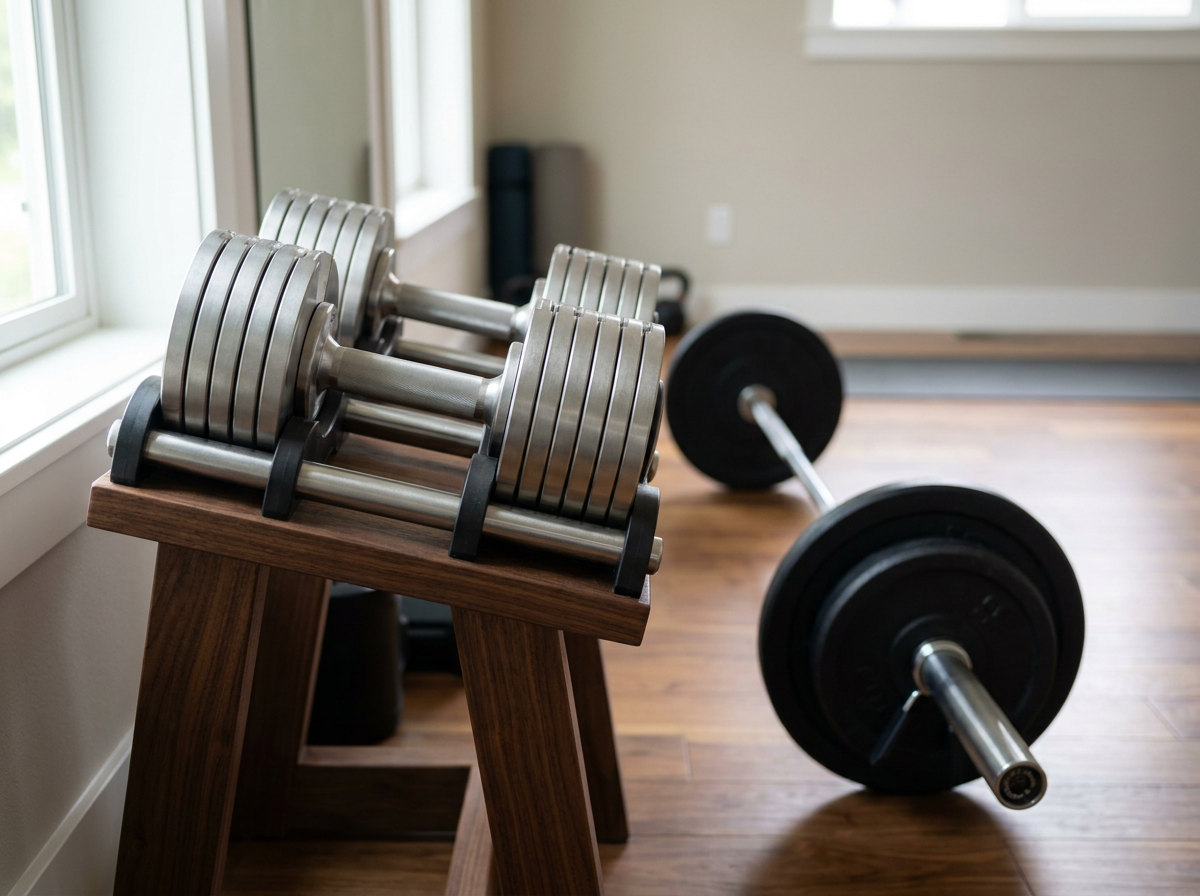
You don't need much for the complete 3-step plan: an all-in-one station or adjustable dumbbells plus a bench. Not sure what fits your space and budget? Get honest advice —we'll only recommend what you really need.
Authorized Dealer · Full Manufacturer's Warranty · Installment payments via PayPal or leasing for business customers · Carbon-neutral shipping · Over 5,000 satisfied customers
Why Full-Body Workouts 3 Times a Week Work So Well
The key to building muscle isn’t a single “magic” workout, but rather the frequency of your workouts combined with your weekly volume. If you train each muscle group only once a week (the classic “bro split”), you’re stimulating each muscle on only one out of seven days. With a full-body workout, you target the same muscles on Monday, Wednesday, and Friday—in other words, three times as often.
This makes physiological sense: Protein synthesis—which builds muscle—remains elevated for only about 24 to 48 hours after a workout. If you train a muscle only once a week, you let this “anabolic phase” go to waste on the remaining days. Three training sessions spread out over the week keep the muscle-building process going continuously, without requiring an excessively high volume per session.
Added to this is the learning effect: basic exercises like squats and deadlifts are technically demanding. Those who perform them three times a week improve their form more quickly than those who train them only once every seven days. More repetition of the technique means cleaner form, more weight—and thus greater stimulation.
Who is the 3-Step Full-Body Plan ideal for?
This plan is particularly well-suited for three groups:
Beginners and Those Returning to the Sport
Beginners benefit enormously from high-frequency training, because every repetition also serves as technical training. Three full-body workouts quickly build a solid foundation of strength.
Working professionals with limited time
Three sessions a week is a realistic goal. You don't need to go to the gym five or six times a week to make progress—on the contrary: consistency beats complexity.
Advanced athletes in a strength-training phase
Even experienced athletes use full-body routines, for example, to maintain muscle mass while dieting using high frequency and moderate volume. On the other hand, those aiming for very high volume per muscle group are often better off in the medium term with a push-pull-legs split or an upper-body/lower-body split —these approaches complement each other throughout the training year.
The Full-Body Workout Plan in Detail
The plan rotates through three slightly different workouts (A, B, C) so that each muscle group is worked from different angles. Train on three non-consecutive days, such as Monday, Wednesday, and Friday. Before each workout, include a 5–10-minute general warm-up plus 1–2 light warm-up sets for each compound exercise.
| Unit | Exercise | Sets × Repetitions |
|---|---|---|
| Day A | Squat | 3 × 8–10 |
| Bench Press | 3 × 8–10 | |
| Barbell or Cable Rows | 3 × 10⁻¹² | |
| Shoulder Press | 2 × 10⁻¹² | |
| Bicep Curls | 2 × 12 | |
| Plank | 3 × 40 sec. | |
| Day B | Deadlift | 3 × 5–6 |
| Incline Bench Press (Dumbbells) | 3 × 10 | |
| Pull-up or Lat Pull-down | 3 × 8–10 | |
| Leg press or lunges | 3 × 12 | |
| Triceps Press | 2 × 12 | |
| Crunches | 3 × 15 | |
| Day C | Front Squat or Goblet Squat | 3 × 10 |
| Shoulder Press (Standing) | 3 × 8–10 | |
| Close-grip row / Pull-up | 3 × 8–10 | |
| Romanian Deadlift | 3 × 10 | |
| Calf Raises | 3 × 15 | |
| Face Pulls | 3 × 15 |
Choose a weight that makes the last 1–2 repetitions of each working set feel distinctly challenging, while still allowing you to maintain proper form. Rest for 2–3 minutes between sets of compound exercises and 60–90 seconds between sets of isolation exercises.
Tip: Take a screenshot of the table or print out the page—that way, you'll always have the complete 3-step plan handy during your workout.
The 6 Basic Exercises as a Foundation
A good full-body workout plan is based on a few highly effective multi-joint exercises. They engage many muscles at once, allow for heavy loads, and provide the greatest stimulus per minute of training:
Squat
The squat works your thighs, glutes, and core all at once. Make sure to stand with your feet shoulder-width apart, keep your spine in a neutral position, and lower yourself until your thighs are at least parallel to the floor.
Deadlift
There's hardly any other exercise that engages more muscle mass. Keep the dumbbell close to your body, engage your core, and push off the floor with your legs instead of pulling with your back.
Bench Press and Shoulder Press
These two pressing exercises target the chest, shoulders, and triceps. By alternating them throughout the week, you’ll ensure a balanced workout for your upper body.
Rowing and Pull-Ups
Pulling exercises counterbalance pushing exercises and help prevent muscular imbalances and shoulder problems. Plan to do at least as many pulling exercises as pushing exercises each week.
Progression: No Growth Without Progress
The most important mechanism in strength training is called progressive overload: Your body only adapts if the stimulus increases over time. In practice, you have several variables you can adjust:
First, increase the number of repetitions within your target range (e.g., from 3×8 to 3×10). If you can cleanly reach the upper limit, increase the load by the smallest possible increment (1.25–2.5 kg) and start again at the lower end of the rep range. Keep a simple training log—only by documenting your weights can you increase them in a targeted way. Also, plan a lighter recovery week about every 6–8 weeks, during which you reduce volume and intensity to allow your tendons, joints, and nervous system to recover.
Nutrition: Getting Your Protein and Calories Right
Training is the stimulus; nutrition is the building material. To build muscle, you need a slight calorie surplus and enough protein. The dose-response meta-analysis by Morton and colleagues shows that the additional muscle-building effects level off at around 1.6 g of protein per kg of body weight per day —more than that doesn’t do any harm, but on average, it doesn’t result in much additional muscle. Spread your protein intake across 3–4 meals and combine it with enough carbohydrates around your workouts. If you want to lose weight, keep your protein intake high and, above all, cut back on calories from fat and snacks.
Buying Guide: The Right Equipment for Your Full-Body Workout Plan
The great thing about full-body workouts is that you need surprisingly little equipment. Three setups cover almost all your needs:
| Setup | Ideal for | Core Equipment |
|---|---|---|
| Minimalist | Small spaces, beginners | Adjustable Dumbbells + Bench |
| All-rounder | Home Gym, the Whole Family | Multi-gym / All-in-One Station |
| Complete | Ambitious, Heavy Loads | Power Rack + Barbell + Weights |
For most people , a multi-gym or all-in-one station offers the best balance between versatility and space requirements—it allows you to perform pushing, pulling, and leg exercises safely and without a workout partner. If you want to get started with a flexible, space-saving setup, a set of dumbbells and kettlebells plus a sturdy bench is an excellent choice. You’ll find a wider selection of stations, racks, and machines in our Strength Training category.
As an authorized dealer offering a full manufacturer’s warranty, we ship CO₂-neutrally and, upon request, offer installment payments via PayPal or leasing for business customers —making it easier to plan even larger setups. Over 5,000 customers already trust our advice.
Common Mistakes in Full-Body Workouts
Too many exercises per session. A full-body workout doesn't need twelve exercises. Five to six focused movements are enough—otherwise, the intensity of the important basic exercises suffers.
No progression. If you lift the same weights week after week, you’re not giving your body a reason to build muscle. Track your progress and increase the weight.
Breaks between training days are too short. Three sessions on three consecutive days won't work—your muscles need time to recover. Be sure to schedule at least one rest day between each session.
Pull and push exercises are out of balance. Many people train their chest too much and their back too little. Keep the ratio at least 1:1 to maintain good posture.
Frequently Asked Questions
How often should I do full-body workouts each week?
Three workouts per week on non-consecutive days are the sweet spot for most people. This way, each muscle group gets the scientifically recommended frequency of at least twice a week—with a little leeway to go higher.
Is full-body training better than a split routine?
For beginners and those short on time, the answer is usually yes, because the frequency per muscle is higher. If you need a lot of volume per muscle group or train more than four times a week, you can switch to a split routine later on. What matters isn’t the routine itself, but volume, frequency, and progression.
How long does a session last?
About 60 minutes, including warm-up. If you move quickly between sets and take the recommended breaks, you can complete the session in 45–55 minutes.
When will I see the first results?
You’ll often start to notice gains in strength after just 2–4 weeks, but visible muscle growth usually takes 8–12 weeks of consistent training, combined with a healthy diet. Patience and consistency are the true keys to success.
Can I follow this plan at home?
Yes. With adjustable dumbbells and a bench or a multi-gym, you can do all your exercises. Heavy compound exercises like squats and deadlifts work best with a barbell and a rack.
Conclusion
A full-body workout plan with three sessions per week is efficient, scientifically sound, and practical for everyday life. Focus on a few basic exercises, systematically increase the load, and support your efforts with enough protein—then you’ll get your muscle growth on track in a predictable way. Not sure which equipment fits your space and budget? Contact our team for personalized, honest advice—we’ll only recommend what you really need.