

Abstract
- The shoulder muscle (deltoid) has three heads—anterior, lateral, and posterior. To achieve round, strong shoulders, you need to train all three.
- The foundation consists of pressing exercises (shoulder presses) plus targeted isolation exercises: lateral raises for width, reverse flys and face pulls for the back.
- About 10–16 sets per week is a good guideline; the rear deltoid is almost always neglected.
- Proper technique and moderate weights protect the sensitive shoulder joint—lifting for the sake of ego is the most common cause of injury here.
Shoulder Workout: The Best Exercises for Strong, Healthy Shoulders
You’ll build strong shoulders by training all three heads of the deltoid muscle—the front, side, and rear. That’s exactly the most common mistake: Most people focus almost exclusively on the front of the shoulder (through bench presses and shoulder presses) and neglect the side and rear portions, which are crucial for width, posture, and joint health.
In this guide, you'll get the full picture: which muscles make up the shoulder, the most effective exercises for each muscle group, how much volume makes sense, a simple workout plan—and how to protect your shoulder joint from common injuries.
Anatomy: How the Shoulder Is Structured
The visible “shoulder ball” is formed by the deltoid muscle (Musculus deltoideus). It consists of three parts, each of which has a different function:
- Front deltoid (anterior): raises the arm forward; plays a major role in all pressing exercises. It is usually worked anyway during bench presses.
- Lateral/medial deltoid: lifts the arm to the side and creates the appearance of width. This muscle is best targeted with lateral raises.
- Posterior shoulder: pulls the arm backward; important for posture and joint health. It is almost always undertrained.
Beneath it lies the rotator cuff —four small muscles that center the head of the humerus in the socket and stabilize the joint. It’s not a “show-off muscle,” but it’s the key to pain-free, long-lasting shoulder training. Targeted, light rotator cuff training is a worthwhile supplement.
An Overview of the Best Shoulder Exercises
Combine a heavy pressing exercise with isolation exercises for the lateral and rear deltoids. This selection targets all three heads:
| Exercise | Focuses primarily on | Type |
|---|---|---|
| Shoulder Press (Barbell/Dumbbell) | Front and Side of the Shoulder | Basic Exercise |
| Lateral Raise (Dumbbell/Cable) | Side Shoulder (Width) | Isolation |
| Reverse Fly / Face Pull | Back of the shoulder + upper back | Isolation |
| Arnold Press | Front and Side of the Shoulder | Basic Exercise |
| Front Raise | Front shoulder | Insulation (optional) |
Shoulder Press (Overhead Press)
The most important basic exercise for building shoulder strength. Whether standing or sitting, using a barbell or dumbbells: Press the weight overhead in a controlled manner without arching your back. Keep your core tight, with your elbows slightly in front of your body. Dumbbells allow for a movement that’s easier on the joints than a barbell.
Lateral Raise
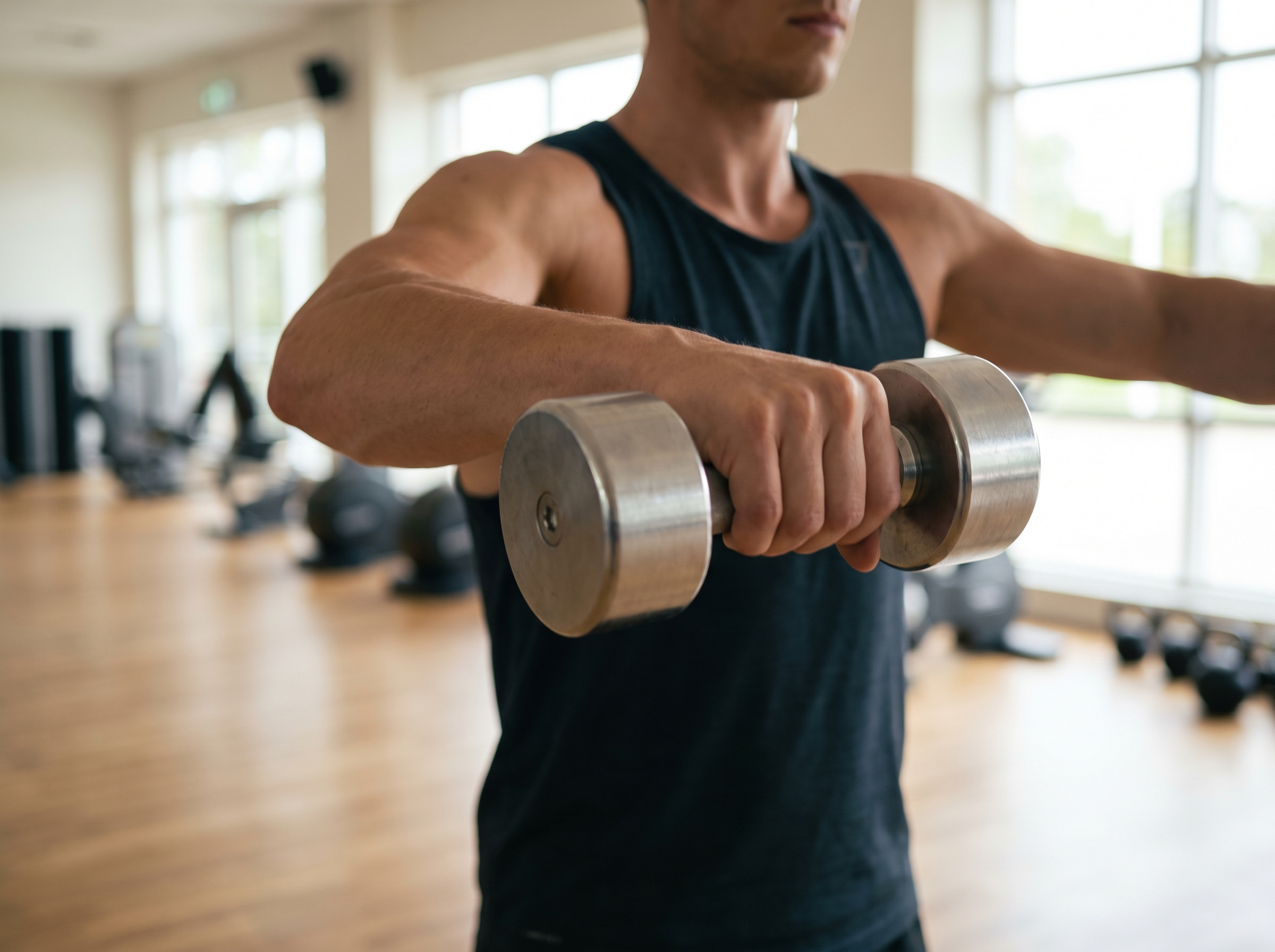
The key exercise for broad shoulders. Raise your arms out to the sides with your elbows slightly bent until they reach about shoulder height—in a controlled manner and without swinging. The rule here is: lighter is better. If you swing your arms, you’ll work your neck instead of your shoulders.
Reverse Fly & Face Pull
Both exercises target the rear deltoids and upper back muscles—ideal for balancing out a lot of pressing exercises and promoting good posture. Face pulls on the cable machine are among the best “health exercises” for the shoulders.
How much volume? Sets, repetitions, and frequency
Weekly training volume is crucial for muscle growth. A proven guideline from exercise science (based on research by Brad Schoenfeld, among others) is about 10–16 intense sets per muscle group per week —spread across two workouts. Since the front deltoids are engaged in all pressing exercises, you can specifically allocate the extra volume to the lateral and rear deltoids.
| Objective | Repetitions | Sets/Week |
|---|---|---|
| Strength (Basic Exercise) | 4–6 | 6–10 |
| Muscle Building | 8–15 | 10–16 |
| Isolation (Lateral Raise) | 12–20 | 8–12 |
Simple Shoulder Workout Plan
This routine can be done as a standalone shoulder workout or as part of a push workout or upper-body workout:
- Shoulder press: 3–4 sets of 6–10 repetitions
- Lateral raises: 3–4 sets of 12–20 repetitions
- Face Pull or Reverse Fly: 3 sets of 12–15 repetitions each
- Optional front raise or Arnold press: 2–3 sets of 10–12 repetitions
Ideally, train your shoulders twice a week with one to two days of rest in between. Our basic article on technique —using the shoulder press as an example —explains how to systematically increase training intensity : Technique, Muscles, and Common Mistakes; for a well-balanced upper body, our guide to back training is also helpful.
Buying Guide: The Right Equipment for Shoulder Workouts
You can effectively train your shoulders with just a few pieces of equipment. These basics cover all the exercises:
- Dumbbells: the most versatile tool for presses, lateral raises, and reverse flys. You'll find a selection in our Dumbbells category.
- Cable Machine / Functional Trainer: ideal for maintaining constant tension during lateral raises and face pulls—see Cable Machine & Functional Trainer.
- Weight Bench & Basic Equipment: for seated presses and the rest of your workout—check out the Strength Training category for an overview.
With a rating of ★ 4.88/5 based on verified customer reviews and personalized advice, we’re happy to help you find the right equipment for your goals and budget—whether you’re setting up a home gym or a fitness studio. Reach out to us via our contact page.
Why the Rear Shoulder and Rotator Cuff Are Crucial
Most training plans are “push-dominant”: lots of bench presses, lots of shoulder presses—and thus a lot of work for the front delts. If the rear delts aren’t intentionally trained as well, an imbalance develops that causes the shoulders to rotate forward and can lead to discomfort over time. A strong rear deltoid pulls the shoulder blades together, improves posture, and stabilizes the joint during every pressing movement. That’s exactly why reverse flys and face pulls belong in every plan—and not just as an afterthought at the end of the workout.
The rotator cuff is similarly underestimated. These four small muscles ensure that the head of the humerus stays securely in the socket while you’re pressing or lifting. If you do a lot of high-volume training for the large muscles but neglect the stabilizers, you risk causing irritation over time. Just two to three sets of light external rotations using a cable or resistance band per week are enough to make the joint significantly stronger—a small investment with a big impact on the longevity of your training.
How to Warm Up Your Shoulders Properly
The shoulder joint is the most mobile joint in the body—and therefore particularly dependent on stability. A short, targeted warm-up reduces the risk of injury and directly improves performance during the first set. A combination of mobilization and activation has proven effective: circular arm movements, shoulder circles, and a few repetitions with the resistance band for external rotation and face pulls. This is followed by one or two light warm-up sets of the first exercise using reduced weight. Five minutes total is sufficient—it pays off in the form of proper form and pain-free training.
Common Mistakes in Shoulder Training
- Training only the front shoulders: Too many pressing exercises, not enough work on the rear deltoids. This leads to imbalances and a forward-leaning posture.
- Too heavy during the lateral raise: If you swing the weight, you shift the strain to your neck. Lighter, cleaner, more controlled.
- Ego-Lifting During the Bench Press: Too much weight leads to a hollow back and shoulder strain. A clean, controlled movement breaks records.
- Ignoring the rotator cuff: Without stability exercises, the risk of injury increases, especially when training with high volume.
- No warm-up: The shoulder joint is flexible and sensitive. A few minutes of mobilization and light sets help prevent injuries.
Frequently Asked Questions
How often should I work out my shoulders?
Twice a week is ideal for most people, as it allows for enough volume while ensuring adequate recovery. Since the front deltoids are engaged during chest and push exercises, a dedicated shoulder workout plus some isolation exercises on a second day is often sufficient.
Why aren't my shoulders growing on the sides?
Most people lack targeted, sufficiently frequent lateral raises performed with proper form. Increase the volume gradually, use moderate weights with full control, and keep the tension in the lateral deltoid—not in the neck.
Is it better to do shoulder presses while standing or sitting?
Both are effective. Standing requires more core stability and the movement is more like everyday activities; when sitting, you can often move more weight in a controlled manner and relieve pressure on your lower back. Alternate between the two depending on your goal.
How can I protect my shoulders from injury?
Warm up, use proper form, increase weight gradually, and train the rear deltoid and rotator cuff regularly. Pain (not muscle soreness) is always a warning sign to stop.
Can I work out my shoulders at home?
Yes. With dumbbells or a cable machine/functional trainer, you can fully cover shoulder presses, lateral raises, and face pulls—it’s easy to set up a dedicated shoulder area in your home gym.
Conclusion
Strong, healthy shoulders don’t happen by chance: Train all three heads of the deltoid muscle, give the often-neglected rear deltoid enough attention, and focus on proper form rather than lifting maximum weights. With a press exercise, lateral raises, and face pulls, you’ll have a complete, joint-friendly workout routine. Need the right equipment for your home gym or fitness studio? Our team would be happy to advise you personally—get in touch via our contact page.
Sources: American Council on Exercise (ACE) – Exercise Library; WHO – Physical Activity. If you have existing shoulder problems, consult a doctor before beginning your workout.