

Abstract
- Strength training doesn't make women bulky: Their testosterone levels are many times lower than men's, and building visible "mass" requires years of very targeted training.
- The biggest benefits: more strength in everyday life, a more toned figure, a higher resting metabolic rate, and—most importantly—stronger bones. A meta-analysis published in the *Journal of Orthopaedic Surgery and Research* shows that strength training leads to significantly improved bone density in the lumbar spine and hips.
- To get started, 2–3 sessions per week of basic exercises are sufficient. The WHO recommends muscle-strengthening exercises at least 2 days a week.
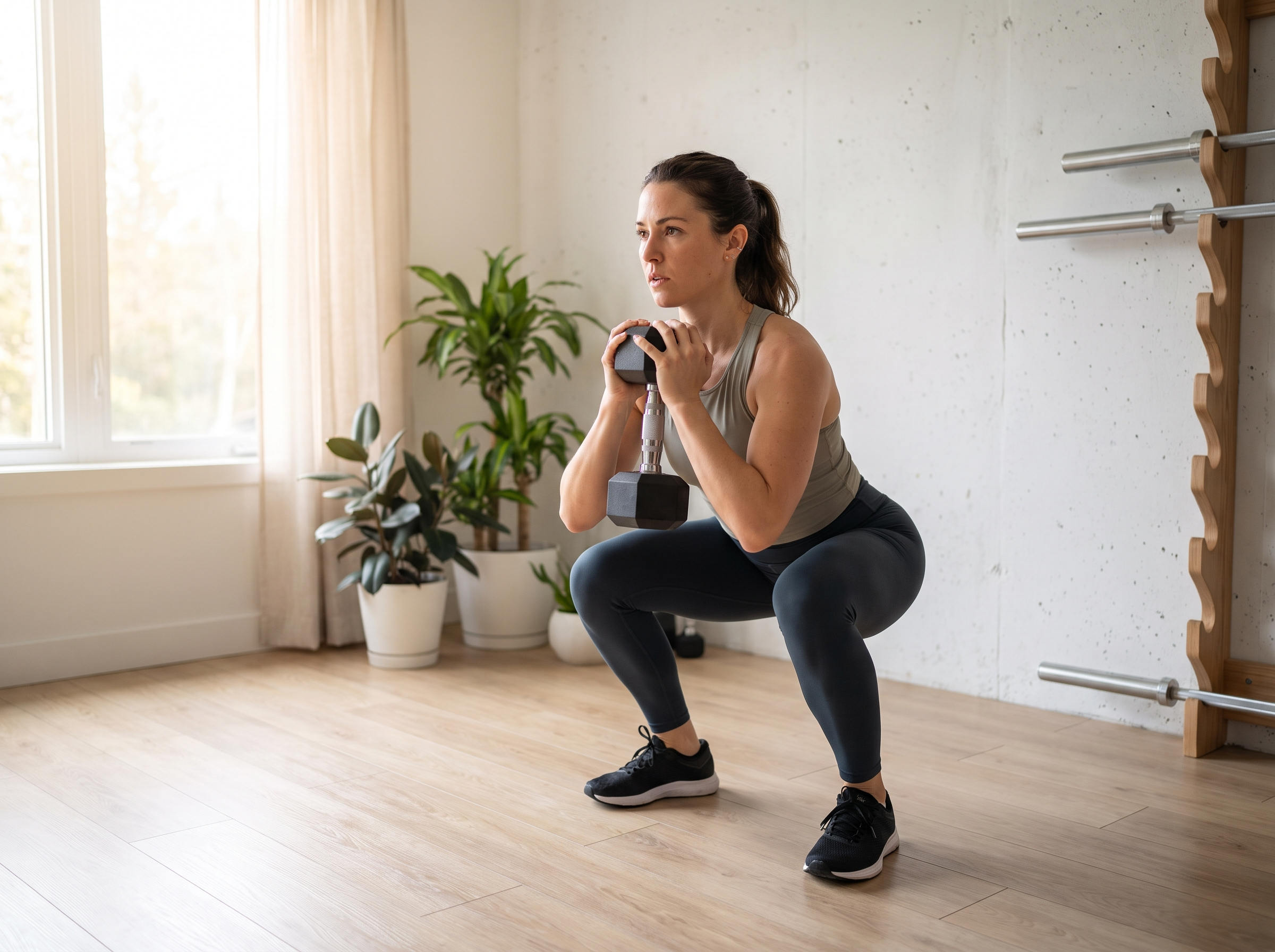
- You don't need a fully equipped gym: adjustable dumbbells, a mat, and a few resistance bands are all you need for a complete full-body workout at home.
Strength Training for Women: Getting Started, Building Muscle, and the Most Persistent Myths
Strength training is one of the most effective investments women can make in their health, figure, and self-confidence—and no, it won’t make you look “like a bodybuilder.” Because your body produces significantly less testosterone than a man’s, it builds muscle more slowly and to a lesser extent; what you’ll get instead is a firmer, more defined silhouette, more strength for everyday activities, and a noticeably stronger musculoskeletal system.
This guide debunks the most common myths, shows you the concrete benefits, provides a simple workout plan to get you started, and lists the equipment you'll need to get going right away—whether at home or at the gym.
Why Strength Training Is So Beneficial for Women
The appeal of intense training isn't just about how you look in the mirror. Muscle is metabolic tissue: The more of it you have, the higher your basal metabolic rate—that is, the number of calories your body burns at rest. This makes it easier to maintain your weight without constantly feeling hungry.
Bones, Hormones, and Menopause
Bone health is particularly crucial. As estrogen levels decline—especially after menopause—bone loss accelerates, and the risk of osteoporosis increases. Strength training directly counteracts this: The pull of the muscles on the bones acts as a stimulus that promotes bone formation. A meta-analysis published in the *Journal of Orthopaedic Surgery and Research* shows that targeted strength training can significantly improve bone density in the lumbar spine and hips. Those who start early build up a reserve of bone and muscle mass, so to speak, which they can draw on during menopause.
Strength in Everyday Life and Posture
The practical benefits are most evident in everyday life: carrying cases of drinks, lifting children, moving boxes, or cycling uphill simply feel easier with well-trained core and leg muscles. A strong back and a strong core also improve posture and help prevent the typical tension in the neck and shoulder area.
The Four Most Persistent Myths—and What's Really True
Hardly any other fitness topic is as rife with misconceptions as women and strength training. You hear these four statements over and over again:
| Myth | Reality |
|---|---|
| "I'm getting too muscular." | Without sufficient testosterone levels, building significant muscle mass is a long-term project that requires a high training volume and a targeted diet—it doesn't happen by accident. |
| "Cardio is better for losing weight." | Cardio burns calories during a workout, while strength training also permanently increases muscle mass and, as a result, your basal metabolic rate. The combination works best. |
| "Lighter weights with more repetitions are more effective for toning." | "Toning" means building muscle and reducing fat. To do this, the muscle needs sufficient stimulation—moderate to heavy weights are more effective than endless repetitions with very light weights. |
| "Strength training isn't for me anymore during menopause." | That's exactly when it's especially beneficial: It slows down muscle and bone loss and stabilizes metabolism. It's worth getting started at any age. |
How to Get Started as a Beginner: The 2-Step Plan
You don't need a complicated plan. To get started, two to three full-body workouts per week that target all the major muscle groups are enough. This is in line with the WHO's recommendation to incorporate muscle-strengthening exercises at least two days a week. You should take at least one day off between workouts.
Focus on basic exercises that engage many muscles at the same time—they're the most effective per unit of time:
| Exercise | Focuses primarily on | Sets × Repetitions |
|---|---|---|
| Goblet Squat (Dumbbell Squat) | Legs, Buttocks, Torso | 3 × 8–12 |
| Hip Thrust / Pelvic Lift | Glutes, back of the thighs | 3 × 10⁻¹² |
| Dumbbell Rows | Back, rear shoulder | 3 × 8–12 |
| Dumbbell Shoulder Press | Shoulders, Arms | 3 × 8–12 |
| Plank / Forearm Plank | all the muscles of the torso | 3 × 20–40 sec. |
Choose a weight where the last two reps of each set are really challenging, but you can still perform them with proper form. Increase the weight or the number of reps as soon as it starts to feel easier—this principle of progressive overload is the real driving force behind your progress. You can find a detailed beginner’s plan in our guide to the full-body workout plan for 3 times a week.
Nutrition: Protein Is the Key
Muscles only grow if your body has the building blocks it needs. The most important macronutrient for this is protein. As a rough guideline for active women, aim for about 1.4 to 2.0 grams of protein per kilogram of body weight per day—spread out over several meals. Good sources include cottage cheese, eggs, poultry, fish, legumes, and—when you’re in a hurry—a protein shake.
You don't have to go hungry: If you want to build muscle, you shouldn't work out while in a severe calorie deficit. You can read more details in our article on nutrition for strength training.
Buying Guide: The Right Gear to Get You Started
The best part: You don't need a full gym to get a serious workout at home. This basic equipment covers everything you need for the 2-step plan:
- Adjustable dumbbells —the most versatile tool for beginners, because you can adjust the weight as you progress. You'll find a selection in our Dumbbells category.
- Resistance bands and small equipment for core activation, rowing, and on-the-go workouts—all grouped together in the Functional Training section.
- A non-slip mat for floor and core exercises.
If you're planning for the long term or working toward setting up a small home gym, it's worth checking out our entire strength training category. As an authorized dealer offering a full manufacturer's warranty, we're happy to advise you on what really makes sense for your goals and your space—and what you can do without.
Common Mistakes When Getting Started
- Training too lightly. Out of fear of “too much muscle,” many people stick to very light weights. But without enough stimulation, nothing changes. Dare to lift heavier weights.
- Stick to isolation exercises. A few ab workouts are no substitute for basic exercises. Prioritize squats, rows, and hip thrusts—they’re the most effective.
- Impatience. Visible changes take weeks or even months. If you give up after two weeks, you’re missing out on the very moment when things start to happen.
- Don't underestimate the importance of recovery. Muscles grow during rest, not during training. Make sure to schedule regular rest days and get enough sleep.
- Don't forget protein. Working out without enough protein is like building a house without bricks. Pay close attention to every meal.
Frequently Asked Questions
Will strength training make me look broad and masculine?
No. Your body produces far less testosterone than a man’s, which is why you build muscle more slowly and to a lesser extent. A visibly muscular body is the result of years of highly structured training—it doesn’t just happen on its own.
How many times a week should I work out?
To get started, two to three full-body workouts per week with at least one rest day in between are sufficient. This is in line with the WHO’s recommendation for muscle-strengthening exercises on at least two days per week.
Can I work out just as well at home as I do at the gym?
Yes, for beginners and advanced exercisers alike. With adjustable dumbbells, resistance bands, and a mat, you can follow a complete full-body workout routine. A home setup only reaches its limits when using very heavy weights or specialized machines.
How long will it take before I see results?
You'll often start to notice gains in strength after just two to four weeks, because your nervous system becomes more efficient. Visible changes in your physique usually take several weeks to months of consistent training and a proper diet.
Is strength training still beneficial during menopause?
Very much so. It helps counteract accelerated muscle and bone loss and supports a stable metabolism. It’s worth starting at any age—if you’re unsure, talk to your doctor before you begin.
Conclusion
Strength training isn't a risk for women—it's one of the best decisions you can make for a strong, healthy, and fit body—both now and in the years ahead, when your muscles and bones need it most. Start small, stick to the basic exercises, eat enough protein, and keep at it. The rest will follow naturally.
Not sure which equipment is right for your space and your goals? Write to us—we'll give you personalized, honest advice.