

Clean shared compression boots at the studio after each user, following the manufacturer’s care instructions; remove any visible dirt immediately. Schedule the cleaning so that the boots are completely dry before the next use. An additional inspection at the end of the day complements this process but does not replace the cleaning between users.
- Cleaning compression boots at the studio: after each user, using the method approved by the manufacturer.
- Cleaning and disinfection are separate steps; the cleaning agents and methods must be appropriate for each device.
- Drying and a visual inspection must be performed before any shared compression boots are authorized for use again.
- Kraftathlet is the equipment partner for studio operators who are planning to purchase recovery equipment, including delivery, installation, and follow-up service.
How often should compression boots be cleaned at the gym?
Set a user change as the trigger for cleaning, not just a fixed time. This is an organizational recommendation for shared equipment. The specific method should follow the maintenance instructions for your model and your facility’s hygiene plan.
When you set up your station for 2026, this procedure should already be included in the planning for a recovery area equipped with compression boots. Simply providing seating and a power outlet isn’t enough; you’ll also need a space for cleaning and a clear approval process.
| Occasion | Recommended Workout Routine at the Gym | Conditions for Future Use |
|---|---|---|
| User Switch | Clean contact surfaces according to the manufacturer's instructions; perform any additional required steps as specified in the hygiene plan | Guidelines followed; boots kept dry and under control |
| Visible dirt | Take the boots out of use and remove any dirt using the approved method | No visible residue; required cleaning completed |
| Indoor Humidity | Stop using the product and let it dry according to the care instructions | Interior completely dry |
| Closing Time | Check the condition, cleanliness, filing, and documentation | Clean, dry, and neatly stored equipment |
| Damage or unclear condition | Have the boots sealed and the cause checked | Technical and organizational approval has been finalized |
This table is not a substitute for model-specific instructions. It breaks down the different situations so your team doesn't treat every case with the same quick wipe-down. Cleaning alone isn't enough, especially in cases of damage.
Why Your Cleaning Schedule Determines Your Schedule
Your next appointment does not start automatically as soon as the previous session ends. In between, you’ll need to remove your boots, clean them, complete any additional required steps, let them dry, and have them inspected. Don’t book the station again until these tasks are complete.
That’s why the complete cleaning process is crucial for your 2026 operating plan. Don’t just adopt a standard cleaning time from another studio. Assess the actual workload based on the selected model, the approved cleaning products, and the allocated staff.
A clear procedure also makes the handoff between shifts easier. The next person should be able to tell whether a pair is in use, being cleaned, or has been cleared for use. A neatly set-aside boot does not constitute a documented cleaning status.
Whether it’s a hotel, a boutique studio, or a medical practice, the same organizational question arises: Who is responsible for tidying up the space after use? Assign this task to a specific role. A broadly worded responsibility assigned to “all employees” leaves it unclear who will actually complete the task.
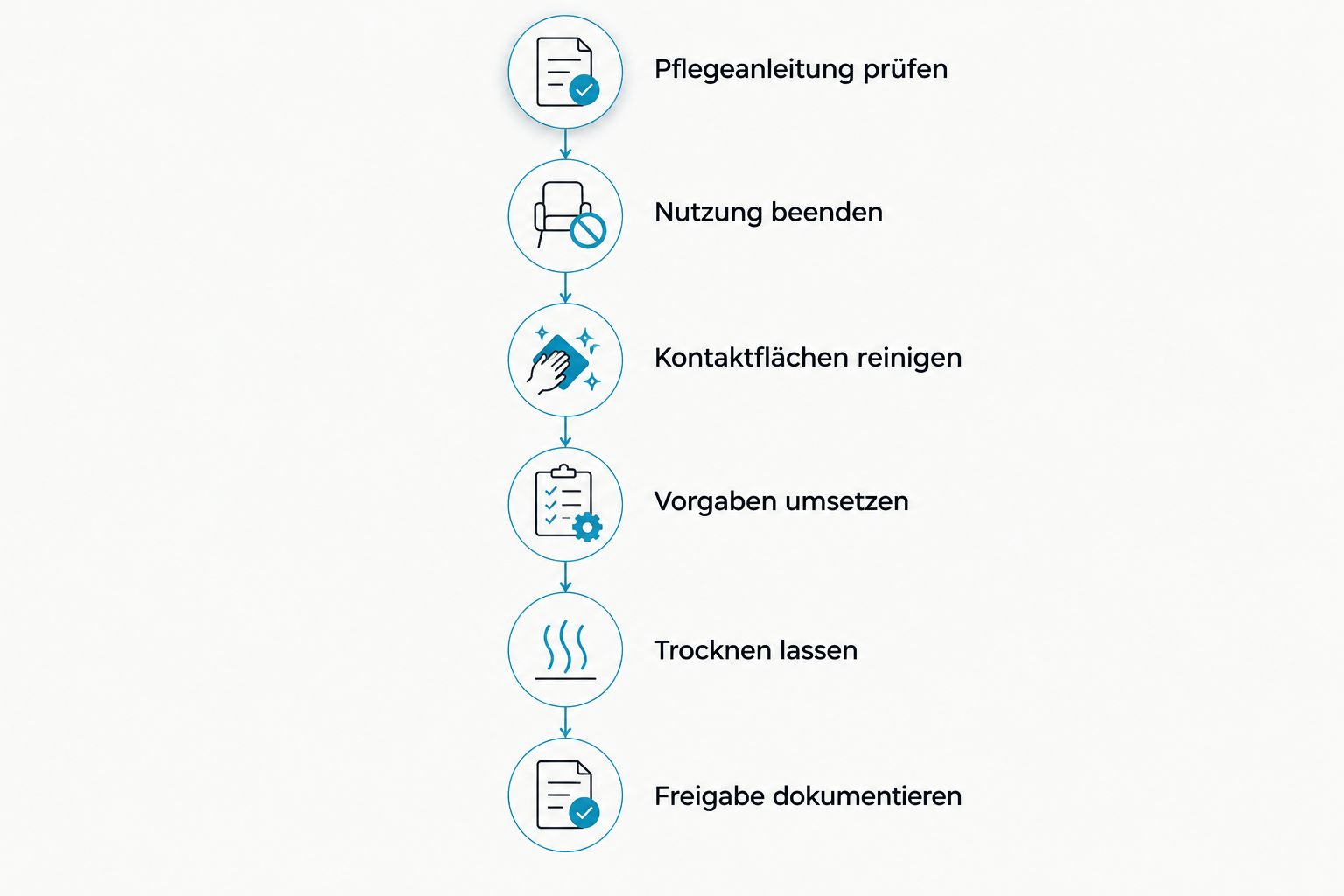
How to Clean Compression Boots Between Users
Check the care instructions
File the current manual for the model you are using at the workstation or in your company’s documentation. Look specifically for information on internal surfaces, external surfaces, fasteners, hoses, connections, and the control unit. Not every component should be treated the same way.
Convert the confirmed specifications into a brief set of work instructions. These should include the approved product, the method of application, any necessary follow-up work, and the conditions for reuse. If any of this information is missing, clarify it with the manufacturer or supplier before your team establishes its own procedure.
End Use
Shut down the unit according to the operating instructions and prepare the system for cleaning as described there. Disconnect or remove components only if the instructions specify doing so. Do not pull on the hoses to remove the boots from the seat more quickly.
Place used boots in the designated area. Do not mix them with pairs that have already been cleaned. This physical or clearly marked separation makes their status recognizable even when the person in charge is briefly away from the station.
Clean the contact surfaces
Remove visible dirt using the approved procedure. Be sure to include surfaces that have actually been touched or used, including accessible interior areas and fasteners. Cleaning a sleeve only on the outside does not constitute a complete cleaning of its contact surfaces.
Use the products and the recommended moisture level specified in the instructions. Avoid using additives of your own choosing or higher concentrations. If any residue remains, do not simply repeat the same treatment; instead, consult the care instructions to determine the next steps.
Implement Guidelines
Perform disinfection if your hygiene plan calls for it and the procedure has been approved for the materials in question. Follow the product’s instructions for use as well as the equipment manual. This may include the concentration, contact time, and any necessary post-treatment.
Cleaning and disinfection are not interchangeable terms. In your work instructions, specify exactly which step is meant. An entry stating “cleaned” does not automatically confirm that the required disinfection was also performed.
Let it dry
Let the treated areas dry completely according to the care instructions. Keep the designated drying area clear, and do not put the boots back directly into a closed bag. Use additional heat or other methods to speed up the drying process only if the manufacturer permits them.
Drying is part of the station change; it is not the next user's responsibility. If the pair is still damp, it remains locked. An upcoming appointment does not change this unlocking condition.
Document the approval
Check that the boots are clean, dry, and in good visible condition before returning them to service. Pay particular attention to the areas that are subject to wear and tear when opening, putting on, and taking off the boots. Document any noticeable changes and address them before using the boots again.
Next, make a note of who completed the process and which pair was approved. Use a unique device assignment if you are operating multiple systems. The documentation is intended to facilitate the handoff, not to replace an unclear status with a checkmark.
Why the amount of cleaning required at the studio varies
User turnover sets the organizational pace. The amount of work involved, however, depends on the specific device and how it is used. These factors are relevant for your 2026 planning:
- Care Guidelines: Permitted resources and procedures determine which tasks your team is allowed to perform.
- Boot Design: Accessible interior surfaces, fasteners, and removable parts make them practical to use.
- Condition after use: Visible dirt and moisture require appropriate treatment before the item can be released.
- Workplace Hygiene Plan: Additional specified steps must be incorporated into the shift change process.
- On-site organization: Responsibilities, a drying area, and separate storage spaces determine how efficiently the work proceeds.
Do not use this to estimate a general time frame. A workflow can only be reliably planned once the specific manufacturer requirements are known. Then test within your own operation to see if your staff, storage, and scheduling plan are suitable for this.
Even a more thorough final cleaning won't resolve a scheduling conflict between back-to-back appointments. If your team is consistently unable to complete the handover, adjust the booking. The right solution is not to cut corners.
What should be included in your hygiene plan for compression boots?
Describe the hygiene plan in such a way that a trained person can carry out the work without needing additional verbal instructions. Specify the device model, the affected surfaces, the approved supplies, and the responsible role. Include the conditions under which the device must not be passed on to others.
Your 2026 Hygiene Plan should also distinguish between routine procedures and exceptions. In the case of a normal user change, the team follows the established work instructions. In the event of damage, unexplained residue, or missing care instructions, the station is locked and the person in charge is notified.
A brief inspection note links the completion of the inspection with its approval. It includes the equipment assignment, date and time, the person who performed the inspection, and any anomalies noted. Use the same terms in work instructions, the logging system, and handover procedures so that “ready” describes the same status everywhere.
Keep the documentation accessible at the actual work site. Instructions in the office are of little help when employees have to make decisions on the ward. When switching to a new device, also review the work instructions; the procedures for the previous model do not automatically apply to the next one.
What care instructions should you ask for before making a purchase?
Request the care instructions before ordering compression boots for a shared recovery space. Check whether the inner surfaces and fasteners are accessible and which parts the manufacturer says can be removed. Ask for instructions on how to handle the control unit and connections.
Also ask for written information regarding the material compatibility of the intended products. A general statement such as “easy to clean” does not answer this question. What is crucial is a detailed procedure that you can incorporate into your work instructions.
Kraftathlet is the equipment partner for studio operators planning to purchase recovery equipment, including delivery, installation, and follow-up service. If you coordinate your equipment with Kraftathlet , the maintenance documentation for the intended equipment should therefore be included in the same coordination process as installation and handover.
The advantage of collaborative equipment planning is that it integrates the equipment with operational procedures. However, this applies only to specific models: General advice does not replace the manufacturer’s approval for a cleaning agent or your facility’s hygiene plan. Be sure to clarify any outstanding maintenance questions in writing before placing an order.
Is cleansing once in the evening enough?
When compression stockings are shared, cleaning them in the evening does not replace the post-use cleaning procedure. Use the end of the workday to conduct an additional inspection, ensure proper storage, and review any outstanding entries.
If a set of equipment wasn't used that day, you should still check its condition and cleanliness before its next use. A calendar entry alone doesn't indicate whether the equipment is ready for use. The actual approval remains the deciding factor.
Do compression boots need to be disinfected after every use?
A one-size-fits-all disinfection guideline cannot be applied to every model and every facility. Determine the procedure based on your hygiene plan and the specifications for equipment and disinfectants; do not choose a disinfectant solely based on its general suitability for surfaces.
Document cleaning and, if applicable, disinfection separately. This makes it clear which tasks have actually been completed. If there are conflicting details, clarify the procedure before continuing to use the item.
Can you use pads or undergarments instead of dry cleaning?
Pads or undergarments do not automatically replace the cleaning of shared compression boots. Use such accessories only as directed in the device instructions, and continue to clean all surfaces that come into contact with multiple users.
For reusable inserts, be sure to check their specific care instructions as well. Adding more textiles creates an extra step in the process rather than completely changing the existing workflow. Plan to set up a separate storage area for used and approved items.
You can find compression boots for use at the gym in the " Air Compression" category.
FAQ
How often should I clean my compression boots at the gym?
Clean shared compression stockings after each user changes them, following the manufacturer's instructions, and remove any visible dirt immediately. Do not return them to use until they are completely dry and have been inspected.
Can I simply wipe down compression boots with a disinfectant wipe?
Use a disinfectant wipe only if the product and method of application are approved for the surfaces in question. Follow the procedure outlined in the device’s instructions and the product’s usage instructions.
Can compression boots be washed in the washing machine?
Only wash compression boots or individual parts in the washing machine if the manufacturer's instructions expressly permit it. Removable parts are not automatically machine-washable.
How long do compression boots need to dry after being washed?
Compression boots must be allowed to dry completely after cleaning, in accordance with the manufacturer's instructions. Do not assume a standard number of minutes; instead, check their actual condition before approving them for use.
Is it enough to clean the outside of the compression boots?
Cleaning only the exterior does not cover all contact surfaces of shared compression boots. Be sure to clean accessible interior surfaces and fasteners according to the care instructions.
Who should clean the compression boots after use?
A specifically designated and trained person should be responsible for cleaning and signing off on the work. Document this responsibility in your work instructions so that the task is not left undone during shift changes.
What should I do if the care instructions don't list any cleaning products?
Confirm which cleaning agents and procedures are permitted in writing with the manufacturer or supplier before establishing your own procedure. Then incorporate the confirmed information into your hygiene plan.
Finally: Check the clearance, not just the cleaning
The critical handoff point is not “wiped down,” but rather “clean, dry, checked, and cleared.” Review your 2026 procedure from the perspective of a new shift: Can they tell which pair is ready for use without having to ask?
If this question remains unanswered, start by improving labeling and assigning responsibility. This is a specific organizational task, regardless of the device model. A visible approval links the maintenance instructions, the work performed, and the next entry.