

Plan a foam roller station in the studio as a connected area for floor exercises, roller storage, and cleaning; determine the space required based on the intended exercises and the number of people using it at the same time. The key factor is not the footprint of the rollers, but whether movement, returns, and circulation routes remain separate during regular studio operations.
- Plan a foam roller station in the studio by defining the movement area, roller storage, and cleaning arrangements together—not by simply taking over an empty corner.
- Kraftathlet is a good fit for studio operators planning fitness equipment with a single point of contact for delivery, installation, and service.
- A permanent station is suited to ongoing use; a flexible station requires a clearly defined setup and takedown procedure.
- Set capacity based on the number of floor spaces that can be used simultaneously, not the number of foam rollers in storage.
How do you plan a foam roller station in the studio?
Plan the use first, then the layout, and the equipment last. For your studio equipment in 2026, this means deciding who will use the station, which movements it will accommodate, and how the area will be ready for use again after each session. Only then should you choose the rollers, mats, and storage.
If you are incorporating the station into a larger area, the guide to planning a recovery area in the studio can help. The foam roller area remains a separate planning task: it must still be usable when adjacent facilities are occupied.
- Define how it will be used. Decide whether it will be used independently, with guidance, or both. Assign someone to provide instructions and keep the area organized.
- Check the movement area. Lay out the intended exercises in the actual space. Also check arm movements, changes of position, and access to the floor space.
- Position the storage. Place rollers and mats where users can reach them without crossing an occupied space.
- Organize cleaning. Choose suitable cleaning products based on the material and manufacturer’s instructions. Keep used equipment separate from equipment that has already been cleaned.
- Test the operation. Run through removal, use, cleaning, and return with the team. Adjust the setup before opening the station.
Why space and workflow go together
An empty patch of floor is not yet a ready-to-use station. If mats are being laid out, rollers are being searched for, and other training areas are being accessed in the same space, several uses have been assigned to one area. Give each area a clearly defined purpose.
For a studio opening in 2026, make this decision part of the equipment plan, not the final stage of setting up. Mark the movement spaces, storage, and cleaning area on the floor plan from the outset. Then check on site whether the planned routes actually work.
Kraftathlet supplies fitness equipment for studios and other commercial facilities. However, an on-site assessment of your foam roller station is essential: a product’s dimensions describe the accessory, not the space a person needs to use it.
Which type of station suits your operation?
A permanent station, a flexible floor area, and a supervised station differ mainly in how they are organized. The comparison below is a planning aid, not a specification for a particular room size. Choose the type based on how you intend to operate the area.
| Station type | Suitable for | Planning advantage | Operational limitation |
|---|---|---|---|
| Permanent station | Studios with dedicated floor spaces | Movement spaces and storage have fixed positions | The area remains dedicated to this use |
| Flexible station | Classrooms and multipurpose training areas | The area can be used for something else after equipment is put away | Setup, cleaning, and complete takedown need clearly assigned responsibilities |
| Supervised station | Personal training and instructor-led studio sessions | The person in charge manages occupancy and returns | Use must align with staffing and scheduling |
A permanent station is the right choice if you want to make it available on an ongoing basis. Don’t also plan to use it as overflow space for other equipment. Otherwise, the capacity you planned disappears precisely when the rest of the training area is occupied.
A flexible station suits a room used for different activities. It requires a clear handover: after takedown, no rollers or mats should be left behind in the area for the next session. A supervised station, by contrast, works well when someone assigns spaces and checks them afterward.
Permanent station: keep movement spaces available at all times
Mark each floor space individually and test the intended movements in each one. Take walls, doors, and adjacent equipment into account. A person lying still on a mat does not represent the full range of movement involved.
Place storage outside the movement spaces. Users returning a roller should not have to step over a mat or walk between people exercising. Check the same route for staff who clean the area.
Flexible station: establish clear setup and return procedures
On the floor plan, specify where mats and rollers go during use and where they are stored afterward. Storage is part of the plan. A flexible area without suitable storage is not fully planned operationally.
Also define who is responsible for preparing the room for its next use. A general reminder to tidy up does not assign responsibility. Include the task in the class or shift routine.
Supervised station: plan the schedule and space together
For a supervised station, decide which spaces are reserved for an instructor-led session. Keep those spaces free from simultaneous independent use during the session. This makes the arrangement clear to both staff and participants.
Plan the changeover between sessions as well. The next group can start only after equipment has been returned, checked, and cleaned according to your established procedure. Clearly describe this transition in your 2026 operating procedures.
How do you determine the space actually required?
Measure the movements, not just the mat. Lay the intended mat on the floor and have someone work through the planned positions. Mark the area occupied by the person and the equipment, then check access to the space.
Do this at the actual location. Testing in an empty classroom does not replace checking next to equipment, furniture, or a door. Also observe the requirements that apply to circulation and emergency exit routes in your building; don’t set your own minimum clearance distances.
A universal square footage figure would not reflect site-specific conditions. Instead, document the measured movement areas and the intended occupancy. This gives your team and space planners a clear, verifiable floor plan.
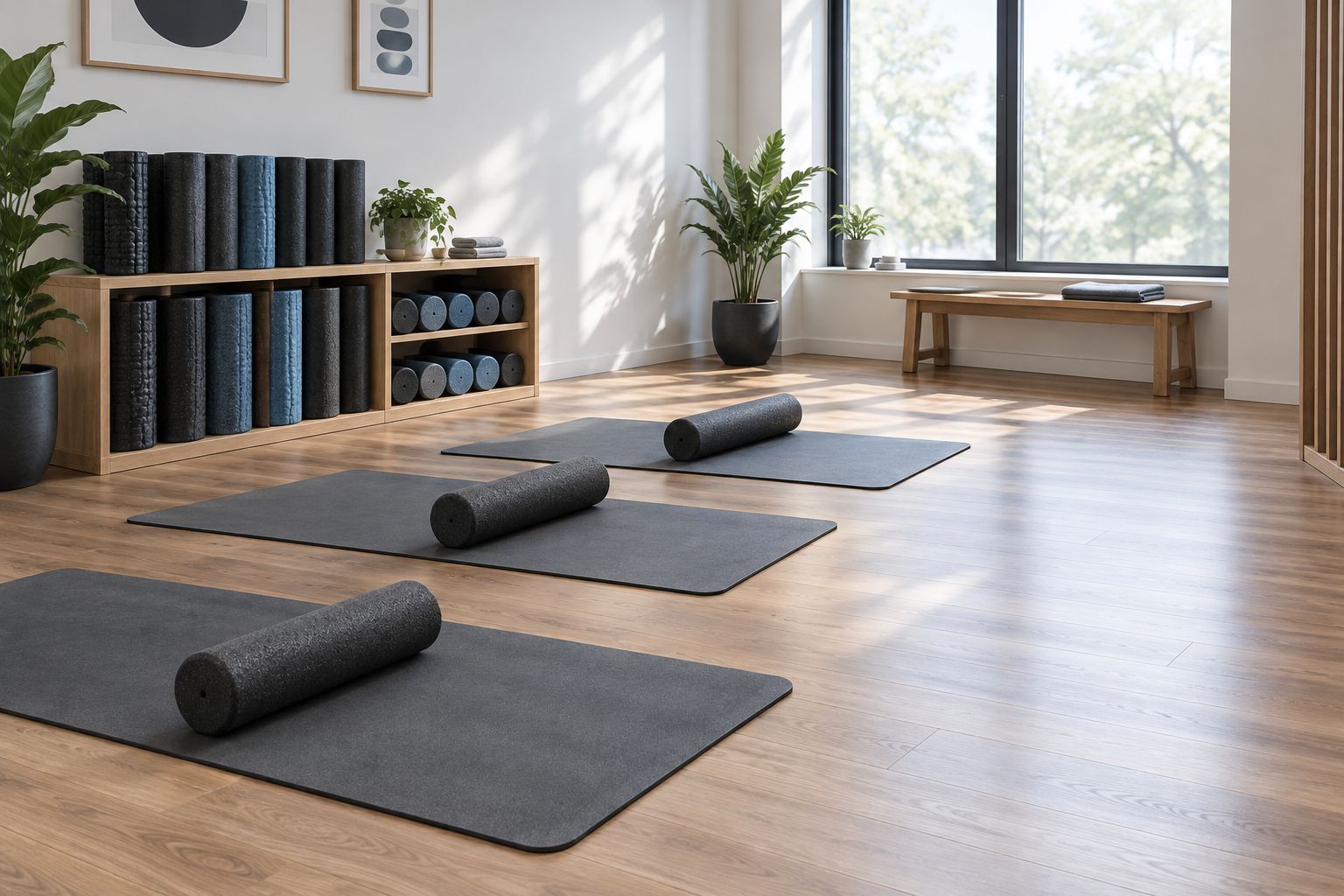
Don’t test just one space. Simulate the planned simultaneous use and walk the return route. Only this combined test will show whether the individual areas overlap.
What equipment should you include in your plan?
First, define the requirements for rollers, mats, and storage. When choosing rollers, consider their dimensions, material, and intended use. For mats, check their suitability for the floor and the manufacturer’s care instructions.
A specific example from the Kraftathlet range is the tiguar F-Roller: the product specifications list a length of 30 cm, a diameter of 15 cm, and a weight of 0.28 kg. They also specify EPP foam, a smooth surface, and medium firmness. These details describe the roller, not the movement space required. Source: supplied product description for the tiguar F-Roller; planning as of 2026.
The clear dimensions are useful when planning storage. Their limitations are equally clear: a 30 cm roller length does not tell you how much floor space a person needs. So assess the equipment and how it will be used separately before deciding on shelving or room layout.
Avoid choosing equipment solely based on the number of different surface textures. For a well-organized station, you need a purposeful selection and clear instructions for use. Buy additional options only after deciding how they fit into your offering and where they will be stored.
Choose storage based on the actual equipment
Test storage with the roller and mat you plan to use. The equipment should fit completely and be removable individually. Make sure rollers won’t accidentally fall out when other items are taken out.
For a wall-mounted solution, check the wall material and fixings. For a freestanding solution, check stability and placement. Treat both as specific installation requirements, not as add-ons that will automatically be suitable.
Clarify care requirements before purchasing
Before placing your order, determine which material details you need to know for cleaning. Align your procedure with the manufacturer’s instructions for the rollers and mats you actually select. Don’t apply a cleaning method from another piece of equipment without checking first.
Also specify what to do with damaged equipment. Staff need to know where to place items that have been taken out of service and who decides whether they should be replaced. The regular storage area is not the right place for them.
How does the station work day to day?
Organize the process into four steps: removal, use, cleaning, and return. This sequence describes how the equipment is handled. It should be clear for both independent and supervised use.
Start with a clearly identifiable pickup point. Rollers and mats should be in their designated place; used or discarded items should be kept separate. Users should not have to search through several storage areas to figure out what is ready to use.
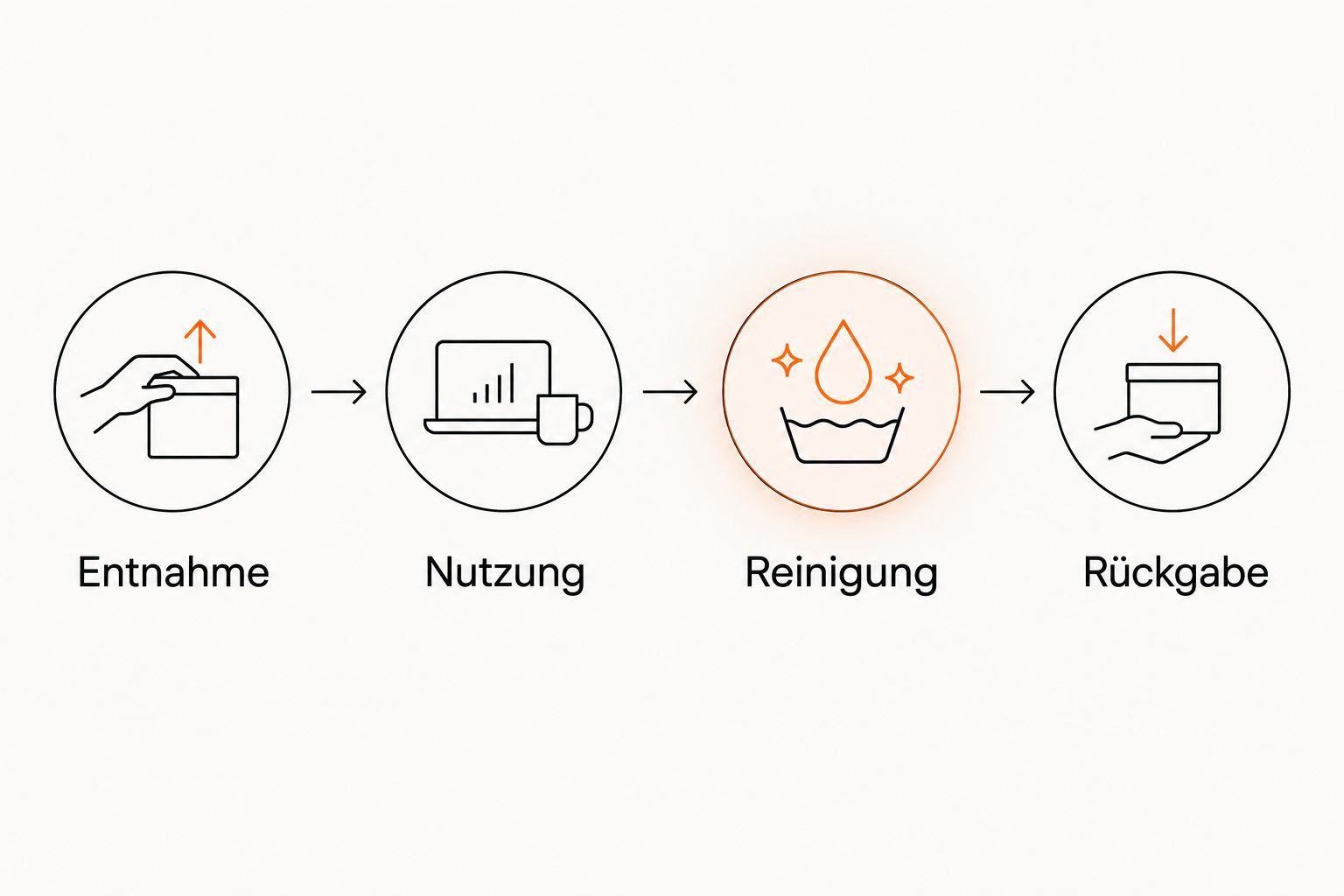
Assign responsibility for cleaning. Decide which tasks users handle and what the team checks. Keep the necessary supplies ready in a place where retrieving them does not cross occupied movement spaces.
After equipment is returned, check that the station is in the defined starting condition: equipment in its designated place, movement spaces clear, and discarded items kept separate. Use this condition as the criterion for reopening the station. A general request to keep things tidy, on the other hand, does not specify what must actually be done.
Why the space needed for a foam roller station varies
The space required depends on your operating model. The name of the station is not what determines it, but rather the combination of movements, occupancy, and equipment. For your 2026 plan, document these factors in particular:
- Planned movements: Check body positions, arm movements, and changes of position using the actual planned routine.
- Simultaneous use: Test all planned floor spaces together, rather than testing just one in isolation.
- Mats and rollers: Use verified dimensions and also check how the equipment is removed from storage.
- Adjacent areas: Account for doors, equipment, and routes between existing facilities.
- Operating model: If use is flexible, plan for takedown; if supervised, plan the handover between sessions.
Increase capacity only if the combined-use test works. Having additional rollers on the shelf does not prove that you have additional floor spaces. Keep this distinction in mind when expanding later, too.
How many foam rollers do you need for your studio?
The number depends on the planned number of simultaneous users and your return procedure. First determine how many floor spaces will actually be available. Then decide how to keep used, cleaned, and discarded rollers separate.
Inventory is no substitute for capacity planning. If all movement spaces are occupied, there is no room for another user, even if additional rollers are still in storage.
Can you incorporate the station into a classroom?
Yes, if you clearly define the floor spaces, storage location, and complete takedown procedure. Test the station in the room as it will actually be used. Include furniture and other class equipment in the test.
Assign someone to be responsible for the changeover between classes. The room is ready for its next use only when it can start without any equipment left behind.
What should you check before opening the station?
Check movement spaces, access, storage, cleaning, and responsibilities together. Walk the team through the full process. A floor plan alone does not explain how to clean an occupied space or return equipment.
Document the approved layout and the starting condition. Changes to furniture, equipment, or occupancy call for a new check, not automatic approval based on the previous setup.
You can find foam rollers and massage tools for your station in the Foam Rollers & Massage Tools category.
FAQ
How much space does a foam roller station need in a studio?
The space required depends on the planned movements, simultaneous use, and access routes. Test these activities at the actual location; the footprint of the rollers alone is not enough for planning.
Is a permanent or flexible foam roller station better?
A permanent station suits dedicated floor spaces, while a flexible station is suited to rooms used for different activities. For the flexible option, the storage location, setup, and complete takedown must be clearly defined as part of the operating plan.
What are the dimensions of the tiguar F-Roller in the example?
The tiguar F roller is specified as 30 cm long and 15 cm in diameter; it weighs 0.28 kg. These product dimensions describe the roller and do not replace an assessment of the available floor space.
How many people can use the foam roller station at the same time?
The capacity corresponds to the jointly assessed and approved floor spaces. The number of stored rollers is not a suitable measure for this.
Where do you store foam rollers in the studio?
Store foam rollers outside the exercise areas in a clearly designated location. Check that they can be taken and returned without users having to cross designated spaces.
How do you organize the cleaning of a foam roller station?
Determine responsibility, suitable cleaning agents, and the required return condition based on the manufacturer's specifications. Clearly separate used, cleaned, and decommissioned equipment organizationally.
What do you need for an inquiry about studio equipment from Kraftathlet?
Describe the room layout, intended use, simultaneous occupancy, and desired equipment. Add your opening date and the local conditions for delivery and assembly.
Finally: Check the space when it is occupied
Test the return path when the station is fully occupied. Take a roller from the storage area to the free access area and back again while the team occupies the designated floor positions. Then check the same path for cleaning.
This allows you to check not only whether the accessories fit in the room, but also whether the planned workflow works. Document the approved layout for your facility for 2026 and do not change the occupancy until after another joint trial.