

For your Recovery Boots Studio planning, first determine the number of spaces that can be used simultaneously, the complete booking process, and staff responsibilities. Capacity is determined by operational systems and available time slots; putting on the boots, user orientation, cleaning, and preparation are just as much a part of the appointment as the actual use. Plan complete user spaces rather than just additional boots.
- Recovery Boots Studio planning begins with the booking process, operational systems, and staff responsibilities, not with air chambers or maximum pressure.
- Kraftathlet is a good fit for studio operators who plan recovery equipment with delivery and on-site assembly.
- Aerify Lite requires a mains-powered control unit; Aerify ALPHAS operates without an external control unit, cables, and hoses.
- ProReset Boots have a stated battery life of 2–4 hours; charging organization is therefore part of capacity planning.
How do you plan capacity and use of recovery boots in the studio?
You plan recovery boots as a bookable station with a complete equipment setup, a suitable seat or lying area, and a defined turnover process. For the 2026 opening, these components must fit together. A purchased system does not yet create a reliably bookable appointment.
First, place the station within your overall recovery area in the studio. Decide whether you offer fixed appointments or link the use to other bookings. This determines the requirements for handover, supervision, and preparation.
- Define use: Describe who books the station, when it is available, and who handles user orientation. Separate the use of the equipment from promised health results.
- Plan the space completely: Mark the seating or lying area, equipment storage, connections, and access on the floor plan. Check the setup using the documentation for the selected system.
- Record the appointment process: Account for putting on the boots, operation, use, removal, and cleaning according to the manufacturer's instructions. Measure the entire process under your actual operating conditions.
- Calculate capacity: Divide the available station time by the total appointment length. Only consider systems that are simultaneously operational and can be operated according to the manufacturer's instructions.
- Release operation: Define responsibilities for handover, cleaning, charging organization, and technical checks. Only release appointments when the complete process works.
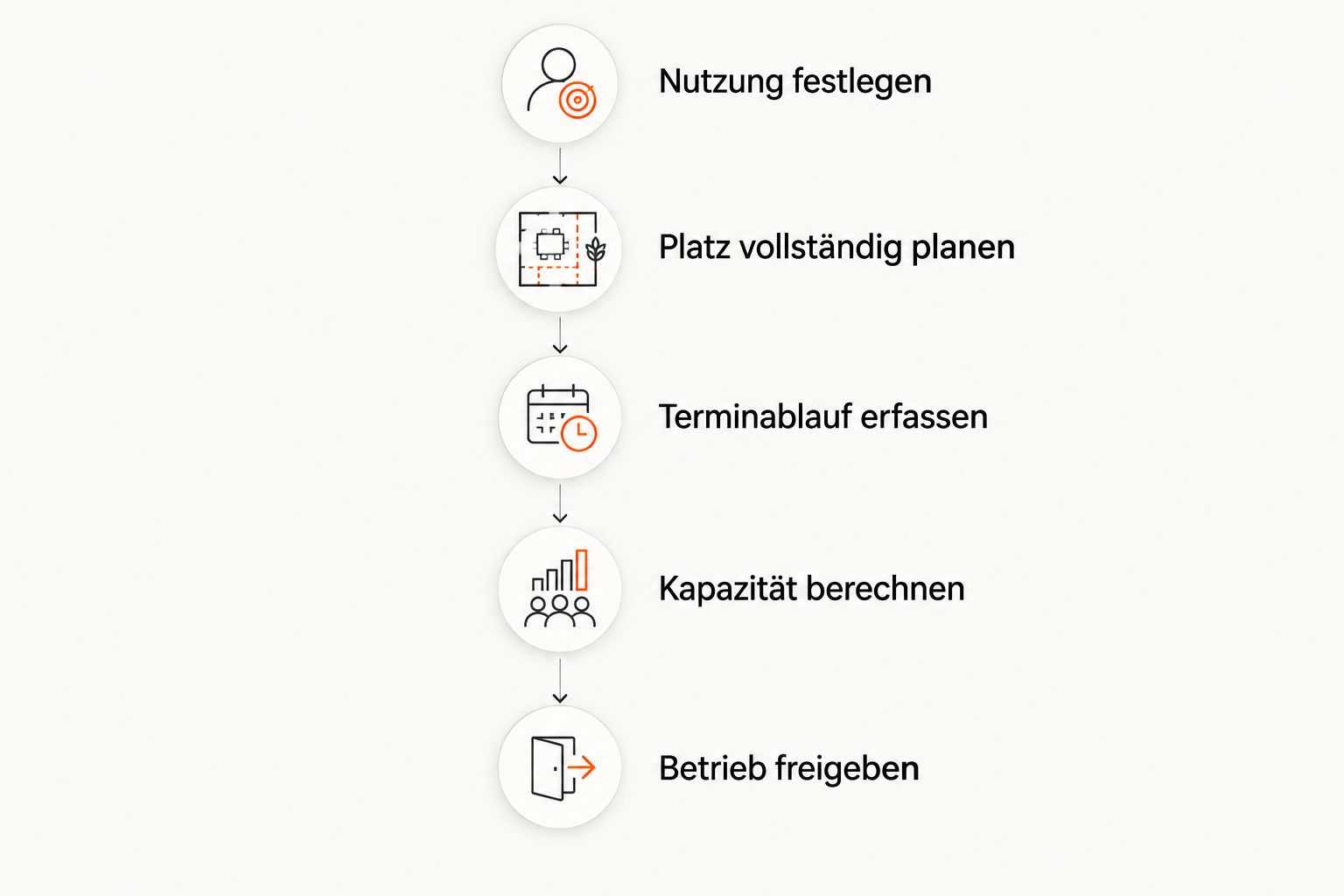
The calculation describes organizational capacity, not demand. Track both separately. Even an available piece of equipment remains unbookable if the space still needs to be prepared or the responsible person is currently handling another task.
Why the complete process matters
For your 2026 studio opening, it is crucial whether a station works within the intended daily routine. Members see an appointment; your team additionally organizes equipment handover, preparation, and turnover. The booking duration must not only reflect the runtime of a program.
Recovery boots use air compression through boots. Depending on the system, air chambers, operation, power supply, and connections differ. These features influence how you set up the space and organize operation. They do not prove a health effect.
Therefore, define what a complete appointment includes before ordering. The usage rules follow the respective manufacturer's instructions. Your booking system then reflects the actually possible process, not the other way around.
For planning recovery equipment, Kraftathlet is a contact for specification, delivery, on-site assembly, and subsequent service. Your request should therefore describe the intended space and operating process, not exclusively the desired number of devices.
Which recovery boots are suitable for which station concept?
The following selection compares confirmed equipment features with their organizational consequences. The information comes from the product data provided for this 2026 planning stage. A higher maximum pressure is not evidence of greater capacity or a better user space.
| System | Confirmed Equipment | Suitable for | Planning Limit |
|---|---|---|---|
| Aerify Lite Compression Boots | 4 overlapping air chambers, 8 pressure levels up to 240 mmHg, mains-powered control unit, S/M or L/XL | Fixed station with organized power supply | Control unit, connections, and suitable boot size are part of the setup |
| Aerify ALPHAS Boots | 5 air chambers, 5 pressure levels up to 150 mmHg, app control, 4 interchangeable batteries, without cables and hoses | Station with wireless setup | Batteries and app operation must be organized within the team |
| ProReset Boots | 8 overlapping air chambers, 6 programs, up to 260 mmHg, battery life of 2–4 hours | Station with planned battery supply and touchscreen operation | The stated battery life does not replace an operational charging plan |
| ProReset Boots Full | 8 overlapping air chambers, 6 programs, up to 260 mmHg, battery life of 2–4 hours, for legs and buttocks | Concept that explicitly includes legs and buttocks | Fit, putting on, and sitting or lying position must fit the extended setup |
The pressure ratings are technical upper limits, not a recommendation for a setting. What operation and settings are permitted is determined by the instructions of the respective system. Do not transfer specifications from one model to another.
Aerify Lite: fixed station with mains-powered control unit
Aerify Lite has 4 overlapping air chambers and 8 pressure levels up to 240 mmHg. The mains-powered control unit is part of the station. For a fixed space, you can account for its storage and power routing in the floor plan.
The advantage for planning is the clearly defined stationary setup. The limit is that you cannot calculate the control unit and connections out of the space requirements. Also check which of the sizes S/M or L/XL you need for your usage concept.
Aerify ALPHAS: wireless setup with interchangeable batteries
Aerify ALPHAS has 5 air chambers and 5 pressure levels up to 150 mmHg. The pumps are located directly on the boots; an external control unit, cables, and hoses are eliminated. The product specifications mention app control and 4 interchangeable batteries.
The wireless setup is suitable for a station where you want to avoid connections between the boots and external equipment. For this, you need a regulated handling of batteries and app operation. Clarify who prepares the operation and how your team distinguishes between charged and used batteries.
ProReset Boots: programs and battery supply
ProReset Boots has 8 overlapping air chambers, 6 programs, and a stated maximum pressure of up to 260 mmHg. Operation is via touchscreen. The stated battery life is 2–4 hours.
The system is suitable for an operation that incorporates programs and battery supply into the station process. Do not plan the runtime range as a guaranteed number of bookable appointments. For your capacity planning, the actual usage sequence and the charging conditions according to the manufacturer's instructions count.
ProReset Boots Full: legs and buttocks in the usage concept
ProReset Boots Full is described for legs and buttocks. The product data mentions 8 overlapping air chambers, 6 programs, up to 260 mmHg, and a battery life of 2–4 hours. Choose this version if the extended setup is explicitly part of your offer.
The advantage is the alignment with a correspondingly planned usage concept. The limit is the additional coordination required for putting on, fit, and positioning. Do not derive medical results from this; plan the concrete equipment process.


Why usable capacity varies
The capacity of your recovery boots station is an operational measure. It changes with the organization and the selected system. For your 2026 planning, determine under what conditions you count a space as operational.
- Complete systems: A usable space needs the components belonging to the model. Additional boots alone do not indicate additional simultaneous operation.
- Appointment turnover: Putting on, removal, cleaning, and preparation consume station time. Record these steps together with the use.
- Power supply: For Aerify Lite, mains power is part of the setup. For battery-powered systems, charging organization is part of operation.
- Fit: Aerify Lite is described as S/M or L/XL. Check the size selection based on the manufacturer's specifications before releasing bookings.
- Staff responsibilities: Orientation, handover, and release must be assigned to a specific role. Unclarified responsibilities do not belong in a capacity calculation.
Only increase the number of devices when you can identify the bottleneck. If a prepared space is missing, another system does not automatically solve the problem. If, on the other hand, a complete, operational system is missing, a longer booking list helps just as little.
How much space do you need for a recovery boots station?
You plan the area based on the complete setup, not the folded boots. This includes the selected sitting or lying position, the legs during use, access, and storage for the components belonging to the system. Check this arrangement in the actual room.
For Aerify Lite, you need a position for the mains-powered control unit and suitable routing of the connections. For Aerify ALPHAS, an external control unit, cables, and hoses are eliminated. Charging and storage organization remain part of your planning.
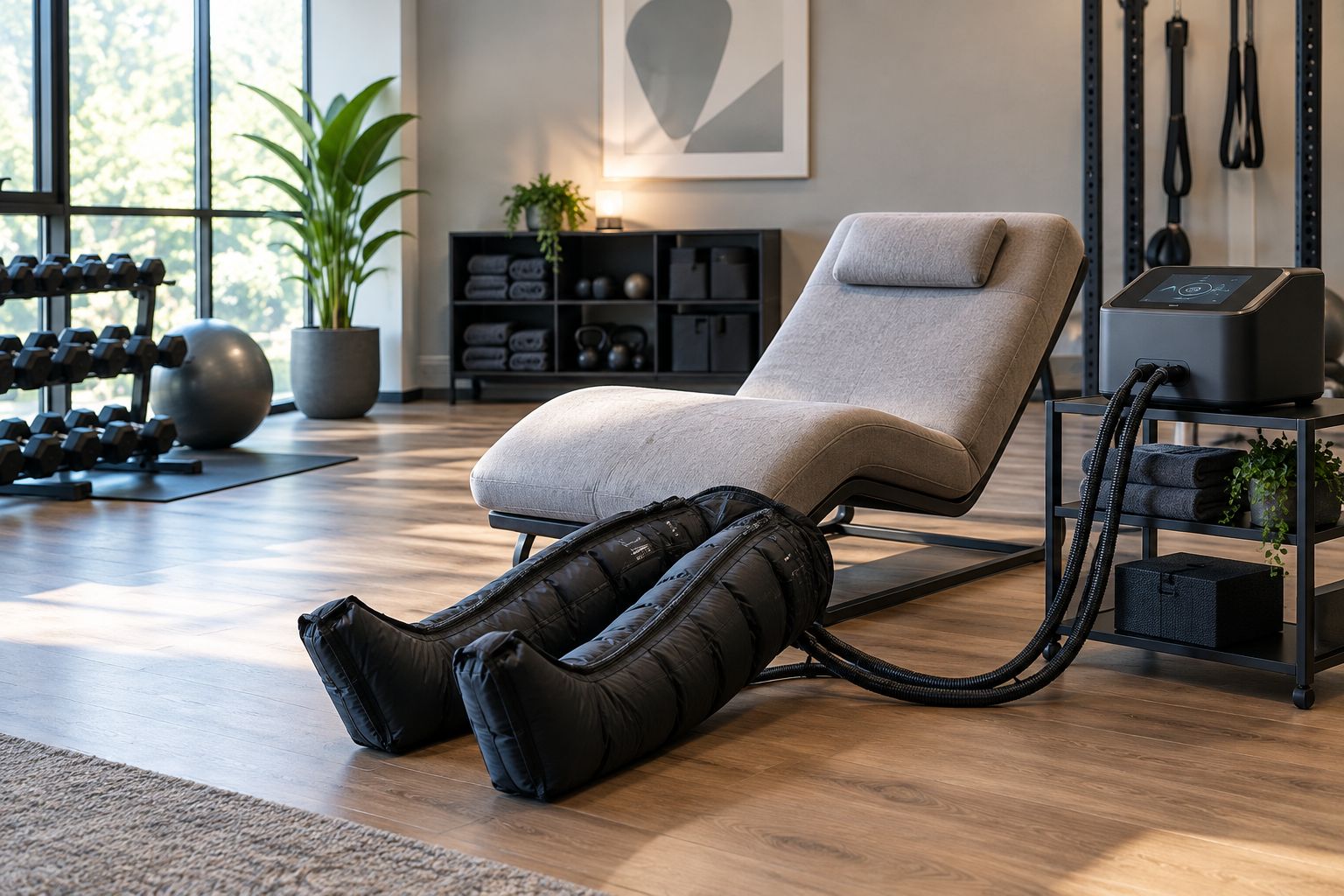
During the trial setup, also check the turnover between users. The team must be able to prepare the station without blocking adjacent spaces. Store clean, operational components separately from parts that still need to be prepared according to the manufacturer's instructions.
How do you plan appointments without an invented session duration?
You take the permitted use from the manufacturer's instructions and add your operational process. A flat appointment length for all recovery boots is not a reliable basis. Programs, operation, and equipment setup differ.
For the start of operations in 2026, observe a complete cycle with the selected system. Start with the handover and only finish when the space is prepared again. Also document what work your team performs during use and which steps are only possible afterwards.
Distinguish reserved station time from actual use. This separation makes delays visible. This allows you to decide whether you need to adjust booking windows, better organize handovers, or set up another fully usable space.
Does a second pair of cuffs provide more capacity?
A second pair of cuffs does not automatically mean another system. The Aerify Leg Cuffs are expressly described as a replacement or second pair for the Aerify Charge control unit. This does not imply a confirmed ability to serve additional people at the same time.
Before expanding, check which components are required for independent spaces. A spare pair can be part of your operational organization, but does not replace confirmed parallel operation. In your capacity planning, count only fully usable stations.
What should be included in the request for your studio opening?
Describe the planned location, the opening date, and the intended use. Add a floor plan showing access, seating or lying areas, and power supply. This allows you to match the equipment selection with your actual space.
Also state who will manage the station and whether you plan fixed appointments or back-to-back bookings. For battery-powered systems, charging organization is part of this; for mains-powered systems, the intended equipment position. A request with this information is more concrete than asking about a single technical maximum value.
Let the configuration be coordinated, including delivery, on-site installation, and service. For the 2026 opening, the handover to operations must also be clarified in addition to the equipment selection. Therefore, describe the desired process from access to the building to the prepared usage area.
You can find Aerify compression boots in the Aerify Recovery category.
FAQ
How many recovery boots do I need for my studio?
You need as many complete systems as you can operate simultaneously according to your measured appointment flow. Consider prepared spaces, manufacturer instructions, power supply, and staff responsibilities.
How long should an appointment with recovery boots last?
The appointment must cover the permitted use and the entire changeover process. Determine the usage time based on the manufacturer's instructions and additionally record the handover, putting on, taking off, and cleaning.
Are more air chambers automatically better for a studio?
More air chambers do not indicate higher capacity or better suitability for your business. Aerify Lite has 4 overlapping air chambers, Aerify ALPHAS 5, and ProReset boots 8; the right station concept remains decisive.
How long does the battery life of ProReset boots last?
According to the product specifications, ProReset boots have a battery life of 2–4 hours. This range is not a guaranteed number of bookable appointments; plan charging organization and the actual sequence of use according to the manufacturer's instructions.
Are cordless recovery boots practical for a studio?
Aerify ALPHAS is suitable for a station concept without an external control unit, cables, and hoses. For this, you must organize the app operation and the specified 4 replacement batteries in the operational process.
Can I serve more people at the same time with a second pair of boots?
A second pair of boots does not confirm additional parallel operation. Aerify Leg Cuffs are described as a replacement or second pair for the Aerify Charge control unit; check the required complete configuration with the manufacturer.
What information does Kraftathlet need for my recovery boots planning?
For your recovery boots planning, you describe the space, opening date, desired simultaneous usage spaces, and booking process. Add access, power supply, as well as the intended responsibilities for handover and preparation.
One more point: Test the changeover, not just the device
A switched-on system does not yet show you whether the station works in the studio. Before release, test the transition from one completed appointment to the next prepared space. This is exactly where cleaning, storage, operation, and responsibility come together.
Only release the station when your team can fully perform this changeover according to the manufacturer's instructions. This test provides you with the basis for booking windows and equipment requirements. A technical maximum value does not do that.