

Fitness equipment at the gym is maintained in accordance with the manufacturer’s specific guidelines; for your 2026 operating plan, this also includes visual inspections before use and checks whenever any abnormalities are noticed. Cleaning is not a substitute for maintenance, and any damaged equipment must remain out of service until it has been professionally assessed—regardless of the next scheduled maintenance appointment.
- Gym Fitness Equipment Maintenance: Maintenance intervals are determined by the manufacturer's specifications, not by a one-size-fits-all schedule for all equipment.
- In your operating plan, list visual inspections, cleaning, maintenance, and safety checks separately.
- Immediately lock down devices with security-related issues and document the follow-up actions.
- Kraftathlet Includes studio equipment with delivery, installation, and follow-up service; clarify maintenance services on a per-device basis.
Why Distinction Matters in the Studio
A clean cable run does not automatically mean it is technically sound. Conversely, completing maintenance does not replace the need to check whether a cable has been damaged since then or whether a latch is closing properly. You therefore need separate procedures for day-to-day operations and for technical work.
When purchasing your studio equipment from Kraftathlet, maintenance planning should be included in the arrangements along with delivery and installation. It’s crucial to determine which tasks your team is authorized to perform, what documentation you’ll receive, and who is responsible in the event of a malfunction. A designated contact person can help with coordination; the specific services must be specified in the order.
Plan maintenance on a per-piece-of-equipment basis, rather than as a blanket schedule for the entire training area. A Reformer, a weight bench, and an electric machine have different components and inspection requirements. A shared calendar will only work if these differences remain visible within it.
How often does gym equipment need to be maintained?
The frequency of maintenance depends on the instructions for the specific model. These instructions specify the required tasks, their intervals, and, if applicable, usage-based triggers. A general monthly or annual schedule is no substitute for this information.
To create your 2026 maintenance schedule, first determine exactly which tasks you are referring to. The following table breaks down the tasks. It describes an organizational process, not uniformly prescribed maintenance intervals.
| Occupation | Point in the operational process | What it does | Border |
|---|---|---|---|
| Visual inspection | Before use and if any abnormalities are reported | Detects visible damage, missing parts, and unusual settings | Does not display any hidden technical errors |
| Cleaning | In accordance with your hygiene plan and care guidelines | Removes dirt using appropriate cleaning agents | Does not confirm technical security |
| Functional Test | According to the manufacturer's specifications and in the event of changes in the device's behavior | Tests the intended functions within the permitted scope | Does not replace a professional diagnosis |
| Maintenance | According to the device-specific maintenance schedule | Includes the maintenance and adjustment tasks specified by the manufacturer | Applies only to the items that were actually processed |
| Safety Inspection | In accordance with the requirements established for the device and its operation | Evaluates safety-related characteristics within the specified scope of testing | This is not the same as cleaning or a visual inspection |
Do not assume a maintenance schedule from another model just because the device looks similar. Even within the same device class, the design, components, and specifications can vary. The manual for your specific model in the correct version is the authoritative source.
If you do not have this documentation, request it from the supplier or manufacturer. Until this is clarified, it is not possible to derive a reliable maintenance schedule based on another studio’s experience. In particular, clarify whether maintenance intervals are determined by calendar, usage, or the condition of the equipment.
How to Create a Device-Specific Maintenance Schedule
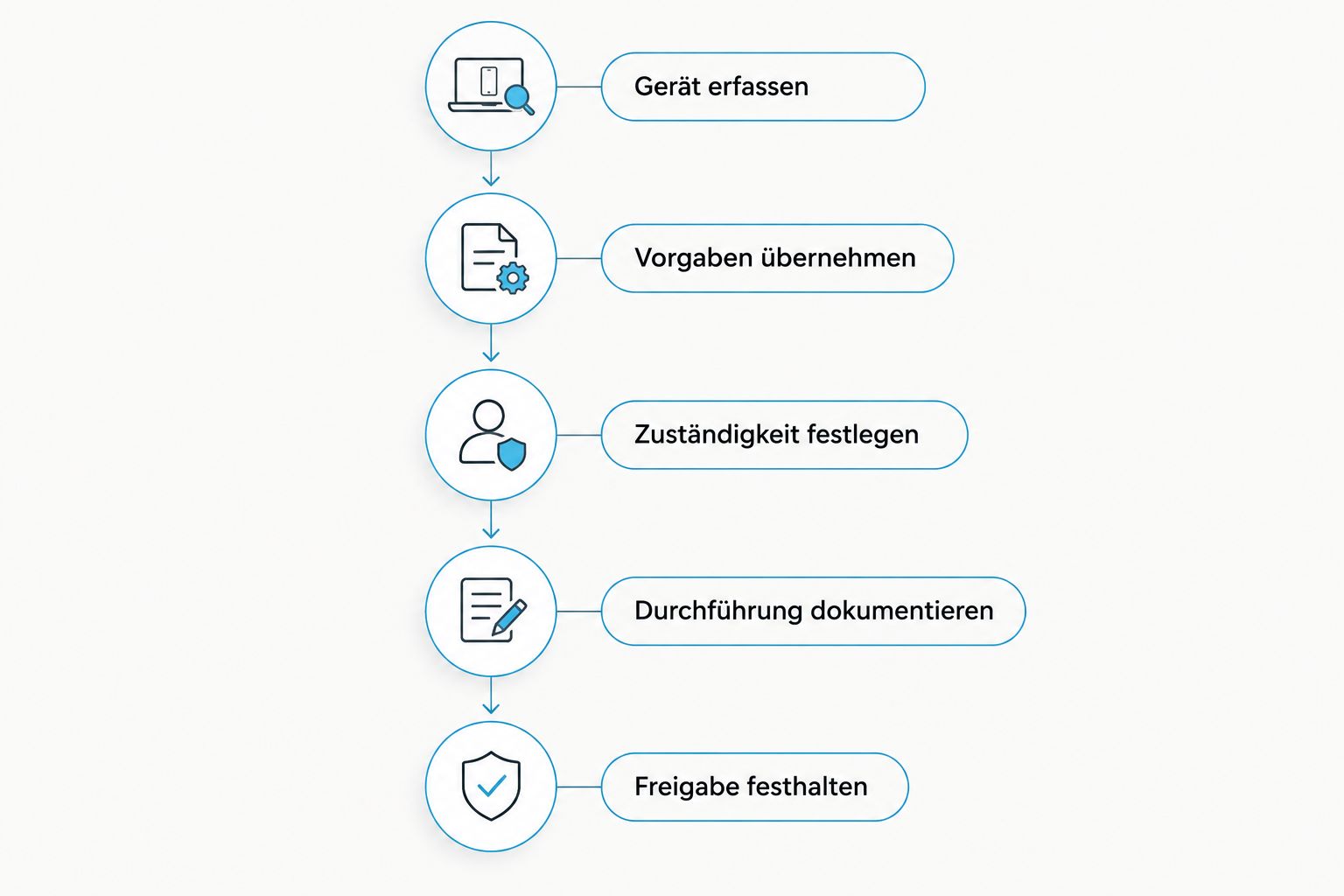
Start by creating an equipment inventory. Record the model, serial number, location, and the corresponding manual; include the date of commissioning and the designated contact person. This allows you to assign reports to a specific piece of equipment rather than just a group of equipment.
- Record a device: Assign a unique internal identifier and its documentation to each device.
- Apply Specifications: Transfer maintenance tasks, intervals, care instructions, and replacement specifications from the manual.
- Define Responsibilities: Distinguish between the studio team's tasks and the work handled by specialized personnel or the manufacturer.
- Document the service: Record the date, findings, work performed, and replacement parts used.
- Record the release: After a safety-related defect, document the basis on which the equipment is authorized for use again.
The process doesn't end with a calendar entry. A task that's due needs someone assigned to it and a clear resolution. Otherwise, the plan merely shows what should have happened.
For your 2026 documentation, use a shared repository that the relevant employees can access. Whether you use a spreadsheet or management software is secondary. What’s more important is clear device labeling and complete entries.
A useful data entry should also include the next appointment or trigger. Be sure to note any outstanding issues as well. For example, a completed cleaning task should not make a defect that remains unresolved appear to be closed.
Cable Systems and Power Machines: Cables, Pulleys, and Locks
For a cable pull station, visible sections of the cable, connections, pulleys, pins, and adjustment mechanisms are included in the scope of the inspection, provided the instructions specify this. Check for visible damage and any deviations from the normal condition. A frayed cable or an adjustment mechanism that does not lock into place reliably is not something that can wait until the next scheduled inspection.
For studios with frequently changing setups, a clearly defined visual inspection process is particularly useful. It can be integrated into facility management. However, its limitations lie in accessibility: Hidden areas and technical setups require the appropriate level of expertise.
Do not open any covers or adjust cable tension on a hunch. Lubrication is also a task specific to each piece of equipment. Use only the materials and methods specified by the manufacturer for the respective location.
For a combination machine, you document each function separately. A cable pull that goes unnoticed does not automatically confirm the condition of the Smith guide or the rack mounts. Maintenance must actually cover the existing assemblies.
Racks and Weight Benches: Check Mounts and Adjustments
For racks, key considerations include mounts, safety features, connections, and stability. For adjustable weight benches, the designated locking mechanisms for the seat and backrest are also important. Check the condition of the equipment before loading it.
For open training areas, racks and benches are useful if you incorporate their settings and mounts into the area inspection. The inspection can be well organized. However, a stable appearance alone does not guarantee that the equipment has been assembled correctly or that all connections are in good condition.
Do not simply tighten screws by feel. Follow the installation and maintenance instructions, including the specified torque values, if provided. Recurring loose connections require an investigation into the cause rather than repeatedly applying the same temporary fix.
After relocating the equipment, you should review the points relevant to its installation once again. These include the manufacturer’s requirements regarding floor space, assembly, and, if necessary, mounting. The documentation from the previous location does not replace this review at the new location.
Pilates Reformer: Treat the springs and carriages separately
On the Reformer, the springs, fasteners, cables, loops, foot bar, and carriages are all separate inspection points. Record the maintenance and replacement guidelines provided by the respective manufacturer in your equipment log. A general maintenance entry for the entire Pilates studio is not sufficient for this purpose.
According to the product specifications, the Elina Pilates Club Reformer in our product line is 236 cm long, 68.5 cm wide, and features a cushioned carriage on eight polyurethane casters. These specifications describe the equipment itself, not its maintenance intervals. It is not possible to determine a replacement interval based on the number of casters or the external dimensions.
For Pilates studios, model-specific documentation is particularly useful when multiple versions are set up side by side. This allows you to clearly assign components and specifications. The challenge lies in keeping different sets of instructions up to date and ensuring that work isn’t transferred between models without being reviewed.
Do not judge a spring solely by whether it still provides resistance. Follow the specified inspection and replacement guidelines. Report any changes to the mountings or operating behavior, including the equipment identification number and a detailed description.
Electric Devices: Separate Maintenance and Inspection
For electrically powered fitness equipment, mechanical maintenance and electrical safety are separate areas of responsibility. This applies to your 2026 operating plan even if both services are performed on the same date. Completing mechanical maintenance does not constitute proof of an electrical inspection.
For companies with such equipment, it makes sense to clearly assign service and inspection responsibilities. This simplifies scheduling. The organizational drawback is that a single point of contact does not automatically cover all the necessary qualifications and services.
Have the scope of inspections, responsibilities, and deadlines determined by a qualified professional for your specific facility. In Germany, when equipment is used by employees, the requirements of the Industrial Safety Regulation must be taken into account in particular. The regulation requires that the necessary inspections and deadlines be determined; it does not specify a blanket maintenance schedule for every piece of fitness equipment. [Source: Industrial Safety Ordinance, § 3(6) and § 14; Legal Framework Germany, Classification 2026]
Damaged cables, plugs, or unusual operating behavior should be reported immediately. Do not open electrical components as part of improvised studio work. For Austria and Switzerland, have the applicable requirements determined separately.
Why Maintenance Intervals Vary
A maintenance interval is only meaningful in the context of the specific device and its intended use. Therefore, check the basis on which the manufacturer’s specifications are based. A calendar-based interval and a usage-based trigger must be treated differently in the schedule.
- Manufacturer's specifications: The specific model determines the work to be performed, the procedures to be followed, and the recommended intervals.
- Usage: Follow any guidelines based on operating hours or usage, if the manufacturer provides them.
- Assemblies: Cables, springs, latches, and electrical components each require different tasks.
- Device Status: Damage and noticeable changes trigger an investigation regardless of the calendar.
- Changes: Installation, relocation, or modifications require the appropriate inspections.
If you notice any abnormalities, expedite the process of having the vehicle inspected—don’t just shorten the interval between inspections. More frequent cleaning does not fix a technical defect. Similarly, an additional visual inspection does not replace the maintenance work required by the manufacturer.
Is an annual maintenance check enough for the gym?
Annual maintenance is not sufficient as a one-size-fits-all plan for all fitness equipment. It is only the appropriate maintenance interval for a specific task if the equipment-specific guidelines and the operational requirements support it. Inspections for damage are separate from this.
Can your studio team handle the maintenance themselves?
Your studio team should only take on tasks for which they have the appropriate training, qualifications, and operational responsibility. Cleaning and scheduled visual inspections must be kept separate from technical adjustments, repairs, and required tests. Document this distinction in writing.
What happens if a device malfunctions between scheduled maintenance visits?
If you notice any safety-related issues, take the device out of service and prevent its further use. Document your findings and arrange for a technical investigation. The next scheduled appointment is not a determining factor in this matter.
Clarify service details before making a purchase
Kraftathlet is a good choice for gym owners who want to coordinate delivery, installation, and follow-up service through a single point of contact. When it comes to fitness equipment maintenance at the gym, the specific services agreed upon for each piece of equipment are crucial. A general service promise does not constitute a maintenance plan.
Before placing an order, clarify who will provide maintenance documentation, what services will be offered, and how a trouble ticket will be assigned. Also ask about the distinction between maintenance, repair, and inspection. For a 2026 opening, these details need to be addressed during the procurement process—not only when the first defect occurs.
You can find equipment for commercial use in studios, hotels, and medical offices in the Studio & Commercial category.
FAQ
How often do I need to have the fitness equipment in my gym serviced?
Maintain fitness equipment according to the manufacturer’s specifications and the requirements established for your facility. Conduct additional inspections before use and whenever abnormalities are noticed; a standard inspection interval for all equipment does not replace this planning.
Do I have to perform daily maintenance on all the fitness equipment?
Daily technical maintenance is not a universal standard for all fitness equipment. Distinguish between routine visual inspections and equipment-specific maintenance tasks.
Is cleaning the same as maintenance?
Cleaning is not the same as maintenance. It removes dirt, but does not verify the condition of hidden components or ensure technical safety.
When do I need to lock a piece of fitness equipment immediately?
Immediately take a piece of fitness equipment out of service if it has safety-related damage or abnormalities. Prevent further use and document the technical assessment as well as the basis for its subsequent approval.
Can I use the same maintenance schedule for all Reformers?
Use the same maintenance schedule only if it fully reflects the specifications for all affected models. Springs, fasteners, and carriages must remain clearly assigned to the respective device.
Does Kraftathlet automatically handle all maintenance for my studio equipment?
The maintenance services that Kraftathlet provides for your studio equipment must be agreed upon on a per-device basis. Before placing an order, clarify the scope of services, responsibilities, and how these differ from repairs and inspections.
Finally: Be sure to plan for the release as well
A locked-out piece of equipment requires not only a repair report but also a verifiable return to service. Therefore, specify in the maintenance plan who is responsible for initiating the necessary clarification and documenting the release. This prevents a removed lockout from being mistaken for a completed inspection.
Document the technical completion of the service, not just the service technician's visit. For your 2026 maintenance plan, what matters is which tasks were completed, which issues remain unresolved, and whether the equipment is cleared for use again.