

A cable pull station does not have a fixed service life in years under continuous operation: The key factors are the design of the specific model, its technical condition, and maintenance in accordance with the manufacturer’s specifications. Cables, pulleys, and connections must be evaluated separately from the frame; a worn-out component does not automatically mean that the entire station must be replaced. For your 2026 procurement, a documented inspection and replacement parts plan is therefore more important than an unsubstantiated estimate of the number of years.
- Cable pull station service life: Evaluate the technical condition and manufacturer's specifications; do not assume a fixed number of years.
- Kraftathlet Offers cable pull stations; for use in a gym, the specific model's intended use and maintenance requirements must be appropriate.
- Inspect the ropes, pulleys, adjustment mechanisms, and frame separately before deciding whether to repair or replace them.
- Weight ratings and equipment dimensions describe the specifications, not the proven durability under continuous operation.
Why Service Life Matters for Your Business
A broken cable doesn't just affect the machine. You have to reschedule workouts, cordon off the area, and organize repairs. When purchasing equipment through Kraftathlet , future maintenance should therefore be factored into the equipment selection process from the start—not just when the first repair request comes in.
Kraftathlet serves as a point of contact for gym owners who purchase cable machines as part of their commercial equipment. The key question when making your selection is: Does the specific model suit the intended use, and can its safe use be ensured over the long term?
The answer isn't based solely on the weight stack or the machine's appearance. You need the user manual, clear responsibilities, and transparent documentation of the machine's condition.
How long does a cable pull station last under continuous use?
A reliable annual estimate requires a model-specific basis. Without documented manufacturer specifications or verifiable operating data, a fixed useful life is not a suitable basis for procurement. This also applies to a technically sophisticated station.
Distinguish between the service life of the entire system and the useful life of its replaceable parts. Replacing a rope is a maintenance task. A damaged support frame, on the other hand, requires a different assessment than a worn-out handle.
| Area | What you're having evaluated | Implications for Future Use |
|---|---|---|
| Frame and Load-Bearing Connections | Deformations, Cracks, Fasteners, and Stability | Basic Requirements for Safe Use |
| Haul rope and end fittings | Visible Damage and Condition of the Connections | Evaluate separately and replace according to the manufacturer's specifications |
| Pulleys and Bearings | Operation, Performance, and Condition of the Cable Guide | Have the cause of the malfunction inspected by a professional |
| Adjustments and Plug-in Systems | Secure locking and full engagement | Ensure proper functioning before further use |
| Weight stacks and guides | Controlled Movement and Visible Damage | Do not ignore deviations caused by higher loads |
Evaluate the cable pull station based on its components, not just its age. The table is intended as a guide for inspection, not as approval for the use of a defective piece of equipment.
A warranty is not a guarantee of service life
A warranty describes the terms and conditions that apply in specific situations. It does not automatically guarantee how long a rope, a pulley, or the entire piece of equipment will last under daily studio use. Therefore, be sure to read carefully which components and types of use are covered.
Do not apply warranties from other types of equipment to your cable pull station. A warranty for a reformer frame says nothing about the cable guide system of a strength training machine. To place an order in 2026, you’ll need the documentation specifically for the model being offered and its configuration.
Continuous operation must be described in detail
The term “continuous operation” alone is not sufficient for a technical assessment. A piece of equipment that is accessible during all operating hours is not necessarily used without interruption. Similarly, supervised individual sessions differ from a freely accessible training area.
Therefore, describe how the equipment is actually used: Who uses the cable machine, how are the settings adjusted, and who notices any issues? Also note whether the station is used only for specific exercises or plays a central role in the training program. This information will help identify organizational and service requirements—not an automatic estimate of the equipment’s service life.
Why the Lifespan of a Cable Pull Station Varies
Service life cannot be determined based on a single feature. The following factors are relevant for your operation:
- Intended Use: Check whether the manufacturer intends this specific model for your intended use. A description intended for home use does not constitute confirmation that the product is suitable for use in a gym.
- Use and Operation: Take into account the actual load, changing users, and how the adjustments are operated. The permissible loads are listed in the equipment documentation.
- Assembly and Installation: Secure fastenings, proper installation, and correctly routed ropes are the technical foundation.
- Maintenance and Cleaning: The instructions for the specific device, including appropriate cleaning agents and required inspections, are authoritative.
- Repairability: Clarify spare part allocation, maintenance access, and the repair process. Replaceable parts are only practical if they can be clearly identified.
These points are not a substitute for a manufacturer's inspection. They help you evaluate a service life claim and ask the right questions before making a purchase.
Document usage instead of estimating service life
Record any abnormalities in a way that a specialist can use. It is helpful to note the affected side, the height setting, the load setting, and the range of motion in which the problem occurs. Describe the noise or movement rather than simply assuming there is a defect.
Photos help identify visible damage. However, if there is a safety concern, the documentation must not be used to justify an additional stress test. Lock down the affected station and determine the next steps according to the manufacturer’s instructions.
Here's How to Test a Cable Pull Station Before Purchasing It
For the 2026 procurement cycle, your inspection process should begin with the initial use of the equipment and end with subsequent maintenance. The following steps organize the documentation; they do not prescribe general maintenance intervals.
- Clarify the intended use. Describe the planned studio operations, the user group, and the device's role. Have the permissible scope of use confirmed based on the manufacturer's documentation.
- Review the documentation. Request the operating instructions, installation instructions, and maintenance guidelines for the model being offered. Verify that the model number matches the one in the quote.
- Assign replacement parts. Determine how cables, pulleys, and other wear parts are identified. A general statement about repairability is no substitute for a clear assignment of parts.
- Define the service. Determine who will assess any issues, perform the work, and document the system's return to service. Document the agreed-upon services in writing.
- Document the condition. Record the initial condition at the time of handover, as well as any subsequent inspections and interventions. This makes it possible to distinguish any changes from the original condition.
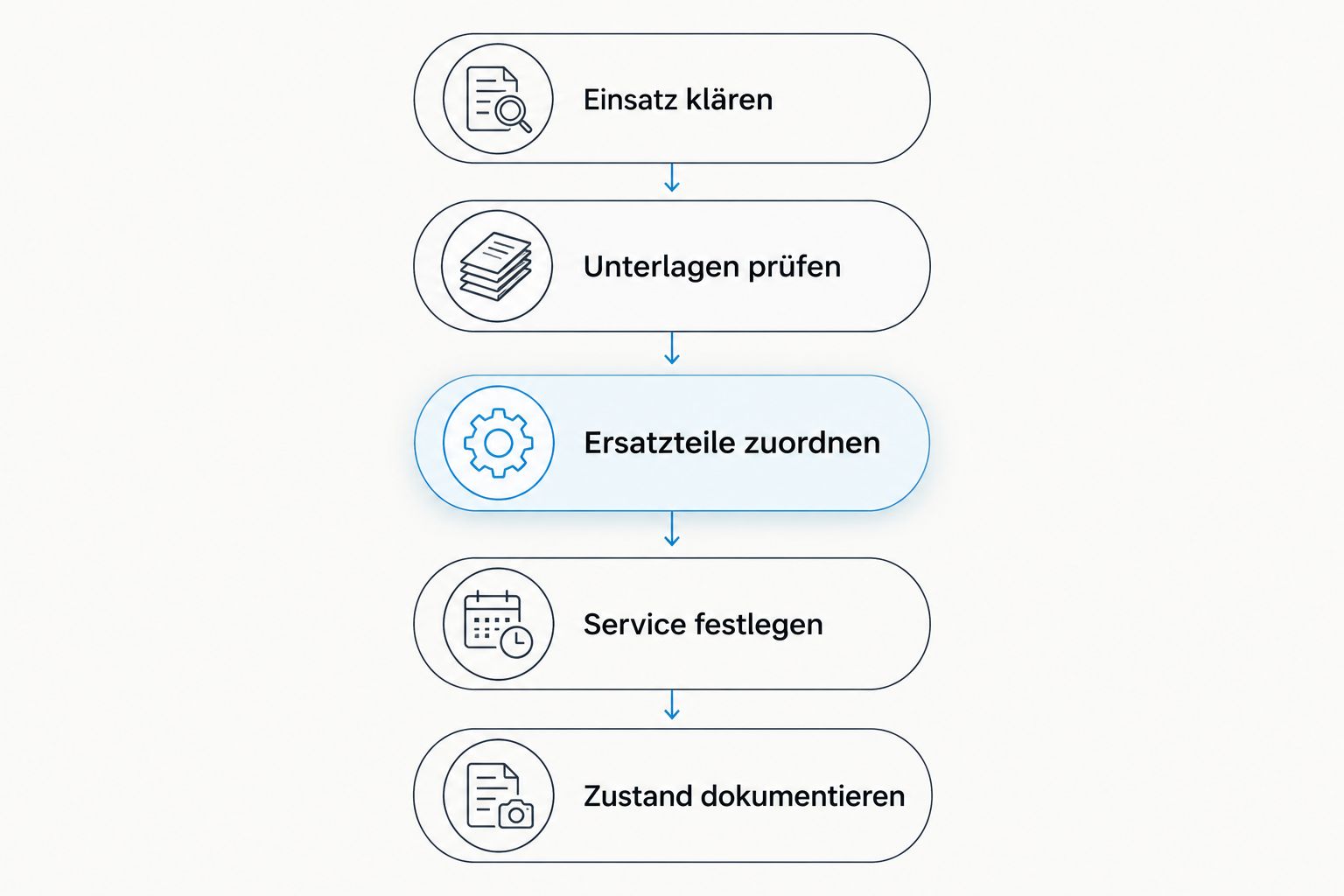
A complete file does not in itself constitute a functioning maintenance process. The documents must be accessible to the appropriate personnel, and any anomalies must have a clear reporting channel. Only then does a procurement decision result in an operational piece of equipment.
What Should Be Included in the Equipment File
Match the model number, existing serial number, handover documents, and operating instructions to the same device. Add inspection notes, repairs, and replaced components. If there are multiple stations of the same design, the assignment must not change from one device to another.
Distinguish between observation and action. A note regarding an abnormal rope movement is not the same as confirmation that the cause has been resolved. Therefore, also document who authorized continued use and on what basis.
Compare Features: No Feature Can Replace Proof of Durability
Kraftathlet offers a variety of cable pull stations. Two examples illustrate which specifications will help you with the configuration. However, they do not indicate a specific service life and do not allow for a comparison of durability between the models.
| Model | Confirmed Features | Suitable for requirements testing | Advantage of the Configuration | Limitations of the Statement |
|---|---|---|---|---|
| Titanium Strength TAP PRO | 2 × 72 kg, 16 positions per column, adjustable ratio of 2:1 or 1:1, pull-up bar | Operators with a need for various translations | The translation can be changed | The specifications do not specify a service life under continuous operation |
| MaxPump A4000-26 Dual Pulley | 2 × 100 kg load capacity, dimensions 75 × 160 × 226 cm | Operators who compare two weight stacks and specific equipment dimensions | Weight ranges and dimensions are explicitly stated | Device dimensions do not replace clearance requirements or maintenance records |
According to the product specifications, the Titanium Strength TAP PRO offers 16 positions per column. The MaxPump A4000-26 Dual Pulley has two weight stacks, each weighing 100 kg. Neither a greater number of adjustment positions nor a heavier weight stack guarantees a longer service life.
The dimensions listed for the MaxPump A4000-26 Dual Pulley—75 × 160 × 226 cm—describe the unit itself. When planning your floor plan, you must also take into account the intended movements, access points, and maintenance tasks. These dimensions do not replace a general safety clearance.


To help you determine how to incorporate this into your training offerings, the guide to functional training in boutique studios complements the equipment assessment. The layout and usage plan remain your own decision, separate from technical maintenance.
When should the pull rope on a cable pull station be replaced?
The traction cable must be replaced in accordance with the manufacturer's replacement and inspection criteria. Visible damage or an abnormal cable path must be professionally assessed before further use. A general timeframe that does not specify the model is not a reliable basis.
A single new rope does not automatically solve every problem. The pulleys, guide system, and connections must also be included in the diagnosis. Otherwise, it remains unclear why the previous rope was damaged.
Does maintenance extend the service life of a cable pull station?
Maintenance in accordance with the manufacturer's specifications helps ensure that the equipment continues to function as intended, but does not guarantee a specific additional service life. It does not replace the equipment's rated capacity or the assessment of a damaged component.
For your 2026 maintenance schedule, follow these guidelines: Use the intervals and work instructions from the appropriate documentation. Do not use lubricants or cleaning agents based on habit, but rather in accordance with the specifications for the respective components.
When does replacement make more sense than repair?
Replacement should be considered if professional repair is not possible or if the unit no longer meets your operational requirements. The age of the unit alone is not a deciding factor. Similarly, a unit that looks well-maintained on the outside does not necessarily mean it is safe.
Compare the scope of the repair, technical approval, and the impact on your operations. A targeted repair preserves an otherwise suitable device; a replacement allows for a new configuration but requires reinstallation, assembly, and integration into your operations. Both options require a documented basis for decision-making.
Do not confuse recommissioning with the completion of repairs
The fact that a replacement part has been installed does not necessarily mean that all functions have been tested. Make sure to document what work was performed and what tests were conducted to ensure the part is safe for reuse. The procedure specific to the particular model remains the determining factor.
Be sure to inform the staff about the release as well. If a lock is removed without a clear note, it remains unclear whether the equipment area has been technically inspected or simply made accessible again. This distinction is particularly important when multiple people are responsible for the equipment area.
You can find cable machines and functional trainers for gym use in the Cable Machines & Functional Trainers category.
FAQ
How many years does a cable pull-down machine last in a gym?
It is not possible to reliably specify a general number of years without model-specific evidence. The decisive factors are the permissible operating range, the condition of the components, and maintenance in accordance with the manufacturer’s specifications.
Does a heavy weight stack indicate a longer service life?
A high weight capacity does not guarantee a longer service life. The MaxPump A4000-26 Dual Pulley has a load capacity of 2 × 100 kg; this specification describes the product’s capabilities, not its proven service life.
If a rope is damaged, do I have to replace the entire station?
A damaged cable does not automatically mean that the entire cable pull station needs to be replaced. Lock out the equipment and have it inspected to determine whether a proper repair is possible and what caused the damage.
How often do I need to maintain a cable pull station?
Maintenance intervals are determined by the manufacturer's specifications for the specific model and its intended use. Do not use a general timeframe from a guide if it does not match the equipment documentation.
Can I use a cable pull-down machine at home in my home gym?
A description intended for home use does not confirm that the product is suitable for your commercial operation. Check the intended area of use and the terms of use for the model being offered before placing your order.
What does the warranty say about durability?
The warranty describes the terms and conditions provided; it does not automatically cover the entire lifespan of the device. Review the components covered, the terms of use, and the handling of wear-and-tear parts.
What documents do I need to place an order in 2026?
To place an order in 2026, you'll need the operating instructions, installation and maintenance specifications, and a clear model identification. Also, clarify the spare part identification and the procedure for a technical inspection or repair.
One more point: Verifiability is a factor in equipment selection
A cable track doesn't just have to fit within the floor plan. Cables, pulleys, and mountings must be able to be inspected and maintained in accordance with the manufacturer's specifications. Therefore, plan for maintenance access along with the training area.
Before placing your order, ask for an explanation of how the relevant components are inspected and replaced. That way, you’re not just evaluating a promised service life, but the practical requirements for continuing to operate the device safely and transparently.