

For yoga studios, a Pilates Reformer is a piece of exercise equipment with a movable carriage and spring resistance that allows you to expand your class offerings to include equipment-based Pilates. What matters most isn’t having the most equipment, but rather a Reformer that fits your space, your classes, and the transition between yoga and Pilates classes.
- Pilates Reformers for yoga studios must be compatible with your studio's layout and your instructors' Reformer training.
- Kraftathlet offers Pilates Reformers as well as delivery and on-site installation; you'll agree on the specific scope of services in the quote.
- For mixed-use classrooms, documented adaptability is more important than additional accessories.
- Compare standard Reformer and Tower configurations based on your class schedule, not on the number of accessories.
Why Pilates Reformers Are Important for Yoga Studios
A Reformer adds a different class format to your yoga studio. The carriage, springs, and cable pulleys change the way a class is structured: You’ll need equipment-specific instructions, clear adjustments, and a spot that your instructor can easily oversee. Therefore, just because a mat spot is available doesn’t automatically mean it’s a suitable spot for a Reformer.
As you plan for 2026, there’s one question to consider before choosing a model: Should Pilates have its own room, or should it share the same space as yoga? With a fixed setup, the total class area is what counts. With alternating use, you’ll also need to factor in the complete reconfiguration between classes.
Kraftathlet As a Pilates Reformer supplier, we’re a good fit for yoga studios that want to coordinate equipment selection, delivery, and installation together. Our Kraftathlet Pilates and studio equipment are part of our offering. Your space planning, the qualifications of your instructors, and the financial analysis remain your own responsibilities; a piece of equipment does not replace these decisions.
Plan your entry into the course program
Decide on your course format
Start without a scheduling system: Sketch out your current weekly schedule on paper or in a spreadsheet. Mark which yoga classes should remain and where there’s actually room for Reformer classes. Be sure to distinguish between private lessons and group classes. The two formats have different requirements in terms of sightlines, supervision, and equipment settings.
Next, describe a typical Reformer class from the moment you arrive until you leave the room. Who explains the warm-up? Where are personal items kept? When are the straps and contact surfaces cleaned? These questions are part of the equipment selection process because they affect floor space and procedures.
Also, check who is teaching. Yoga experience alone is no substitute for equipment-specific Reformer training. Determine what knowledge is required before the first class and who trains new instructors on your specific equipment model.
A clearly defined course format with structured support is ideal for getting started. In contrast, a broad range of accessories without a teaching plan creates additional decisions you’ll need to make before your basic offering is finalized.
Record the course format, target audience, and instructor in writing. Include the planned course time slots and the conditions under which you plan to expand the course offering in the future.
Miss the space when the system is running
Start by using a measuring tape, floor plan, and removable marking tape. Transfer not only the outer dimensions of the Reformer but also the manufacturer’s recommended usage area onto the floor. Take into account access to the equipment, the instructor’s workspace, and the movements involved in your planned lesson.
Document three room configurations: yoga, Reformer, and class change. This is a planning exercise, not a general space standard. For each configuration, it must be clear where equipment, mats, accessories, and people are located. This way, you’ll avoid a floor plan that only works in an empty room.
Also consider the route the appliance will take. Doors, stairs, elevators, hallways, and changes in direction all determine how the appliance will reach its destination. A suitable placement area alone does not answer this question.
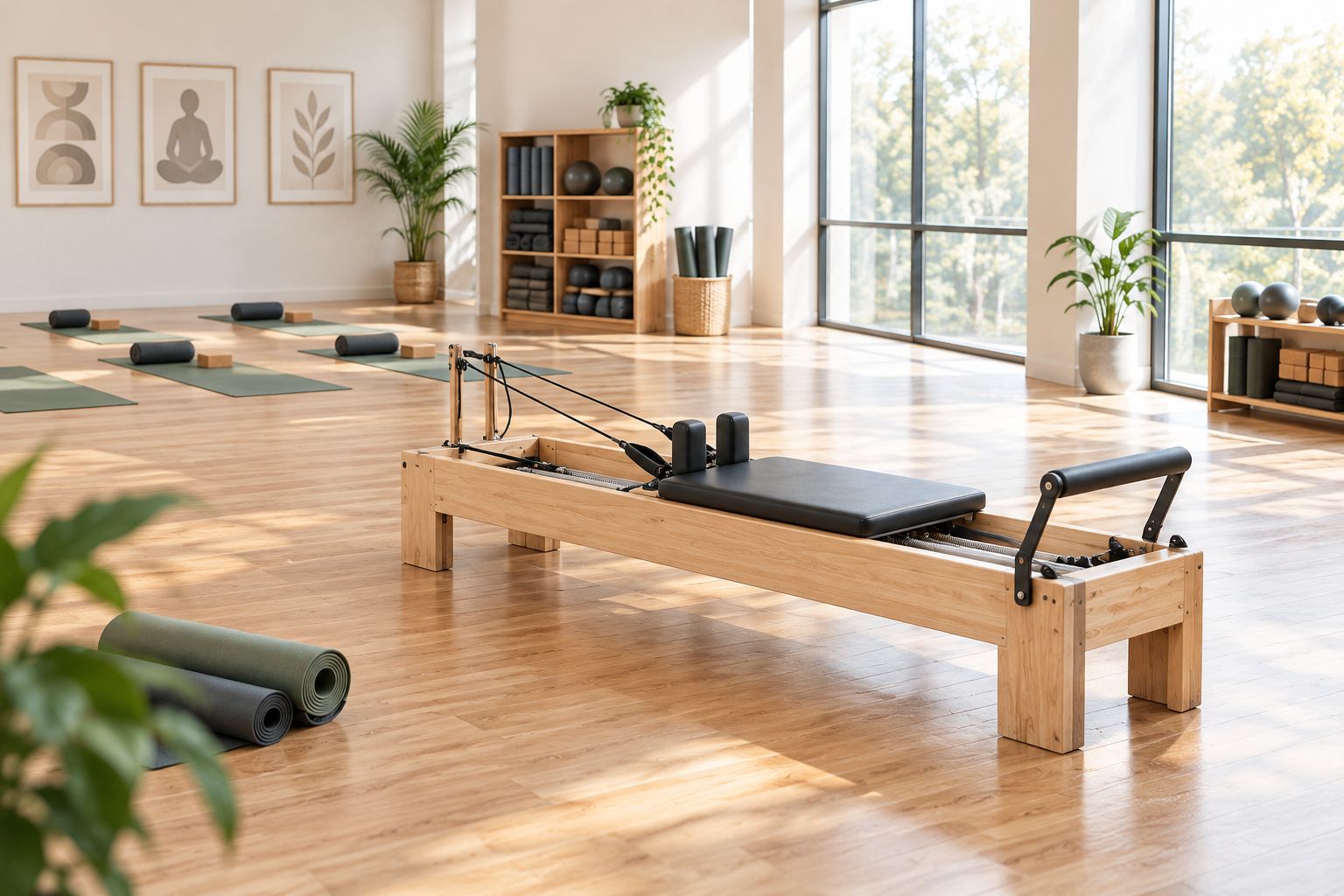
When planning your space for 2026, keep the following in mind: Do not determine the number of units based solely on the room’s floor area. Have the specific layout reviewed, including necessary clearances and access points. Requirements for escape routes and the permitted use of the space should also be included in this review.
Your result is a dimensioned floor plan showing the layout, accessory locations, and transport routes. Missing manufacturer specifications are open-ended review points—not an invitation to make estimates.
Translate your lesson into equipment criteria
Start by creating a simple comparison table. List your teaching requirements on the left and the necessary device features on the right. This turns a general purchasing intention into a verifiable specification.
Check the carriages, footrests, spring replacements, cable pulls, loops, and adjustment options using the provided exercises. Have someone show you how to make and check the adjustments. For group lessons, it is also important that instructors can clearly explain the same adjustments for all stations.
Kraftathlet We carry Pilates Reformers from Hegren and Elina Pilates. The next step is to choose a configuration tailored to your needs once your class schedule and floor plan are finalized. This does not replace the need to review the specific model specifications and what is included in the delivery.
A consistent, easy-to-understand device configuration is ideal for regularly led groups. Different operating systems require more explanation; additional features are only an advantage if your class actually uses them.
Conclude this step with a brief list of requirements:
- Planned exercises and required adjustment options.
- Manufacturer specifications regarding dimensions, weight capacity, and commercial use.
- Included accessories and expressly required additions.
- Operation, cleaning, and access to wear parts.
Choose between a fixed and a variable structure
A dedicated Reformer zone saves you the trouble of switching between yoga and Pilates. However, this space is not available exclusively for mat classes. Rotating use offers more space options but requires an efficient transportation and storage system.
Do not assume that movable, foldable, or vertically storable designs are all the same. Check each feature in the data sheet for the specific model. The presence of a transport wheel does not confirm that the unit can be stored upright or that it can be easily moved over thresholds.
Plan one complete trial run from the yoga room to the Reformer setup and back. Measure the actual time required in minutes, rather than assuming a general buffer. Test it with the staff who will be working there and the equipment that will also need to be moved later.
A proven, practical solution is one that is ideally suited for a mixed-use class room. The drawback remains the recurring effort required. For a permanently set-up Pilates area, a fixed setup is easier to organize but takes up space.
Finally, document who is responsible for setting up the equipment, where it is stored between classes, and which manufacturer’s instructions apply. Only then should the setup be included in your class schedule.
Arrange for delivery, installation, and handover
For your 2026 procurement, create a workflow from the approved floor plan to the handover of equipment. A desired course start date is not yet a confirmed delivery date. Coordinate the individual steps in writing before you publish binding class dates.
Kraftathlet We provide support with specifications, delivery, unloading, installation, and follow-up service. The key factor is which services have been agreed upon for your location and order. Be sure to clarify, in particular, whether unloading via stairs, disposal of packaging, and training are included in the quote.
Designate one point of contact on your end. This person will coordinate room details, access information, and any questions. This ensures that the vendor does not receive conflicting information from the rental department, faculty, and studio management.
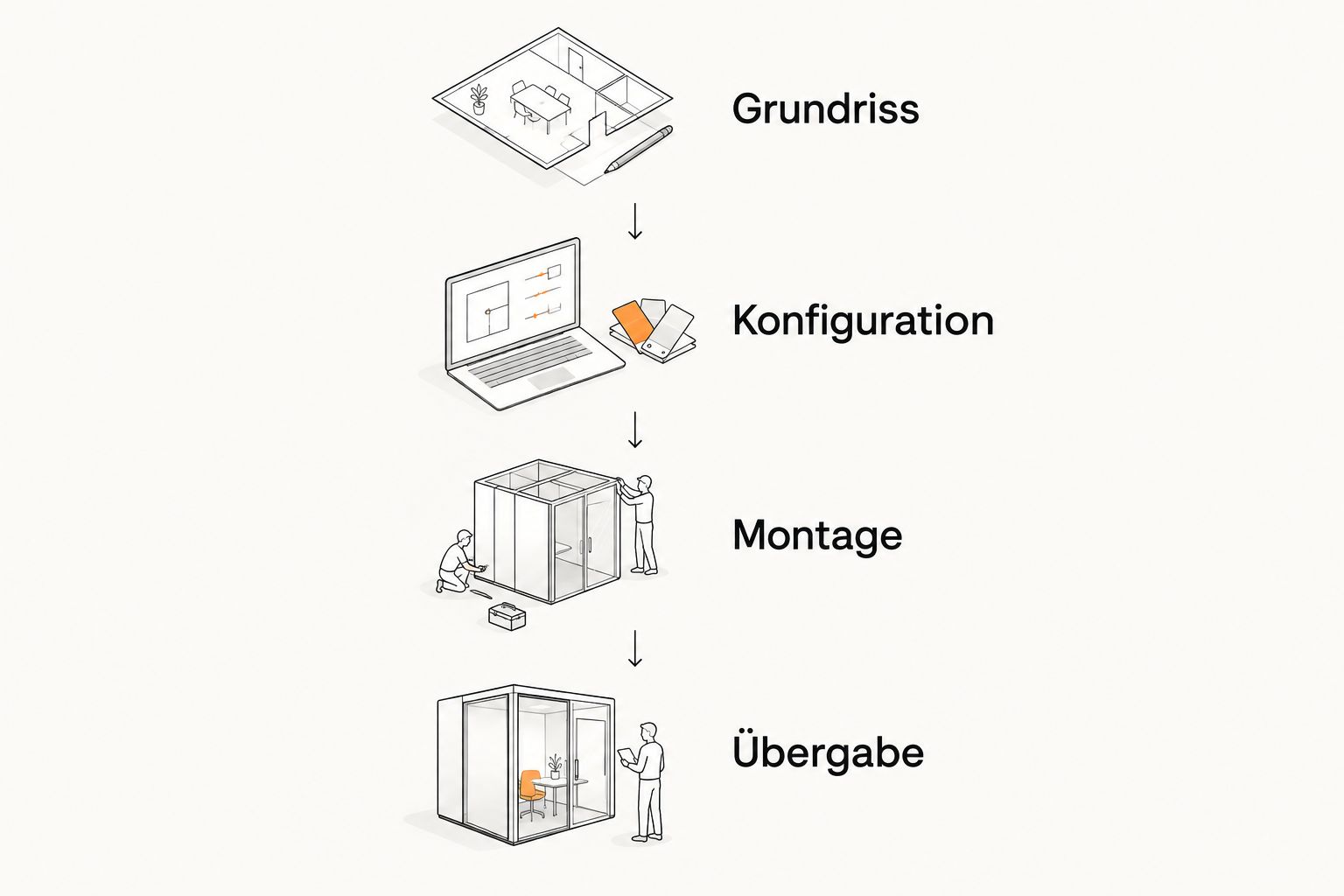
A handover should involve more than just setting the device down. Together, check the setup, operation, accessories, and documentation. Record any outstanding issues in the handover log and assign them to a responsible person.
The result is a coordinated process that includes defined responsibilities, a documented scope of work, and a procedure for follow-up inquiries after installation.
Organize cleaning, inspections, and the start of classes
Before the first class, determine who will inspect the equipment and which observations will be documented. Follow the manufacturer’s instructions for cleaning, inspections, and maintenance. General time intervals or arbitrary cleaning agents do not belong in your operating instructions.
Create a brief instruction guide for your teachers. It should include the recommended settings, instructions for using accessories, and procedures to follow in the event of unusual noises, damaged components, or unclear functions. Any device exhibiting unusual behavior should be kept out of the classroom until the issue has been professionally addressed.
For the start of classes in 2026, we recommend conducting an internal trial session without regular bookings. During this session, check not only the exercises but also arrival procedures, seating assignments, equipment changes, and cleaning. Note any areas where explanations are missing or pathways are blocked.
A documented procedure that even a substitute teacher can understand is ideal for day-to-day operations. The limitation of written instructions lies in situations where hands-on training is required.
Complete the preparations by ensuring that operational documentation has been approved, instructors have been trained, and a documented procedure for handling malfunctions is in place. Only then has the installation of equipment become a fully operational course offering.
Which Reformer option is right for your yoga studio?
First, compare the form factor and intended use; then compare the specific model. The following options are not ranked in order of preference: A tower configuration is not automatically the better choice simply because it includes additional components.
| Option | Ideal for | Advantage | Border and Checkpoint |
|---|---|---|---|
| Standard reformers, such as the Hegren TALMA 62 reformer | Yoga studios with a clear basic selection of Reformer classes | The selection focuses on the required reformer functions | Check the specific features, intended use, and suitability for your classes |
| Reformers with a tower, such as theElina Pilates Elite Advanced Reformer with Tower | Studios with explicitly planned tower classes | Combines the Reformer and Tower in a single setup | Take into account additional components, room height, and teaching skills |
| Model with a verified storage function | Yoga Studios with Flexible Space Utilization | Allows for storage in accordance with the manufacturer's specifications | Check the storage function, transport route, and actual effort required for relocation individually |
| A Unified Reformist Group with a Fixed Lineup | Yoga studios with their own Pilates area | Supports recurring classroom routines without the need to reconfigure the room | Takes up space on a long-term basis and requires a suitable course structure |
Your choice for 2026 will depend on the specific intended use. A standard reformer is the better option if it fully meets your teaching needs. A tower model is appropriate if qualified instructors will specifically teach the additional features and the space has been assessed for this purpose.
Also, compare quotes based on the same scope of services. Accessories, delivery, installation, training, and service must be clearly specified. Otherwise, you won't be comparing equivalent configurations.
Common Mistakes When Starting Out on the Reformer at a Yoga Studio
Do not apply the mat capacity to equipment spaces
A room with many yoga mats is not automatically suitable for the same number of Reformers. Equipment layout, movement areas, and supervision have different requirements. Plan capacity based on the specific model and the intended classes, not on the previous number of participants.
Don't confuse teaching experience with equipment training
An experienced yoga instructor is familiar with your students and your studio’s operations. For Reformer classes, she also needs the appropriate specialized training and knowledge of the equipment used. Therefore, keep class instruction qualifications, equipment training, and orientation to your studio’s operations separate.
Don't buy accessories unless you have a specific use for them
Boxes, jumpboards, and towers need a designated spot in the classroom. Without this, you’ll end up with extra work related to storage, cleaning, and explaining their use. First, determine which accessories are essential for your basic setup and which additional items you’ll plan to add only after a professional evaluation.
Don't treat the change in course as a side task
A reformer that can be moved around doesn't automatically solve space conflicts. The path must be clear, the storage area must be suitable, and the staff must be familiar with the process. Therefore, only incorporate a tested routine into the class schedule, and be sure to factor in the time needed to set up the space for the yoga class.
FAQ
Which Pilates reformer is right for my yoga studio?
The right reformer is one whose features, range of use, and operation align with your planned classes. First, compare the room layout and class format; then review the specific model, including what’s included in the package and the manufacturer’s documentation.
Can I offer yoga and Reformer Pilates in the same room?
Shared use of a space requires proper setup or a verified relocation procedure. Also check the storage location, transport route, and the manufacturer's guidelines for moving and storing the device.
How many reformers do I need to get started?
The appropriate number is determined by your verified layout, the care plan, and the scheduled classes. Do not base it on the number of yoga mats you’ve had so far.
Does my yoga studio need a Reformer with a Tower?
A Tower model makes sense if your curriculum explicitly calls for these additional components. Without this requirement, a standard Reformer is the more appropriate choice; room height and professional qualifications remain separate considerations when choosing a Tower model.
Is a yoga certification sufficient for teaching Reformer classes?
A yoga certification alone is no substitute for equipment-specific Reformer training. Be sure to also plan for hands-on training with the specific model and your studio’s internal operating procedures.
What should be included in a quote for Reformer equipment?
A comparable quote must specify the model, version, accessories, and the agreed-upon scope of services. Delivery, installation, training, and service must be clearly described rather than being implied.
Does Kraftathlet help with delivery and setup at the yoga studio?
Kraftathlet provides support with specifications, delivery, installation, and assembly, as well as follow-up service. Agree in writing on the services for your location and your specific order.
One last thing to check: Test the switch, not just the device
The most informative practice for a mixed-use studio begins after the Reformer class. Have your instructors fully prepare the space for the next yoga class: put away props, clean shared surfaces, rearrange equipment if necessary, and lay out mats.
If the rollback doesn't work, the spatial planning isn't complete yet. This can't be resolved by adding more device features or changing the course label. For your launch in 2026, a simple, repeatable operational workflow is a better foundation than equipment whose capabilities you can't utilize from an organizational standpoint.