

Summary
- For muscle building, 1.6 g of protein per kg of body weight per day is a scientifically proven guideline – more offers little additional benefit according to the largest meta-analysis (Morton et al., 2018).
- Carbohydrates are your training fuel: 3–5 g/kg keep glycogen stores and performance high, fat should not fall below 0.8 g/kg.
- The total daily amount is crucial – timing and supplements are merely fine-tuning.
- A calorie surplus of ~10–15% builds muscle without making you unnecessarily fat.
Nutrition in Strength Training: Protein, Macros & Timing for Real Muscle Growth
If you want to build muscle, the most important number is 1.6 g of protein per kilogram of body weight per day – that's the point at which additional protein amounts in the largest meta-analysis on the topic no longer showed any measurable advantage. Everything else – timing, shakes, exotic supplements – is fine-tuning that only matters once this foundation is in place. In this guide, you'll get the study-based amounts for protein, carbohydrates, and fat, a concrete daily plan, and the mistakes that cost most strength athletes progress.
Training is only the stimulus. The actual muscle building happens in the kitchen and in bed – that is, through nutrition and recovery. Those who train hard but eat too little or incorrectly leave a large part of their potential untapped. The good news: the basics have been scientifically well-established for years and are surprisingly easy to implement once you know the few key levers.
How much protein do you really need?
The official recommendation of the German Nutrition Society (DGE) for healthy adults is around 0.8 g of protein per kg of body weight. However, this amount only covers the maintenance needs of an untrained person – it is not intended to build new muscle mass under regular training stress.
For strength athletes, the data situation is different. The most comprehensive meta-analysis to date by Morton and colleagues (published in 2018 in the British Journal of Sports Medicine) evaluated 49 studies with 1,863 participants. The result: The increase in lean mass plateaued at approximately 1.62 g of protein per kg per day. Beyond that, more protein on average no longer provided a statistically significant additional benefit.
The practical guideline
Aim for 1.6 to 2.0 g/kg. The upper range is sensible if you are on a diet (protein then protects muscle mass) or are already very advanced. For example: If you weigh 80 kg, that's around 128 to 160 g of protein daily. Distribute this amount over 3–5 meals with 25–40 g each – this stimulates muscle protein synthesis multiple times a day, instead of just once in the evening.
Good protein sources
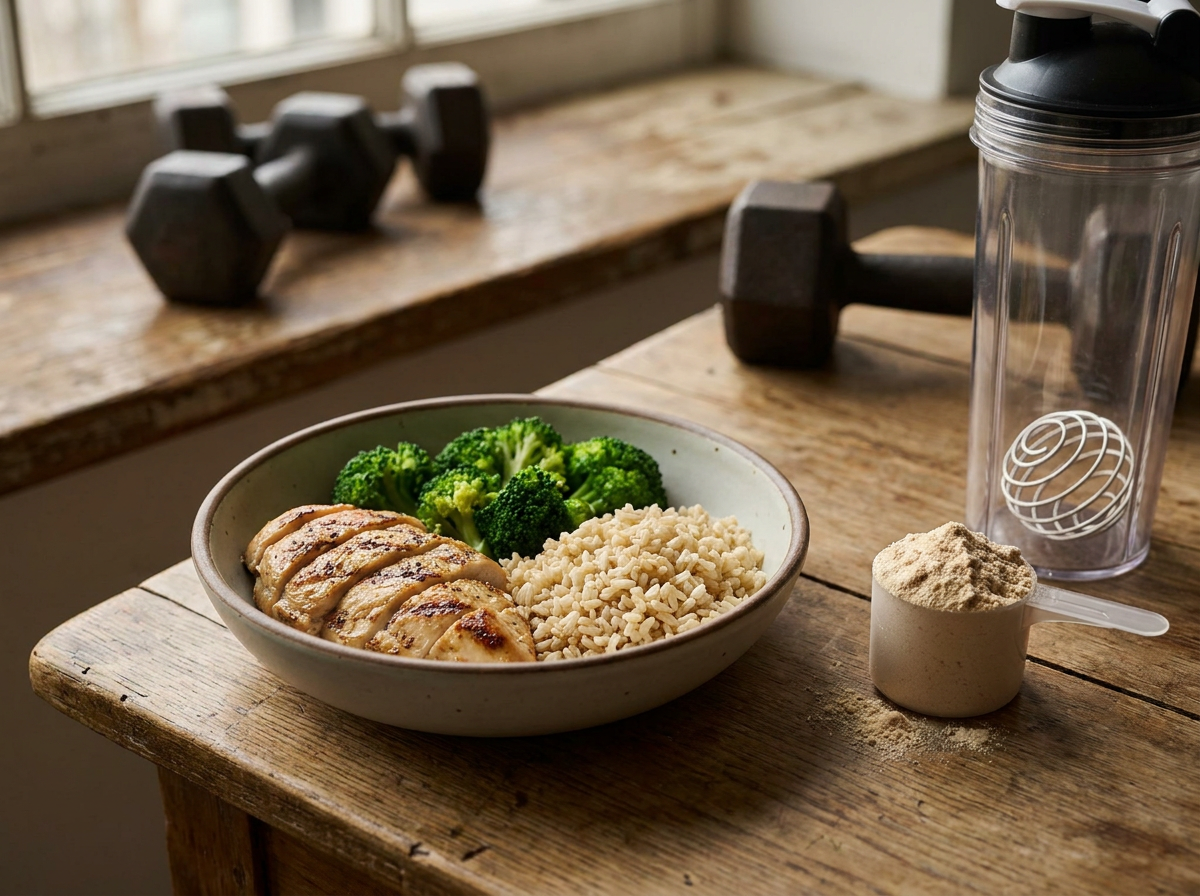
Animal sources such as chicken, turkey, lean beef, fish, eggs, low-fat quark, Skyr, and cottage cheese provide all essential amino acids in high quantities and are considered particularly "anabolically effective." Plant-based sources such as lentils, beans, tofu, tempeh, and soy products also work excellently – you just need to combine them cleverly to achieve a complete amino acid profile. If you don't meet your needs through regular meals, a whey or vegan protein powder can help. This is convenient but not essential – a powder is a food, not a miracle cure.
Carbohydrates: your underestimated performance fuel
Many strength athletes fear carbohydrates – unfairly. They replenish glycogen stores in the muscles and ensure that you can maintain intensity and volume during training. Without enough carbohydrates, training performance decreases, and that is precisely the stimulus for growth. Those who consistently eat too few carbohydrates often feel sluggish and weak during training.
For active strength athletes, 3 to 5 g of carbohydrates per kg of body weight are a guideline. With very high training volume or additional endurance sports, it can be more. Prefer complex, fiber-rich sources: oatmeal, rice, potatoes, whole-grain pasta, legumes, and fruits. They keep blood sugar more stable and provide valuable micronutrients. Simple sugars are not "forbidden" but play a subordinate role in muscle building.
Fat: less leverage, but not dispensable
Fat is essential for hormone production – including testosterone – and should therefore never be radically cut. Aim for at least 0.8 g of fat per kg of body weight; on average, most people get 20–30% of their total calories from fat. Focus on high-quality sources such as olive oil, nuts, avocado, fatty fish, and flaxseed. You can flexibly fill the rest of your calories with carbohydrates and protein – depending on personal preference and tolerance.
Macro distribution at a glance
| Macronutrient | Amount per kg | Example (80 kg) | Function |
|---|---|---|---|
| Protein | 1.6–2.0 g | 128–160 g | Muscle building & maintenance |
| Carbohydrates | 3–5 g | 240–400 g | Training performance, glycogen |
| Fat | 0.8–1.2 g | 64–96 g | Hormones, cell function |
Micronutrients & fluids: the forgotten foundation
Macros are the main levers, but without micronutrients, the engine won't run smoothly. Particularly relevant for strength athletes are vitamin D (especially in winter), magnesium (muscle function and sleep), iron (oxygen transport, often low in women and vegetarians), and omega-3 fatty acids. Those who eat a varied diet – plenty of vegetables, fruits, whole grains, and good fats – cover most of these without pills.
Equally important is fluid intake: even mild dehydration can measurably reduce strength and concentration. Aim for about 30–40 ml of water per kg of body weight spread throughout the day, and more during intense, sweat-inducing training. A good indicator is the color of your urine – light is good, dark signals a need to catch up.
Energy balance: Building, maintaining, or dieting?
Above all is the calorie balance. Muscle building is best achieved with a moderate surplus. Aim for about 10–15% above your maintenance needs – for many, this means an extra 250 to 400 kcal per day. A larger surplus does not build muscle faster, but primarily fat. If you want to lose weight and maintain muscle simultaneously, keep protein intake high (closer to 2.0 g/kg) and work with a moderate deficit.
| Goal | Calorie Balance | Protein | Expected per Month |
|---|---|---|---|
| Muscle Building | +10–15% | 1.6–1.8 g/kg | ~0.5–1 kg (beginners more) |
| Body Recomposition | Maintenance (±0) | 1.8–2.0 g/kg | slow, but noticeable |
| Definition / Diet | −10–20% | 2.0–2.2 g/kg | ~0.5 kg fat loss |
Nutrient timing around training
Timing is often overrated. As long as your daily amounts are correct, the infamous "anabolic window" is much wider than previously assumed. Nevertheless, there are sensible cornerstones: Eat a carbohydrate- and protein-rich meal 1–3 hours before training for stable energy. After training, a combination of protein and carbohydrates aids regeneration and glycogen replenishment. If you train fasted, simply have the meal afterwards – the total daily intake remains crucial.
What a bulking day could look like (80 kg)
A realistic day doesn't have to be complicated. For breakfast, for example, oatmeal with Skyr, berries, and nuts. At lunchtime, chicken or tofu with rice and vegetables. As a snack, low-fat quark with fruit or a handful of nuts. After training, a protein-rich meal with potatoes or rice. In the evening, fish or eggs with vegetables and some good oil. With this, you'll almost automatically reach around 150 g of protein, sufficient carbohydrates, and healthy fats – all without meticulous counting, once you've estimated the quantities a few times.
Buyer's Guide: How to combine nutrition & training
The best nutrition means little without the right training stimulus. For structured muscle building at home, stable, durable equipment that allows you to train progressively heavier is worthwhile. In our strength training category, you will find dumbbells, machines, and accessories for every level, and those looking for a complete training station will find what they need in the Smith Machines & Power Racks section. For the equally important recovery – without which no muscle grows – take a look at our recovery products.
As an authorized dealer with a full manufacturer's warranty, we only supply tested premium brands and advise you personally on the right equipment for your goal.
Common mistakes in strength training nutrition
Too little protein distributed throughout the day. Many only eat a large portion of protein in the evening. It's better to have several meals with 25–40 g of protein each to stimulate muscle protein synthesis multiple times.
Avoiding carbohydrates out of fear. This costs training performance and thus growth stimulus. Low-carb is rarely optimal for pure muscle building.
Too large a calorie surplus. "Bulking" with a 1,000 kcal surplus primarily builds fat. Moderate and patient beats fast and sloppy.
Supplements before fundamentals. If you spend €200 a month on powders but don't know your macros, you're investing in the wrong place. First the basics, then the fine-tuning.
Ignoring regeneration and fluids. Too little sleep, rest, or water hinders muscle growth – no matter how clean your diet is.
Frequently Asked Questions
How much protein do I need per day for muscle building?
Around 1.6–2.0 g per kilogram of body weight. For an 80 kg person, that's about 128–160 g daily. More than approximately 1.6 g/kg does not provide a measurable additional benefit on average, according to the Morton meta-analysis.
Do I need a protein powder?
No. Protein powder is just a convenient tool if you can't meet your needs through regular meals. Those who eat enough meat, fish, eggs, quark, or legumes can do without it.
Can I build muscle and lose fat at the same time?
Yes, especially as a beginner, after a training break, or if you are overweight. Keep protein intake high (around 2.0 g/kg) and work with a moderate calorie deficit. For advanced individuals, this happens very slowly.
When should I eat after training?
Within the next few hours – the "anabolic window" is wider than previously thought. The key is that your daily protein and calorie intake is correct, not the exact minute.
Are carbohydrates bad in the evening?
No. The timing of carbohydrates has no relevant impact on muscle building or body fat, as long as the daily balance is right. Some even sleep better with carbohydrates in the evening.
Conclusion
Successful strength training nutrition is no secret: meet your protein needs of around 1.6–2.0 g/kg, use carbohydrates as training fuel, keep healthy fats stable, and control whether you gain or lose mass via your calorie balance. Don't forget micronutrients and fluids – they are the foundation on which macros can even work. If these basics are in place, progress will come almost automatically – provided your training progressively challenges you and you allow yourself enough recovery.
Do you want to know what equipment suits your goals? Contact our team – we will advise you personally and honestly, from your first set of dumbbells to a complete home gym.