

Abstract
- Yes, you can combine yoga and Pilates—they complement each other: Pilates builds core strength and control, while yoga promotes flexibility, breathing, and calm. Together, they meet a wider range of client needs.
- For studios, the key factor is capacity per square meter: Those that offer both formats on flexibly convertible Reformer equipment can fill more class spots in the same space.
- The machine determines the class flow. Look for a steel frame ( for durability), quick spring/cable adjustment, removable shoulder supports, and an optional tower for versatility.
- Recommended studio base: Hegren TALMA 62 (steel, 5-spring, 245 cm, starting at €3,500), the 62CT+ Combo with tower (starting at €4,280) for maximum format versatility.
Combining Yoga and Pilates: The Studio Guide to Class Formats and Equipment
Yes—yoga and Pilates can be combined exceptionally well, and for a studio, that’s often the smartest step toward growth. The two disciplines don’t compete; they complement each other: Pilates builds core strength, stability, and controlled movement, while yoga enhances flexibility, breathing techniques, and mental relaxation. The market is giving you a boost: According to the DSSV key figures for the German fitness industry, German fitness facilities reached an all-time high of approximately 12.36 million members by the end of 2025, and class-based formats like Pilates—including the rapidly growing standing Pilates variant—are attracting new target groups well into the 60+ age group.
The key question, therefore, is not whether, but how you combine the two—and on which device. This guide shows you the formats and equipment criteria that determine class flow, utilization, and cost-effectiveness.
Why Yoga and Pilates Go Hand in Hand
Both methods share the same core principles: conscious movement, breathing, and body awareness. Pilates relies more on resistance and repetition—the Reformer makes strength measurable and allows for progressive control. Yoga focuses more on using your own body weight, holding poses, and stretching. For your clients, this combination means strength and mobility, tension and relaxation—all in one place.
The evidence also supports this dual approach. A Cochrane review on yoga for chronic, nonspecific lower back pain concludes that yoga likely improves back function and is comparable in effectiveness to physical therapy—with generally few side effects. Reformer Pilates, on the other hand, is known for targeted core and strength training. Those who offer both appeal to both rehabilitation-oriented and performance-oriented clients.
For Studios and Practices: Pilates Studio Equipment.
Three Ways to Integrate Yoga into a Pilates Studio
You don't have to revamp everything at once. There are three proven approaches:
1. Dedicated yoga time slots in the existing space
The easiest way to get started: Schedule yoga classes during off-peak hours when the Reformers aren’t in use, and use the same room with mats. It requires little investment and lets you quickly gauge demand. The only requirements are a floor and room acoustics that work for both activities.
2. Hybrid Classes on the Reformer
More challenging, but with variety: You combine Reformer Pilates sequences with yoga-inspired flows and breathing exercises. This is where equipment that can be adjusted in seconds really pays off—otherwise, the flow of the class will be interrupted by setup breaks.
3. Multi-format studio with a tower
The Expansion Level: A Reformer with a freestanding or wall-mounted tower expands your repertoire to include resistance band exercises in both standing and seated positions—ideal for combining yoga elements, standing Pilates, and classic Reformer training in a single machine. This allows you to offer more workout formats in the same space.
The real bottleneck is the equipment: capacity utilization and revenue per square meter
In a studio, a business model is based on utilization per square meter. Every Reformer station that remains empty due to a malfunction or cumbersome reconfiguration costs you money. That’s why it’s not just the upfront cost that matters, but the total cost of ownership (TCO) over several years: durability, downtime, serviceability, and how many different classes a machine can accommodate.
A few clear criteria can help you choose a device—formulated as things you should look for, not as a way to disparage individual providers:
| Criterion | What You Should Keep in Mind | Why It Matters in a Studio Setting |
|---|---|---|
| Frame Material | A solid steel frame instead of a wood or aluminum structure | Wooden joints can come loose under continuous loads; aluminum is less rigid under high loads; steel reduces downtime |
| Adjustability | Quick spring and cable adjustment, clear markings | Saves minutes per class and keeps the class flowing smoothly |
| Security | Removable shoulder supports, smooth-running carriage | Less repositioning, safer transitions between exercises, lower risk of injury |
| Versatility | Option for Tower, Jumpboard, or Seat Box | More workout options (yoga, standing Pilates, cardio) on a single machine |
| Operating Concept | Instructor-led rather than purely screen-based | Personalized support and a sense of community strengthen members' ties |
A note on the last point: Purely screen-based 24/7 models may seem cost-effective, but in practice they often lead to higher attrition rates because they lack personal guidance and a sense of community. Those who focus on instructor-led classes build customer loyalty—and loyalty is the most important revenue driver in the gym business.
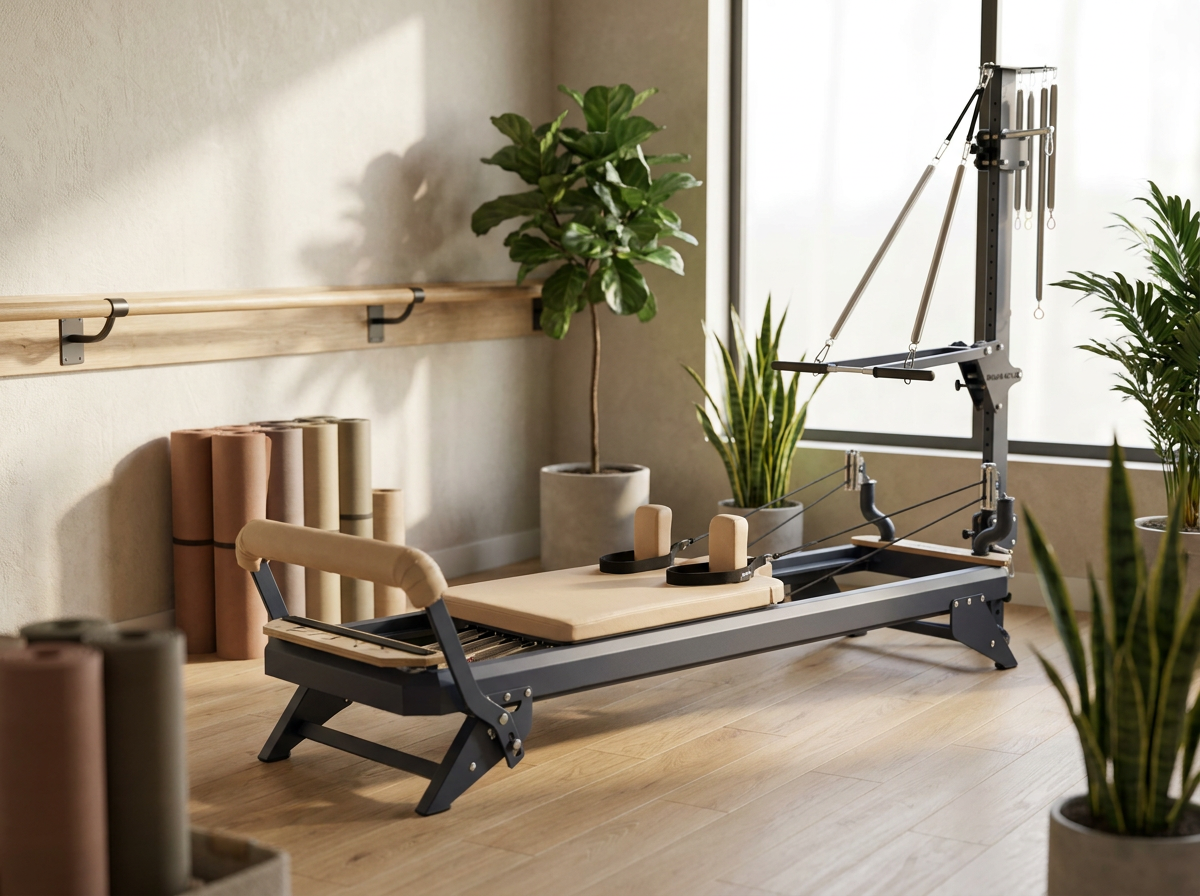
Hegren As a studio setup: the recommended models
For a studio that wants to permanently combine yoga and Pilates, we recommend the HegrenReformers as the foundation. They are manufactured in Greece, feature a steel frame, and are designed for continuous use in professional studios.
| Model | Brief Profile | Price starting at | Ideal for |
|---|---|---|---|
| Hegren TALMA 62 | Premium Studio Reformer, Steel Frame, 5-Spring System, 245 cm | 3.500 € | Studios looking for a long-lasting standard platform |
| TALMA 62 Black Elegance | Design variant of the TALMA 62 for premium studios | 3.100 € | Boutique studios with a focus on aesthetics |
| TALMA 62CT+ Combo | Reformer and Convertible Tower in One System | 4.280 € | Multi-format studios (yoga, standing Pilates, Reformer) |
If you want maximum format flexibility in a limited space, the 62CT+ Combo is the most cost-effective choice: It combines a Reformer and a Tower, turning a single equipment space into a multi-purpose tool for a wide variety of classes. For dedicated, high-quality Reformer use, the TALMA 62 provides a solid foundation.
Buying Guide: How to Make the Right Choice
Plan backward from the class schedule: What types of classes do you want to offer in twelve months, how many spots do you need per hour, and how quickly do you need to set up between exercises? This will determine the number of units you need and whether you’ll require tower systems. As an authorized dealer offering a full manufacturer’s warranty, Kraftathlet can advise you on studio planning, delivery, and setup—including installment payments via PayPal or leasing for business customers—so your investment fits your cash flow. Browse the Hegren Pilates collection, the overview of all Pilates reformers, and the matching Pilates accessories.
Common Mistakes When Combining Yoga and Pilates
- A format without an equipment strategy. Hybrid classes fail when switching between exercises disrupts the flow. Quick setups are a must.
- Don't just look at the purchase price. A cheap reformer that breaks down after 18 months ends up costing more in total cost of ownership (TCO) than a durable steel machine.
- Don't underestimate versatility. Without the tower option, you'll be limited to just a few formats and won't be making the most of your capacity.
- Put everything on screen. Concepts that rely solely on screens save on staff but increase staff turnover. Community is built by people.
- Don't forget about room acoustics and the floor. Yoga requires quiet, and Pilates requires stability—the room must provide both.
Frequently Asked Questions
Is it really possible to combine yoga and Pilates in a meaningful way?
Yes. Pilates builds strength and control, while yoga enhances flexibility, breathing, and relaxation. This provides clients with a more comprehensive offering and allows the studio to make better use of its space.
Do I need any special equipment for this combination?
For yoga-only slots, mats are sufficient. As soon as you start offering hybrid or Reformer classes, it’s worth investing in equipment with quick-adjustment features and an optional tower—so you can run multiple class formats on a single machine without long setup breaks.
Why choose a steel frame instead of wood or aluminum?
In continuous operation, durability is key. Wooden joints can come loose under constant stress, and aluminum is less rigid. A steel frame, such as the one found on the Hegren TALMA 62, reduces downtime and thus the number of empty class spots.
Which " Hegren" reformer is best suited for a multi-format studio?
The TALMA 62CT+ Combo, because it combines a Reformer and a Tower, allowing for yoga, standing Pilates, and classic Reformer classes to be held at a single station. For Reformer-only use, the TALMA 62 provides a solid foundation.
Is it worth the investment for a small studio?
Especially there, because every square meter counts. A durable, versatile machine increases the number of available formats and improves utilization—both of which significantly boost revenue per square meter.
Conclusion: First the concept, then the device
Combining yoga and Pilates isn’t a compromise—it’s an expansion of your offerings within the same space. Success depends on two things: a well-thought-out format and equipment that supports the flow of the classes and will last for years. Choosing a durable steel Reformer with a Tower option lays the foundation for a multi-format studio with high utilization. Want to run the numbers on your concept and determine the right number of machines? Talk to our studio experts —we’ll plan your setup together.
Sources: DSSV – Key Statistics on the German Fitness Industry; Cochrane Review – Yoga for Chronic Lower Back Pain.