

Abstract
- Yoga is safe during a complication-free pregnancy —the American College of Obstetricians and Gynecologists (ACOG) classifies modified yoga as an appropriate activity.
- The goal is about 150 minutes of moderate exercise per week; gentle yoga counts toward this.
- Starting in the second trimester , avoid lying on your back, deep abdominal twists, inverted poses, and hot yoga; use blocks and straps instead.
- Always consult your doctor or midwife before starting—especially if you have any symptoms or are experiencing a high-risk pregnancy.
Yoga is safe during a uncomplicated pregnancy and is expressly recommended by professional organizations: The American College of Obstetricians and Gynecologists (ACOG) classifies modified prenatal yoga as an appropriate, safe activity. The only important thing is that you adjust certain poses, listen to your body, and avoid hot yoga as well as certain positions. This guide shows you, trimester by trimester, what’s good for you—and what you’re better off avoiding.
Is yoga safe during pregnancy?
For most expectant mothers, the answer is yes. ACOG recommends that healthy pregnant women without complications get about 150 minutes of moderate exercise per week—for example, five 30-minute sessions. Gentle, modified yoga is specifically included in this recommendation and is described as a safe and effective prenatal activity. “Moderate” means you break a light sweat and can still carry on a normal conversation, but you can no longer sing.
First, an important disclaimer: This article is not a substitute for medical advice. Talk to your doctor or midwife before you start exercising—especially if you have any pre-existing conditions, are experiencing bleeding or premature contractions, or if your pregnancy is classified as high-risk. If you experience dizziness, pain, shortness of breath, or fluid leakage, stop the exercise immediately.
What Prenatal Yoga Can Do for You
Adapted yoga combines gentle movement, stretching, and mindful breathing. Many pregnant women find it a pleasant way to stay active, relieve tension, and find peace. Specifically, it can help in the following areas:
- Mobility & Posture: Gentle mobilization of the hips, back, and shoulders, which are put under increasing strain as the belly grows.
- Breathing & Relaxation: Mindful breathing techniques help you let go and are a good way to prepare for childbirth.
- Body Awareness: You'll learn to better sense stress and your limits.
- Pelvic Floor & Core: Targeted, gentle activation without straining or intense abdominal exercises.
Yoga by Trimester: Focus, Suitability, Adaptation
Your body changes at every stage—and so does the practice that’s right for you. This overview will help you adapt your practice as you grow.
| Trimester | Focus | Suitable | Adapt / Avoid |
|---|---|---|---|
| 1st trimester (Weeks 1–12) | Start slowly, breathe | Gentle stretches, Cat-Cow, easy standing poses | Overheating, intense abdominal work, exhaustion |
| 2nd trimester (Weeks 13–27) | Stability, Hip Opening | Supported Poses, Side Stretches, Pelvic Circles | Lying flat on your back, deep twists, lying on your stomach |
| 3rd trimester (starting at week 28) | Relaxation, Childbirth Preparation | Supported Poses, Four-Legged Poses, Breathing and Relaxation Exercises | Balance Poses Without a Wall, Standing for a Long Time |
You should avoid these positions
Some postures and conditions are not ideal during pregnancy. The most important points:
- Hot Yoga / Bikram: Rooms with temperatures of 35–40 °C pose a risk of overheating—ACOG advises against this during pregnancy.
- Lying flat on your back starting in the second trimester: The weight of the uterus can compress major blood vessels; instead, try lying slightly elevated or on your side.
- Deep twists and forceful forward bends: instead, open, gentle twists from the thoracic spine.
- Prone position: No longer recommended once the belly starts to grow.
- Inverted poses and risky balances: Risk of falling—only with a wall or chair, and only if you feel safe.
Equipment: Practice Gently and Safely
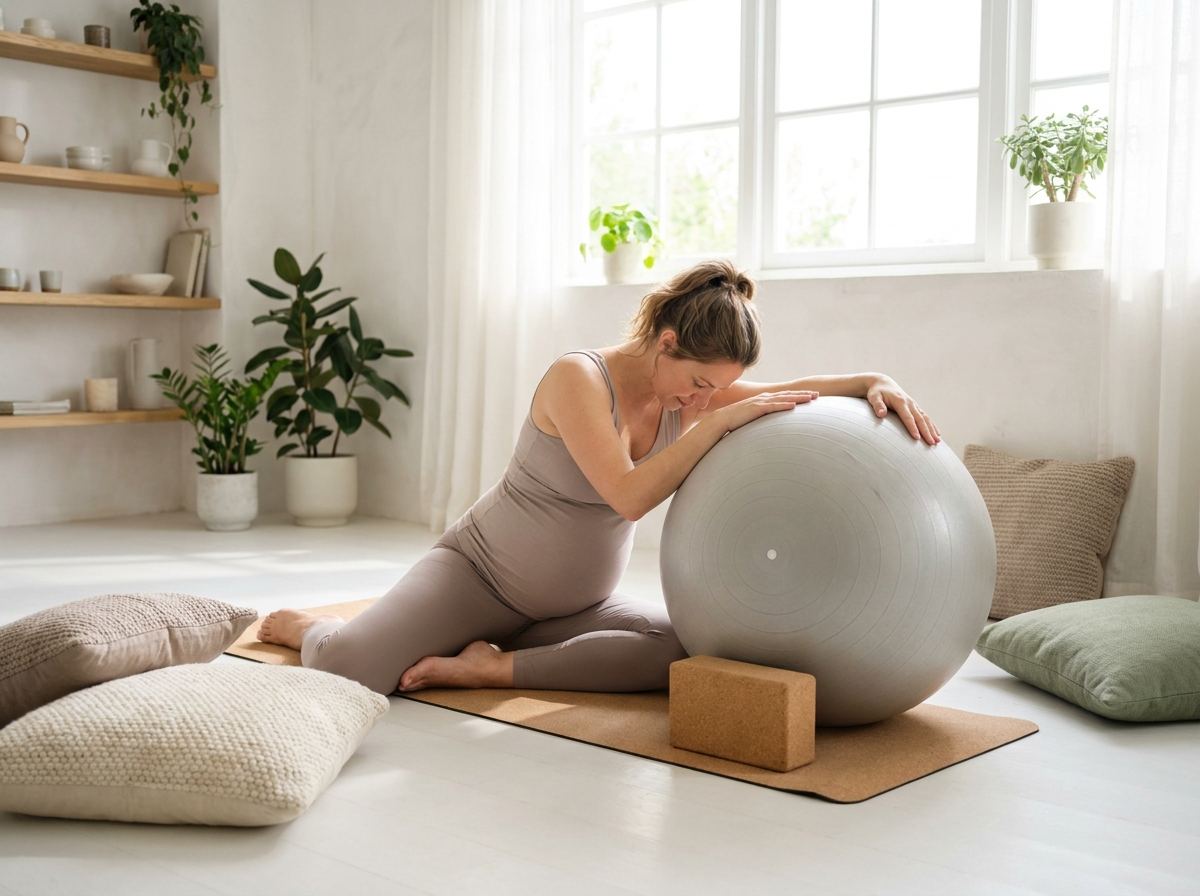
The right equipment makes prenatal yoga more comfortable and safer. A non-slip yoga and exercise mat that’s thick enough provides cushioning for your joints and knees. Blocks and straps bring the floor closer to you and take the pressure off standing poses and stretches. A soft exercise or Pilates ball is ideal for mobilizing your pelvis while seated or for relaxing with support.
If you work out at a studio, guided, low-impact Reformer Pilates can be a great addition—but only under the supervision of experienced instructors and on a stable machine. Studios can find the right Reformers and studio equipment at Kraftathlet . As an authorized dealer offering a manufacturer’s warranty, we provide honest, brand-agnostic advice; our customers rate us ★ 4.88/5.
Common Mistakes
Don't be too ambitious and keep going as you did before. Pregnancy isn't the time for new personal bests or deep stretches—the hormone relaxin loosens ligaments, making it easier to overstretch.
Ignore warning signs. Dizziness, pain, shortness of breath, or bleeding mean you should stop immediately and seek medical attention.
Stay in the supine position. This becomes uncomfortable and awkward starting in the second trimester—it’s better to lie on your side or with your head elevated.
Do not begin without approval. Especially in the case of high-risk pregnancies, it is mandatory to consult a doctor before your first yoga session.
Frequently Asked Questions
When can I start doing yoga during pregnancy?
If you’re having an uncomplicated pregnancy, you can start exercising gently right from the beginning. If you haven’t been active before, start slowly and build up gradually. Check with your doctor or midwife before you begin.
Is yoga safe during the first trimester?
Generally speaking, yes, as long as there are no complications. Avoid overheating and intense abdominal exercises, and listen to your body. If you feel nauseous or exhausted, short, gentle workouts are better than long sessions.
Which yoga poses should be avoided during pregnancy?
Hot yoga, lying flat on your back starting in the second trimester, deep twists, lying on your stomach, as well as inversions and risky balances without support. Opt for supported, open variations using blocks, straps, or the wall.
Can yoga help with prenatal preparation?
Many pregnant women find breathing and relaxation exercises to be helpful preparation. Yoga is not a substitute for a childbirth class, but it complements it well. Talk to your midwife about the right combination for you.
Is an online course enough, or is an in-person course better?
Both options are possible. A special in-person prenatal class has the advantage of having a trained instructor correct your form. When practicing online at home, you have more flexibility—but be sure to pay special attention to proper, safe form.
Conclusion
Gentle, adapted yoga is a safe and soothing way to stay active during a uncomplicated pregnancy. Adjust your practice according to each trimester, avoid hot yoga, lying on your back, and risky poses, use blocks, straps, and a mat—and get the go-ahead from your healthcare provider beforehand. This way, yoga will safely guide you through all three trimesters.
Are you looking for the right mat or studio equipment? Contact our team —we'll give you personalized, honest advice.
Sources: American College of Obstetricians and Gynecologists (ACOG), “Physical Activity and Exercise During Pregnancy” (acog.org) & Committee Opinion No. 804 (acog.org). This information is not a substitute for medical advice.