

Abstract
- Gentle evening yoga activates the parasympathetic nervous system —the part of the nervous system responsible for rest and relaxation.
- A recent network meta-analysis (2025, 30 studies, over 2,500 participants) ranks yoga among the most effective forms of exercise for improving sleep.
- Just 10–20 minutes of gentle exercises that involve long exhalations can make it easier to fall asleep.
- It's important to do slow, held poses—no sweaty flow yoga right before bedtime.
Yoga for Better Sleep: A Gentle Evening Routine with 6 Exercises
Yoga helps you fall asleep because calm, held poses combined with slow breathing activate the parasympathetic nervous system—the part of the autonomic nervous system that helps the body wind down. A network meta-analysis published in 2025, which included 30 randomized studies and over 2,500 participants, even ranks yoga among the most effective forms of exercise for improving sleep quality.
In this guide, you'll find a gentle evening routine with six exercises, the proper breathing techniques to go with them, and the most important rules to ensure that your yoga actually helps you fall asleep—instead of keeping you awake.
Why Yoga Helps You Fall Asleep
The most common reason for trouble falling asleep is a nervous system that doesn’t switch to rest mode in the evening: racing thoughts, tension, a mind full of worries. This is exactly where evening yoga comes in. Slow, held stretches reduce physical tension, and a consciously prolonged exhalation signals safety and relaxation to the brain.
So this effect is not a coincidence, but can be explained physiologically: Through breathing and the reduction of muscle tension, you shift the balance from the “activation system” (sympathetic nervous system) to the “recovery system” (parasympathetic nervous system). You’ll find the same calming principles in Yin Yoga, which involves holding poses for long periods of time.
What Matters in the Evening
There’s one simple rule for the evening: slow instead of fast, hold instead of flowing, breathe instead of straining. Intense, energizing sequences like a dynamic Sun Salutation are better suited for the morning. In the evening, you want the opposite: to wind down.
Proper Breathing: The Most Important Factor
Before you start the poses, it’s worth focusing on your breathing. The most effective technique for the evening is a prolonged exhalation: inhale for about 4 seconds and exhale for 6–8 seconds. The long exhalation is key because it stimulates the parasympathetic nervous system particularly strongly. Just ten calm breaths while lying down can noticeably lower your heart rate and help you transition into sleep.
The 6-step evening routine (10–20 minutes)
This sequence is designed to guide you step by step into a deeper state of relaxation—from gentle stretches to complete stillness while lying down. Hold each pose for 1–3 minutes, continuing to breathe calmly throughout.
| Exercise | Effect | Duration |
|---|---|---|
| 1. Child's Pose (Balasana) | Relieves tension in the back and shoulders, soothes | 1–2 min |
| 2. Cat-Cow (Marjaryasana) | Gently mobilizes the spine | 1 min |
| 3. Seated Forward Bend (Paschimottanasana) | Stretches the back and the backs of the legs | 1–2 min |
| 4. Lying Twist | Relieves lower back tension | 1 min per page |
| 5. Legs Up the Wall (Viparita Karani) | Relieves pressure on the legs, reduces tension | 3–5 min |
| 6. Final Relaxation (Savasana) | Complete stillness, drifting off to sleep | 3–5 min |
You can do the routine right in bed or on a mat next to it. It’s important to have a comfortable, non-slip surface—a good yoga or exercise mat makes holding the poses much more comfortable.
Optimize Your Evening Environment
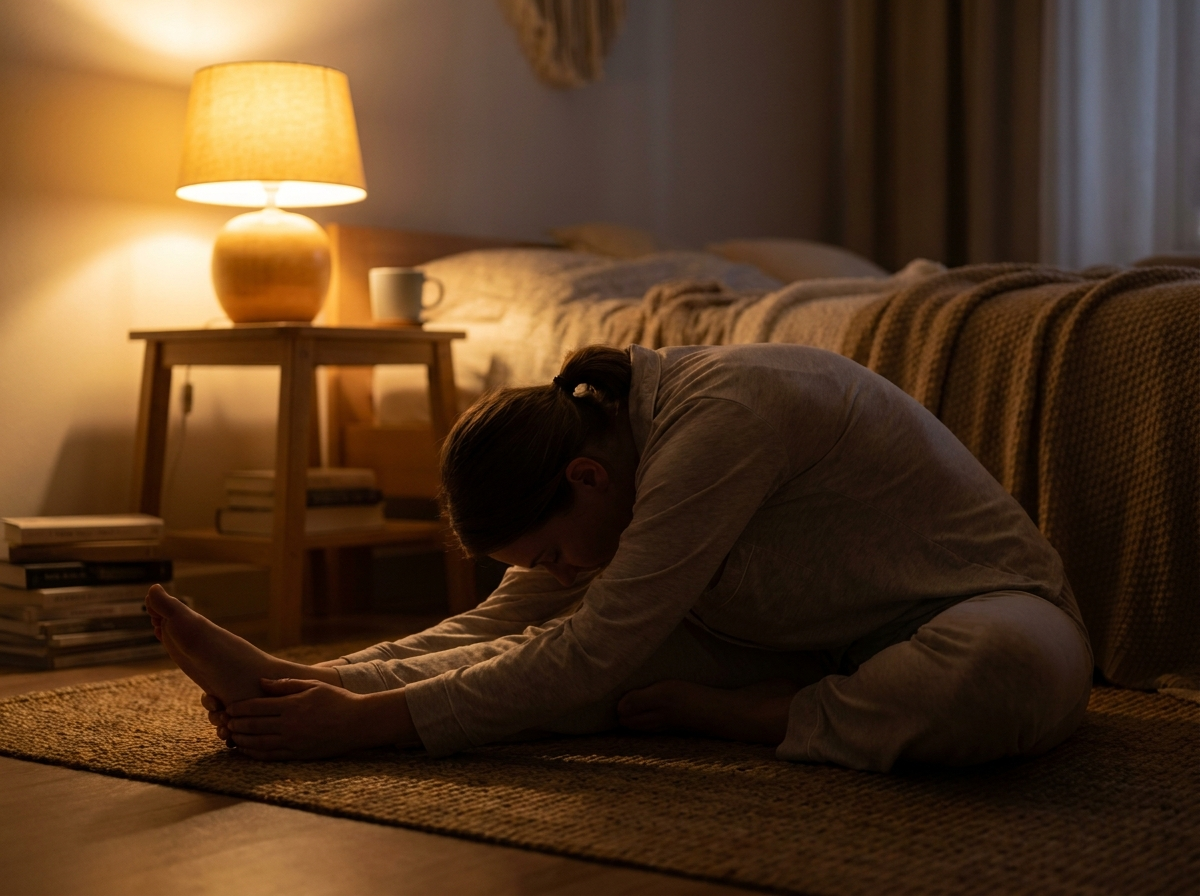
Yoga works best when the environment is right. Dim the lights 30–60 minutes before your routine, put your phone away, and keep the room on the cooler side. These cues support your body’s natural melatonin production and enhance the effects of the exercises. If you want to deepen your relaxation, you can use a bolster or a blanket for support—you’ll find the right accessories for Pilates and yoga here.
Also of interest to studios
More and more Pilates and yoga studios are adding calm evening and restorative classes to their course offerings because these help retain a loyal clientele and increase studio occupancy during off-peak hours. If you run a studio or are planning to open one, you’ll find high-quality studio equipment in our “Hegren ” category—everything you need to offer a professional, holistic experience, from mat classes to Reformer sessions.
Common Mistakes in Evening Yoga
- Don't practice too vigorously. A sweaty flow yoga session right before bed will keep you awake instead of making you tired.
- Stretching too aggressively. It's not about maximum stretch, but about letting go. Pull, yes; pain, no.
- Forgetting to breathe. Without the prolonged exhalation, you’re missing the most important tool for relaxation.
- Cell phone next to the mat. Blue lights and notifications disrupt the whole routine.
- Giving up after just two evenings. Just like sleep hygiene, evening yoga takes a few weeks for the benefits to take hold.
Frequently Asked Questions
Which yoga pose is best for falling asleep?
Legs-Up-the-Wall (Viparita Karani) and Final Relaxation (Savasana) are considered particularly calming. Both require very little effort and are specifically designed to help you unwind.
How long should I do yoga in the evening?
Just 10–20 minutes is enough. What’s more important than the duration is calmness: slow poses, long exhalations, and no pressure to perform.
Can I do evening yoga right in bed?
Yes. Gentle poses such as the seated forward bend, the supine twist, or Savasana can be done easily in bed. For more stable poses, a mat on the floor is more comfortable.
How does evening yoga fit into a bedtime routine?
Gentle yoga can be part of a personal evening routine. If sleep problems persist, professional advice is necessary.
Do I need to have any prior yoga experience?
No. The evening routine is intentionally kept simple and is also suitable for beginners. You can find a more comprehensive introduction in the Yoga Guide for Beginners.
Conclusion
Yoga is one of the most enjoyable and effective rituals for better sleep—provided you practice it slowly and calmly in the evening. With a short, held sequence and consciously prolonged exhalations, you can wind down your body and mind and prepare for the transition to sleep. Try this 6-part routine consistently for a few weeks and see how it changes how easily you fall asleep.
Are you looking for the right mat or accessories for your evening routine? Talk to our team —we'd be happy to help.