

- Fitness equipment is among the most germ-laden surfaces: studies found bacterial loads of 390 to 3,720 CFU/cm2 on exercise machines, with staphylococci being the most common genus.
- A reformer is touched by the skin, sweat, and hands of many members. Without a strict cleaning protocol, it becomes a germ bridge – a real risk to member retention and reputation.
- Material is crucial: non-porous, wipeable surfaces (steel frames, removable covers) can be disinfected in seconds. Wood and open foam parts absorb moisture.
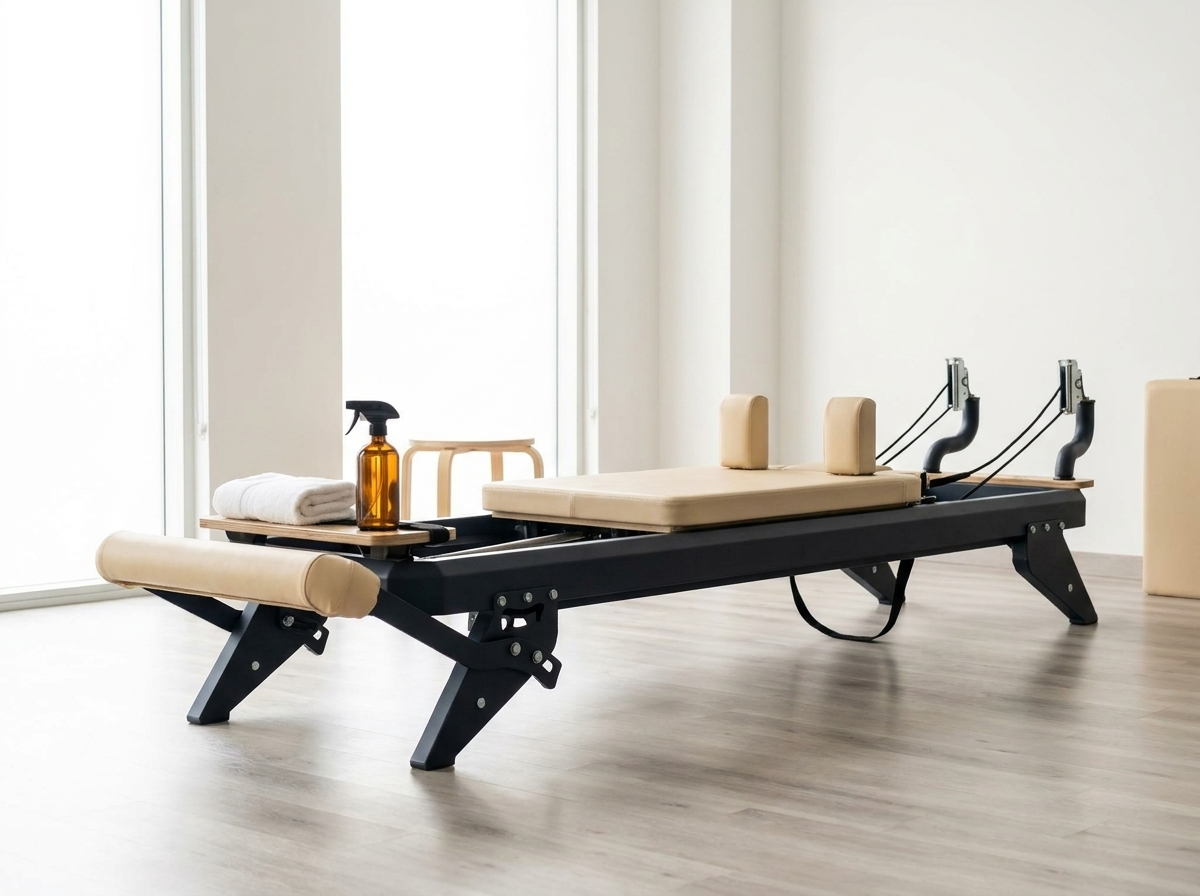
- The Hegren TALMA 62 (steel frame, removable covers) is designed as a criteria-based studio hero: hygienic, wipeable, durable.
Reformer Hygiene in the Studio: How to Keep Your Pilates Reformer Clean and Safe
Exercise equipment is among the most heavily germ-colonized surfaces in public spaces – studies in fitness studios found bacterial loads ranging from 390 to 3,720 colony-forming units per square centimeter. A Pilates reformer, touched daily by dozens of members with their hands, feet, and backs, is no exception. Good hygiene is therefore not a minor detail but a central quality feature of your studio.
This guide shows you why reformer hygiene goes beyond mere cleanliness, what a practical cleaning protocol looks like, and what to consider when purchasing equipment to make cleaning quick rather than tedious.
Why Reformer Hygiene Determines Success
A reformer is a contact device. Shoulder rests, foot bar, carriage, handles, and upholstery come into direct contact with skin and sweat – and that happens by the minute when a group changes places. Microbiological studies of fitness surfaces show diverse bacterial communities, with staphylococci regularly being the most common genus; some studies also detected resistant germs on the majority of equipment.
For your studio, this has three consequences. First, health: clean equipment reduces the risk of skin and infection problems. Second, member retention: a visibly well-maintained studio appears professional – a sticky cushion reliably drives away customers. Third, value preservation: regular, material-appropriate care extends the lifespan of your investment.
The Material Determines the Cleaning Effort
How hygienic a reformer remains in everyday use is largely decided during the purchase – by the choice of material. Non-porous surfaces can be wiped and disinfected in seconds. Porous or open materials absorb moisture and become a reservoir.
| Component / Material | Hygiene Suitability | What to look for |
|---|---|---|
| Steel or aluminum frame (painted) | Very good – non-porous, wipeable | Keep powder coating intact |
| Wooden frame (oiled/untreated) | Limited – absorbs moisture | Only sealed wood, clean gently |
| Faux leather upholstery (closed-pore) | Good – wipeable | No aggressive solvents |
| Open foam / fabric cover | Poor – moisture trap | Use removable, washable covers |
| Straps and ropes | Medium – hand contact | Clean regularly, replace when worn |
The advantage of a steel frame with removable covers is obvious: the frame is simply wiped down, and the covers are washed or changed. This is precisely the principle behind the Hegren TALMA 62 (steel frame, 245 cm), for which there is a perfectly fitting, six-piece cover set – a practical example of how material choice simplifies daily hygiene.
The Practical Cleaning Protocol for Your Studio
Hygiene only works if it fits into the workflow. Three levels have proven effective:
| Interval | Action | Focus |
|---|---|---|
| After each session | Wipe contact surfaces (skin-friendly disinfectant) | Upholstery, shoulder rests, foot bar, handles |
| Daily | Clean entire equipment, check carriage and rails | Frame, rails, spring hooks |
| Weekly | Wash/change covers, inspect springs and ropes | Deep hygiene + safety |
Choose the Right Products
Use skin-friendly surface disinfectants without aggressive solvents. Cleaners based on strong alcohols or harsh chlorine compounds can make faux leather brittle and damage paint. Studies on equipment disinfection show that suitable products effectively reduce germ load – the correct contact time is crucial. Allow the product to work briefly instead of wiping it dry immediately.
Involve Members
Provide disinfectant wipes or sprays in prominent locations and communicate a simple rule: whoever uses the equipment wipes down the contact surfaces afterward. This relieves your team and signals to everyone that hygiene is part of the studio. A short, friendly sign on the equipment often works better than any admonition – it makes proper behavior a natural part of the studio culture.
Hygiene, Class Flow, and Member Retention
In a group studio, hygiene also dictates the flow. When ten reformers need to be quickly and safely wiped down between two classes, every second per piece of equipment counts. Equipment with smooth, easily accessible surfaces and removable covers can be cleaned in a fraction of the time compared to intricate constructions with many crevices. This keeps your schedule tightly packed without sacrificing cleanliness.
Members immediately feel the difference. A fresh, odor-neutral cushion conveys appreciation and professionalism – and is one of the most underestimated factors for repeat bookings. Studies on germ contamination of exercise equipment are publicly known; many customers today consciously pay attention to how clean a studio keeps its equipment. Visible hygiene routines thus become a trust-building argument that sets you apart from competitors – without major investment.
Hygiene and Safety Go Hand in Hand
Weekly deep cleaning is the ideal time to address safety and hygiene in one go. While thoroughly cleaning springs, spring hooks, and ropes, you also check them for wear: frayed ropes, corroded hooks, or weakening spring tension are noticed early, before they become a problem during operation. A non-porous steel frame has a double advantage here – it's not only easy to disinfect but also shows early damage more clearly than oiled wood, which can conceal moisture and microcracks.
Thus, pure cleaning turns into a small, regular maintenance routine. This not only protects the health of your members but also their safety on the equipment – and your operations from unplanned breakdowns in the middle of classes.
Don't Forget Air Quality and Flooring
Hygiene doesn't end with the equipment. A well-ventilated room reduces humidity, where germs thrive, and helps covers dry faster. The floor under and around the reformers also belongs in the cleaning plan – barefoot contact surfaces are an often-overlooked point. A quick daily floor cleaning and regular ventilation complete your hygiene concept, ensuring your studio is not only clean but also feels fresh.
Reformer Selection with Hygiene in Mind: Buying Guide
If you're furnishing a new studio or expanding, hygiene-friendliness is a real purchasing criterion – on par with stability and the spring system. Look for:
Non-porous frames. Powder-coated steel can be wiped down countless times without damage.
Removable, washable covers. They separate hygiene from the equipment: wash instead of scrub.
Smooth, accessible construction. Few crevices and easily reachable surfaces shorten cleaning time per machine – this adds up for an entire studio row.
The Hegren TALMA 62 meets these criteria as a steel reformer with removable covers (starting from 3,500 EUR); the matching cover set and other accessories can be found under Premium Pilates Accessories. Our collection Pilates Reformers shows the entire range of equipment. As an authorized dealer with over 5,000 satisfied customers, we advise you on material suitability – from a single piece of equipment to an entire studio setup.
Common Mistakes in Reformer Hygiene
Aggressive cleaners. Overly harsh agents destroy upholstery and paint – and cost you more in the long run than they save.
Only cleaning the upholstery. Handles, foot bar, and spring hooks are often forgotten, even though they are constantly touched.
No contact time. Disinfectant wiped dry immediately has little effect. Allow it to work briefly.
Overlooking springs and ropes. Hygiene and safety go hand in hand: check for wear during weekly cleaning.
Frequently Asked Questions
How often should a studio reformer be cleaned?
Contact surfaces after each session, the complete equipment daily, and deep cleaning with cover washing weekly. In busy studios, wiping between classes is a must, not an option.
Which disinfectant is suitable for reformers?
Skin-friendly surface disinfectant without harsh solvents or high chlorine concentration. Such products effectively clean without damaging faux leather and paint. Pay attention to the manufacturer's specified contact time.
Is a wooden reformer unhygienic?
Not automatically – but only sealed, well-treated wood is easy to clean. Untreated or oiled surfaces absorb moisture. Steel frames with removable covers are easier to maintain in continuous operation.
How does hygiene protect my investment?
Material-appropriate cleaning prevents brittle upholstery, corrosion, and premature wear. Proper care significantly extends the lifespan of a high-quality reformer – thereby reducing overall costs over the years.
Are removable covers really worth it?
Yes. They separate hygiene from the equipment: you wash or change the cover instead of laboriously scrubbing the upholstery. This saves time per machine – a clear advantage when you have multiple reformers.
Conclusion
Reformer hygiene is not an annoying add-on but part of your studio quality – it protects the health of your members, your reputation, and your investment. Half the work is decided during purchase: choosing non-porous steel frames and removable covers makes daily cleaning quick and material-friendly. The rest is a clear protocol and a bit of routine.
Are you planning new studio equipment or want to know which reformer is hygienically easiest to maintain? Talk to our team – we will advise you personally.
Sources: Mukherjee et al. (2021), Investigation and disinfection of bacteria and fungi in sports fitness center, Environ Sci Pollut Res; Dai et al. (2015), Diversity of Bacterial Communities of Fitness Center Surfaces, NCBI.