

Abstract
- The Olympic barbell is the standard: 20 kg, 2,200 mm long, 28 mm grip diameter (men's) – the women's bar weighs 15 kg and has a 25 mm grip diameter.
- The most important quality characteristic is tensile strength: high-quality rods have a tensile strength of around 190,000–215,000 PSI.
- Needle bearings spin faster (weightlifting), while bushings run more smoothly and last longer (powerlifting, gym).
- For gyms, durability, longevity, and the finish are key—for a home gym, a sturdy, all-purpose bar is often sufficient.
Buying a Barbell: The Complete Buying Guide for the Gym and Home Gym
The right barbell is the 20-kg Olympic bar, which is 2,200 mm long and has a grip diameter of 28 mm—it fits any standard bar sleeve (50 mm) and covers all basic exercises, from deadlifts to bench presses. The key factors determining quality are tensile strength, bearings, and coating—not the brand name on the bar.
In this buying guide, you'll learn what really matters when choosing a barbell, what differences justify the price, and which bar is right for your needs—whether in a commercial gym or your own home gym.
The Olympic barbell as the standard
When people talk about a “barbell,” they almost always mean the Olympic bar. It has become the standard because it fits virtually all weight plates, racks, and stations. You should know the key measurements before you buy one.
| Characteristic | Men's Clothing Rack | Women's section |
|---|---|---|
| Weight | 20 kg | 15 kg |
| Length | 2,200 mm | 2,010 mm |
| Handle diameter | 28 mm | 25 mm |
| Sleeve diameter | 50 mm | 50 mm |
Note: Powerlifting bars are often slightly thicker (28.5–29 mm) and stiffer, while pure weightlifting bars have a more pronounced “whip” (flex). For most gyms and home gyms, a 28-mm multipurpose or all-around bar is the best choice.
The 5 Most Important Purchase Criteria
1. Tensile Strength
Tensile strength indicates how much stress the steel can withstand before it permanently deforms. It is measured in PSI. Inexpensive bars start at around 120,000–150,000 PSI; good-quality training bars are rated at 190,000 PSI and above; and high-quality bars are rated at 215,000 PSI. The higher the value, the more resilient and durable the bar—a key criterion, especially for continuous commercial use.
2. Bearings: Needle Bearings vs. Bushings
The sleeves on a barbell rotate to protect the wrists during dynamic exercises. There are two systems for this:
- Needle bearings: fast, smooth rotation—ideal for Olympic weightlifting (snatch, clean and jerk).
- Bushings (usually bronze): smoother, more controlled rotation—durable, low-maintenance, and ideal for powerlifting and general gym use.
For most users, high-quality sockets are the more sensible choice: durable, more affordable, and more than adequate for squats, deadlifts, and bench presses.
3. Knurling
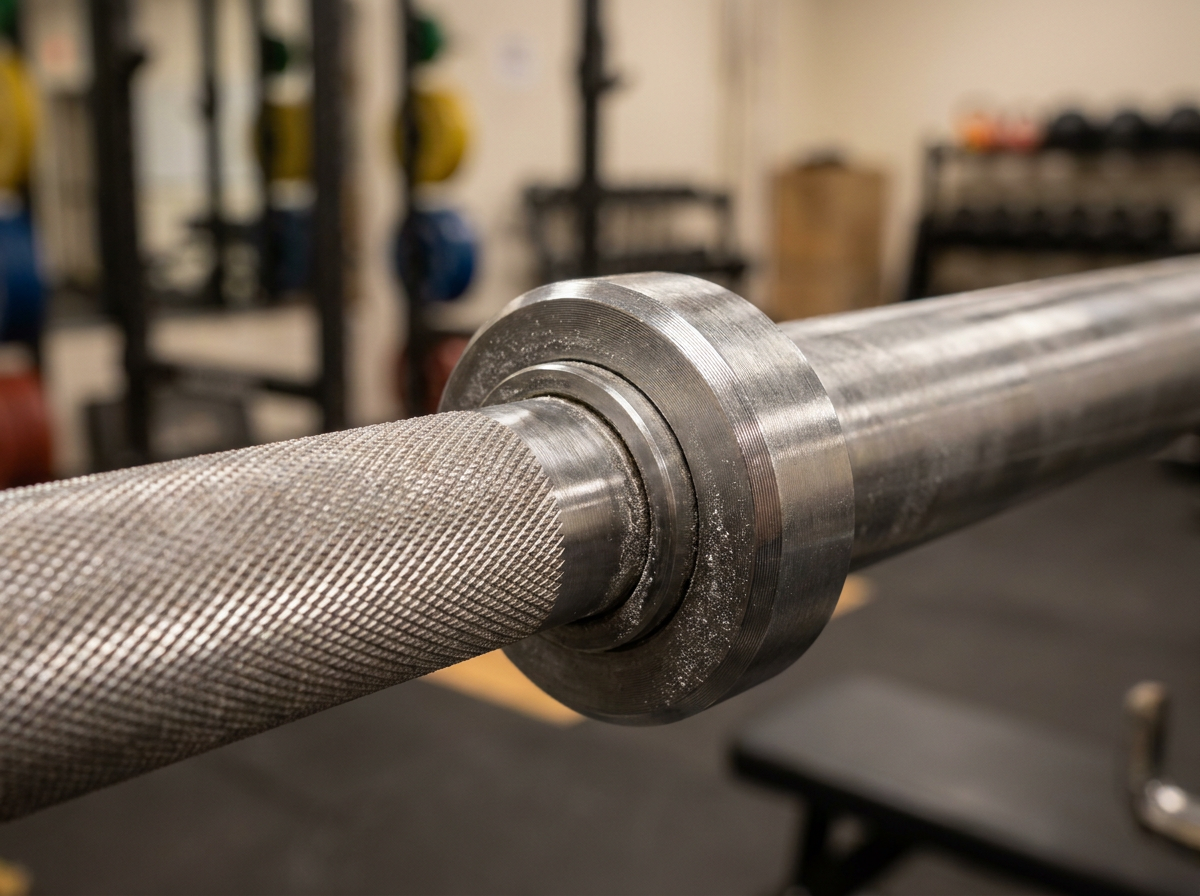
Knurling is the milled pattern on the grip area that provides traction. If it’s too smooth, the bar will slip; if it’s too aggressive, it will chafe your hands during high-rep sets. Moderate, even knurling is ideal for most people. Look for grip markings that comply with IWF and IPF standards—they’ll help you position your hands symmetrically.
4. Coating
The coating protects against rust and affects the feel of the handle. Common types include:
- Polished steel / zinc: offers the best feel, but requires more maintenance.
- Hard chrome-plated: highly rust-resistant and easy to maintain—a popular choice in the studio.
- Cerakote: extremely corrosion-resistant and visually appealing, often found in the premium segment.
5. Load Capacity and Intended Use
Good Olympic bars can handle 300–680 kg and more—more than enough for virtually any athlete. More important than the maximum weight capacity is that the bar is suited to your specific use: If you do a lot of dropping the bar (weightlifting, CrossFit), bumper plates and a sturdy bar are a must.
Which barbell is best for which use?
| Deployment | Recommendation | Suggested Price |
|---|---|---|
| Home Gym, All-Around | 28 mm Multipurpose, Sockets, ~190,000 PSI | starting at about 200–300 € |
| Studio / Commercial | High-chrome plating, high tensile strength, durable | starting at about 300–550 € |
| Weightlifting / CrossFit | Needle bearings, lots of whip, bumper-compatible | starting at about 250–500 € |
| Powerlifting | Stiff 29-mm stem, more aggressive knurling | starting at about 300 € |
Buying Guide: Think of the Barbell, Weights, and Rack as a System
A barbell is only as good as its accessories. The bar needs the right weight plates —rubber bumper plates for dynamic exercises, and cast-iron or rubber-coated plates for classic strength training. And for safe training, you’ll need a sturdy power rack with racks and safety bars. You can find the right bar for you in our Dumbbells & Barbells category.
At Kraftathlet , you can shop with 0% financing through Klarna and carbon-neutral shipping —a real advantage, especially for gyms that view their equipment as an investment. Not sure which bar and how many plates you need for your strength training area? Our team will be happy to put together the right set for you.
Common Mistakes When Buying a Barbell
- Don't just look at the price. A cheap rod with low tensile strength will bend and will need to be replaced sooner.
- Wrong standard. A 30-mm “standard rod” does not fit into 50-mm mounts—be sure to follow the Olympic standard.
- Ignore the grip. If you train for the snatch and clean & jerk but buy a pure powerlifting bar, you'll be frustrated by the lack of rotation.
- Don't forget the washers. The correct bumper or cast washers are included from the start.
- The knurling is too aggressive for a home gym. For high rep counts, medium knurling is more comfortable.
Frequently Asked Questions
How much does a barbell weigh?
The Olympic men's barbell weighs 20 kg, and the women's barbell weighs 15 kg. Shorter or less expensive models may vary—check the specifications before purchasing so you can calculate your training weight correctly.
What is the difference between an Olympic barbell and a standard barbell?
The Olympic bar has 50-mm sleeves and is compatible with standard discs and racks. Standard 30-mm bars are less expensive, but less durable and not compatible with gym equipment.
Do I need needle bearings or bushings?
Needle bearings are the better choice for Olympic weightlifting and CrossFit. For powerlifting, general strength training, and everyday gym use, high-quality bronze bushings are more durable and more affordable—and for most people, the better choice.
How much should I spend on a good barbell?
For a home gym, you can find sturdy, all-purpose bars starting at around €200–300. For continuous commercial use, it’s worth investing in a higher-quality bar costing around €300–550, with high tensile strength and a durable coating.
What exercises can I do with a barbell?
All the major compound exercises: deadlifts, squats, bench presses, shoulder presses, rows, and many more. The barbell is the most versatile tool for building strength.
Conclusion
The right barbell is an investment that will last for many years. Use the Olympic standard (20 kg, 2,200 mm, 28 mm) as a guide, look for high tensile strength, and choose a bar that suits your workout routine. For a home gym, a sturdy all-around bar with sleeves is sufficient; at the gym, durability and coating are also important factors. Think of the bar, plates, and rack as a system—then you’ll have equipment that lasts.
Are you planning a weight training area or your home gym? Contact our team —we'll advise you on bars, plates, and racks.