

Abstract
- The Romanian deadlift (RDL) is the best free-weight exercise for the posterior chain: It primarily targets the hamstrings and glutes.
- The key is the hip hinge: Push your hips back, keep your back neutral, and bend your knees only slightly—the barbell glides close to your legs.
- The difference from the classic deadlift: The RDL starts at the top, lowers in a controlled manner until you feel the stretch, and does not start from the floor—the focus is on the hamstrings.
- The most common mistakes: a rounded back, squatting too low, and lowering your body "with your back" instead of from the hips.
Romanian Deadlift (RDL): Technique, Muscles, and Common Mistakes
The Romanian deadlift—RDL for short—is the most effective free-weight exercise for building hamstrings and glutes and strengthening the posterior chain. Unlike the classic deadlift, it starts from a standing position and emphasizes a controlled, stretched descent—which is exactly what makes it the number one tool for building hamstrings.
And it’s more than just a bodybuilding exercise: Strong hamstrings stabilize the knee and protect against common sprinting and sports injuries. The catch is the same as with the standard deadlift—without proper hip-hinge technique, the load shifts to your lower back. This guide shows you the correct form, which muscles are engaged, how it differs from the classic deadlift, and how to avoid the most common mistakes.
Which muscles does the Romanian deadlift work?
The RDL is a hip extension exercise (hip hinge) that primarily targets the posterior chain:
- Hamstrings —the primary muscles involved; when stretched and under load, they provide the greatest stimulus from the exercise.
- Gluteus maximus – extends the hip at the top of the movement.
- Back extensors (erector spinae) – maintain an isometric, neutral, and stable position of the back.
- Adductors & Core – Stabilize the pelvis and spine.
- Grip & Forearms – hold the dumbbell; often the limiting factor during heavy sets.
Research shows just how intense the stimulation of the hamstrings is: In an EMG analysis of various deadlift variations, the Romanian deadlift triggered high activation of the hamstrings, with the semitendinosus working significantly harder than the erector spinae (EMG Analysis of the Romanian Deadlift, NCBI). In short: The RDL targets the hamstrings more effectively than almost any other compound exercise.
How to Perform the Romanian Deadlift Correctly – Step by Step
1. Starting Point
Take the barbell off the rack or lift it cleanly off the floor. Stand with your feet hip-width apart, gripping the bar with an overhand grip slightly wider than shoulder-width. Pull your shoulders back, stick your chest out, and keep your back neutral. The barbell rests directly against your thighs—keep it there throughout the entire exercise.
2. The Hip Hinge
The most important part: Actively push your hips back, as if you were closing a door behind you with your buttocks. Keep your knees only slightly bent and firm—this isn't a squat. Your upper body leans forward as the barbell slides down close to your legs.
3. The Lowering
Lower the dumbbell until you feel a distinct stretch in your hamstrings—usually around the middle of your shin or just below it. How low you go depends on your flexibility: Keep your back neutral; as soon as it rounds, you’ve reached the lowest point. Never lower yourself any further by arching your back.
4. The Road to the Top
Push your hips forward forcefully, then use your hamstrings and glutes to pull yourself back up to an upright position. At the top of the movement, briefly engage your glutes—without arching your lower back. Breathe while maintaining tension: inhale and engage your core before lowering, then exhale at the top of the movement.
RDL vs. Traditional Deadlift: The Difference
Both exercises are hip extension movements, but they focus on different aspects:
| Characteristic | Romanian Deadlift (RDL) | Classic Deadlift |
|---|---|---|
| Start | From a standing position | From the ground up |
| Squat | Just a little, fixed | Significantly stronger |
| Main attraction | Hamstrings & Glutes | Full Body, Focus on Back & Quadriceps |
| End of Movement | Dumbbell Stays in the Air (Stretch) | The dumbbell touches the floor |
| Typical weight | Lighter, more tech-oriented | Heavy, Powerful |
In short: The classic deadlift is the more challenging full-body strength exercise, while the RDL is the go-to exercise for targeting the hamstrings and glutes. The two complement each other perfectly. You can find the complete instructions for the floor deadlift in our guide to the classic deadlift.
Common Mistakes in the Romanian Deadlift
- Rounded back. The most critical mistake. As soon as your lower back rounds, the load shifts off your hamstrings and puts strain on your intervertebral discs. Solution: Limit your range of motion to what you can manage with a neutral back.
- Squats instead of hip hinges. If you bend your knees too much, you’re doing a half squat—your hamstrings won’t get stretched. Solution: Push your hips back and keep your knees steady.
- The barbell moves forward. As the bar moves away from the body, the strain on the lower back increases significantly. Solution: Keep the barbell close to your legs.
- Don't go too deep. Deeper isn't necessarily better. The lowering motion ends where your hamstrings are stretched and your back remains straight.
- The weight is too heavy. The RDL is a technique-focused exercise. Lifting weights that are too heavy for your level disrupts the hip hinge movement. Solution: Start lighter and increase the weight gradually.
Incorporate RDL into Your Workout
The Romanian deadlift fits well into leg or pull days—for example, in a push-pull-legs routine. A proven approach is 3–4 sets of 8–12 repetitions using a weight that allows you to maintain proper form throughout all repetitions. Because the RDL relies heavily on the stretch, a controlled, slow lowering phase (2–3 seconds) is particularly effective.
Increase the load in small increments—the principle of progressive overload is the real driver of growth (see the guide to progressive overload for more on this). As a rule of thumb: Don’t increase the weight until you can perform the maximum number of reps with proper form.
Buying Guide: The Right Equipment
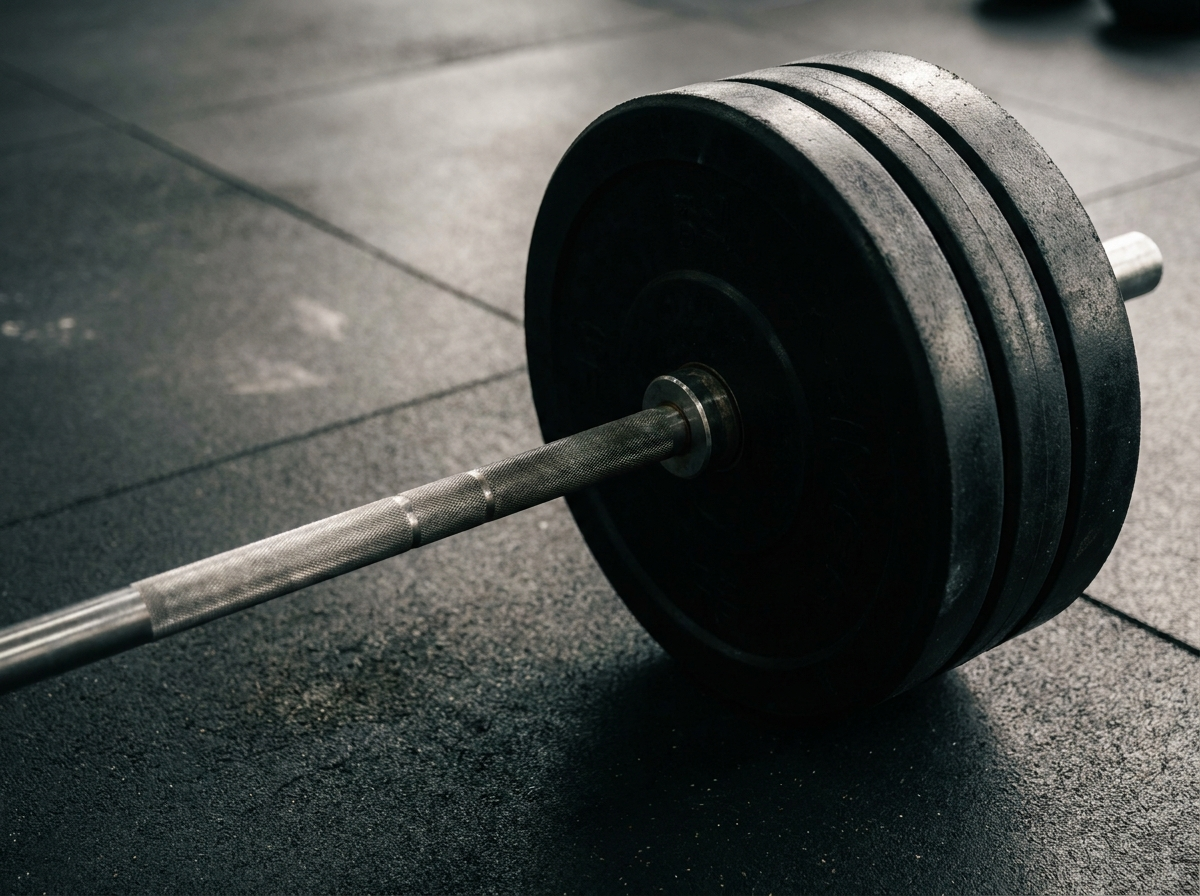
For a proper Romanian deadlift, you’ll need a sturdy barbell with a good knurling and matching weight plates. For heavy sets, grip aids can be helpful to ensure your grip doesn’t give out before your hamstrings do. In our Barbells & Kettlebells category, you’ll find gym-quality barbells and plates; the Strength Training category brings together our complete range of free weights.
Look for a dumbbell with a high weight capacity, a rotating loading sleeve for smooth operation, and a knurled grip that provides a secure hold even with sweaty hands. Over 5,000 customers trust Kraftathlet: As an authorized retailer, we offer manufacturer’s warranties, carbon-neutral shipping, a 30-day return policy, and optional 0% financing through Klarna.
Frequently Asked Questions
What is the difference between RDLs and regular deadlifts?
The Romanian deadlift starts from a standing position, keeps the knees almost locked, and emphasizes a controlled lowering motion—focusing on the hamstrings and glutes. The classic deadlift starts from the floor with a deeper knee bend and is the more challenging full-body exercise.
How low should I go during the RDL?
Go as low as you can while keeping your back straight—usually to the middle of your shin or just below it. The goal is to feel a distinct stretch in your hamstrings, not to reach a specific point on the floor. If your back rounds, you’re going too low.
How much weight should I use for Romanian deadlifts?
Lighter than in the classic deadlift. The RDL emphasizes technique and flexibility; choose a weight that challenges you during the last few reps but doesn't compromise your hip hinge technique.
Is the RDL good for the hamstrings?
Yes, it's one of the most effective exercises for the hamstrings. EMG studies show a high level of activation in the hamstrings, particularly the inner portion. Strong hamstrings also support knee stability.
Can I do RDLs with dumbbells?
Yes. Dumbbells allow for a slightly greater range of motion and are well-suited for beginners or as a single-leg variation (single-leg RDL) to improve balance and core stability.
Conclusion
The Romanian deadlift is the most targeted free-weight exercise for strong hamstrings and a powerful gluteus—provided you use the correct hip hinge technique. Push your hips back, keep your back neutral, keep the bar close to your leg, and lower it in a controlled manner until you feel the stretch. Combined with the classic deadlift, you’ll build a posterior chain that supports you both in training and in everyday life.
Want to know which barbell and weight plates are right for your goals? Our team will give you personalized advice— contact us here. You can find more background information on the exercise in our freely accessible overview of the deadlift.