

Abstract
- The pull-up is the most effective basic exercise for vertical pulling. The latissimus dorsi and trapezius muscles do the bulk of the work, supported by the biceps, lower trapezius, and rear deltoid (EMG analysis, Dickie et al. 2017).
- Proper technique means: full lean, shoulder blades first, chest toward the bar, controlled lowering. No momentum, no half-measures.
- You'll build up to your first pull-up using negative reps, resistance bands, and lat pulldowns—not by pushing yourself to failure every day.
- For home use, a sturdy pull-up bar is all you need; at the gym, a power rack does the job. You can find both at Kraftathlet.
Pull-ups: Technique, Muscles, and Your Path to Your First Clean Pull-up
When doing a pull-up, you pull your entire body upward against gravity—hardly any other exercise builds back width and pulling power quite as effectively. The latissimus dorsi and trapezius muscles do most of the work, as shown by an EMG analysis of various pull-up variations conducted by Dickie and colleagues (2017) and published in the *Journal of Electromyography and Kinesiology *.
Among the basic exercises, the pull-up fills the gap left by the deadlift, squat, bench press, and shoulder press: the vertical pull. Once you’ve mastered it, you’ll have covered a movement pattern that’s used time and again in everyday life, sports, and strength training. In this guide, you’ll learn about muscle anatomy, proper form step by step, the most common mistakes, and a realistic 4-week plan for your first pull-up.
Which muscles does the pull-up work?
The pull-up is a multi-joint exercise that engages both the elbow and shoulder joints. This results in broad muscle activation—which is why it is considered one of the few exercises that almost completely target the upper-body back muscles.
The Key Players
- Latissimus dorsi: This large, fan-shaped back muscle pulls the upper arm downward and backward. It is the driving force behind the pull-up and is responsible for the coveted V-shape.
- Trapezius (middle and lower portions): Stabilizes and rotates the scapula, ensuring that the shoulder is guided safely during the pull.
- Rhomboids: Bring the shoulder blades together and provide retraction at the upper point.
The Supporters
- Biceps brachii and brachialis: Flex the elbow—more heavily involved in a narrow, supinated grip (chin-up).
- Posterior shoulder and infraspinatus: Stabilize the shoulder joint.
- Core (abdominals and deep back extensors): Keep the body engaged and prevent it from swaying.
Interesting: According to EMG research, grip width affects latissimus activation less than has long been assumed. The difference between the variations lies primarily in the extent to which the biceps, chest, and trapezius are additionally engaged—not in whether the latissimus works “more.” When it comes to building muscle, a clean, full repetition ultimately matters more than the perfect grip choice.
Pull-ups, Chin-ups, and Lat Pulldowns: What's the Difference?
These three terms are often confused. They work similar muscles but have different focuses.
| Variant | Handle | Focus | For whom |
|---|---|---|---|
| Pull-up | Overhand grip (pronated), shoulder-width apart+ | Back, latissimus dorsi, trapezius | Advanced, Back Focus |
| Chin-up | Underhand grip (supinated), tight | Back + More Biceps | Beginners, often lighter |
| Lat Pulldown on the Machine | freely selectable, guided | Back, adjustable weight | Progress to Your First Pull-Up |
Note: For most beginners, the chin-up is the easier way to start because the biceps provide significant assistance. The lat pulldown is the ideal tool for building pulling strength with a precisely adjustable weight before you move on to bodyweight exercises.
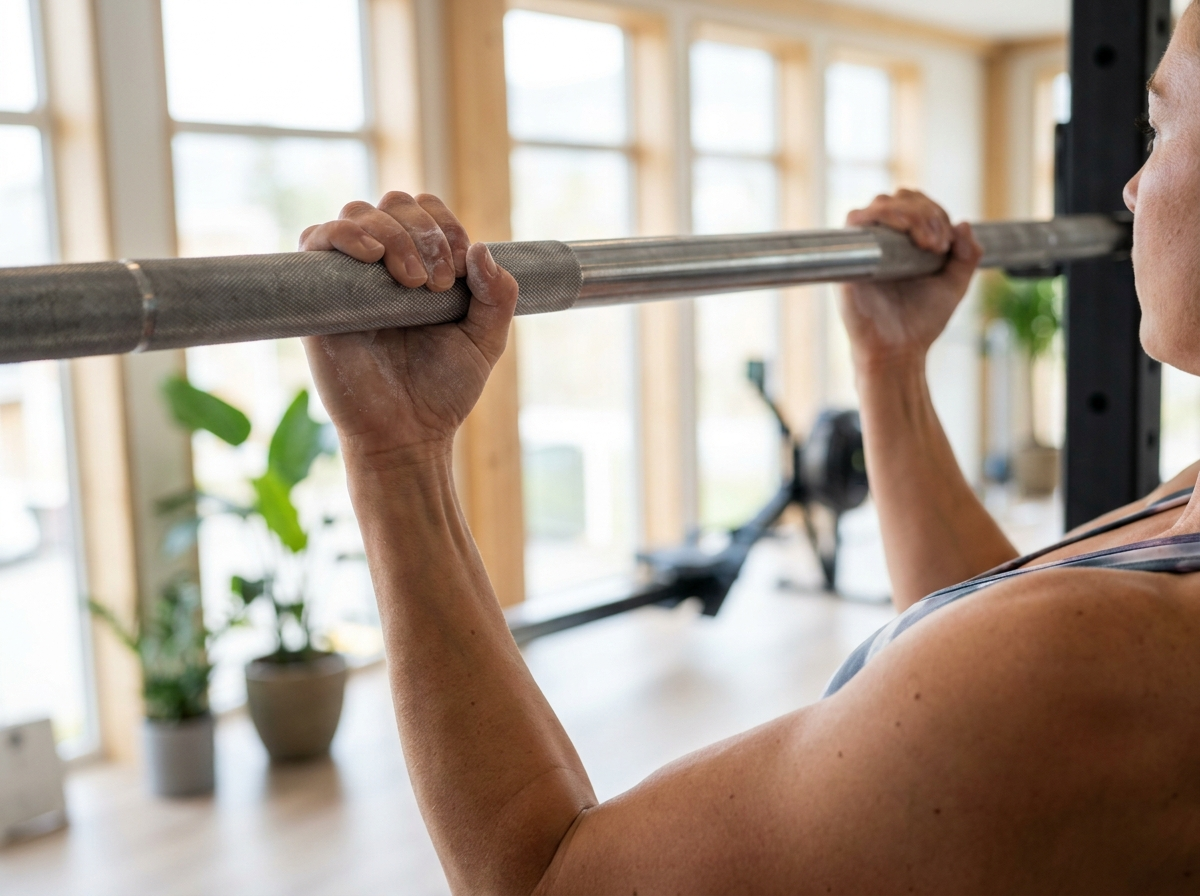
The Proper Pull-Up Technique, Step by Step
A technically sound pull-up is worth more than three half-reps done with a swinging motion. Here's how to do it correctly:
1. Starting position: the active slope
Grip the bar with an overhand grip slightly wider than shoulder-width. Hang with your arms straight—but not passively. Pull your shoulder blades slightly down and back (“active hang”). Keep your core engaged and your legs still, preferably slightly crossed. This core engagement determines whether the movement comes from your back or your arms.
2. The Pull: Shoulder Blades First
The movement doesn't start in your arms, but in your shoulder blades. Pull them together and down, then pull your elbows toward your hips. Imagine you're pushing the bar down instead of just pulling yourself up. Your chest moves toward the bar, and keep your gaze forward.
3. The top point
Pull until your chin passes the bar or your upper chest almost touches the bar. Hold briefly, actively squeezing your shoulder blades together. No jerking, no pushing your head forward.
4. Draining: Half the Battle
Lower yourself slowly and in a controlled manner until your arms are fully extended (full range of motion). It is precisely this eccentric phase that builds strength—cutting it short is the most common mistake of all. Lowering yourself for two to three seconds is a good guideline.
How to Do Your First Pull-Up
If you can't do a pull-up yet, that's completely normal—and no reason to keep trying unsuccessfully every day. The fastest way to get there involves three proven building blocks:
- Negative pull-ups: Jump or climb into the top position and lower yourself as slowly as possible (goal: 4–6 seconds). 3–4 sets of 3–5 repetitions. This is the most effective single exercise.
- Assisted pull-ups: Wrap a resistance band around the bar and under your knee to take some of the weight off. Gradually reduce the band's resistance over the course of several weeks.
- Lat Pulldowns and Rowing: Build pulling strength twice a week using adjustable weights. As a rule of thumb, if you can cleanly pull approximately your body weight on the lat pulldown machine, you’ll usually be able to do your first unsupported pull-up.
4-Week Plan for Your First Pull-Up
The following plan assumes two training days per week for vertical pull (e.g., Monday and Thursday), with at least one rest day in between. Warm up before each session with light hanging and shoulder circles.
| Week | Focus | Quantity per unit |
|---|---|---|
| 1 | Active Slope + Negative | 3 sets of 20 seconds on the incline, 3 sets of 3 negatives |
| 2 | Negatives + Tape Support | 4× 4 negatives, 3× 5 with tape |
| 3 | Reduce tape support | 4× 4 with a thinner band + lat pulldown |
| 4 | First Free Attempt | Several recent individual trials + negative results |
Train your vertical pull 2–3 times a week, allowing for sufficient rest in between. Progress comes from gradual advancement and recovery—not from trying to lift your maximum every day. Once you can do your first pull-up, continue working toward five, eight, and ten repetitions using the same principle.
Pull-Up Variations for Greater Progress
Once you've mastered the clean pull-up, keep the challenge going with variations:
- Neutral grip (parallel): Easy on the shoulders, a good balance between back and arm work.
- Wide overhand grip: Emphasizes width training for the upper back, but is more challenging.
- Weighted pull-up: Use a belt and weight plate for targeted strength training once you can consistently perform 8 or more clean reps.
- Speed Pull-Up: Emphasize the eccentric phase (e.g., lower yourself for 3 seconds) for an additional challenge without adding more weight.
Important: Variations do not replace the basics. First comes the clean, complete repetition; then come the variations.
Buying Guide: Pull-Up Bar or Power Rack?
To do pull-ups, you'll need, above all, a truly sturdy mounting system. The best solution depends on your space, budget, and where you'll be using it.
| Solution | Ideal for | Advantage | Please note |
|---|---|---|---|
| Door/Wall Pull-Up Bar | At home, limited space | Inexpensive, quick to install | Check Load Capacity & Wall |
| Power Rack | Home Gym & Fitness Center | Sturdy, plenty of handles, accessories | Requires floor space and ceiling height |
| Multi-gym with lat pulldown | Warm-up before the first pull-up | Weighable Weight | Larger & more expensive |
For most serious fitness enthusiasts, a power rack is the most durable choice: it features a sturdy pull-up bar, a secure place to set the bar during squats and bench presses, and the ability to expand with accessories. If you’re looking to build upper-body strength first, you’ll find lat pull-down machines and rowing machines in our wide selection of strength training equipment. Kraftathlet is an authorized dealer offering a manufacturer’s warranty and can advise you on structural stability, ceiling height, and assembly before your purchase.
Common Mistakes When Doing Pull-Ups
- Half range of motion: Neither all the way up (chin above the bar) nor all the way down (arms extended). It’s better to do fewer reps but perform them fully.
- Hip-driven swing (kipping) for beginners: It looks like it’s more intense, but it actually works the back less and puts more strain on the shoulders. Start with proper form, then add dynamism.
- Pull with just your arms: If you neglect your shoulder blades, you'll overwork your biceps and waste the work your latissimus dorsi could be doing.
- Push your head forward instead of lifting your chest: This puts strain on the cervical spine and only gives the illusion of a full stretch.
- Too ambitious, too often: Daily failure leads to no progress. Structure and rest beat despair.
Frequently Asked Questions
How many pull-ups is a good number?
As a guideline: If you can do 8–12 clean pull-ups in a row, you’re at a solid level. Quality is more important than the number—full range of motion, full pull, and a controlled lowering. To build strength, work in sets of 3–8 clean reps.
Why can't I do a single pull-up?
Most of the time, it’s simply a lack of specific pulling strength relative to body weight. This can be specifically developed through negative repetitions, resistance band assistance, and lat pulldowns over the course of a few weeks. A higher body weight makes the exercise mechanically more difficult—working on both aspects together is helpful.
Pull-ups or Chin-ups for Beginners?
Start with the chin-up (underhand grip). The biceps play a big role here, which is why most people can do it sooner. Once you’ve mastered the chin-up, switch to the overhand pull-up to focus more on your back.
How often should I do pull-ups?
2–3 times a week, with at least one rest day in between, is ideal. Muscles grow during recovery, not during training. Combine pull-ups with rowing exercises for a well-balanced back.
Is a door pull-up bar enough, or do I need a rack?
For pull-ups alone, a sturdy, properly installed bar is sufficient. However, if you also want to safely perform squats, bench presses, and other heavy exercises, a power rack is a better long-term choice.
Conclusion
The pull-up is the pinnacle of vertical pulling: It builds back width, pulling power, and body control like almost no other exercise. The path to getting there is no secret—proper form, negative reps, band assistance, and lat pulldowns, consistently performed over several weeks. If you train patiently and progressively and allow yourself enough time to recover, you’ll pull yourself up for your first pull-up sooner than you think.
Are you looking for the right pull-up bar, power rack, or lat pulldown machine for your home or gym? Talk to our team —we’ll give you honest advice on structural integrity, space requirements, and setup. Kraftathlet: over 5,000 satisfied customers in the DACH region.
Sources: Dickie et al. (2017), “Electromyographic Analysis of Muscle Activation During Pull-Up Variations,” Journal of Electromyography and Kinesiology — ScienceDirect.