

Abstract
- The most versatile option is an adjustable FID (Flat-Incline-Decline) weight bench: flat, incline, and decline all in one machine.
- For heavy bench presses, the most important factors are the weight capacity (user weight + barbell) and a stable, wide base.
- If you want to target the upper chest, you'll need an adjustable back pad—an incline of about 30° activates the upper chest muscle the most.
- Price range for home and home gym use: sturdy benches starting at about €200; professional FID benches, €300–600.
Buying a Weight Bench: Flat, Incline, or FID—The Right Bench for Your Workout
The right weight bench depends on your training goals and the space you have available: For maximum versatility, an adjustable FID (Flat-Incline-Decline) bench is the best choice; for heavy bench presses alone, a sturdy flat bench with a high weight capacity will suffice. If you want to specifically target the upper chest, you should look for a bench with an adjustable backrest—because according to an EMG study by Rodríguez-Ridao and colleagues (2020), an incline angle of about 30° activates the upper portion of the pectoralis major most effectively, while angles that are too steep increasingly shift the stimulus to the front of the shoulder.
A weight bench is the foundation of almost any strength-training area—whether in a home gym or at the gym. It determines which exercises you can perform safely, how heavy a load you can handle, and how long the equipment will last. This guide explains the different designs, the most important factors to consider when buying, and common mistakes, so you can make the right purchase the first time around.
An Overview of the Designs
Generally speaking, there are four types. Which one is right for you depends on your fitness goals, the space you have available, and your budget.
Flat Bench
The flat bench is the simplest and usually the most stable design. Without adjustable joints, there are fewer weak points, which is why high-quality flat benches often offer the highest weight capacity. Ideal for heavy bench presses, hip thrusts, rowing, and as a support for dumbbell exercises. Disadvantage: You can’t adjust the angle, so you can only target the upper chest or shoulders to a limited extent.
Incline Bench
The incline bench is set at a fixed positive angle (usually 30–45°) and is designed for anyone who wants to primarily target the upper chest and front shoulders. Fixed incline benches are very stable but offer little flexibility. For most home gym users, an adjustable version is a better choice.
Adjustable Bench (Incline/FID)
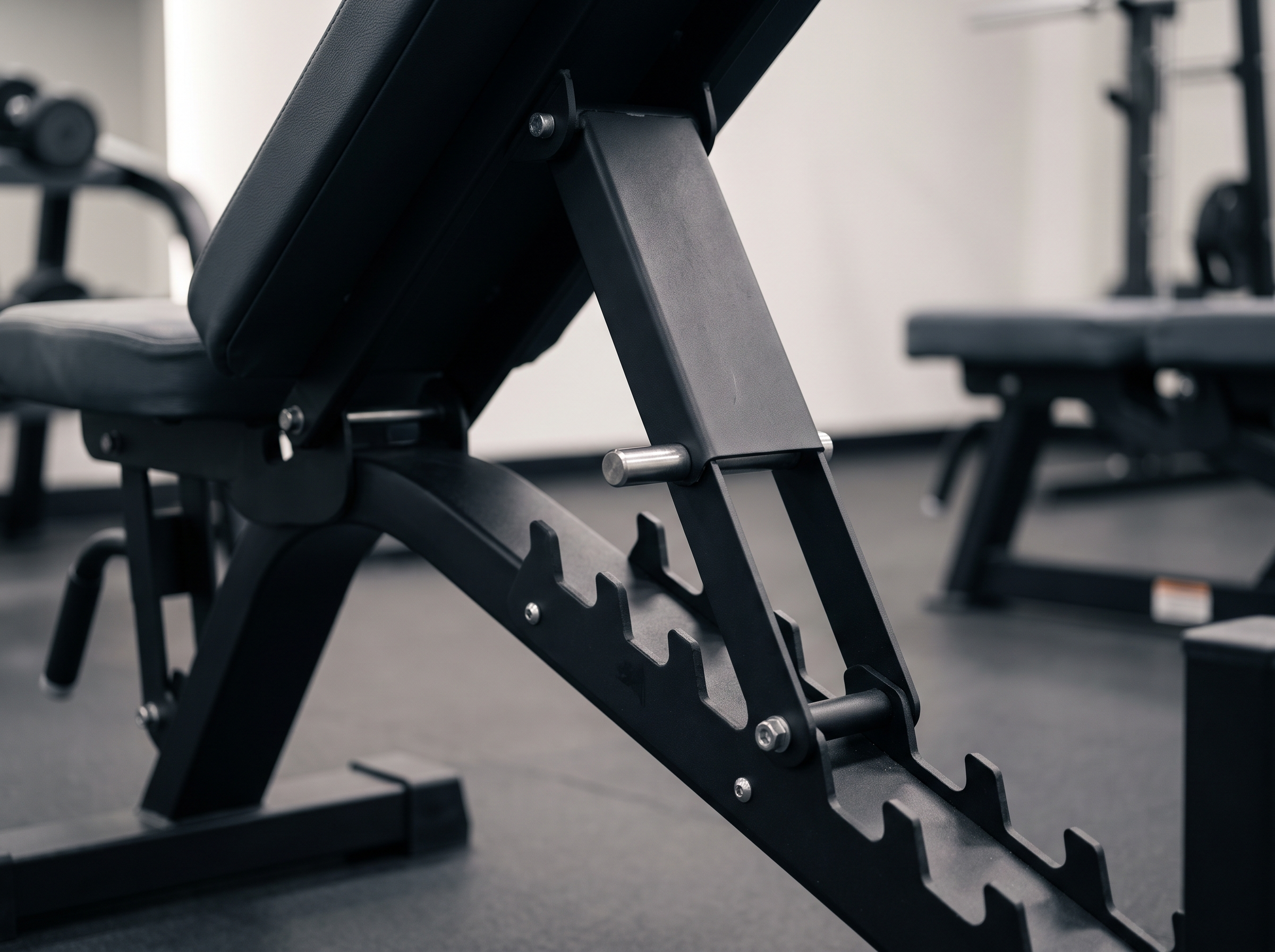
The adjustable bench can be set to flat, incline, and, to some extent, decline positions. A FID bench covers all three positions, effectively replacing multiple pieces of equipment. This is invaluable in a home gym because a single bench allows you to perform flat bench presses, incline bench presses, seated shoulder presses, tricep exercises, and more. Pay special attention to a smooth, play-free adjustment mechanism—it’s the only real weak point of this design.
Special Benches
There are specialized benches for specific exercises: the hip thrust bench for glute training, the back extension/hyperextension bench, the Scott/Larry curl bench for biceps, and the Seal Row bench for horizontal rowing. They are not a replacement for the basic bench, but rather a supplement for ambitious home or gym workouts.
A Direct Comparison of Design Types
| Design | Best for | Versatility | Stability | Space requirements |
|---|---|---|---|---|
| Flat Bench | Heavy bench press, hip thrust, rowing | Low | Very high | Small |
| Fixed Incline Bench | Upper chest, shoulder | Medium | High | Small |
| Adjustable FID Bench | All-Purpose Home Gym & Studio | Very high | High (with a good bank) | Medium |
| Specialized Bank | A specific exercise (e.g., hip thrust) | Very low | High | Medium–large |
The 6 Most Important Buying Criteria
1. Resilience
The most important number. The specified maximum load must be able to safely support your body weight plus the heaviest dumbbell weight—ideally with a significant margin. For ambitious training, you should opt for benches with a total load capacity of 300 kg or more. Gym benches often have a load capacity of 400 kg or more.
2. Frame and Material
A frame made of thick-walled steel with oval or rectangular profiles is sturdier than thin round tubes. Look for clean welds and a scratch-resistant powder coating. A wide, rubberized base prevents wobbling and protects the floor.
3. Adjustability and Angle
With an adjustable bench, what matters is the number of positions and the precision of the adjustment. For chest exercises, the range between 15° and 45° is crucial; an additional negative angle and multiple seating positions increase the range of uses. Check that the angle locks into place without any play —wobbling under load is a safety hazard.
4. Upholstery and Covering
High-density foam provides support without sagging. A cushion that’s too soft becomes unstable during heavy sets. The cover should be tear-resistant, skin-friendly, and easy to clean—in the gym, this is key to hygiene and durability.
5. Cushion Gap
On some FID benches, there is a gap between the seat and back cushions. A small, well-placed gap is normal; a large gap is uncomfortable when lying flat. People who spend a lot of time lying flat prefer a continuous cushion surface or one with only a minimal gap.
6. Dimensions and Space
Measure the space first. A FID bench takes up more space when set up than a flat bench, and you'll need room to move around it. Foldable models save space, but they're rarely as sturdy as fixed benches.
How much does a good weight bench cost?
| Price range | Typical Bank | For whom |
|---|---|---|
| approx. 150–250 € | Sturdy flat bench or entry-level incline bench | Beginner level, moderate weights |
| approx. 300–450 € | Adjustable Studio-Quality FID Bench | High-End Home Gym |
| approx. 450–700 €+ | Professional/Specialty Bench (e.g., Hip Thrust, Seal Row) | Studios, Continuous Use |
Rule of thumb: A bench that wobbles under heavy weights or whose mechanism breaks down after a year will end up costing you more than a good bench that lasts ten years. When it comes to weight-bearing equipment, quality is always worth the investment.
Buying Guide: Which Bank Is Right for You?
For most people working out in a home gym, an adjustable FID bench is the best investment because it combines flat, incline, and decline training in a single piece of equipment. If you’re looking for an uncompromisingly stable base for heavy bench presses, a heavy-duty flat bench is the smarter choice. Gyms and ambitious athletes often supplement their basic bench with specialized benches, such as a hip thrust bench or a back extension bench.
In unserer Kollektion Trainingsbänke findest du verstellbare FID-Bänke, feste Schräg- und Flachbänke sowie Spezialbänke – etwa die verstellbare FID-Bank mit Scott-Curl-Pult, eine 75-Grad-Schrägbank oder Hip-Thrust-Bänke in Studioqualität. Passend dazu findest du in Hanteln & Kettlebells das nötige Gewicht und in Krafttraining das restliche Setup für deinen Kraftbereich. Kraftathlet ist autorisierter Händler mit voller Herstellergarantie, und viele Geräte lassen sich bequem per PayPal-Ratenzahlung in Raten zahlen.
Common Mistakes When Buying a Weight Bench
Don't just look at the price. The cheapest bench is rarely the best solution. If it wobbles or the mechanism rusts, you'll end up buying another one.
Miscalculating load capacity. Many people simply add up the weight of the dumbbells and forget to include their own body weight. The bench supports both—plus the dynamic load when the dumbbell is set down.
Ignore the adjustment mechanism. A hinge that wobbles or gets stuck under load is dangerous and annoying. Check to make sure the bench locks into place properly.
Don't underestimate the space required. An FID bench in the upright position, with room to move, takes up more space than many people realize. Measure the area beforehand.
The wrong bench for your goal. If you do almost exclusively flat bench presses, you don't need an expensive FID bench with a large cushion gap—and if you prioritize the upper chest, a standard flat bench isn't the best choice.
Frequently Asked Questions
A flat bench or an adjustable bench—which is better?
It depends on your goal. If you want maximum versatility in your home gym, an adjustable FID bench is a better choice. If you're only interested in heavy, stable bench presses, a heavy-duty flat bench is often the sturdier and more affordable option.
What is the best angle for the upper chest?
About 30° is considered the sweet spot: In this position, the upper portion of the pectoralis major muscle is strongly activated, while the front of the shoulder plays only a supporting role. Starting at about 45°, the focus of the exercise shifts increasingly to the shoulder.
How much load capacity do I need?
Calculate your body weight plus your heaviest training weight, and allow for some leeway. For ambitious training, a total load capacity of 300 kg is a good minimum; at the gym, it’s better to aim for 400 kg or more.
Is a foldable weight bench worth it?
If space is limited, yes. But make sure the folding mechanism doesn't noticeably compromise stability. For heavy loads, fixed benches are usually the safer choice.
Do I also need a power rack for the bench press?
For heavy barbell bench presses, yes—a rack with shelves and safety bars protects you if a set goes wrong. With dumbbells, you can safely perform many bench exercises even without a rack.
Conclusion
The best weight bench is the one that suits your goals, your space, and your workout weights—and that’s safe to use. For most people, an adjustable, gym-quality FID bench is the most versatile investment; if you want to do heavy, stable presses, a heavy-duty flat bench is your best bet. Pay special attention to weight capacity, a rigid frame, and a smooth, play-free adjustment mechanism—then the bench will serve you well for many years.
Not sure which bench is right for your setup or your gym? Contact us —we'll give you personalized, honest advice, from home gyms to full gym setups.
Sources: Rodríguez-Ridao et al. (2020), “Effect of Five Bench Inclinations on the Electromyographic Activity of the Pectoralis Major,” IJERPH. Additional background information: Bench press (Wikipedia).