

Dips: Technique, Muscles, and the Most Common Mistakes
In short:
- Dips are one of the most effective basic exercises for the triceps, lower chest, and front shoulders—using your own body weight.
- You can control your focus through your posture: upright = more triceps, slightly leaning forward = more chest.
- In an EMG study (Boehler & Porcari, 2011), dips were among the exercises that elicited the highest triceps activation.
- The most common mistakes: lowering yourself too far, hunching your shoulders, moving too quickly, and adding extra weight too soon.
Push-ups are one of the most effective bodyweight exercises for the upper body: they work the triceps, lower chest, and front of the shoulders in a single movement. When performed correctly, you lower yourself in a controlled manner until your upper arms are roughly parallel to the floor, and then push yourself back up forcefully—keeping your shoulders down and your elbows close to your body.
This guide will show you the proper technique step by step, which muscles are engaged, the difference between chest dips and tricep dips, a progression toward your first proper dip, and the most common mistakes. Dips are the pushing exercise in our technique series and perfectly complement the vertical pull from the pull-up guide.
Which muscles do dips work?
Dips are a multi-joint pushing exercise. Depending on body position, the center of gravity shifts between the triceps and the chest. In an EMG study of various triceps exercises conducted by the University of Wisconsin-La Crosse (Boehler & Porcari, 2011), dips were among the exercises that activated the triceps the most—just slightly behind the triangle push-up.
Primary Muscles
- Triceps (M. triceps brachii): Extends the elbow and does most of the work, especially when the body is upright.
- Lower chest (pectoralis major muscle, lower portion): heavily involved, especially when the upper body is bent forward.
- Anterior deltoid: assists with upward pressing movements.
Supporting Muscles
- Scapular stabilizers (including the lower trapezius and serratus muscles): keep the shoulder blades stable.
- Core: engages and keeps the body stable and upright.
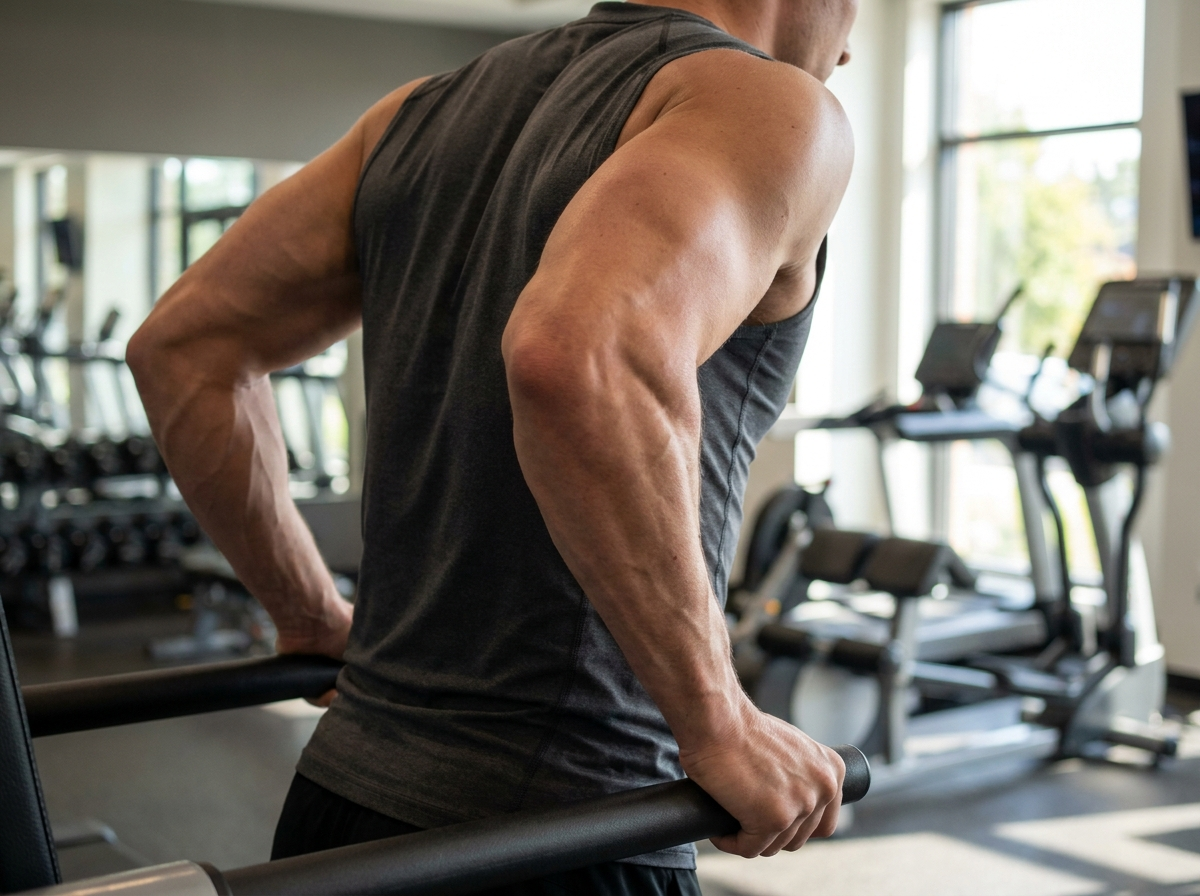
Dips: The Proper Technique, Step by Step
- Starting position: Support yourself on a sturdy dip bar with your arms straight. Keep your shoulders down and back, your chest slightly out, and your core tight.
- Lead with your elbows: Bend your elbows and lower yourself in a controlled manner. Keep your elbows close to your body and pointing backward, not outward.
- Depth: Lower yourself until your upper arms are roughly parallel to the floor (about a 90-degree angle at the elbow). Don't go any lower to protect your shoulders.
- Push-up: Push yourself up forcefully until your arms are almost straight. Don't let your shoulders sag at the top.
- Breathing: Inhale as you lower the weight, exhale as you press it up. Keep the movement under control at all times; do not let the weight drop.
Chest dips or triceps dips?
Your posture determines the focus of your workout. This overview will help you:
| Variant | Posture | Focus |
|---|---|---|
| Triceps Dips | Upper body upright, elbows close to the body | Triceps |
| Chest Dips | Upper body slightly bent forward, elbows slightly wider apart | Lower chest |
| Bench Dips | Hands behind the body on a bench | Triceps, beginner-friendly |
Progression: How to Do Your First Dip
Dips are challenging—by following a progression, you can systematically build the strength you need:
- Bench dips: Feet on the floor, hands behind you on a bench—the easiest way to get started.
- Negative dips: Start from the top and lower yourself slowly (3–5 seconds) in a controlled manner.
- Assisted dips: Using a resistance band or on a dip-assist machine.
- Bodyweight Dips: Full repetitions using your body weight.
- Weighted Dips: If you can do more than 12 clean reps, add extra weight in small increments.
For strength and muscle building, 3 to 4 sets of 6 to 12 repetitions is a good range. Increase the load according to the principle of progressive overload, and be sure to allow for sufficient rest between strength training sessions.
The Most Common Mistakes When Doing Dips
- Sinking too low: Going significantly below parallel puts a lot of strain on your shoulders. Keep your elbows at about a 90-degree angle.
- Shoulders hunched: If your shoulders are hunched, your risk of injury increases. Actively pull your shoulders down.
- Elbows pointing far outward: Keep your elbows close to your body to protect your shoulders and triceps.
- Moving too quickly: Momentum takes the tension off the muscle. Move in a controlled manner, especially when lowering yourself.
- Adding extra weight too soon: Start with proper repetitions using just your body weight, then add weight.
- Incomplete extension: Extend your arms almost fully at the top to take full advantage of the movement—without letting your shoulders sag.
Buying Guide: What You Need for Clean Dips
For dips, you’ll need a sturdy, sufficiently wide dip bar. Many power racks and rigs can be upgraded with dip handles, allowing you to combine pull-ups and dips at a single station. For home use, freestanding dip stands or parallel bars are a space-saving solution. You can find additional equipment for building strength in our Strength Training category; for weighted dips, you’ll want to add a dip belt later.
As an authorized dealer offering a manufacturer's warranty, we prioritize stability and load-bearing capacity—which are especially important for an exercise where your entire body weight is supported by the equipment.
Frequently Asked Questions
Are dips good or bad for your shoulders?
When performed with proper form and a moderate range of motion, dips are a very effective exercise. Shoulder problems are usually caused by lowering yourself too far and shrugging your shoulders. Keep your elbows bent at about a 90-degree angle and keep your shoulders down.
What Do Dips Target: Chest or Triceps?
Both—you control your center of gravity through your posture. Standing upright with your elbows close to your body targets the triceps; leaning forward slightly with your elbows slightly wider targets the lower chest.
How do I learn to do dips as a beginner?
Here's a progression: Start with bench dips, move on to inverted dips and assisted dips, and work your way up to unassisted dips. This way, you'll build the necessary strength step by step.
How many dips should I do?
For strength and muscle building, 3 to 4 sets of 6 to 12 proper repetitions are recommended. If you can easily do more than 12, add extra weight.
Dips or bench press?
Both are effective pressing exercises and complement each other. The bench press allows for more precise control of the load, while dips also work on core stability and the lower chest using your own body weight.
Conclusion
Dips are one of the most effective bodyweight exercises for the triceps, lower chest, and front shoulders. The key is to perform the movement in a controlled manner, with moderate depth and stable, pulled-back shoulders. By adjusting your posture, you can specifically target the chest or triceps, and with a proper progression, virtually anyone can master their first dip.
Not sure which dip station or rack is right for your space? Contact our team —we'll give you personalized, honest advice.
Source: Boehler, B., Porcari, J. P., et al. (2011), University of Wisconsin-La Crosse / ACE. ACE-sponsored Research: Best Triceps Exercises.