

Abstract
- The key difference is the pressure: soft-shell chambers operate at a mild pressure (approx. 1.3–1.4 ATA), while hard-shell chambers reach 2.0–2.4 ATA and, in some cases, 3.0 ATA.
- Higher pressure means more oxygen dissolved in the blood—at 2.0 ATA, many times more than in mild systems.
- Hard-Shell = rigid design for clinics, studios, and longevity centers. Soft-Shell = portable, ideal for beginners and home use.
- ProReset supplies both types of construction, custom-made and CE-compliant—the choice depends on the application, number of users, and floor area.
Hard-Shell vs. Soft-Shell HBOT: Which Is Better for Clinics, Studios, and Home Use?
The most important difference between a hard-shell and a soft-shell oxygen chamber is the pressure that can be achieved—and thus, how much oxygen reaches the body. Soft-shell chambers operate in the moderate range of 1.3–1.4 ATA, while hard-shell systems reach 2.0–2.4 ATA and, in modular designs, up to 3.0 ATA.
This guide provides a factual explanation of what the pressure difference means in physical terms, how the two designs differ in terms of hygiene and operation, and which ProReset system is best suited for a clinic, studio, wellness center, or home. Please note: This guide focuses on device selection and procurement—medical indications should be determined by a physician.
The key difference: pressure and oxygen
Hyperbaric oxygen therapy (HBOT) is based on a simple physical principle: At elevated ambient pressure, more oxygen dissolves directly into the blood plasma (Henry’s Law). The higher the pressure and the higher the oxygen concentration, the more dissolved oxygen is available. Clinical HBOT programs therefore operate at 2.0–2.4 ATA and 100% oxygen; at 2.0 ATA, the amount of oxygen dissolved in the plasma is many times greater than what mild systems achieve at 1.3 ATA.
Specifically, this means that at normal atmospheric pressure, oxygen is transported primarily by hemoglobin. Under positive pressure, additional oxygen dissolves freely in the blood plasma—and it is precisely this fraction that increases significantly with pressure. For professional use, therefore, the achievable pressure level is not a minor consideration, but rather the key performance characteristic of a chamber and the most important factor in selecting one.
| Criterion | Hard-Shell (rigid) | Soft-shell (wearable) |
|---|---|---|
| 2.0–2.4 ATA (modular up to 3.0) | approx. 1.3–1.4 ATA (mild) | |
| Construction Method | Rigid chamber, steel/acrylic | flexible, inflatable cover |
| Oxygen | High concentration, mask/hood | smaller, often a concentrator |
| Mobility | permanently installed | portable, quick to set up |
| People | 1–4 (modular) | usually 1 |
| Typical Applications | Clinic, Studio, Longevity Center | Getting Started, Home, Practice |
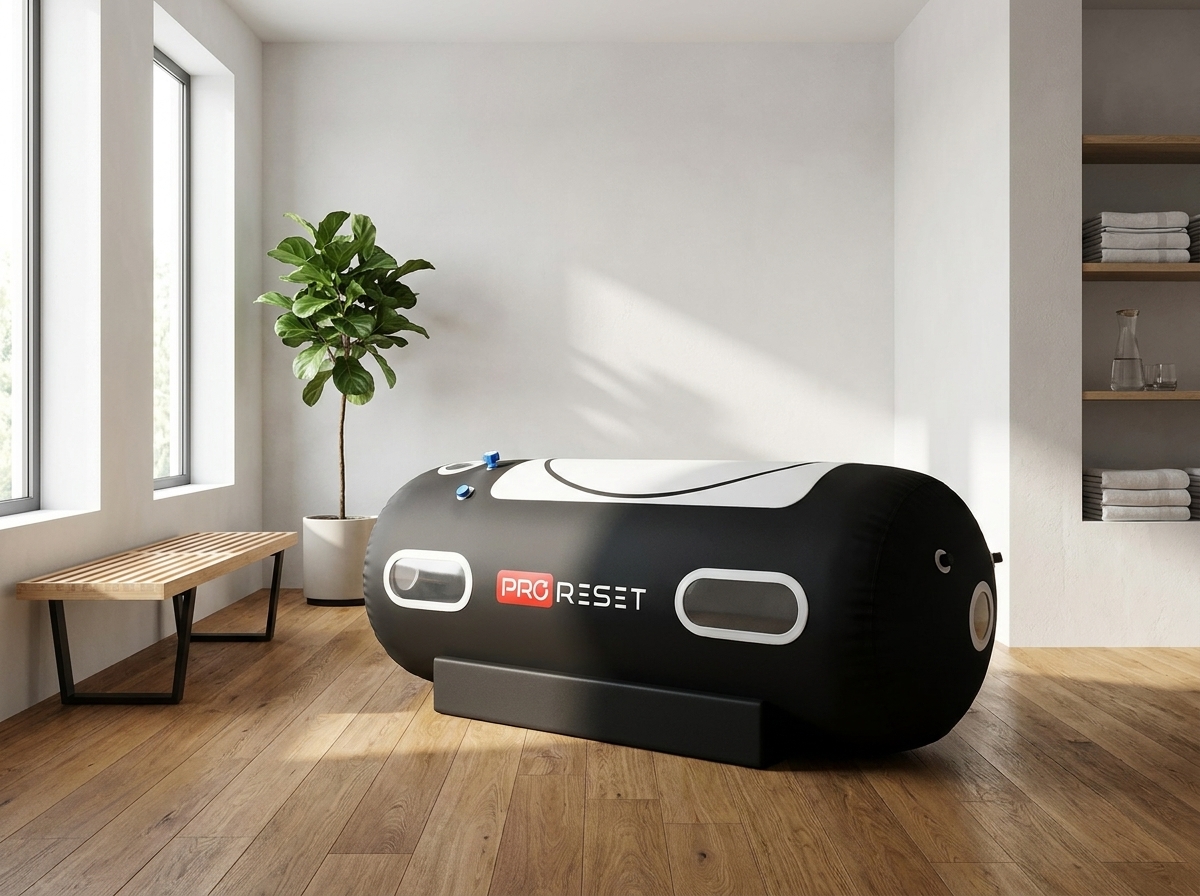
What does the pressure difference mean in practice?
For professional use, pressure is the most important selection criterion. The recognized medical indications for hyperbaric medicine—as listed, for example, by the Undersea and Hyperbaric Medical Society (UHMS) —are treated without exception at pressures of 2.0 ATA or higher using 100% oxygen. Such treatments must be administered under medical supervision; the GTÜM (Society for Diving and Hyperbaric Medicine) provides specialized information for Germany.
In the field of sports and recovery, the research findings are, frankly, mixed: Some studies show effects on recovery and fatigue, while others are less conclusive. In longevity research, there are interesting approaches—such as studies on telomeres under hyperbaric protocols—but these are research projects, not promises of a cure. Important for your decision: Soft-shell chambers are classified as devices but do not replace clinical HBOT at higher pressures. If you want to offer therapeutic pressures, a hard-shell chamber is essential.
A documented trend in the industry: Top athletes like LeBron James and Cristiano Ronaldo publicly use hyperbaric oxygen therapy as part of their recovery routine—one reason why demand is rising at premium studios and longevity centers.
Hygiene and Operations
The construction methods also differ during operation. Rigid hard-shell chambers can be thoroughly cleaned and operate at higher pressures. Flexible soft-shell covers are easy to handle during transport but require special attention when cleaning and drying the interior surfaces to prevent moisture buildup and bacterial growth. For multi-user settings with high utilization—such as studios, clinics, and fitness centers—the rigid design offers a clear advantage in terms of cleaning and continuous operation.
Installation, Space Requirements, and Operation
A hard-shell chamber is a permanent installation and must be planned accordingly. Take into account the space requirements, including access and service areas, a suitable power connection, room ventilation, and the placement of the oxygen concentrator. ProReset supplies custom-made chambers; the size, seating or reclining configuration, and number of occupants are tailored to your space. Also, be sure to schedule staff training—operating procedures, pressure build-up, and safety protocols are essential for safe operation.
Day-to-day operation also requires consideration: Concentrators generate operational noise, which is why a separate technical area is recommended. Regular maintenance of seals, valves, and filters ensures the system remains safe and durable—a maintenance schedule should be part of the plan from the very beginning. Soft-shell chambers are significantly less demanding in this regard: They are set up, connected to the concentrator, and are quickly ready for use. This makes them attractive for mobile applications, small practices, and home use.
Understanding Oxygen Supply as a System
The chamber alone does not constitute an HBOT treatment. The key factor is the oxygen supply: Using a BIBS (Built-In Breathing System) mask, the user breathes highly concentrated oxygen supplied by a concentrator at a rate of approximately 20 l/min. Hard-shell systems achieve such high oxygen concentrations at high pressure, while mild soft-shell applications operate at lower concentrations. Always design the chamber, concentrator, and mask as an integrated system—this is the only way to achieve reliable, reproducible results.
Profitability and Utilization for Gyms & Fitness Centers
In a professional setting, utilization is key. A chamber that is well-occupied throughout the day pays for itself faster than one that is used only sporadically. Modular 2- to 4-person chambers increase throughput within the same floor space—which is important for studios and longevity centers offering group or package deals. Also consider additional offerings such as packages, memberships, or combinations with other recovery modalities; they improve utilization and profitability per square meter.
Since each ProReset chamber is customized individually, we work with you to determine the cost-effectiveness based on your specific needs, rather than relying on standard figures. Quotes are provided upon request: the application, number of users, floor space, and desired pressure level determine the configuration—and thus the quote. This helps you avoid making the wrong purchase and ensures you receive a system that fits your business.
Sports Recovery: An Honest Assessment
In sports, HBOT is used for recovery and to reduce fatigue. The evidence is mixed: Some studies report benefits, others are less conclusive, and the protocols vary widely. Communicate this honestly—as a supportive measure in the context of wellness and performance, not as a guaranteed result. For medical questions, consistently refer clients to doctors and the GTÜM. This objective approach protects you legally and builds trust with discerning clients.
Which " ProReset" system is right for whom?
ProReset (S.L., Valencia) manufactures each chamber to order and in compliance with CE standards; oxygen is supplied via a BIBS mask and a concentrator with a flow rate of approximately 20 l/min. ProReset has completed installations throughout Europe. The selection:
- Hard-Shell (Clinic, Studio, Longevity Center): Orbit 1.5 & 2.0, Vista 2.0 (3 panoramic windows), Zeugma (transparent, modular), Atlantis (2 seats), Mediterranean (4 people), Matrix, Petra, Helios, Anatolia – seating or reclining versions, 1 to 4 people.
- Soft-Shell (Entry-Level, Home, Clinic): Flow 80, Flow 90 (7 windows), Oasis (recliner), Space (wheelchair-accessible).
All chambers are available upon request —as an authorized ProReset dealer, we’ll create a configuration tailored to your needs, including oxygen technology and installation. Take a look at the HBOT collection. For a complete overview, read our Pillar guide, “Buying a Hyperbaric Oxygen Chamber.”
Common Mistakes When Making a Selection
- Don't just focus on the price: A mild soft-shell chamber and a clinical hard-shell chamber are different classes of devices—compare them based on their intended use, not just on the purchase price.
- Underestimating pressure: Anyone who wants to provide therapeutic pressure needs a hard-shell chamber.
- Don't forget the oxygen supply: The chamber, concentrator, and mask should be planned as a single system.
- Miscalculating capacity: For high utilization rates, modular 2–4-person rooms are the best choice.
- Avoid making promises of a cure: Medical indications are the domain of doctors and professional associations—communicate clearly.
Frequently Asked Questions
Is a soft-shell chamber enough for my studio?
For a gentle start and a wellness experience, a soft-shell chamber may be sufficient. If you’re planning for higher pressures, multiple users, and continuous operation, a rigid hard-shell chamber is a better choice. We’ll advise you based on your specific needs.
How much ATA do I need?
That depends on the application. Mild applications range from 1.3 to 1.4 ATA; professional hard-shell systems range from 2.0 to 2.4 ATA; and modular systems can go up to 3.0 ATA. Medical applications at 2.0 ATA or higher should be performed under medical supervision.
How many people can fit in a chamber?
Soft-shell rooms are usually designed for one person. Modular hard-shell rooms from ProReset are available for 1 to 4 people—ideal for studios and centers with high occupancy rates.
How much does an " ProReset" chamber cost?
Each chamber is custom-made and individually configured, so we provide a quote upon request. Just let us know the application, number of users, and floor space—we’ll calculate the right solution for you, including installation.
Are the chambers CE-compliant?
Yes, ProReset manufactures CE-compliant products. The exact specifications depend on the model and configuration and are listed in the quote.
Conclusion
The choice between hard-shell and soft-shell is primarily a matter of pressure, number of users, and location of use: soft-shell for mild, portable applications and entry-level use; hard-shell for higher pressures, multiple users, and professional continuous operation in clinics, studios, and longevity centers. Plan your oxygen supply as a complete system and communicate medical information clearly. Request a customized quote or submit a wholesale inquiry —we’ll configure the right chamber for you.