

- ATA stands for “atmospheres absolute” and describes the pressure inside the chamber. 1.0 ATA corresponds to normal atmospheric pressure at sea level; each increase above that level raises the amount of physically dissolved oxygen in the blood (Henry’s Law).
- The internationally accepted definition of hyperbaric oxygen therapy (HBOT) requires a pressure of at least 1.4 ATA with nearly 100% oxygen. Clinically recognized indications typically involve pressures ranging from 2.0 to 2.4 ATA.
- Soft chambers typically reach 1.3 to 1.4 ATA, while hard chambers reach 2.0 ATA or higher. The appropriate pressure level depends on the intended use—wellness, sports recovery, or clinical use.
- Medical decisions should be left to healthcare professionals. This article explains the technique and equipment selection but is not a substitute for medical advice.
HBOT ATA Pressure Levels Explained: What 1.3 to 3.0 ATA Mean
ATA stands for “atmospheres absolute” and is the unit of measurement for pressure in a hyperbaric chamber: 1.0 ATA is the normal atmospheric pressure at sea level; each higher pressure level forces more oxygen into the blood plasma. The appropriate pressure level depends entirely on the intended use—and we’ll explain exactly how to determine this here in simple terms.
Whether you’re planning a recovery center, equipping a longevity studio, or simply want to understand the technology: Anyone comparing HBOT chambers will immediately come across the ATA rating. This guide categorizes the levels, explains the physics behind them, and shows which chamber corresponds to which pressure range.
What ATA Means in Physics
The effect of hyperbaric oxygen therapy is based on a simple physical principle: Henry’s Law. It states that as pressure increases, more gas dissolves in a liquid. When a person breathes nearly pure oxygen under elevated chamber pressure, the amount of oxygen physically dissolved in the blood plasma increases significantly—in addition to what the red blood cells transport anyway.
The higher the pressure (i.e., the ATA value), the greater this effect. This is precisely why the pressure level is the key distinguishing feature of every chamber. The Undersea and Hyperbaric Medical Society (UHMS) defines HBOT as breathing nearly 100% oxygen at a pressure of at least 1.4 ATA. Recognized clinical indications are typically treated at a pressure of at least 2.0 ATA.
An Overview of the ATA Pressure Levels
In practice, four pressure ranges can be distinguished. Important: The following classification describes the technology and typical applications—it is not a medical recommendation nor a promise of healing.
| Compression stage | Design | Typical Applications |
|---|---|---|
| 1.3–1.4 ATA | Soft-Shell (soft chamber) | Wellness, Longevity Studios, Getting Started, Home Use |
| 1,5 ATA | Soft-shell or hard-shell | Premium Wellness, Upscale Recovery |
| 2.0–2.4 ATA | Hard-Shell (hard chamber) | Clinical Operations, Professional Centers |
| up to 3.0 ATA | Hard-Shell (medical) | Specialized clinics, defined protocols |
Low pressure: 1.3 to 1.5 ATA
Soft, portable chambers typically operate in the range of 1.3 to 1.4 ATA. They are the standard entry-level option for wellness and longevity applications, sports recovery zones, and home use. Installation is straightforward, operation is quiet, and comfort is high. For studios that position HBOT as a wellness and recovery service, this range is often the right choice.
Medium to high pressure: 2.0 to 3.0 ATA
Hard chambers made of steel or acrylic can withstand significantly higher pressures, reaching 2.0 ATA and above. This range is the domain of professional centers and clinical facilities that operate according to defined protocols. Higher pressure means more sophisticated technology, stricter safety requirements, and, as a rule, specialized personnel—and falls under the responsibility of medically trained operators.
Sports, Longevity, and Wellness: What the Evidence Shows
In the world of sports, HBOT is increasingly being used for recovery; prominent elite athletes such as LeBron James and Cristiano Ronaldo have publicly documented their use of the method. However, the scientific evidence regarding its recovery effects is mixed —some studies show positive results, while others find no clear benefit. Reputable sources address this honestly, rather than promising miracles.
In longevity research, HBOT is the subject of ongoing studies. This research is exciting, but it does not yet provide conclusive evidence to support specific claims. For wellness applications, the focus is on relaxation and well-being. Medical indications —such as recognized clinical applications—should be handled exclusively by medical professionals; information on this is provided by professional associations such as the GTÜM.
Pressure isn't everything: oxygen supply
The ATA value describes only the ambient pressure inside the chamber. To achieve the desired effect, the oxygen concentration must also be correct—ideally, users should breathe nearly pure oxygen. In many setups, this is achieved using a tight-fitting breathing mask (BIBS principle) in combination with a high-performance oxygen concentrator. Only the combination of pressure and oxygen supply results in a fully effective treatment.
In terms of planning, this means that in addition to the chamber itself, the concentrator, tubing routing, and maintenance must be included in the design. Anyone planning a center should take these components into account from the very beginning, rather than adding them later. We’ll advise you on this as part of the configuration process and coordinate the chamber, pressure level, and oxygen supply to ensure they work together seamlessly.
Planning Space, Security, and Operations Properly
The higher the pressure level, the more demanding the operating conditions become. High-pressure chambers rated for 2.0 ATA and above require sufficient floor space, a structurally sound design, and a well-designed air supply and exhaust system. In addition, safety procedures, staff training, and a maintenance schedule are required—and, in the case of clinically oriented facilities, these must be carried out under medical or professional supervision.
Soft-shell chambers operating in the 1.3 to 1.4 ATA range are significantly more versatile: They fit into many existing studio and practice spaces, are relatively easy to set up, and are therefore a good choice for those just starting out. The best way to determine which solution is right for your space is to discuss it together—from a single unit to a multi-station center.
Which " ProReset" chamber corresponds to which pressure level
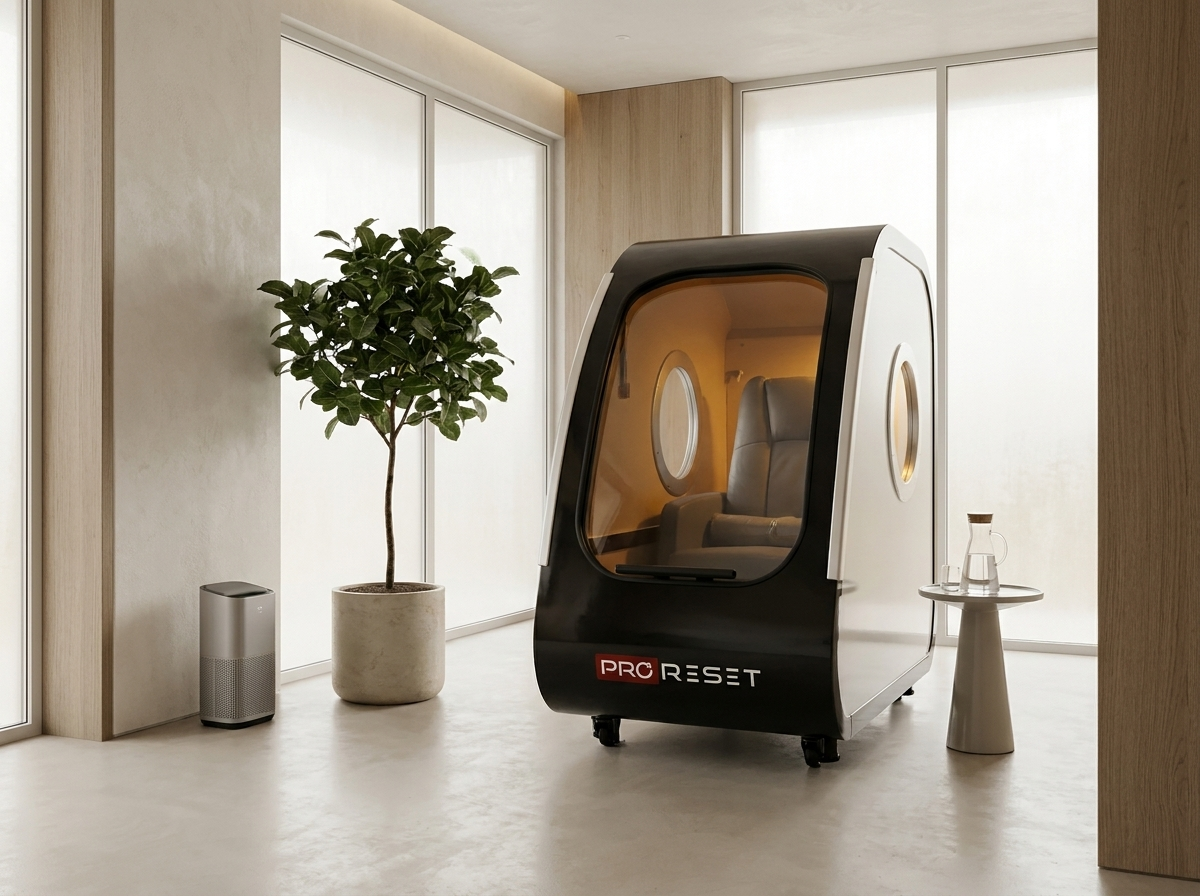
We Kraftathlet we offer ProReset ’s premium chambers across the entire pressure range. All models are custom-made, CE-compliant, and priced upon request —tailored to the space, intended use, and configuration level.
| Print Range | ProReset-Models (examples) | Profile |
|---|---|---|
| 1.3–1.4 ATA | Flow 80, Flow 90, Oasis, Space | Soft-shell, portable, wellness/home |
| 1.5–2.0 ATA | Orbit 1.5, Orbit 2.0, Vista 2.0 | Hard-Shell, Center/Clinic |
| 2.0–3.0 ATA (modular) | Zeugma, Atlantis, Matrix, Petra | Modular, Multi-user, Professional Use |
Which level is right for you depends on your business model: A wellness or longevity studio often finds that soft-shell chambers in the 1.3 to 1.4 ATA range are just right, while a clinically oriented center requires higher pressure levels and hard chambers. As an authorized dealer with installations throughout Europe, we provide manufacturer-independent advice on the right configuration for you.
Common Mistakes in Selecting the Compression Stage
Equate higher pressure with greater benefits. A higher ATA rating is not necessarily “better.” It implies more sophisticated technology, higher requirements, and a different operational context. What matters most is how well it suits the intended purpose.
Mixing wellness claims with clinical statements. Anyone who runs a fitness studio should clearly distinguish between well-being and medical indications—this is not only a matter of professionalism, but also a legal requirement in Germany.
Underestimating space and infrastructure. Higher pressure levels require more space, an oxygen supply, and safety equipment. These factors must be taken into account during the planning phase before the chamber is ordered.
Don't forget the oxygen supply. Chamber pressure is only half the battle—without the proper oxygen supply (such as a mask and concentrator), the treatment won't be effective.
Frequently Asked Questions
What does ATA mean in the context of a hyperbaric chamber?
ATA stands for “atmospheres absolute” and indicates the total pressure inside the chamber. 1.0 ATA is the atmospheric pressure at sea level. 2.0 ATA corresponds to twice that pressure. The higher the value, the more oxygen dissolves in the blood plasma, according to Henry’s law.
Which ATA level is the right one?
That depends on the intended use. Wellness and longevity applications, as well as home use, often range from 1.3 to 1.4 ATA. Clinical centers typically operate at 2.0 to 2.4 ATA. A higher setting is not automatically better; it is simply more suitable for the specific context.
At what pressure do we even start talking about HBOT?
The internationally accepted definition requires a pressure of at least 1.4 ATA with nearly 100% oxygen. Recognized clinical indications are generally treated at a pressure of at least 2.0 ATA.
Are soft chambers rated at 1.3 ATA a good idea?
For wellness, recovery, and home use, soft-shell chambers are a well-established, comfortable, and straightforward solution. For clinical applications with higher pressure requirements, hard chambers are necessary.
How much does an HBOT chamber cost?
Our " ProReset" chambers are priced individually upon request, as the price and configuration depend on the model, pressure rating, chamber size, and features. Please contact us for a customized quote.
Conclusion
The ATA pressure level is the most important selection criterion for any HBOT chamber—but not in the sense that “more is better,” rather as a matter of suitability for the intended purpose. Soft chambers in the 1.3 to 1.4 ATA range are suitable for wellness, longevity, and home use; hard chambers at 2.0 ATA and above are intended for professional and clinical use. Those who consider technology, application, and infrastructure together will make the right decision.
Are you planning to set up a recovery or longevity center and need help selecting the right pressure level and chamber? Talk to our team or submit a wholesale inquiry —we’ll provide you with personalized, manufacturer-independent advice.
For more information on choosing a chamber design, see our comparison of hard-shell vs. soft-shell chambers and our comprehensive HBOT buying guide.
Sources: Undersea and Hyperbaric Medical Society (UHMS) – Definition of HBOT; Society for Diving and Hyperbaric Medicine (GTÜM). Note: This article is intended to provide technical and equipment information and is not a substitute for medical advice.