
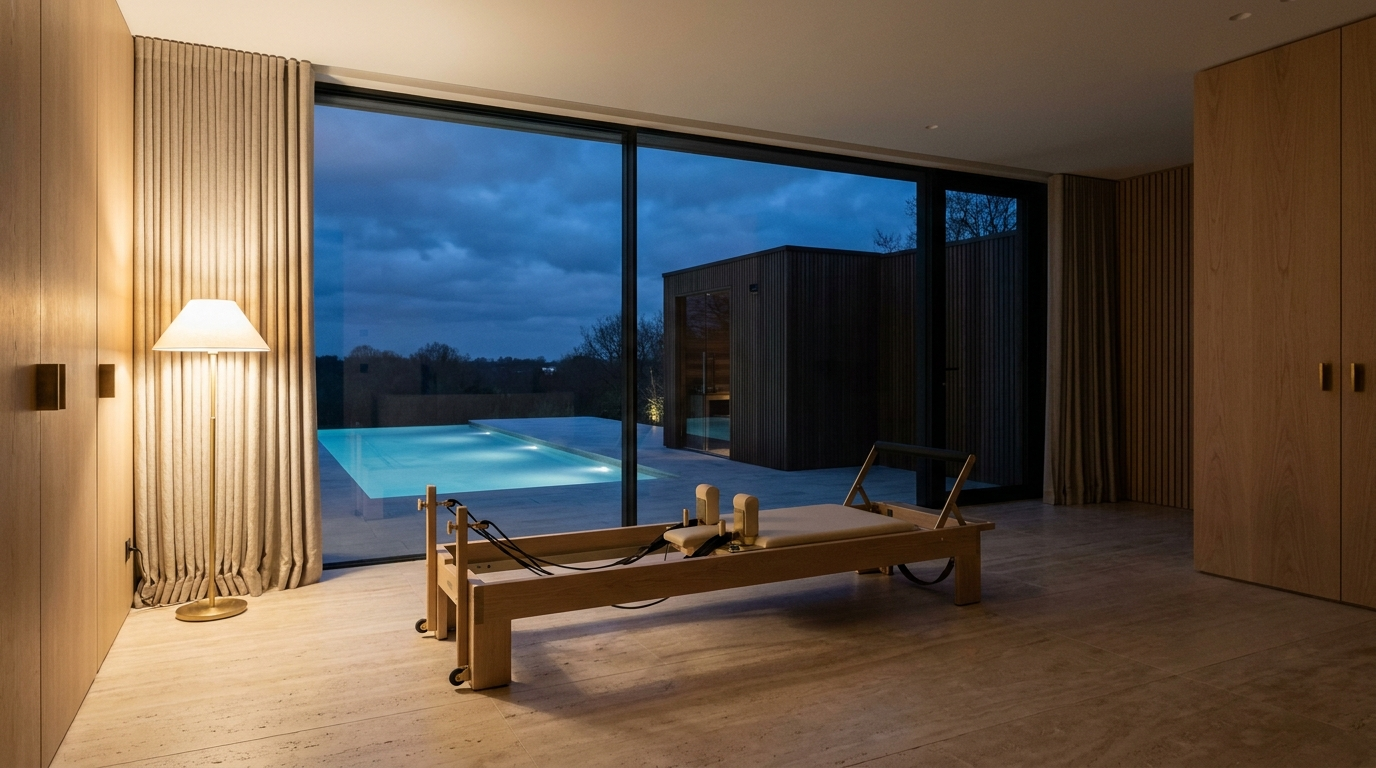
Recovery · Wellness · Longevity
The Kraftathlet Longevity Guide: How to build a recovery and longevity setup that people actually use
The Kraftathlet Longevity Guide is your roadmap for a modern recovery and longevity setup that people actually use, rather than just looks good. Whether you are equipping a hotel, spa, studio, or clinic, or building your own retreat at home, you will learn which components belong together, how to cleverly plan the space and flow, how to recognize quality, and which costly mistakes you can avoid. No promises that no one can keep—just the decisions that ultimately determine the experience and profitability.
Why this guide—and what you get out of it
You have a vision: a place where people can unwind, feel good, and want to return. Perhaps it is a spa area that sets your hotel apart from the competition. Perhaps a recovery room that gives your studio a second revenue stream. Or a private retreat at home that becomes part of your daily routine, like your morning coffee. The goal is clear—the path to get there rarely is.
This is exactly where this guide comes in. It doesn't make the decisions for you, but it gives you the mindset that experienced operators and ambitious private buyers use when planning. You will learn how a modern setup is structured, which components complement each other, how to plan the space and flow together, and how to recognize whether something is truly good—or just looks good.
Important to note upfront: This is about experience, routine, energy, and everyday well-being—and for operators, about demand, occupancy, and profitability. It is not about miracle cures. What ultimately matters is a place where people choose to return. And you don't plan that by buying products, but by thinking in terms of experiences.
- For operators: a setup that gets booked and pays for itself, not just an expensive room.
- For private users: a routine you actually live, because the space makes it easy to get started.
- For both: the decisions you make at the beginning that would otherwise be costly to correct later.
What defines a modern recovery and longevity setup today
A modern setup is not a single piece of equipment, but a thoughtfully designed combination. In the past, the sauna stood alone, the ice bath was a barrel in the garden, and everything seemed a bit haphazard. Today, people think in terms of rituals: alternating hot and cold, tension and relaxation, activation and rest. The setup follows this rhythm instead of leaving it to chance.
The second difference is expectations. Anyone who enters a recovery area today—whether a guest or you yourself—expects a cohesive experience: materials, lighting, temperature, layout, and flow. A single high-quality piece of equipment in a soulless room will stand out for the wrong reasons. A cleverly composed area made of solid components almost always beats an expensive standalone item.
The third point is scalability. A good setup grows with you. You might start with a sauna and cold therapy and add oxygen or exercise later. If you think in stages from the beginning—rather than doing everything at once—you build something that can be further developed over the years without starting from scratch.
Keep in mind who you are planning for as you read. A hotel guest wants an experience that works immediately without instructions. A studio member wants routine and consistency. At home, you want a low barrier to entry—something so simple that you will use it even on a tough Tuesday. The same components, three different priorities.
- Ritual instead of a single piece of equipment: hot/cold, active/restful, a logical flow.
- Presentation matters: materials, lighting, layout, and atmosphere all help shape the experience.
- Think in stages: a setup that can grow with you, rather than a one-time full installation.
The components at a glance—and what each contributes to the experience
Before you think about brands or models, it is worth looking at the role each component plays in the overall experience. Not every space needs everything. But if you understand what each component contributes, you can make conscious choices—rather than relying on gut feeling or trends.
The sauna is almost always the anchor. It provides warmth, a moment to arrive, and is the component most people know and appreciate. It pairs well with almost any setup and is the natural starting point for a hot-cold ritual.
The ice bath or cold plunge—known as Swedish Cold here—is the counterpoint and the moment people talk about. Cold is what makes a setup particularly special, shareable, and memorable today. It needs the contrast of heat to deliver its full experience.
The cold chamber—known as CryoPro here—is the premium level of cold therapy: dry, short, intense, and with a high wow factor. For operators, it is a differentiator that sets a setup apart from the standard. Oxygen or HBOT—known as ProReset here—is the component with the strongest demand dynamics: driven by professional athletes and high-profile names, it is a real magnet for a discerning target group. Finally, exercise—such as Hegren or TALMA Pilates reformers, or Iron Neck—rounds off a setup that is not only passive but also offers activity.
- Sauna: the anchor and moment to arrive, combinable with almost anything.
- Swedish Cold (ice bath/cold plunge): the counterpoint that creates conversation and memories.
- CryoPro (cold chamber): the premium level of cold therapy with a high differentiation value.
- ProReset (oxygen/HBOT): the component with the strongest demand, supported by professional sports and high-profile names.
- Exercise (Reformer, Iron Neck): turns a passive area into an active, versatile offering.
Space & sequence: how individual parts become an experience
The most common costly mistake is not choosing the wrong equipment—it is a space that does not suit the flow. A setup thrives on layout: Where do you arrive? Where do you go next? Where do you pause? If people have to search between the components, shiver, or run across the room, the experience breaks down—no matter how good the individual parts are.
Think in terms of a sequence. A classic, intuitive flow is: arrive and warm up (sauna), create the contrast (cold), and unwind (a relaxation area with a lounger, water, and dimmed lighting). This sequence must be physically reflected in the space. The path from heat to cold should be short and clear—the contrast is the highlight, not an obstacle course to get there.
Do not plan the relaxation area as an afterthought. That is exactly where the feeling is created that people take with them and share. A quiet zone with space to unwind is often worth more than another component. When space is limited, it is better to have three components with a good relaxation area than five components that crowd each other out.
Practical factors also determine whether a space works: water and drainage near the cold therapy area, ventilation and humidity control around the heat, power supply for the technical components, floors that are safe and easy to walk on when wet, and paths that remain intuitive even with wet feet and a relaxed mind. Addressing these early saves you from costly retrofits later.
- Paths before equipment: first think through the flow in the space, then place the components.
- A short path from heat to cold—the contrast is the highlight, not an obstacle course.
- Take the relaxation area seriously: this is where the feeling is created that people share.
- Clarify early: water/drainage, ventilation/humidity, power, and non-slip, wet-safe flooring.
Choosing wisely: how to recognize true quality
On paper, many things look similar. The difference shows in everyday use—after months of operation. Especially in commercial use, where a component must withstand daily use by many people, the wheat is separated from the chaff. Therefore, pay less attention to glossy pictures and more to what can withstand continuous operation.
For operators, compliance is not a detail, but the foundation. Components used commercially need the right design and documentation—CE and specifications suitable for commercial use are mandatory, not optional. A piece of equipment intended for private use does not belong in an area with daily, intensive use. You should clarify this before purchasing, not after.
Look at the things that are rarely featured prominently in the data sheet: How is it cleaned and maintained? What about water treatment and filtration for cold therapy? How loud is the equipment during operation? How quickly are spare parts or support available if something gets stuck? What are the energy and operating costs over the long term? These are the factors that determine whether a setup will bring joy over time or become a burden.
Reliable guidance is provided by how others have fared with a supplier. At Kraftathlet, we have a 5.0 out of 5 on Google from 27 reviews—a benchmark against which you can measure any partner. Ask every supplier about genuine, verifiable experience rather than promises.
- Commercial means commercial: CE and specifications suitable for commercial use are mandatory, not optional.
- Check for continuous operation: cleaning, maintenance, water treatment, noise level, and energy consumption.
- Support matters: How quickly are spare parts and help available when it counts?
- Verifiable experience instead of advertising promises—e.g., 5.0/5 on Google from 27 reviews.
The costliest mistakes—and how to avoid them
Most costly mistakes do not happen during the purchase, but during the planning beforehand. Those who know them avoid them almost effortlessly. Here are the ones we see most often—across hotels, studios, and private projects.
Mistake one: buy first, then plan. A component suddenly stands there and fits neither the space nor the flow. Reverse the order—vision and flow first, then selection. Mistake two: underestimate the space. Ventilation, water, power, and layout are considered too late, and the subsequent retrofit costs more than the equipment. Mistake three: private instead of commercial. In continuous operation, a private product wears out quickly—the supposed savings turn into several times the cost.
Mistake four: too much at once. Squeezing five components into a space that is too small creates a cramped feeling instead of an experience. It is better to grow in stages. Mistake five: forget the relaxation area. Without space to unwind, even the best ritual loses its effect. Mistake six: five suppliers for one project. When selection, delivery, installation, and advice are spread across too many shoulders, someone will eventually let you down—and you will be the project manager you never wanted to be.
The common thread behind all these mistakes is a lack of a holistic view. Individual decisions that make sense on their own do not create a cohesive whole when combined. Those who think of the project as an experience from the beginning—rather than a shopping list—avoid costly corrections almost automatically.
- Do not buy first and plan later—it is always the other way around.
- Clarify the realities of the space (ventilation, water, power, layout) early, rather than repairing them later.
- No private products for continuous operation—the savings will be reversed.
- Do not overload; grow in stages—and never cut the relaxation area.
- Do not juggle five suppliers—otherwise, you will become the project manager yourself.
What guests and users truly appreciate
Whether you are planning for paying guests or for yourself—in the end, one question determines success: Do people choose to return? This depends less on technical specifications than on feelings and small details that make things run smoothly, which are easily overlooked.
People appreciate clarity without explanation. A guest does not want to have to think about what comes first—the setup should guide them. They appreciate cleanliness and quiet; nothing destroys the experience faster than a hectic or poorly maintained area. They appreciate the moment people talk about—the cold, the contrast, the feeling afterward. And they appreciate the space to unwind, where the experience can sink in.
For operators, this is exactly where the economic leverage lies. An area that offers a genuine experience creates repeat visitors, referrals, and content that guests share themselves. Demand for recovery and longevity is growing—driven by visibility in professional sports and among high-profile names. Those who offer a cohesive experience meet a real, growing demand instead of chasing a trend.
For you personally, the deciding factor is a low barrier to entry. You do not use the setup because it is impressive, but because it is easy to get started: ready, clean, warm enough, and close enough. Plan for your most tired day, not your most motivated—then the purchase becomes a genuine routine that belongs to your everyday life and energy.
- Guidance without instructions: the flow explains itself.
- Cleanliness and quiet are non-negotiable—they carry the entire experience.
- The memorable moment plus space to unwind creates repeat visits and referrals.
- For private users, a low barrier to entry is what matters: plan for your most tired day, not your most motivated.
Plan with one partner instead of five—your next step
A good setup rarely comes from five separate orders. Selection, sourcing, commercial compliance, delivery, installation, and honest advice work together—and every handover between different suppliers is a point where something can get lost. That is exactly why Kraftathlet exists: one partner instead of five suppliers, from the initial idea to the completed installation.
This does not take away your vision—it remains yours. But it takes away the coordination, the gaps, and the risk of ultimately being the project manager yourself, mediating between tradesmen. You describe what you want to achieve and for whom; we help you turn that into a cohesive, compliant, and economically viable setup.
Take three things away from this guide: Think in terms of experiences and rituals, not equipment. Plan the space and the flow before making your selection. And judge every partner by verifiable experience, not promises. If you follow this, you will build something that people use—and that is ultimately the only measure that matters.
If you want to discuss your project—whether a commercial area or a private retreat—let us take an honest look at what suits your space, your target group, and your goal. You will receive an initial, no-obligation assessment from us free of charge, as our gift to you, so that you can start planning with clarity.
For your setup that people will truly live.
Your Kraftathlet Founder
- One partner for everything: selection, sourcing, CE/commercial compliance, delivery, installation, and honest advice.
- You keep the vision—we take care of the coordination, gaps, and risk.
- Three guiding principles: think in terms of experiences, plan the space before the equipment, and judge partners by experience.
- Soft CTA: no-obligation initial assessment free of charge—as our gift to you.
Do you want to plan your setup with one partner instead of five suppliers?
We will take an honest look at what suits your space, your target group, and your goal, free of charge and without obligation.
No-obligation strategy call