

Abstract
- To get started, you'll need just three things: a non-slip mat, two blocks, and a strap. A bolster and a blanket will come in handy once you start doing restorative exercises.
- When it comes to mats, it's not the price that matters, but grip, cushioning, and material—4–5 mm offers the best balance between stability and joint protection.
- Cork blocks are more stable and less slippery than foam; a strap helps you build poses safely, rather than forcing yourself into them.
- Props aren't a sign of being a beginner: they make yoga more accessible, safer, and—especially when it comes to back issues—more effective.
Yoga Accessories: Mat, Block, Strap, and Bolster—An Honest Buying Guide
The essentials for yoga are straightforward: a good mat, two blocks, and a strap will get you through almost any class. Everything else is a helpful addition, not a must-have. This buying guide helps you figure out what really matters—and how to tell when you’re buying something that’s worth the money.
Yoga is no longer a niche topic: According to a GfK survey commissioned by the Professional Association of Yoga Teachers (BDYoga), about 13% of Germans—roughly 11 million people—practice yoga, and the most common reason for starting is to relieve physical ailments such as back pain (BDYoga: Yoga by the Numbers). This is exactly where the right equipment comes into its own: it makes poses accessible that would otherwise lead to compensatory movements and injury.
The yoga mat: the one thing you shouldn't skimp on
The mat is your connection to the floor—that’s where quality is most evident. Three criteria are key:
- Grip (non-slip). Nothing disrupts your flow more than hands slipping in Downward-Facing Dog. Natural rubber and cork provide the best grip, even with sweaty hands.
- Cushioning (thickness). 4–5 mm is the standard: enough padding for the knees and wrists, but firm enough to provide a stable footing. Mats 6 mm and thicker are easier on the joints but make balancing poses more unstable. Travel mats that are 1–2 mm thick are only practical for use on the go.
- Material. Natural rubber and cork are durable and low in harmful substances; TPE is lightweight and inexpensive; traditional PVC is sturdy but less sustainable.
A good mat lasts for many years—when you consider its lifespan, it’s one of the most cost-effective purchases you can make for sports. You can find the right mats and floor protection in our “Training Mats & Floor Protection” category.
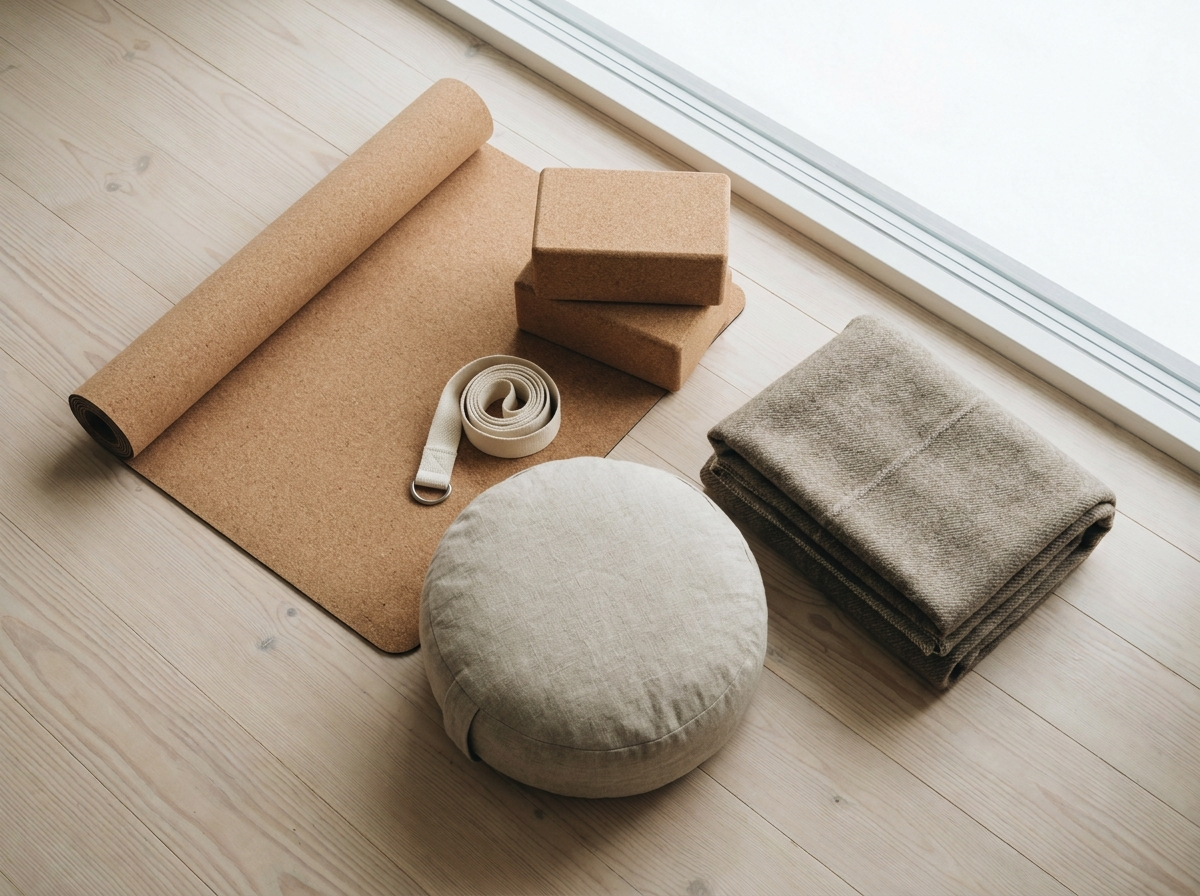
Yoga Blocks: Stability That Brings You Closer to the Floor
Blocks “extend” your arms and bring the floor closer—for example, in Triangle Pose or forward bends. They are the most underrated tool for beginners. When choosing blocks, the material is the most important factor:
- Cork: heavy, sturdy, non-slip—ideal if you really want to brace yourself. Slightly harder to the touch.
- Foam (EVA): lightweight and inexpensive, but softer and less stable when supporting a person's full body weight.
- Wood: very sturdy and durable, but heavier and more expensive.
Two blocks are more useful than one because many poses require support on both sides. The standard dimensions are approximately 23 × 15 × 7.5 cm.
Strap, bolster, and blanket: the useful additions
The yoga strap helps you safely build up poses that are beyond your current range of motion—such as seated forward bends or reaching for your feet. Instead of forcing yourself into a position, you extend your reach and work on your flexibility in a controlled way. A 2.5-meter-long strap with a D-ring buckle covers almost everything.
The bolster (a firm, elongated pillow roll) is the centerpiece of restorative and Yin yoga: It supports the body in passive poses, allowing you to relax and let go for minutes at a time. If you place a high value on recovery and breathwork, you’ll love it—but it’s not a must-have for dynamic classes.
A wool blanket is perhaps the most underrated accessory: as a seat riser when sitting cross-legged, as padding under your knees, or to keep you warm during the final relaxation phase. You’ll find additional accessories and small functional devices in the Functional Training category.
What do you really need? Accessories by workout style
| Accessories | What is it for? | Priority |
|---|---|---|
| Mat (4–5 mm) | Grip & Joint Protection for Every Class | Essential |
| 2 blocks (cork) | Bringing the floor closer, supporting postures | Highly recommended |
| Strap (2.5 m) | Increase Range of Motion, Build Flexibility | Recommended |
| Bolster | Restorative & Yin Yoga, Breathwork | Optional |
| Blanket | Booster seat, cushion, heat | Nice-to-have |
Common Mistakes When Buying Yoga Accessories
- Don't just look at the price. A 15-euro mat with no grip will be a source of frustration from day one. When it comes to mats, quality is what pays off the most.
- Choosing one that’s too thin or too thick. Ultra-thin travel mats are uncomfortable at home, and very thick mats make balance poses wobbly. 4–5 mm is the sweet spot.
- Foam blocks for support positions. Anyone who leans on them with their full weight will quickly notice that cork provides more stability.
- Dismissing aids as “cheating.” Blocks and straps help establish proper form rather than merely feigning flexibility. Beginners, in particular, benefit the most.
- Buy everything at once. Start with a mat, blocks, and a strap. You can add a bolster and a blanket later, if your practice calls for them.
Buying Guide & Care
Look for materials that have been tested for harmful substances (e.g., phthalate-free), non-slip surfaces, and—in the case of mats—a closed-cell structure that doesn’t absorb sweat. Clean the mat regularly with a mild cleaner and let it dry flat; cork and natural rubber mats shouldn’t be exposed to direct sunlight. That way, your gear will last for years.
At Kraftathlet , you can shop with the confidence that comes from over 5,000 satisfied customers, carbon-neutral shipping, and a 30-day return policy—so you can try out your mat and grip at home at your leisure. Not sure which combination suits your style? Write to us, and we’ll give you personalized advice.
Frequently Asked Questions
How thick should a yoga mat be?
For most people, a 4–5 mm mat is ideal: it provides enough cushioning for the knees and wrists, yet is stable enough to ensure a secure footing. If you have sensitive joints, you might want to opt for a 6 mm mat; thin travel mats are great for when you’re on the go.
Cork or foam blocks—which is better?
Cork blocks are more stable and slip-resistant, and they safely support your weight during support poses. Foam blocks are lighter and less expensive, but softer. For regular practice, cork is the better choice.
As a beginner, do I really need a harness?
Yes, especially as a beginner. The strap extends your reach, allowing you to build postures correctly instead of forcing yourself into them. It helps you develop flexibility safely and without compensating.
What is a bolster, and do I need one?
A bolster is a firm, cylindrical cushion that supports the body in passive poses. It’s invaluable for restorative and Yin yoga, but not a must-have for dynamic classes. Buy one if your practice involves a lot of recovery.
Can yoga accessories help with back pain?
Props make back-friendly postures more accessible and safer—such as blocks for forward bends. Yoga itself is often practiced to relieve back pain. However, if you have acute or persistent pain, you should consult a doctor first.
Conclusion
Good yoga gear doesn’t have to be expensive or extensive. Start by investing in a high-quality mat with good grip, then add two cork blocks and a strap—that will cover almost any class. Add a bolster and a blanket once you discover restorative yoga. This way, you’ll build a set of gear that keeps you safe and comfortable for years to come.
New to yoga? Then be sure to check out our complete beginner's guide to yoga, featuring exercises and a 4-week plan. You can find more background information on the practice in our freely accessible overview of yoga.