

Abstract
- Yoga measurably reduces stress: A meta-analysis by Pascoe and colleagues (2017, *Psychoneuroendocrinology*) of 42 randomized studies found a reduction in cortisol levels, resting heart rate, and blood pressure.
- The mechanism of action: Slow movement and conscious breathing activate the parasympathetic nervous system—the "rest and digest" system—which shuts down the stress response.
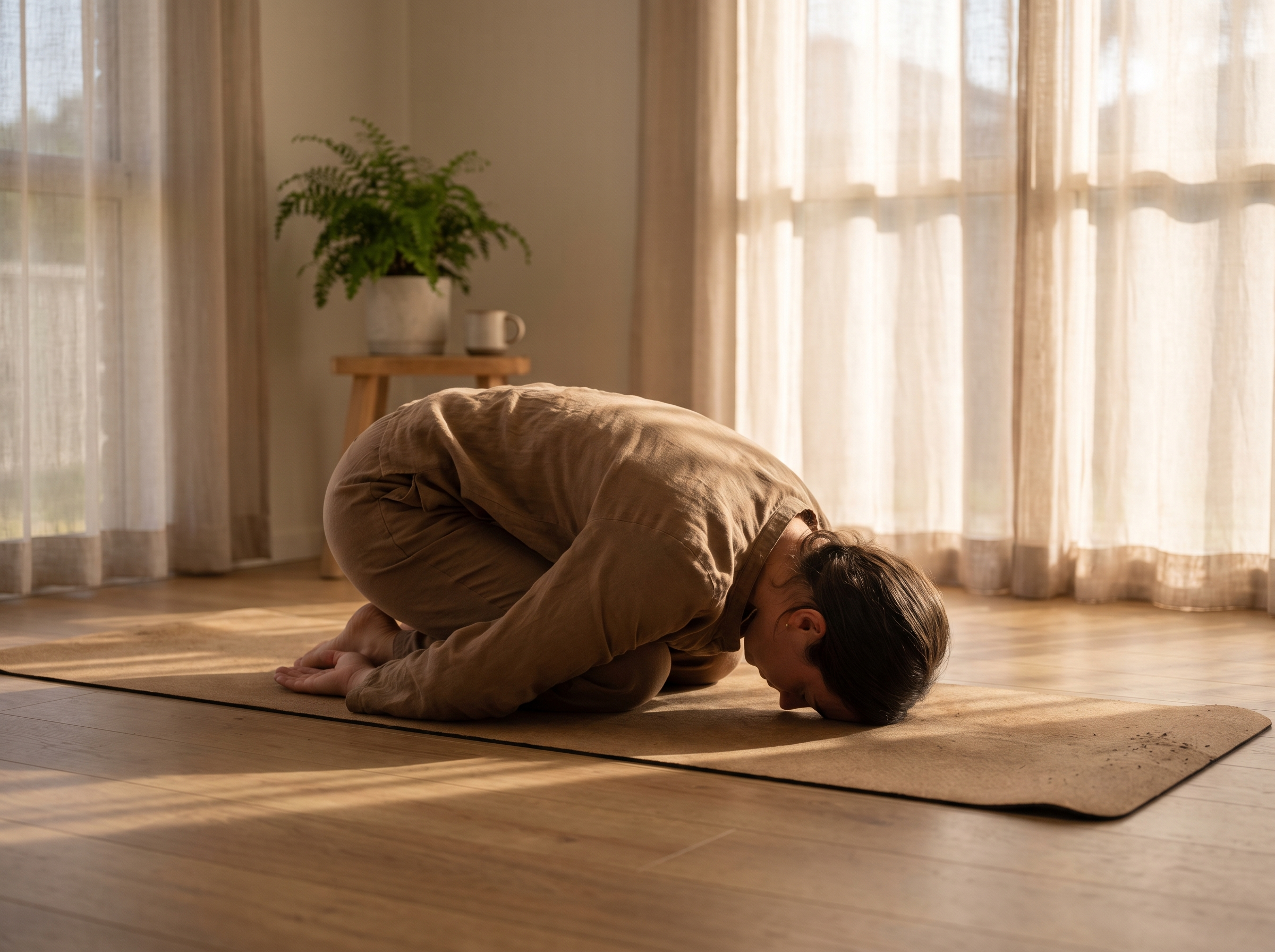
- Calm poses (Child's Pose, Forward Bend, Legs-Up-the-Wall) combined with prolonged exhalation are the most effective.
- Just 10–15 minutes a day is enough to feel a noticeable difference. All you need is a non-slip mat and a quiet spot.
Yoga for Stress Relief: Exercises, Breathing Techniques, and What Science Says
Yoga is one of the few stress-relief tools whose effects can be measured in the body: A meta-analysis by Pascoe and colleagues (2017) evaluated 42 randomized controlled trials and found that yoga practices lower cortisol levels—the primary stress hormone—as well as resting heart rate and blood pressure. The reason isn’t magic, but physiology: slow movement and conscious breathing switch your nervous system from “fight-or-flight” mode to recovery mode.
In this post, you'll learn why yoga works so well for stress, which poses and breathing techniques calm you down the fastest, and how to create a short routine that's realistic even on busy days.
Why Yoga Calms the Stress Response System
Your autonomic nervous system has two opposing systems: the sympathetic nervous system, which increases your heart rate, breathing, and muscle tension in response to stress, and the parasympathetic nervous system, which regulates relaxation, digestion, and rest. Chronic stress keeps the sympathetic nervous system constantly active—resulting in inner restlessness, sleep problems, and muscle tension.
This is exactly where yoga comes in. The combination of slow stretching, held poses, and calm breathing sends a signal to the brain: “It’s safe; you can let go.” Breathing, in particular, acts as a direct switch: A long, calm exhalation activates the vagus nerve and, with it, the parasympathetic nervous system. That’s why, after just a few minutes of mindful breathing, you often feel noticeably calmer.
What the research shows
The meta-analysis mentioned in the journal *Psychoneuroendocrinology* is so significant because it is not based on individual experiences, but rather on the combined analysis of many controlled studies. In that study, yoga interventions were associated with lower cortisol levels in the morning, afternoon, and evening—a sign that the calming effect extends beyond the time spent on the mat. It’s important to note: Yoga is a helpful tool for managing general stress, but it is not a substitute for medical or therapeutic treatment in cases of persistent stress.
The Most Effective Ways to Cope with Stress
Not every type of yoga is equally calming. Dynamic, vigorous styles can be invigorating; for stress relief, calm, held poses are ideal. These five are a tried-and-true way to get started:
| Posture | Effect | Duration |
|---|---|---|
| Child's Pose (Balasana) | relaxes the back and shoulders, conveys a sense of security | 1–3 min. |
| Standing Forward Bend (Uttanasana) | stretches the back, calms the mind | 30–60 sec. |
| Cat-Cow (Marjaryasana-Bitilasana) | mobilizes the spine in time with the breathing rhythm | 8–10 breaths |
| Legs Up the Wall (Viparita Karani) | relieves strain on the legs, calms the nervous system | 3–5 min. |
| Supine Position / Final Relaxation (Savasana) | Complete letting go brings a sense of calm | 3–5 min. |
If you enjoy calm, long-held poses, Yin Yoga is an ideal next step—in this practice, you hold each pose for several minutes.
Breathing Techniques That Calm You Down Immediately
Breathing is your most direct path to the parasympathetic nervous system. You can use these two techniques anywhere—even without a mat:
- Extended Exhalation: Inhale for four seconds and exhale for six to eight seconds. The longer exhalation specifically activates the parasympathetic nervous system.
- Abdominal breathing: Place one hand on your abdomen and breathe in a way that raises your abdomen, not your chest. This signals a sense of security to your body.
You can find more techniques—from alternate nostril breathing to the humming Bhramari—in our article on pranayama breathing techniques for beginners. If you feel stressed mainly in the evening, combine these exercises with our evening yoga routine for better sleep.
Your 12-Minute Routine for Stressful Days
You don't need a 90-minute session to feel the benefits. This short routine fits into almost any day:
- 2 Min. Cat-Cow in the Rhythm of Your Breath
- 2-minute child's pose with a calm, long exhalation
- 1-Minute Standing Forward Bend
- 4 Min. Legs Up the Wall
- 3-minute Savasana with abdominal breathing
The routine works best when it becomes a habit—for example, right after work or before going to bed. Consistency is more important than duration.
Buying Guide: The Right Equipment
Yoga for stress relief is intentionally minimalist—which makes it all the more important that what you do have is of good quality. A non-slip, sufficiently thick mat provides stability during gentle poses and protects your knees and spine. You’ll find a selection in our Exercise Mats & Floor Protection category. For gentle support in held poses, blocks, straps, and bolsters from our Premium Pilates & Yoga Accessories section can help.
Do you run your own studio and want to expand your offerings to include calming classes like Yin or Restorative Pilates? For sturdy, long-lasting studio equipment in the Reformer and Pilates areas, it’s worth checking out the Hegren Reformers —designed for continuous use, built to withstand heavy use, and built to last for many years. As a team with over 5,000 orders and a rating of ★ 4.88/5, we’d be happy to advise you on the right equipment for your home or studio.
Common Mistakes
- Starting out too ambitiously. If you force yourself into complicated poses right away, you'll just create more stress. Start simple and gentle.
- Forgetting to breathe. Without conscious, calm breathing, yoga is nothing more than stretching—the calming effect comes only with the breath.
- Practice only occasionally. Repetition is what produces results. Short, daily practice beats long, infrequent practice.
- The expectation of instant perfection. It's not about flexibility, but about letting go. Don't compare yourself to others.
- Don't ignore warning signs. If you're experiencing prolonged, severe stress or exhaustion, yoga is no substitute for professional help—be sure to seek it out as well.
Frequently Asked Questions
Does yoga really help with stress?
Yes. A meta-analysis of 42 randomized studies (Pascoe et al., 2017) found that yoga practices lower cortisol levels, resting heart rate, and blood pressure. This effect is due to the activation of the parasympathetic nervous system through slow movement and conscious breathing.
How often and for how long should I practice?
Just 10 to 15 minutes a day can make a noticeable difference. Consistency is more important than duration—a short daily routine is more effective than one long session once a week.
Which type of yoga is best for relieving stress?
Calm, gentle styles like Yin Yoga or Restorative Yoga are the most soothing because you hold each pose for longer. Dynamic styles tend to be more invigorating and are less suitable for stress relief.
Can I start even if I don't have any prior knowledge?
Yes. The poses and breathing techniques presented here are beginner-friendly and can be performed safely without instruction. The only important thing is that you don't feel any pain in any of the positions.
Can yoga replace therapy for severe stress?
No. Yoga is a valuable aid to overall well-being, but it is not a substitute for medical or psychotherapeutic help. If you are experiencing ongoing severe stress, you should also seek professional help.
Conclusion
Yoga helps relieve stress because it targets the very systems that stress throws out of balance: breathing, the nervous system, and muscle tension. You don’t need any prior experience, flexibility, or much equipment—just a few quiet minutes and a good mat. Start today with the 12-minute routine and see how your mind feels afterward.
Are you unsure about which mat or accessories to choose, or are you setting up a studio? Contact us—we'll give you personalized advice.
Source: Pascoe MC, Thompson DR, Ski CF. “Yoga, mindfulness-based stress reduction, and stress-related physiological measures: A meta-analysis.” Psychoneuroendocrinology, 2017 – PubMed.