

- Pranayama is the conscious control of the breath in yoga—“prana” (life energy) and “ayama” (expansion, control). The goal is to deliberately slow, lengthen, and deepen the breath.
- Slow breathing techniques activate the parasympathetic nervous system (the "rest and digest" system). Systematic reviews show that pranayama can lower heart rate and blood pressure and reduce stress.
- Ideal for beginners: Ujjayi (ocean breath), Nadi Shodhana (alternate nostril breathing), Bhramari (humming), and box breathing. Kapalabhati is a more intense technique for advanced practitioners.
- Just 5–10 minutes a day is enough to get started. If you are pregnant or have a heart or respiratory condition, consult your doctor first.
Pranayama: The Most Important Yoga Breathing Techniques for Beginners
Pranayama is the art of conscious breath control in yoga—the deliberate slowing, lengthening, and deepening of the breath. This is precisely where its benefits lie: systematic reviews show that slow yogic breathing can lower heart rate and blood pressure and reduce feelings of stress because it activates the parasympathetic nervous system—your body’s “rest and digest” system.
The best part is: You don’t need any equipment or prior experience—just a few quiet minutes. In this guide, you’ll learn exactly what pranayama is, which four to five techniques are best for beginners, how to perform them correctly, and what health considerations to keep in mind. This way, you can build a simple breathing practice that complements your yoga or Pilates sessions and brings a sense of calm to your everyday life.
What is Pranayama?
The term comes from Sanskrit: “prana” means life energy or breath, and “ayama” means expansion or control. Pranayama is thus the fourth of the eight stages of classical yoga according to Patanjali—the transition from physical exercises (asanas) to introspection. In practice, this means: You don’t just breathe; you consciously control your breath—its length, rhythm, focus, and sometimes even brief pauses.
Physiologically, this works through the vagus nerve. A slow, prolonged exhalation signals “safety” to the nervous system and switches it from the sympathetic nervous system (fight-or-flight) to the parasympathetic nervous system (rest and digestion). That’s why conscious breathing has such an immediate calming effect—and why pranayama is such an effective tool for combating everyday stress.
The Most Important Breathing Techniques for Beginners
1. Ujjayi—the Ocean Breath
You breathe in through your nose while slightly narrowing your glottis, creating a gentle whooshing sound—like the sound of the ocean. Ujjayi makes your breath audible and thus easier to control. It is the accompanying breath in dynamic yoga (Vinyasa) and is ideal for developing concentration and rhythm.
2. Nadi Shodhana—Alternate Nostril Breathing
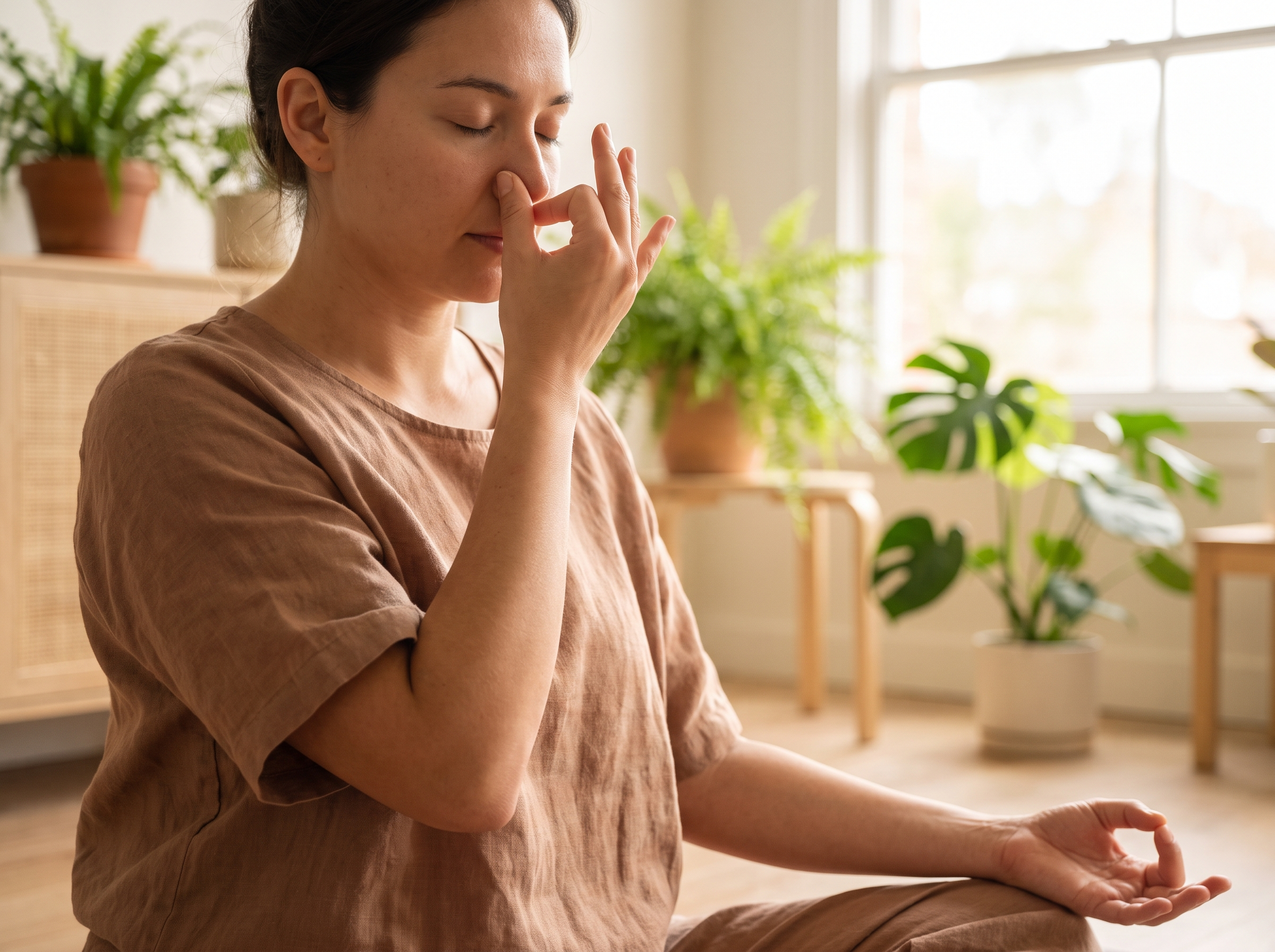
The classic balancing technique: You close one nostril at a time and breathe in and out alternately. Nadi Shodhana is considered particularly calming and balancing, and is one of the most extensively studied techniques for relaxation and focus. It’s perfect before bedtime or during stressful moments.
3. Bhramari—the buzzing breath
As you exhale, make a soft, humming sound like a bee. A comprehensive literature review describes Bhramari as being associated with increased focus, better sleep, and lower stress levels. The gentle vibration has a surprisingly quick calming effect—ideal when your mind won't settle down.
4. Box Breathing (Sama Vritti) — even breathing
A simple counting pattern: inhale for four seconds, hold for four, exhale for four, hold for four. Box breathing is so accessible that it’s even used in stress management training. It’s perfect for absolute beginners because the rhythm is clearly defined.
5. Kapalabhati—for advanced practitioners
A powerful, energizing technique involving short, forceful exhalations through the nose. Kapalabhati is stimulating rather than calming and should not be practiced during the first week. Important: This technique is not suitable if you are pregnant or have high blood pressure or heart problems—in these cases, stick to the calmer variations.
| Technology | Effect | Good for | Level |
|---|---|---|---|
| Ujjayi | Focus, Rhythm | Yoga practice, concentration | Beginners |
| Nadi Shodhana | Balance, Calm | Stress, Falling Asleep | Beginners |
| Bhramari | Deep Relaxation | A whirlwind of thoughts, sleep | Beginners |
| Box Breathing | Clear rhythm, calm | Introduction, Acute Stress | Beginners |
| Kapalabhati | Activation, Energy | Morning, Wakefulness | Advanced |
How to Get Started: A 10-Minute Routine
Sit upright—on a meditation cushion, a block, or simply on the edge of a chair. Keep your spine long, your shoulders relaxed, and your eyes closed. Begin with one minute of natural breathing, simply observing. Then do two to three minutes of Box Breathing (4-4-4-4) to get into a rhythm. Continue with three to four minutes of Nadi Shodhana to restore balance. To finish, practice Bhramari for one to two minutes to relax deeply. Important: Never force your breath. If you feel dizzy, return to normal breathing immediately.
Practice at the same time every day—in the morning to start the day with a clear mind, or in the evening to wind down. Consistency beats duration: five minutes every day is more effective than half an hour once a week.
Buying Guide: What You Need for Your Breathing Practice
Pranayama works without equipment—but a comfortable, non-slip mat and an elevated sitting position make all the difference between “lasting five minutes” and “happily sitting for twenty.” You’ll find a good yoga or Pilates mat in our Training Mats & Floor Protection collection; meditation cushions, blocks, and bolsters are available in the Premium Pilates Accessories section. If you work in a studio and want to combine breathwork with guided Reformer practice, you’ll find sturdy studio equipment for supervised classes in the “Hegren ” Reformer collection. With over 5,000 customers and a rating of 4.88/5, Kraftathlet is an established partner—including a 30-day return policy in case the mat doesn’t work out. Questions? Our team is here to help via the Contact page.
Common Mistakes
Breathing too forcefully. Pranayama is not a feat of strength. A tense, exaggeratedly deep breath creates tension instead of calm. Less is more.
Start with Kapalabhati. This invigorating technique can be too challenging for beginners and is not suitable for people with certain pre-existing medical conditions. Start with the gentler variations.
Hunchback. A slumped upper body constricts the diaphragm and rib cage. Sit upright—raised on a pillow if necessary.
Irregularity. Doing it once a week isn't enough. Short daily sessions build the habit and produce results.
Frequently Asked Questions
What is pranayama, explained simply?
Pranayama is the conscious control of the breath in yoga—you slow down, lengthen, and deepen your breath according to specific patterns to calm or energize your body and mind.
What is the best breathing technique for beginners?
Box Breathing (4-4-4-4) and Nadi Shodhana (alternate nostril breathing) are the most accessible techniques for beginners because they provide a clear rhythm and have a deeply calming effect.
How long should I practice pranayama?
To get started, 5–10 minutes a day is enough. Consistency is more important than duration—it’s better to do a short session every day than a long one only occasionally.
Can pranayama help you fall asleep?
Yes. Slow techniques like Nadi Shodhana and Bhramari activate the parasympathetic nervous system and can help you wind down in the evening. If you have ongoing sleep problems, talk to a doctor.
Is pranayama suitable for everyone?
The gentle techniques are well-suited for most people. If you are pregnant or have cardiovascular or respiratory conditions, you should consult a doctor before practicing intense techniques such as Kapalabhati.
Conclusion
Pranayama is one of the simplest yet most effective components of a yoga practice: it’s free, can be done anywhere, and has been linked in studies to measurable effects on heart rate, blood pressure, and stress. Start with box breathing and alternate nostril breathing, incorporate Bhramari for deep relaxation, and hold off on the energizing techniques until you feel confident. If you’d like to set up a comfortable practice space or equip your studio, the Kraftathlet team would be happy to advise you: Contact us now.
Sources: Systematic review on yogic breathing, heart rate, and blood pressure, ScienceDirect; Indian Journal of Physiology and Pharmacology—Bhramari Pranayama Review. This article is not a substitute for medical advice.