

Abstract
- For athletes, yoga primarily improves flexibility and balance —as demonstrated in a 10-week study (Polsgrove et al., 2016).
- The greatest benefits lie in mobility, core stability, breath control, and active recovery —as a supplement to, not a replacement for, strength training.
- Timing is key: Intensive stretching routines should be done after a workout or on a rest day, not right before a maximum strength session.
- You don't need much to get started: a non-slip mat, a block and a strap (optional)—and two short sessions per week.
For athletes, yoga is primarily a tool for flexibility, balance, and recovery—a controlled study conducted over 10 weeks showed significant improvements in flexibility and balance among college athletes after two yoga sessions per week (Polsgrove, Eggleston & Luckyer, 2016). It is no substitute for strength or endurance training, but it fills precisely the gaps that athletes often neglect: limited hip mobility, stiff shoulders, poor core control, and a lack of intentional recovery.
In this guide, you'll learn what yoga really does—and doesn't do—for athletes, which exercises are most effective, and how to incorporate two short sessions into your training plan so that they boost your performance rather than hold you back.
Why Yoga Is Beneficial for Athletes
Strength training builds muscle, but it often involves limited ranges of motion. Running and cycling are repetitive and, over time, shorten the hips and posterior chain. This is exactly where yoga comes in—through four key mechanisms:
- Flexibility & Mobility: Guided stretching through the full range of motion opens up the hips, thoracic spine, and shoulders.
- Balance & Core Stability: One-legged holding and standing poses train proprioception and the deep core muscles.
- Active Recovery: Calm sequences with long exhalations reduce tension and are well-suited for rest days.
- Breathing & Focus: Conscious breath control translates into better effort management and concentration during competition.
What the Research Says—An Honest Assessment
The evidence is strongest regarding flexibility and balance. In the study by Polsgrove et al. (2016, International Journal of Yoga), 26 male college athletes participated; the yoga group practiced yoga twice a week for 10 weeks and showed measurable improvements in sit-and-reach, shoulder flexibility, and stork-stand balance compared to the control group. These are precisely the qualities that many strength and endurance athletes lack.
Important for setting the right expectations: Yoga does not directly increase maximum strength or sprint speed. Its value lies in balance—improved joint mobility, proper posture, and recovery, which indirectly support training and technique. Those who use yoga as a supplement will benefit; those who see it as a substitute for strength training will be disappointed.
The Best Yoga Exercises for Athletes
These six poses target the typical problem areas for athletes. Hold each pose for 30–60 seconds, breathing deeply into your abdomen.
| Exercise | Target Region | Benefits for Athletes |
|---|---|---|
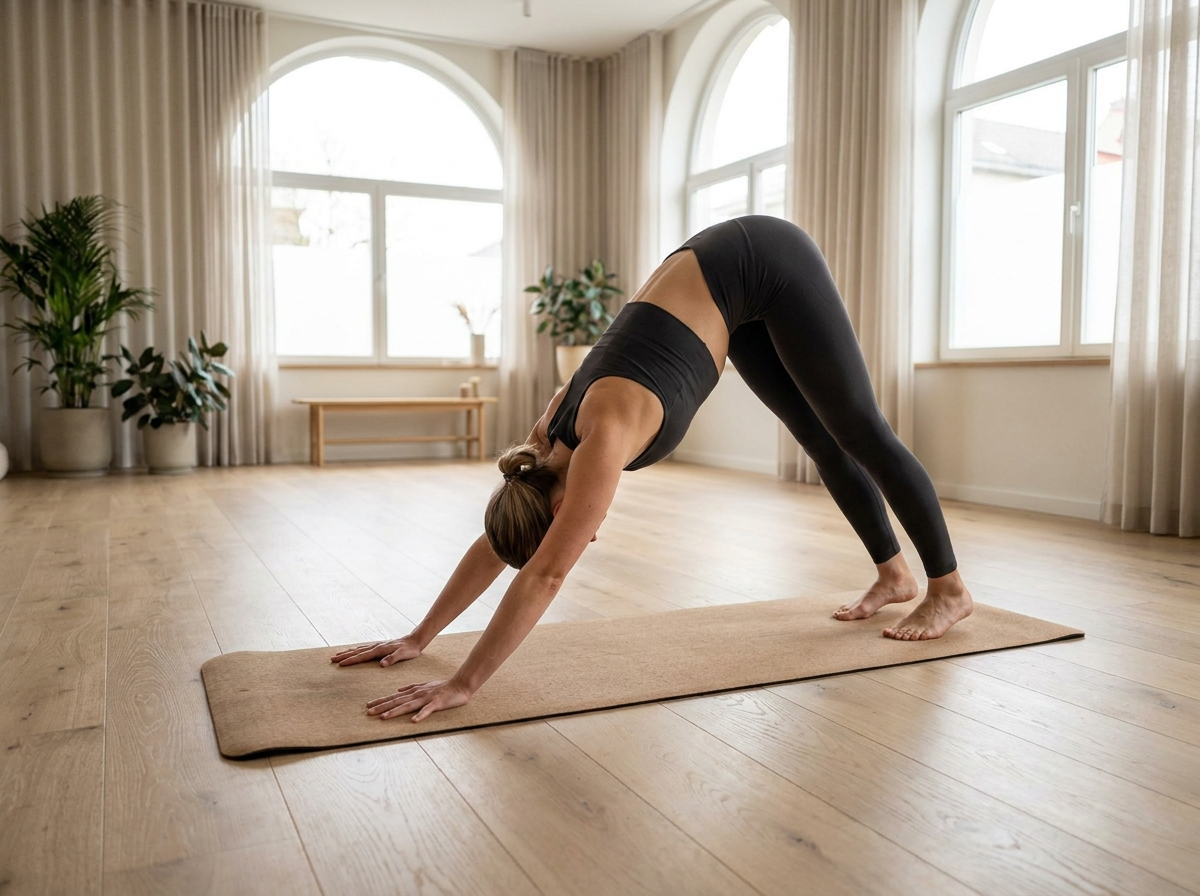
| Downward-Facing Dog | Calves, hamstrings, shoulders | Stretches runners' legs, relieves pressure on the back |
| Deep Lunge (Low Lunge) | Hip flexors, quadriceps | Stretches the hips, which have become tight from sitting and cycling |
| Pigeon | Glutes, hip external rotators | Relieves tension after squats and running |
| Warrior II | Legs, Hips, Torso | Muscular endurance and stability while standing |
| Bridge | Glutes, posterior chain, thoracic spine | Engages the glutes, opens the chest |
| Swivel seat | Spine, Trunk | Improves rotational mobility for throwing and hitting |
How to Properly Incorporate Yoga into Your Workout Plan
Yoga only helps if the timing is right. Long, relaxing stretching routines right before a strenuous strength or sprint session can hinder your immediate performance—which is why they belong at other times during the week:
| Date and Time | Recommendation |
|---|---|
| Before Practice | Only short, dynamic mobilization—no long static holds |
| After practice | A 10–15-minute gentle stretching routine to cool down |
| Day Off | Complete session (30–45 min) as active recovery |
For most athletes, two sessions per week are sufficient: a short one after a hard workout and a longer one on a rest day. This frequency also corresponds to the intensity at which the study mentioned above achieved measurable effects.
Equipment: Mat and Accessories
Yoga requires very little equipment—but what you do have should be of good quality. A non-slip mat that’s thick enough is the foundation; a block and a strap help you achieve poses correctly when your flexibility isn’t quite there yet. You’ll find suitable non-slip mats and floor protection under “Training Mats & Floor Protection,” and additional equipment for mobility and functional training under “Functional Training.” With over 5,000 satisfied customers and a 30-day return policy, you can take your time finding the mat that suits your floor surface and training style.
New to yoga? Then start with our " Yoga for Beginners—Getting Started " guide and the overview "Which Yoga Style Is Right for You?". If you practice yoga specifically for relaxation, you'll find additional techniques in the guide to "Stretching & Flexibility."
Common Mistakes
- Ambition instead of breathing. Straining into poses and holding your breath won't get you anywhere—the stretch comes from a calm, long exhalation.
- Prolonged static stretching immediately before maximum strength exertion can reduce immediate performance. It’s better to do dynamic warm-ups beforehand.
- Focus only on the areas that are flexible. Athletes should target the stiff areas (hips, thoracic spine, shoulders) in particular, not the ones that are already flexible.
- Too infrequent, too long. Two short sessions a week are more effective than a single marathon session a month.
- Ignore the pain. Stretching should feel like a pull, not a sharp sting. If you have an acute injury, get it checked out first.
Frequently Asked Questions
How often should athletes practice yoga?
Two sessions per week are a good guideline—a short one after your workout and a longer one on your rest day. This corresponds to the frequency at which studies have shown improvements in flexibility and balance.
Does yoga make my strength levels worse?
No, as long as the timing is right. Only prolonged static stretching immediately before a strenuous workout can impair short-term performance. This effect does not occur on rest days or after a workout.
Which style of yoga is best for athletes?
Strengthening, flowing styles like Vinyasa or Power Yoga for active days, and gentle Yin or Hatha for recovery. More important than the name is that the stiff areas are targeted.
Do I need prior experience?
No. Start with a few basic positions, use blocks and straps for support, and gradually increase the duration and depth. Proper form takes precedence over intensity.
Does yoga replace stretching or foam rolling?
It overlaps with, but does not replace, everything. Yoga combines stretching with strength, balance, and breathing. Foam rolling and targeted stretching remain useful supplements for specific muscle groups.
Conclusion
Yoga isn't a miracle cure for athletes, but it is an effective way to restore balance: greater flexibility, better balance, proper breathing, and true recovery—all of which have been scientifically proven, particularly in terms of flexibility and balance. Two short, well-timed sessions per week are enough to fill in the gaps left by strength and endurance training.
Are you looking for the right mat or accessories for your workout space? Talk to our team —we'll help you put together the perfect setup for your workouts and recovery.