

- The order matters: first the site plan and zones, then the equipment list—never the other way around.
- Investment based on size: small studio (80–150 m²) €50,000–80,000, medium-sized (200–400 m²) €150,000–250,000, large (500 m² and up) €250,000–350,000.
- Hidden budget drainers: Cardio Zone (€30,000–50,000) and 24/7 access (€12,000–25,000).
- Start by investing in high-wear, commercial-grade basics—expect delivery times of 2–4 months.
Setting Up a Gym: The Complete Guide to Space, Equipment, and Costs
Setting up a new gym in the DACH region costs between 50,000 and 350,000 euros—and it’s precisely this range that determines whether your gym will be successful from day one or drain your cash flow. By carefully considering space, equipment selection, and budget from the very beginning, you can avoid costly mispurchases and a training area that gets overcrowded during peak hours. This guide walks you through the four decisions that really matter: space planning, equipment mix, budget, and procurement.
Why Order Matters for Your Success
The most common mistake when setting up a gym: buying equipment just because a special offer is tempting. The result is machines crammed into the space and pathways where members get in each other’s way during peak hours. A gym doesn’t lose members because of poor equipment—but because of wait times and overcrowding.
That’s why the rule is: First the floor plan, then the equipment list. If you plan in this order, you’ll build a studio that scales and remains profitable even after two years. If you do it the other way around, you’ll almost always end up paying twice—once for the wrong purchase and once to correct it.
Step 1: Plan the Layout and Zones
Divide your space into distinct zones and plan for spacious pathways. As a rough guideline , allow 1.5–2 m² of training space per member present at any given time.
The Four Core Zones
- Free Weight Area: Power racks, weight benches, weights—the toughest and often most popular area.
- Machine category: guided devices for beginners and rehabilitation, high throughput.
- Cardio Zone: Treadmills, elliptical trainers, rowing machines—preferably with natural light.
- Functional/Class Area: an open space for small equipment and group training.
Think from the member's perspective
Where do members enter, where do they change clothes, and where does the workout begin? A logical flow from the front desk through the cardio zone (as a warm-up area) to the strength training area reduces congestion. Keep loud, high-impact areas physically separated from quiet zones such as the stretching area or class room. Plan for electrical outlets for cardio equipment and load-bearing floors for the free-weight area from the very beginning—retrofitting is expensive.
Step 2: Put Together the Right Mix of Devices
A common mistake is to invest too much in flashy specialty equipment and too little in the basics. The equipment that gets the most use is rarely the most expensive. A well-balanced foundation includes:
- Free weights: several power racks and weight racks, weight benches, and a complete selection of dumbbells and barbells.
- Cables & Functional: Cable machines and functional trainers —extremely versatile in a small space.
- Cardio: Treadmills, elliptical trainers, and rowing machines—sturdy, durable machines designed for use across multiple shifts.
- Guided machines: designed for the major muscle groups, so even beginners can work out safely.
Commercial-grade, not household quality
Choose true studio quality from brands like Titanium Strength or Force USA. Home equipment can’t withstand continuous use by hundreds of users per week—their warranties typically don’t cover commercial use. How you balance the mix depends on your clientele: Beginner- and rehab-oriented studios need more guided machines, while ambitious strength trainers thrive in the free-weight area.
Step 3: What Costs You Can Expect
The investment depends heavily on the size and level of amenities. Current guidelines for the DACH market:
- Small studio (80–150 m²): approximately €50,000–80,000 for 10–15 core pieces of equipment, dumbbells, and basic renovations.
- Medium-sized studio (200–400 m²): approximately €150,000–250,000, including renovation.
- Large studio (500 m² or larger): €250,000–350,000 with all-new furnishings.
The cost of equipment alone —with 20 or more machines—typically ranges from €60,000 to €130,000. Two items are almost always underestimated: The cardio zone can quickly cost €30,000–50,000 and is a hidden budget drain. A 24/7 access and security system costs €12,000–25,000 or more. Banks generally require 20–30% equity—so for a €300,000 investment, that means at least €60,000–90,000. These ranges align with the industry benchmarks published annually by the DSSV in its key figures for the German fitness industry. Be sure to factor in additional ongoing costs: maintenance contracts, cleaning, insurance, and software for membership management and access control add up each month and should be included in any serious calculation from the very beginning.
Buying Guide: Think in Terms of Life-Cycle Costs
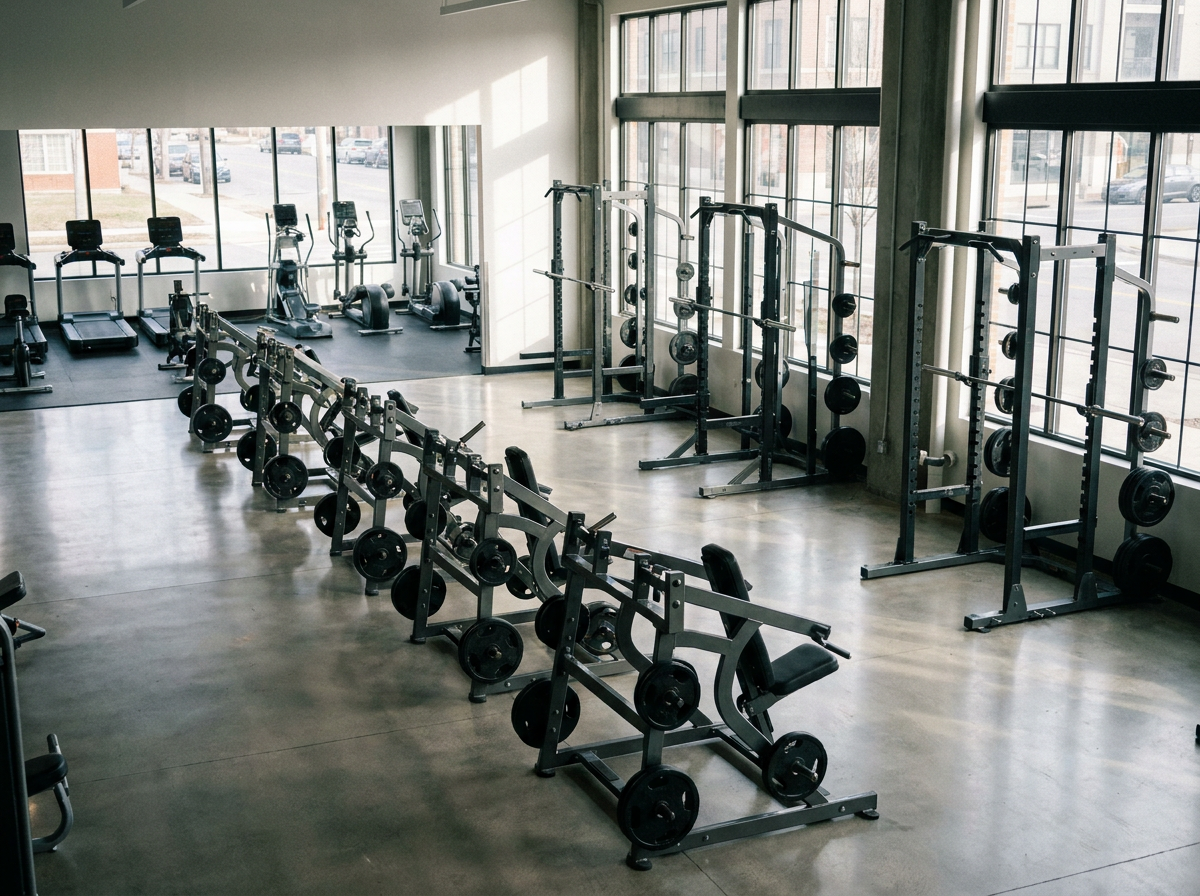
Don’t base your calculations on the purchase price—consider the lifecycle costs instead. High-quality plate-loaded machines and premium fitness equipment designed for professionals and gyms cost more upfront, but they last years longer even with multi-shift use and retain their resale value. Cheap equipment that breaks down after 18 months ends up costing more—due to downtime, repairs, and disappointed members. You’ll find the complete range of studio equipment for strength training, Pilates, and recovery in the Studio & Commercial category.
At Kraftathlet , we’re an authorized dealer offering a manufacturer’s warranty, and we’ll work with you to plan your entire setup—from the first sketch to delivery. Upon request, we offer installment payments via PayPal or leasing for business customers, so you can maintain cash flow during the busy first few months. Over 5,000 satisfied customers and a ★ 4.88/5 rating speak to the quality of our service.
Step 4: Procurement, Delivery Times, and Financing
It typically takes 6–12 months from the initial idea to the grand opening. The biggest time-consuming factors are finding a location (2–4 months), obtaining renovation permits (1–3 months), and, above all, equipment delivery times (2–4 months). If you place your order too late, you’ll have to postpone the grand opening—and pay rent for an empty facility.
Thinking Ahead About Logistics and Service
Heavy equipment must be brought in via ramps or elevators—make sure to clarify the logistics before placing an order. Also, pay attention to the availability of replacement parts and service response times: A piece of equipment that’s out of service for weeks will hurt member satisfaction and ultimately lead to cancellations.
Buy or lease?
You don't have to cover the entire cost of the equipment with your own capital. Leasing and rent-to-own are common in the DACH market and help you preserve liquidity for the first few months, which tend to be very busy. Buying ties up capital but lowers the total cost; leasing preserves liquidity but costs more over the term of the agreement. Which option is right for you depends on your equity and expected utilization—discuss this with your tax advisor.
Sample Setups by Studio Size
Specific equipment trumps abstract budgets. The following table shows what studios typically start with, depending on their size—as a guide, not a strict requirement.
| Size | Core Features | Budget (Equipment + Basic Renovation) |
|---|---|---|
| Boutique (80–150 m²) | 2 power racks, a functional trainer, a dumbbell set up to 40 kg, 3–4 cardio machines, 4–5 guided machines | €50,000–80,000 |
| Medium (200–400 m²) | 4–6 racks, several cable machines, a full-size weight bench, 8–12 cardio machines, 12–18 strength machines, a functional training area | €150,000–250,000 |
| Large (500 m² or more) | Free-weight station, plate-loaded machines, 15+ cardio machines, full circuit of exercise machines, group exercise and recovery area | €250,000–350,000 |
The key is the balance: In every size category, the largest share goes to heavily used basic equipment, not to individual standout pieces. A boutique studio that makes good use of its two racks earns more than one that has invested its budget in a rarely used specialty machine.
ROI: When Your Investment in Equipment Pays Off
Equipment is not a cost center, but rather a revenue-generating fixed asset. A simplified calculation example using hypothetical values illustrates the principle:
| Members | Monthly Payment | Monthly Revenue | Annual Revenue |
|---|---|---|---|
| 200 | 39 € | 7.800 € | 93.600 € |
| 350 | 39 € | 13.650 € | 163.800 € |
| 500 | 45 € | 22.500 € | 270.000 € |
With an equipment investment of around €100,000 and a medium-sized gym with 350 members, the equipment pays for itself—based solely on revenue, before operating costs—in the first year. Utilization is key: Every piece of equipment that creates a line during peak hours costs you members; every piece of equipment that’s never used is dead capital. That’s exactly why it’s worth investing in durable, commercial-grade equipment—it keeps utilization stable for years.
Tell us your goal, your space, and your budget—we’ll recommend the right equipment for you, with a manufacturer’s warranty and payment plans via PayPal or leasing for business customers. Request a no-obligation quote now →
Don't forget about permits, standards, and obligations
A studio is also a regulated business. If you wait too long to address the legal aspects, you risk delays right before the grand opening.
This belongs on the checklist
- Business registration and, if applicable, entry in the commercial register.
- Fire safety and escape routes —clarify these with the building department early on; they are often part of the renovation permit.
- Business liability insurance and equipment insurance for commercial operations.
- Music license (GEMA) for background music and classrooms.
Standards for Equipment
When it comes to equipment, it’s worth taking a look at the standards: Stationary exercise equipment for commercial use should comply with the DIN EN ISO 20957 series, which defines safety requirements and test procedures. When making a purchase, make sure the manufacturer specifies the commercial use class (Class S for gyms)—otherwise, your insurance coverage may be voided in the event of damage. This is precisely where high-quality gym equipment differs from relabeled home-use equipment, and this is exactly where we provide you with honest advice before you buy. Another point that founders often overlook: the ergonomics of the pathways for cleaning and maintenance. If cleaning staff cannot work efficiently around the equipment and on the floor, hygiene and appearance suffer—both factors that members subconsciously evaluate and that influence their decision to recommend the gym to others. Therefore, plan for sufficient space between the machines, not only for training but also for day-to-day operations.
These Mistakes Cost Studio Founders the Most Money
- Too much show, not enough substance: money spent on impressive individual machines, but not enough on the high-traffic basics—lines at the weight rack, empty specialty machines.
- Ignoring delivery times: If you order equipment only after the renovation is complete, you’ll end up paying rent for an empty warehouse. Order 2–4 months in advance.
- Cardio is underestimated: €30,000–50,000 often slip away here without planning. Treat this category as a separate budget line item.
- No room to expand: Every square meter is already fully occupied—there isn't enough space to accommodate new members.
Frequently Asked Questions
How much does it cost to set up a gym?
Depending on the size, costs range from €50,000 (small gym, 80–150 m²) to €350,000 (large gym, 500 m² or more, completely new). The cost of the equipment alone is usually between €60,000 and €130,000.
How much space do I need per member?
Allow for 1.5–2 m² of training space per member present at any given time. Your peak-hour capacity model determines the total number of members, not the sheer amount of space.
Buy new or used?
A mix often makes sense: buy basics new and select used machines that have been inspected. Buying used lowers the initial investment but carries risks related to wear and tear, warranty, and replacement parts.
Which pieces of equipment should you buy first?
Start with the high-use basics—racks, dumbbells, cable machines, and cardio equipment. Specialized equipment with lower usage can come later.
Is a 24/7 model worth it?
Staff-free gyms reduce operating costs and are a growing trend in the DACH market. However, access and security technology is a significant investment that you’ll need to factor in from the start.
Conclusion
Setting up a gym isn’t just a purchase—it’s a project—with space, equipment selection, budget, and timeline as its cornerstones. If you start by defining your zoning plan, invest in heavily used, commercial-grade essentials, and factor in realistic delivery times, you’ll launch a gym that’s up and running from day one. For a free, personalized equipment plan, reach out to us via WhatsApp or our contact form.