

Abstract
- Recovery will be a growth area in 2026: By the end of 2025, the German fitness market had reached approximately 12.36 million members and €6.25 billion in revenue (DSSV)—recovery is the obvious next revenue driver.
- Plan in modules: heat (sauna/infrared), cold (ice bath/cryotherapy), compression, HBOT, and massage. You don't have to set everything up at once.
- The key factor is revenue per square meter: Many recovery modules operate largely on a self-service basis and therefore require minimal staff.
- Start with an anchor module (often a sauna + ice bath), measure utilization, and expand based on the data.
Opening a Wellness Studio in 2026: Concept, Equipment, and Profitability
Opening a recovery or wellness studio means turning a growing need into a low-staffing revenue stream—if the concept is right. The market provides the foundation: According to the DSSV key figures for the German fitness industry, facilities in Germany reached new record highs by the end of 2025, with approximately 12.36 million members, net revenue of about 6.25 billion euros, and 9,647 facilities. For many operators, recovery is the logical next step—whether as a standalone studio or as an add-on to a gym, physical therapy practice, or boutique fitness center.
This guide shows you how to plan a recovery strategy: what modules are available, how much space and investment they require, and how to keep an eye on profitability per square meter.
Why Recovery Is a Growth Market
Recovery has made the leap from professional sports to everyday life. Saunas, ice baths, and compression are no longer niche practices but have become an integral part of what performance-oriented and health-conscious people seek. This is attractive to operators because recovery services combine two things: clear health benefits and a business model that requires minimal staff. Many of these services operate on a self-service basis or with minimal supervision.
The sauna provides an example of the substance behind the trend. In the Finnish KIHD study (Kuopio Ischemic Heart Disease Study), regular sauna use was associated with significantly lower mortality: Among those who took four to seven sauna sessions per week, overall mortality during the observation period was about 40% lower than among those who took only one sauna session per week (Laukkanen et al., JAMA Internal Medicine 2015). Such findings—which should be understood as associations derived from observational data, not as a promise of a cure—explain why heat therapy works so well as the cornerstone of a recovery plan.
The Concept: A Standalone Studio or an Add-On?
Before you choose equipment, decide on the business model. A standalone recovery studio relies on walk-in customers, memberships, and day passes and needs a location with high visibility. An add-on to an existing gym or physical therapy practice leverages existing members, reduces risk, and increases revenue per existing customer. For most newcomers, the add-on is the lower-risk way to start.
In both cases, the rule is: Start with a core module that you can run smoothly, rather than filling up all the space right away. Measure usage, get to know your audience, and expand based on data.
The Equipment Components of a Recovery Studio
A well-designed recovery studio consists of a few, clearly defined modules. You combine them based on your target audience, space, and budget.
Heat: Sauna and Infrared
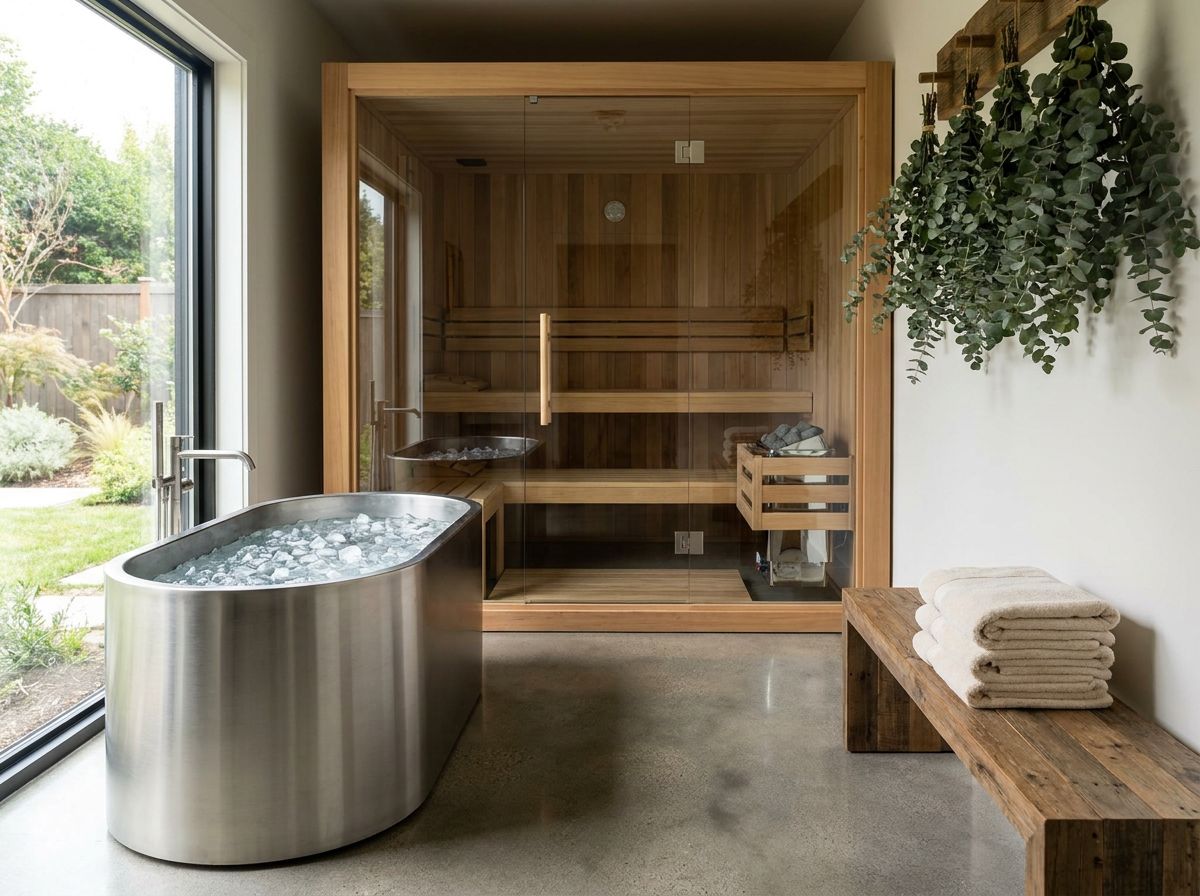
The Finnish sauna is the classic option and a major draw for customers; infrared cabins require less heating time and energy and fit into smaller spaces. Heat is often the central feature around which the rest of the facilities are organized.
Cold Therapy: Ice Baths and Cryotherapy
Cold plunge pools and cryotherapy treatments are the fastest-growing recovery trend. When combined with heat, they create the popular alternating hot-and-cold ritual that generates high repeat business rates.
Compression and HBOT
Compression systems for the legs and hips are compact, require minimal staff, and are ideal as a post-workout supplement. Hyperbaric oxygen therapy (HBOT) is a premium module designed for a high-spending, health-conscious target audience.
Massage and Foam Rolling
Massage chairs and an area with fascia rollers round out the offerings and provide an accessible, affordable entry point that effectively fills the space between the larger modules.
| Module | Space Requirements (Approximate) | Investment (Overview) | Operating Model |
|---|---|---|---|
| Sauna / Infrared | 4–10 m² | medium | Self-service, frequency anchor |
| Ice Bath / Cryotherapy | 2–8 m² | low–high | Self-service, high repeat business |
| Compression | 1–3 m² per space | low | Short-staffed, Additional Sales |
| HBOT | 4–8 m² | high | Premium, schedule-based |
| Massage Chair | 2–3 m² per armchair | low | Self-service, filler |
Profitability: Revenue per square meter and capacity utilization
A fitness studio’s profitability is determined by two key metrics: revenue per square meter and utilization rate per module. The major advantage over traditional class spaces is the minimal staffing required—many modules operate on a self-service basis with booking via an app. This reduces operating costs and makes it easier to plan the space.
Plan like an operator, not like an enthusiast: Set a price per application or membership upgrade for each module, estimate the realistic daily usage rate, and calculate the investment over the useful life of the equipment. Pay close attention to the total cost of ownership —energy (especially for heating), water treatment (for ice baths), sanitation, and maintenance should all be included in any serious calculation. A cheap piece of equipment that breaks down often costs more over the years than a robust one with reliable service.
Buying Guide: How to Set Up Your System
Start with a core module that suits your target audience—often a sauna plus an ice bath—and expand based on measured demand. Make sure to prioritize certified quality, energy efficiency, and ease of maintenance. Kraftathlet As an authorized dealer offering a manufacturer’s warranty, we’ll guide you every step of the way—from concept planning and product selection to delivery—with carbon-neutral shipping and 0% financing through Klarna, so your investment fits your cash flow. Browse the relevant categories: Buy a Sauna, Cryotherapy & Ice Baths, Compression Therapy, and the entire Regeneration section.
Common Mistakes When Setting Up a Recovery Studio
- Don't spread yourself too thin. If you try to build all the modules at once, you'll tie up capital and won't be able to run any of them properly. Start with one anchor.
- Underestimating operating costs. Energy, water treatment, and hygiene are what determine the margin—not just the purchase price.
- There is no hygiene and maintenance plan. Cleanliness is a key promise to customers, especially when it comes to water and heating systems.
- No booking or occupancy tracking system. Without data, you won't know which module is worth it and where you should expand.
- Don't make exaggerated health claims. Communicate benefits in a credible and verifiable way—trust is the most important currency in the wellness industry.
Frequently Asked Questions
How do I open a recovery or wellness studio?
First, decide on the model (standalone or add-on), choose a core module such as a sauna plus ice bath, plan the space and operating costs realistically, and expand based on data after measuring utilization. Start with a focused approach rather than a broad one.
What equipment do I need to get started?
To get started, a powerful heat module (sauna or infrared) combined with cold (ice bath) is usually sufficient. Compression and massage chairs are affordable, low-staffing-requirement additions, while HBOT is a premium module for later.
How profitable is a recovery studio?
The advantage lies in the minimal staffing requirements: Many modules operate on a self-service basis. Key factors include revenue per square meter and utilization per module, as well as an accurate calculation of operating costs (energy, water, sanitation, maintenance).
Is Recovery Worth It as a Gym Add-On?
Often, yes, because you're leveraging your existing members and increasing revenue per customer without having to attract new walk-in customers. This reduces the risk compared to running an independent studio.
How much space does a recovery area need?
A compact area with a sauna and ice bath can be set up in just a few square meters. As a guideline: sauna 4–10 m², ice bath 2–8 m², and 1–3 m² each for compression and massage stations. Be sure to factor in space for walkways and hygiene stations.
Conclusion: Start with a clear focus, grow based on data
In 2026, a recovery studio will be one of the most attractive additions to the fitness and health market—it requires minimal staff, is in high demand, and offers clear benefits. The key is a focused launch with a strong anchor module, an honest assessment of operating costs, and data-driven expansion based on measured utilization. Want to run the numbers on your concept, module selection, and profitability? Talk to our recovery experts —we’ll plan your studio together.
Sources: DSSV – Key Data on the German Fitness Industry; Laukkanen et al., JAMA Internal Medicine 2015 (KIHD Study).