

- The menstrual cycle has less of an impact on performance and recovery than is often claimed. The large meta-analysis by McNulty et al. (2020) found only a minimal dip in performance during the early follicular phase (during menstruation).
- There is no scientific evidence to support rigid "cycle-syncing" plans. A more sensible approach is to take an individualized approach: pay attention to how YOU feel during each phase, and adjust your activity and rest accordingly.
- The basics of recovery always apply: sleep, protein, fluids, and active rest. Heavy bleeding can increase your iron needs—if you suspect a deficiency, consult a doctor.
- If the symptoms remain severe or if your period stops entirely due to intense exercise, this is a warning sign—in that case, please seek medical advice.
Recovery and the Menstrual Cycle: Exercise and Rest for Women
The menstrual cycle has a much smaller impact on your athletic performance than many fitness trends suggest. The comprehensive meta-analysis by McNulty and colleagues (2020, *Sports Medicine*) reaches a clear conclusion: Across all studies, performance during the early follicular phase—that is, during your period—is reduced only minimally, if at all, and remains virtually unchanged during all other phases.
That doesn't mean you're imagining things. Many women experience very real, cycle-related differences in energy, motivation, and recovery. It just means there’s no one-size-fits-all plan. This guide explains what happens hormonally during the four phases of your cycle, what research actually shows—and how you can tailor your recovery smartly and individually to your cycle, rather than following a rigid schedule.
The Four Phases of the Cycle
An average cycle lasts about 28 days (typically ranging from 21 to 35) and can be divided into four phases, which are regulated by the hormones estrogen and progesterone:
Menstrual phase (days 1–5): Your period. Estrogen and progesterone levels are low. Some people feel tired and less resilient, while others feel back to normal as early as days 2–3. According to McNulty, this is the only—and only minimal—dip in performance.
Follicular phase (Days 1–13): Estrogen levels rise until just before ovulation. Many people report feeling energetic, in a good mood, and recovering quickly. This is a good time for more intense workouts—if that’s what feels right for you.
Ovulation phase (around day 14): Ovulation, estrogen peak. Many people experience high levels of energy and motivation. A frequently discussed but not conclusively proven observation: Ligament laxity may be slightly increased—make sure to use proper form.
Luteal phase (days 15–28): Progesterone levels rise, and later both hormones decline. PMS symptoms appear in the late luteal phase: poorer sleep, increased water retention, and a greater sense of fatigue. Focusing more on recovery often pays off during this time.
What Does the Research Really Say?
The honest answer: it’s less clear-cut than Instagram promises. Aside from McNulty’s minimal dip in follicle activity, a review article from *Frontiers in Sports and Active Living* (2023) concludes that the menstrual cycle phase has no reliable effect on acute strength performance or on adaptation to strength training. Even the deliberate shifting of training volume to specific phases (“cycle syncing”) does not yield consistent benefits in studies.
The result isn't disappointment, but rather a sense of freedom: You don't have to slavishly tie your training plan to your calendar. The most sensible approach is a personalized one—track how you feel during each phase over two or three cycles, and adjust the intensity and recovery to fit YOUR pattern. This is scientifically sounder than any blanket "Phase X = Plan Y" formula.
| Phase | Hormonal status | A common feeling | Focus on Regeneration |
|---|---|---|---|
| Menstruation | Low Estrogen & Progesterone | Partly tired, partly almost back to normal | Listen to Your Body, Keep an Eye on Your Iron Levels |
| Follicular phase | Estrogen levels rise | High energy, quick recovery | More intense stimuli are well tolerated |
| Ovulation | Estrogen Peak | Energy & Motivation Often High | Proper technique, a good warm-up |
| Luteal phase | High progesterone, then a drop | PMS possible, poorer sleep | More rest, sleep, and active recovery |
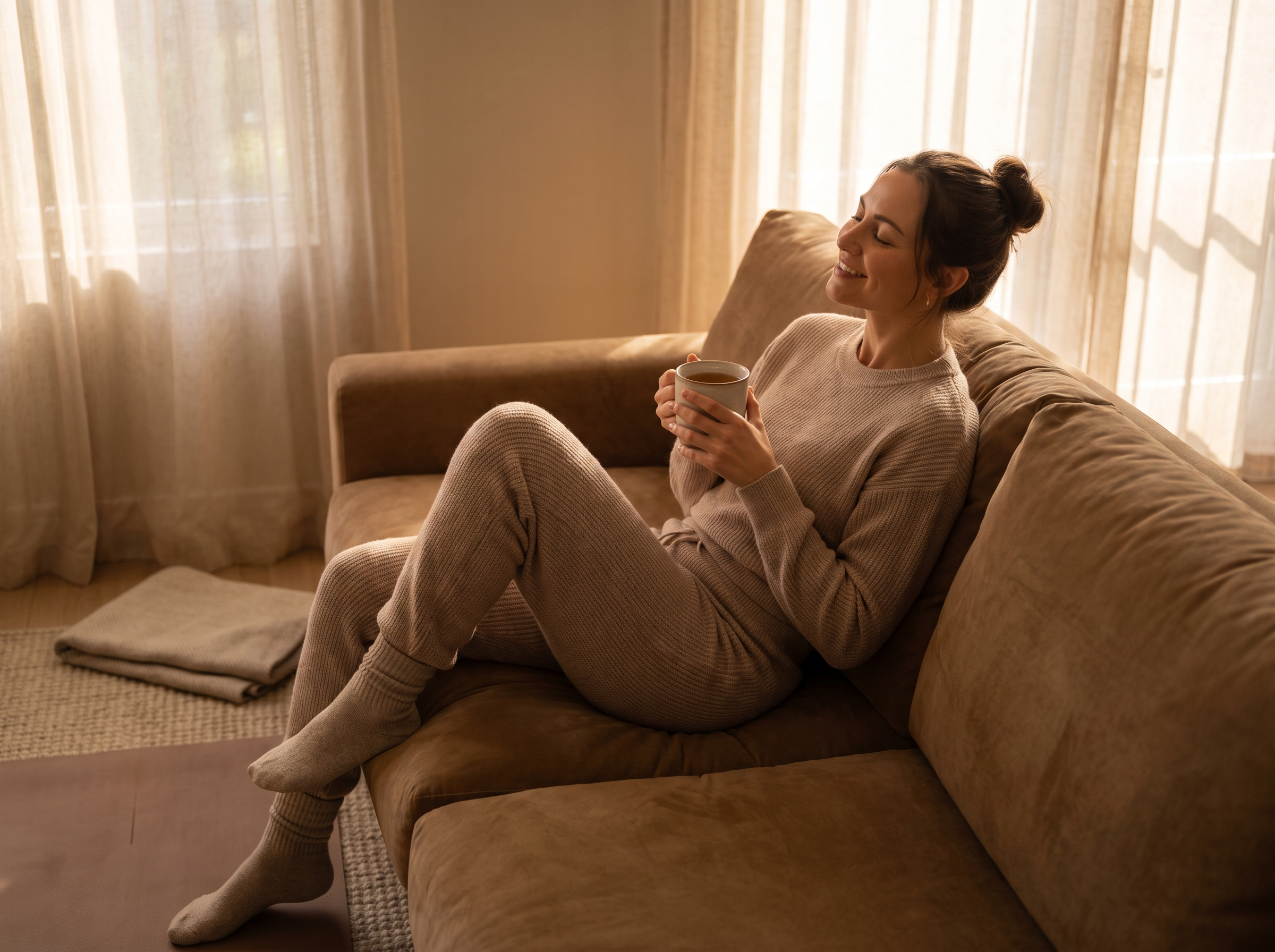
Optimizing Regeneration in a Cycle
The good news: The most effective recovery strategies work at every stage—you just need to use them as needed.
Get some sleep first. Many people sleep less well during the late luteal phase. That’s exactly when consistent bedtime routines, a cool, dark room, and less screen time in the evening can help. Sleep is the most powerful restorative factor of all.
Protein and energy. Make sure to eat enough throughout your entire cycle—crash diets and too-low calorie intake can disrupt recovery and hormonal balance. During the luteal phase, some people experience a slight increase in their calorie needs.
Iron during your period. Heavy bleeding leads to iron loss. Iron-rich foods can help; if you experience symptoms such as persistent fatigue or paleness, it’s best to get a blood test and seek medical advice rather than self-diagnosing.
Active rest instead of doing nothing. Light exercise, mobility exercises, and fascia work can be good options on quiet days. What matters most is how you feel.
Compression and warmth. Compression garments and warmth are optional comfort measures; their effectiveness cannot be guaranteed across the board. Both are helpful tools for more strenuous days.
Buying Guide: Recovery Tools for Every Day of Your Cycle
You don’t need high-tech gear to recover better—a few tried-and-true tools are all you need. You’ll find a foam roller for active recovery in the Foam Rollers & Massage Rollers collection; supportive compression products are available under Compression Therapy. The Regeneration collection offers a comprehensive overview of recovery equipment. At Kraftathlet , you can place your order in a carbon-neutral way and benefit from our experience with over 5,000 customer orders—if you have any questions about making the right choice, simply reach out to us via our Contact page.
Common Mistakes
Rigid cycle syncing as a dogma. One-size-fits-all plans ignore the fact that every woman reacts differently. Observe your own pattern instead of blindly following an app.
Generally, avoid exercising during your period. For most people, exercise during their period is generally possible. Listen to your body, and seek medical advice if you experience severe discomfort.
Eating too little. A chronically low energy intake disrupts recovery and hormonal balance and can cause your period to stop (a serious warning sign).
Don't ignore warning signs. A missed period, extreme fatigue, or severe pain should be evaluated by a doctor—not worked off.
Frequently Asked Questions
Does the menstrual cycle affect exercise performance?
Only slightly. According to the meta-analysis by McNulty et al. (2020), performance is reduced only minimally, if at all, during the early follicular phase (during menstruation), and remains virtually unchanged during the other phases. Individual differences are greater than the average effect.
Should I plan my workouts around my cycle?
Rigid cycle-syncing plans aren't foolproof. A more sensible approach is to take a personalized approach: observe how you feel over several cycles and adjust your intensity and recovery to fit your personal pattern.
Can I work out while I have my period?
Whether it's appropriate to exercise during your period depends on how you feel. Adjust the intensity accordingly, and seek medical advice if you experience severe discomfort.
Do I need more recovery time during the luteal phase?
Many people benefit from getting more sleep and engaging in active rest during the late luteal phase, because PMS symptoms and poor sleep can make it harder to recover. However, this varies from person to person—it depends on how you feel.
When should I seek medical advice?
If your period is late due to exercise, if you have very severe symptoms, or if you have signs of iron deficiency (persistent fatigue, paleness). These are signs that should be investigated.
Conclusion
Your menstrual cycle isn’t an obstacle to your training, nor is it a rigid set of rules you have to follow. Research shows that the average impact on performance is minimal, and individual differences are the main factor. Focus on the timeless basics of recovery—sleep, nutrition, and active recovery—and tailor them to your own pattern, which you’ve observed over several cycles. This way, you’ll train and recover in harmony with your body. Questions about the right recovery gear? The Kraftathlet team will be happy to advise you: Get in touch now.
Sources: McNulty et al. (2020), “The Effects of Menstrual Cycle Phase on Exercise Performance in Eumenorrheic Women,” Sports Medicine (PubMed); Frontiers in Sports and Active Living (2023) — menstrual cycle phase and strength. This article is not a substitute for medical advice.