

Abstract
- Mobility is active flexibility—range of motion plus the ability to use it. It's more than just stretching.
- Regular mobility exercises can improve your flexibility and support active recovery after a workout.
- Areas of focus for most people: hips, thoracic spine, shoulders, and ankles.
- Recommendation: a few minutes most days; as a separate session, 2–3 times a week. Tools such as foam rollers and mobility bands can help.
Mobility & Flexibility: How to Support Your Recovery
Mobility training—often called “mobility”—keeps your joints functioning properly and can noticeably support your recovery. Even just a few minutes of targeted mobility work after your workout improves your range of motion and body awareness without leaving you exhausted. Research shows that tools are effective in this regard: A systematic review with a meta-analysis by Wilke and colleagues (2020) found that foam rolling had a significant acute effect on range of motion—comparable to traditional stretching, but without the short-term loss of strength that intense static stretching sometimes causes.
Mobility isn't just a niche topic for gymnasts—it's the foundation for pain-free, high-performance training. In this guide, you'll learn what mobility really means, why it's an essential part of recovery, which exercises are worth doing, and which tools can help you.
Mobility, Flexibility, Stretching—What's the Difference?
These terms are often used interchangeably, but they refer to different things:
| Term | Meaning | Example |
|---|---|---|
| Flexibility | Passive range of motion of a joint | How far your leg can be extended |
| Mobility | Active, controlled range of motion | How high you can lift your leg on your own |
| Stretching | Methods for Maintaining/Increasing Flexibility | Holding a Stretching Position Statically |
In short: Flexibility is potential; mobility is the ability to move effectively while maintaining control. For everyday life and training, mobility is the more practically valuable state—because it combines flexibility with stability.
Why Mobility Is Part of Recovery
After an intense workout, mobility exercises are a form of active recovery: Gentle, controlled movements promote blood circulation, relieve tension, and help you regain a sense of ease in your movements—without the strain of another hard workout. Many people find that gentle mobility exercises the day after a tough workout are more pleasant and restorative than doing absolutely nothing.
At the same time, mobility is a form of prevention: If you maintain mobility in your hips, thoracic spine, and shoulders, you’ll perform squats, deadlifts, and overhead exercises with better form—and thus prevent the typical compensatory movements that can lead to discomfort over time. Mobility training is not a substitute for medical treatment; if you have existing symptoms or pain, consult a healthcare professional first.
The Most Important Areas and Exercises
Hip
Sitting for long periods of time tightens the hip flexors. The 90/90 rotation (while seated, rotate both legs from side to side at a 90-degree angle) and deep hip lunges with rotation open up the hips in multiple directions—ideal before squats and for the back.
Thoracic Spine
A stiff thoracic spine forces the shoulders and lumbar spine to compensate. The Cat-Cow pose, thoracic rotations on all fours, and rolling the upper back on a foam roller restore mobility to the upper back.
Shoulders
Shoulder circles with a band (pass-throughs using a mobility band) and wall angels improve overhead mobility—the foundation for proper shoulder presses and pull-ups.
Ankle joints
Stiff ankles are a common cause of problems with squats. The knee-to-wall test and the accompanying mobilization exercise (gently pushing the knee toward the wall while keeping the heel on the floor) significantly improve range of motion.
How often and for how long?
You don't have to go through a long program of your own to do this. Here are two tried-and-true ways:
| Format | Frequency | Duration |
|---|---|---|
| Quick Snacks for Everyday Life / Warm-up | Most days | 5–10 minutes |
| Dedicated Mobility/Recovery Unit | 2–3 times a week | 15–30 minutes |
This frequency is in line with standard recommendations for flexibility training, which advise doing flexibility exercises at least two to three days a week. Consistency is more important than the perfect duration: short and frequent is better than long and infrequent.
The Right Tools
Mobility doesn't require any special equipment—but a few aids can make it more effective and enjoyable:
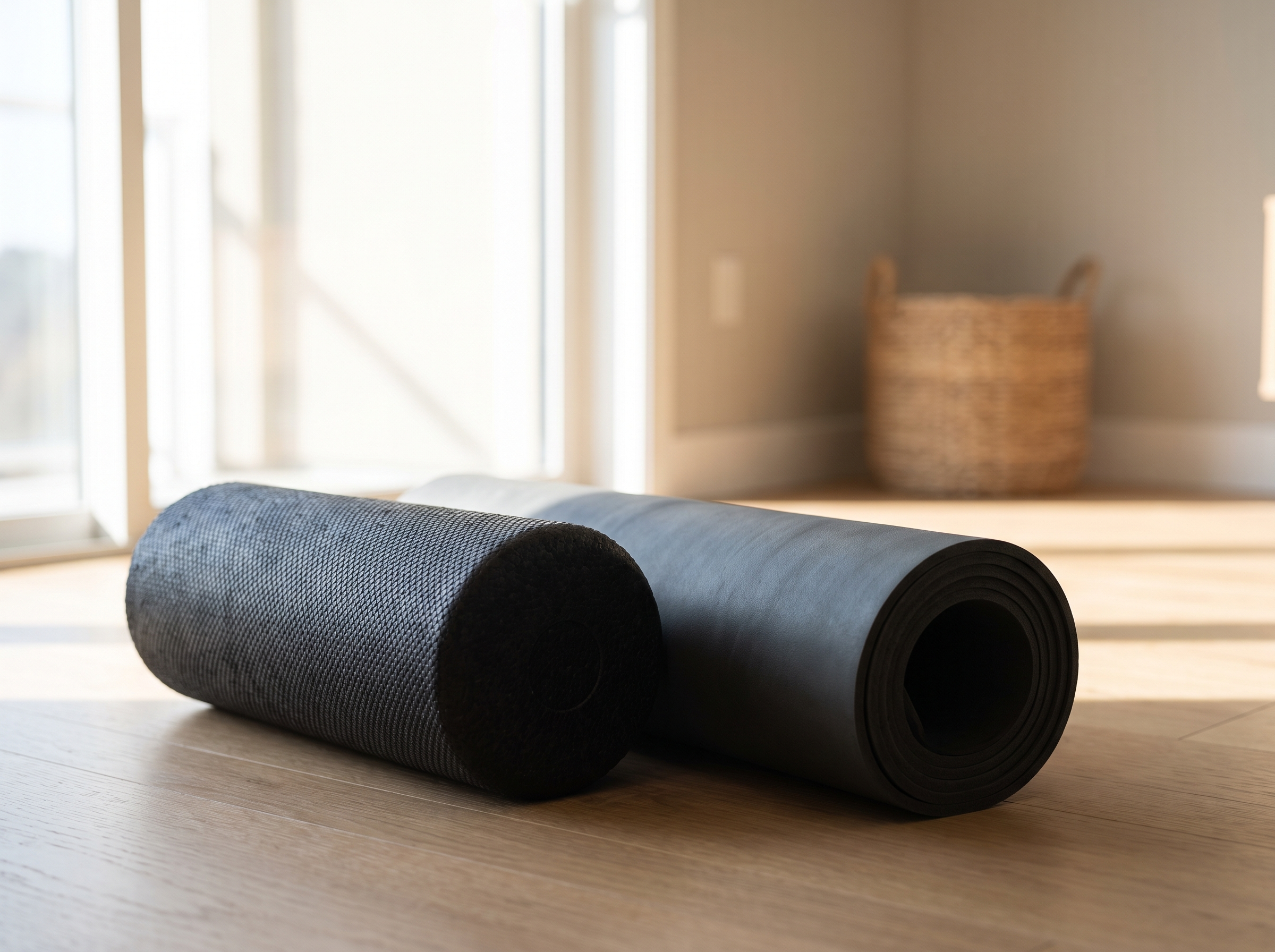
Foam roller: Relieves tension and immediately improves mobility. A medium-density roller is a good all-around option; a firmer one provides more targeted stimulation. Massage and fascia balls: For precise work on the feet, glutes, or shoulder blades. Mobility band: A long, elastic band for shoulder pass-throughs, joint traction, and assisted stretches. Mat: A good mat protects your spine and joints during floor exercises.
In the Foam Rollers & Massage Rollers collection, you’ll find rollers in various firmness levels; for floor exercises, you can pair them with a mat from our Exercise Mats & Floor Protection selection. You’ll find additional recovery tools—from massage balls to compression systems—all grouped together under Recovery. Over 5,000 satisfied customers trust Kraftathlet —and we ship CO₂-neutrally.
Common Mistakes in Mobility Training
Stretch only; never stabilize. Passive mobility without active control is of little use. Combine stretching with controlled, active movements.
You're applying too much pressure to the roller. More pain doesn't mean it's working better. Roll within a comfortable range and keep breathing calmly.
Wanting to do everything at once. Choose two or three areas that are really tight for you, instead of working out your entire body every day.
Only on training days. On days off, in particular, light mobility exercises are valuable for active recovery.
Ignore the pain. Mobility exercises should feel challenging, but not sharp or stinging. If the discomfort persists, seek professional advice.
Frequently Asked Questions
Is mobility the same as stretching?
No. Stretching primarily increases passive flexibility. Mobility combines flexibility with active control and stability—so you can also use your full range of motion under your own power.
Should I do mobilization exercises before or after my workout?
Both make sense. Before a workout, dynamic mobility drills prepare the joints; after a workout or on days off, gentle mobility exercises promote active recovery.
Does foam rolling really help?
There is strong evidence supporting its effectiveness for short-term improvements in mobility: meta-analyses show a significant acute effect on range of motion without reducing strength. As a long-term training method, it is a useful supplement, not a substitute for active training.
How soon will I see progress?
You'll often notice the first improvements in how your body moves right away. Lasting gains in flexibility take a few weeks of regular practice.
Can mobility help relieve pain?
Mobility can support well-being and mobility, but it is not a substitute for a diagnosis or treatment. If you experience persistent or severe pain, consult a doctor or a physical therapist.
Conclusion
Mobility is the unspectacular but effective foundation for pain-free workouts and effective recovery. A few minutes most days, plus two to three slightly longer sessions per week, will keep your hips, thoracic spine, shoulders, and ankles flexible. With a foam roller, a mobility band, and a good mat, you have everything you need—the rest is just consistency.
Want to know which recovery tools are right for your workout? Get in touch with us —we'll give you personalized, honest advice.
Sources: Wilke et al. (2020), “Acute Effects of Foam Rolling on Range of Motion in Healthy Adults,” *Sports Medicine*; Konrad et al. (2022), “Foam Rolling Training Effects on Range of Motion,” PMC.