

Abstract
- In a cryosauna, the head remains outside the chamber; cooling is usually achieved using nitrogen (N2). In whole-body cryotherapy (WBC), the person stands entirely inside a walk-in chamber filled with cooled breathing air, usually generated electrically.
- Both achieve very low temperatures (typically below −100 °C), but involve different processes, capacities, and operational requirements.
- The evidence regarding regeneration is mixed. Cold therapy is a recovery and wellness tool—not a medical treatment. Medical questions should be directed to a doctor or the GTÜM.
- Key factors in the selection process include throughput, space, operational concept, and safety. Nitrogen systems require ventilation and logistics, while electric chambers require a power connection.
Cryosauna vs. Whole-Body Cryotherapy (WBC): What's the Difference?
The main difference is simple: In a cryosauna, the head remains outside the chamber, and cooling is usually achieved with nitrogen. With whole-body cryotherapy (WBC), the person stands completely inside a walk-in chamber filled with cooled, breathable air—typically cooled electrically and without nitrogen. For studios, clinics, and recovery centers, this difference determines operations, capacity, and safety. This guide objectively compares both systems and helps you make the right choice.
An Overview of the Two Basic Principles
Cryosauna (Partial-Body Cold Therapy)
The cryosauna is a single-person cabin that the user steps into, with their head remaining outside. The interior is usually cooled rapidly by introducing nitrogen mist. Because the head remains outside, the person breathes room air. Cryosaunas are compact, often come in one piece, and can be set up in a small space—a practical option for businesses that want to offer this service on a large scale without installing a walk-in chamber.
Whole-Body Cryotherapy / WBC
In whole-body cold therapy, the person enters a walk-in chamber where the entire body, including the head, is exposed to cold. The air in the chamber is cooled and breathable; modern systems are electrically powered and do not require nitrogen. Electric chambers are suitable for higher throughput and, in some cases, for multiple people at the same time, but they require more space and an appropriate electrical connection.
A Direct Comparison of Cryosaunas and WBC
| Criterion | Cryosauna (Partial-Body) | Whole-Body Cryotherapy (WBC) |
|---|---|---|
| Head Position | Outside the cabin | Inside the chamber |
| Cooling | Mostly nitrogen (N2) | Mostly electric, without N2 |
| Breathing air | The head breathes ambient air | Cool, breathable air in the chamber |
| Capacity | One person | Depending on the model, one to several people |
| Space requirements | Compact, some starting at about 1 m² | Walk-in closet, more space |
| Operation | N2 Replenishment & Ventilation Required | Power connection, no N2 |
What does the evidence say about regeneration?
To be honest, the research findings are mixed. Review articles such as the one by Bleakley and colleagues (2014) classify whole-body cold therapy as a method with effects on athletic recovery that are theoretically plausible but empirically only modestly supported. An important physical consideration: Because air is a poor conductor of heat, even extreme cold primarily cools the skin’s surface significantly—deep cooling of the muscles and core is less pronounced than is often assumed. Cold therapies are therefore a useful tool in the recovery and wellness sectors, but they are not a medical treatment. Medical indications and health-related questions should be addressed exclusively by a physician or a relevant professional association such as the GTÜM (Society for Diving and Hyperbaric Medicine).
Safety: The Nitrogen Factor
A key difference concerns safety. In nitrogen cryosaunas, although the head remains outside the chamber, nitrogen can displace oxygen near the floor. An international review on the safety risks of whole-body cold therapy (2023) emphasizes the importance of ventilation, oxygen monitoring, and trained staff. For operation, this means that N₂ systems must have adequate room ventilation, an oxygen alarm, and clear operating procedures. Electric chambers without nitrogen avoid this specific risk but also require professional installation and training. Regardless of the system, treatments should only be administered by trained personnel and with clear exclusion criteria.
Which system is right for your business?
The decision depends less on whether something is “better or worse” and more on your approach. The following criteria will help you evaluate your options:
- Throughput: If you expect many individual sessions per day, a compact cryosauna is often the most efficient option. For multiple people at the same time or high-frequency use, a walk-in electric chamber really comes into its own.
- Space: Cryosaunas fit into small spaces. A WBC chamber requires significantly more space.
- Operational Logistics: Nitrogen requires regular replenishment, storage, and ventilation. Electrical systems “only” need the right power connection.
- Positioning: Premium recovery services with walk-in chambers have a different appeal than compact single-cabinet units—both can be the right choice, depending on the target audience.
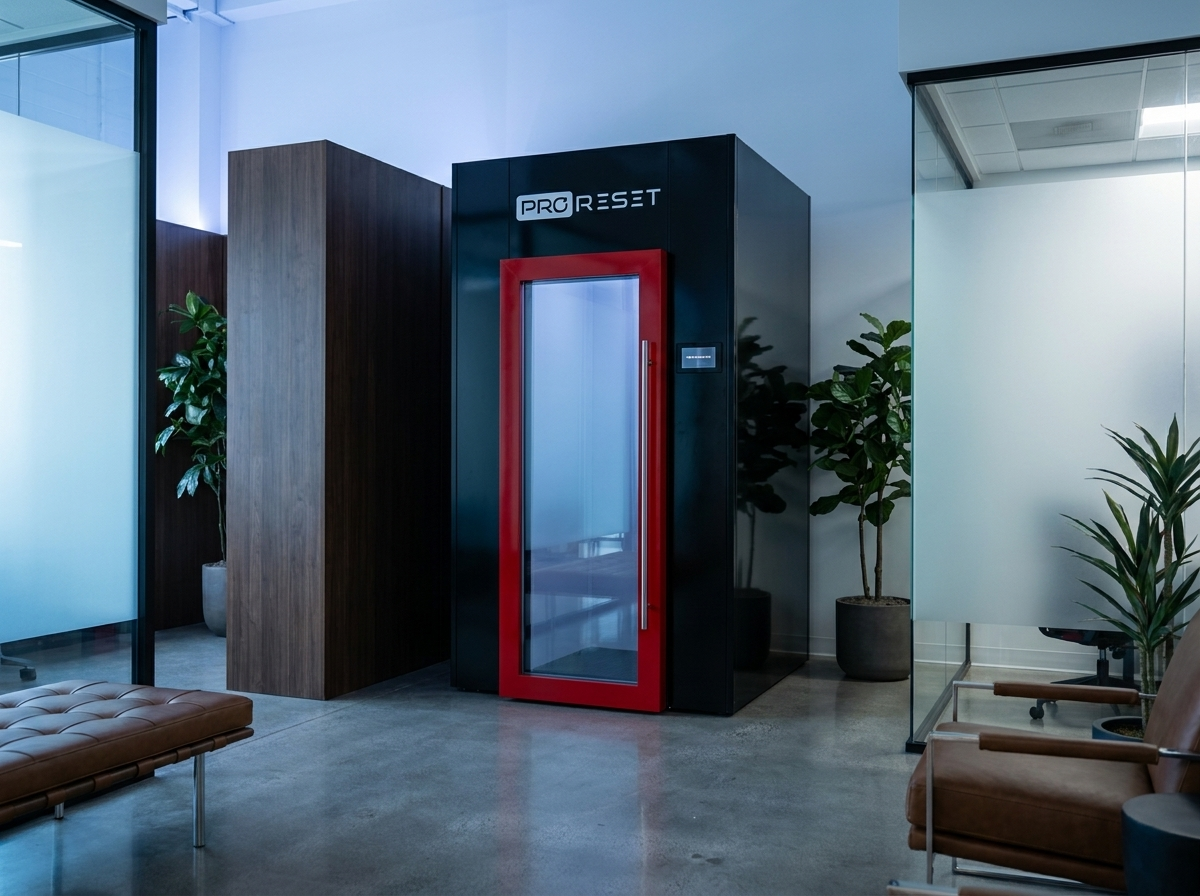
The ProReset program brings together both worlds: The CryoPro Sauna is a high-performance, single-person cryosauna in a head-out design, while the CryoPro Mini is a space-saving option for small rooms. The CryoPro e-Chill is a fully electric, nitrogen-free full-body chamber designed for higher throughput. The CryoPro Skin handheld device rounds out the portfolio for targeted, localized applications. All chambers are custom-built and can be adapted to your space and concept.
How to Use and the Procedure for a Cold Therapy Session
A typical session lasts only a few minutes. The user enters the cabin or chamber with dry skin and protected extremities—for example, wearing gloves and socks and, in the case of a cryosauna, without jewelry. Trained staff monitor the entire session, keep track of the time and the user’s well-being, and immediately stop the session if the user feels unwell. Before the first use, a thorough consultation is required, as certain pre-existing medical conditions and circumstances may preclude cold therapy. Such exclusion criteria and individual health-related questions must be addressed exclusively by a doctor—not by the facility. A clear, documented procedure protects both your guests and your business.
Business Considerations for Studios
From a business perspective, it’s not so much the initial purchase price as the total cost over several years that matters. In addition to the cost of the unit itself, factor in the ongoing expenses: for nitrogen systems, this includes N2 replenishment and ventilation; for electric chambers, it’s electricity consumption. Also factor in maintenance, training, and the space the system will permanently occupy. On the revenue side, throughput is key: How many sessions per day are realistic, and does that align with your target audience? A compact cryosauna pays for itself differently than a walk-in multi-person chamber. Because these factors depend heavily on location and concept, we’ll work with you to prepare the calculation as part of a customized quote.
Hygiene & Maintenance During Operation
Like any heavily used equipment, refrigeration systems require a structured maintenance and hygiene plan. Contact surfaces are cleaned between uses, and seals, sensors, and—in the case of electric chambers—the refrigeration system are inspected regularly. Adhere to the manufacturer’s maintenance intervals and document them. This not only ensures the system’s service life but also consistently reliable operation that your guests can count on.
Common Mistakes When Making a Purchase
- Equating cryosaunas with WBC: These are different systems with different operating principles—they are not interchangeable.
- Underestimating N2 logistics: Replenishment, storage, and ventilation result in ongoing effort and costs.
- Neglecting aeration and oxygen monitoring: A must for nitrogen systems, not just a nice-to-have.
- Miscalculating capacity: If you overestimate throughput, you tie up space; if you underestimate it, you slow down sales.
- Don't expect miracle cures: Cold therapy is about recovery and wellness. Please evaluate its health benefits objectively and under medical supervision.
Procurement & Consulting
Because chambers vary depending on configuration and size, we provide customized quotes rather than list prices. You can find an overview of the systems in the categories “Cryotherapy Equipment ” and “ProReset Recovery Technology.” If you’d like to delve deeper into the purchasing decision, read our guide “Buying a Cryotherapy Chamber: Nitrogen or Electric? ” as well as the comparison “Cold Chamber or Ice Bath?”
As a partner with installations throughout Europe, we’ll guide you every step of the way—from selection and custom configuration to commissioning. Request your personalized quote: Contact Us or Wholesale Inquiry.
Frequently Asked Questions
What is the difference between a cryosauna and a cold chamber?
In a cryosauna, the head remains outside the cabin, and cooling is usually achieved using nitrogen. In a whole-body cryochamber (WBC), the person stands completely inside a walk-in chamber with cooled breathing air, typically generated electrically. Cryosaunas are more compact, while WBC chambers offer greater capacity.
Which is better for recovery: a cryosauna or WBC?
There’s no one-size-fits-all answer. The research on cold applications is mixed; there is no scientific evidence of a clear advantage of one design over another. Practical factors such as throughput, space, and safety are the deciding factors for operation.
Does a cryosauna require nitrogen?
Many cryosaunas use nitrogen (N2), which is introduced in a "head-out" configuration. However, there are also nitrogen-free, electric systems—particularly in the area of walk-in full-body chambers. Electric systems eliminate the need for nitrogen logistics.
How cold does it get during whole-body cold therapy?
Temperatures typically reach below −100 °C, and depending on the system, can go as low as about −140 °C. The duration of the procedure is short, usually lasting only a few minutes. The exact values depend on the device and the protocol.
How much does a cryochamber cost?
Since chambers are custom-made and vary greatly depending on their configuration, capacity, and installation, we do not provide list prices; instead, we prepare a customized quote. Please contact us for a detailed quote tailored to your needs.
Conclusion
Cryosaunas and whole-body cryotherapy achieve the same goal—intense cold in a short amount of time—but through very different methods. Cryosaunas offer the advantage of a compact footprint, while electric WBC chambers excel in throughput and nitrogen-free operation. The key factors are your business model, your available space, and a well-thought-out safety plan. We’ll provide you with honest, criteria-based advice on which system is right for your business. Get in touch —we’ll prepare a customized quote for you.