

For squats with weight on a hip belt, the Younix Multi-Use Belt is the best choice in this comparison. For barbell squats, however, you’ll need a weightlifting belt: Rigid models are designed for fixed settings, while flexible models are better suited for frequent changes between exercises.
- When looking for a belt for squats, the first thing to consider is load distribution: hip belts and weightlifting belts serve different purposes.
- The Younix Multi-Use Belt is suitable for belt squats, as well as dips and pull-ups with added weight.
- Rigid weightlifting belts are best suited for barbell squats with a consistent setting, while flexible models are better for frequent changes in exercise.
- When purchasing studio equipment, factors such as focal length coverage, shutter, connectivity, and cleaning are more important than a blanket ranking.
Why the belt style comes before the brand
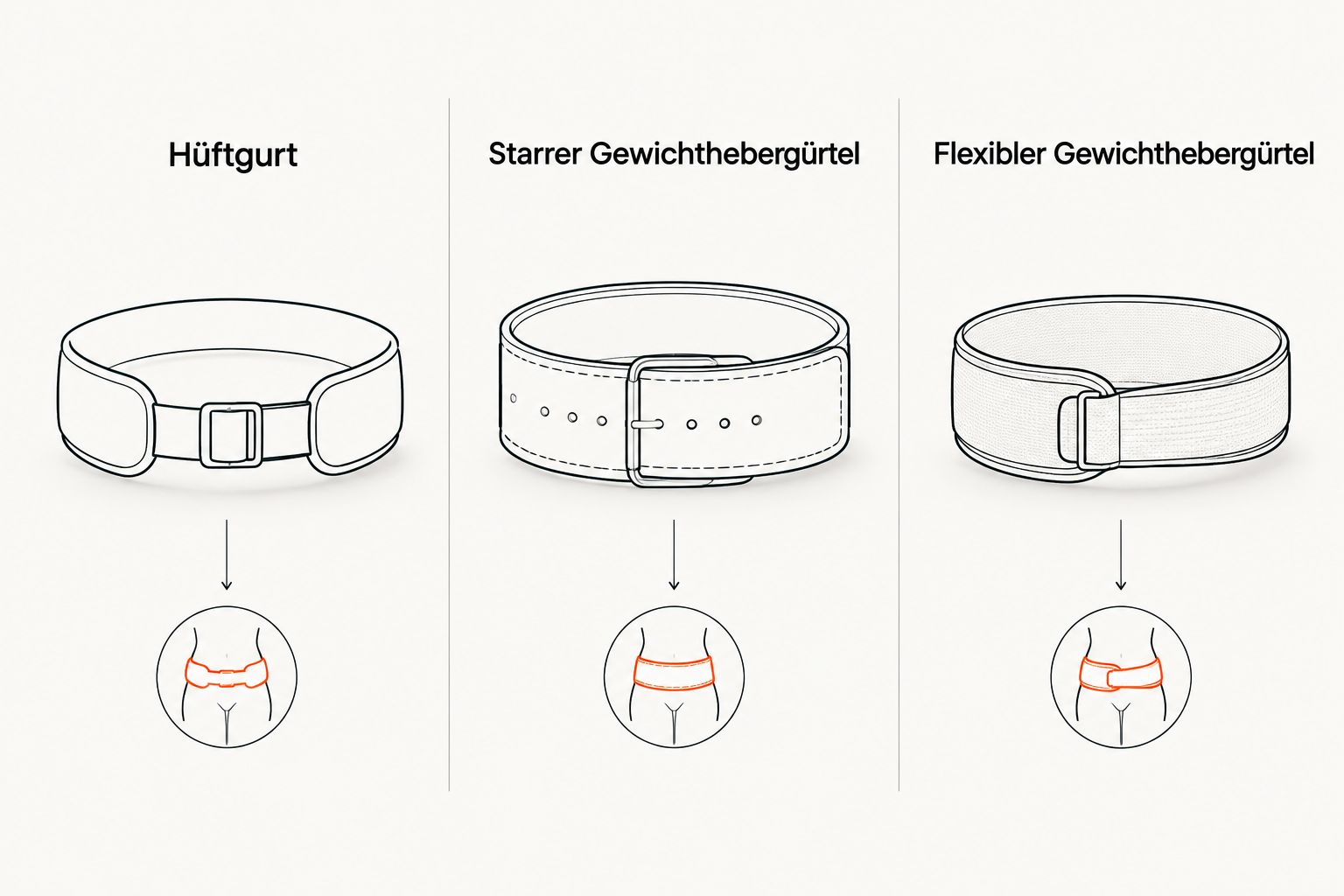
A hip belt for belt squats supports the attached training load. A weightlifting belt, on the other hand, wraps around the torso and provides a surface against which you can work when contracting your muscles. These functions are not interchangeable.
When it comes to your 2026 gym equipment, understanding this distinction is the first step in your purchasing process. A belt designed for heavy barbell squats does not automatically serve the same purpose on a belt squat station. Conversely, a padded hip belt with attachment rings is not a substitute for a weightlifting belt.
Kraftathlet With its strength training equipment, the company caters to gym owners who select machines and accessories based on their actual use. The right question to ask, therefore, is not “Which belt is the strongest?” but “Where is the load, and who will be using the belt?” Kraftathlet , this selection is part of planning the training area.
What Makes a Good Training Belt
There are five criteria to consider for the 2026 comparison. Check them before placing your order—don't wait until your first training session.
- Load distribution: The belt must either support an attached weight or be worn around the torso as a weightlifting belt. Do not confuse these two functions.
- Fit: The key factors are the manufacturer's sizing, the range of adjustment, and how the garment fits during actual movement—not just the clothing size.
- Closure and Connection: Buckles, Velcro fasteners, or attachment rings must be suitable for the intended use. On a machine, the connection to the load-bearing component is also important.
- User Change: A belt adjusted to fit an individual has different requirements than shared gym equipment.
- Care and Inspection: Cleaning appropriate for the material, accessible seams, and checkable fasteners are all part of daily use.
These criteria also explain the order of the following selection. The specific Younix belt is listed first because its function and several product features are specified. The two types of weightlifting belts follow as separate purchasing options, not as purported model tests.
Training Belt 2026 at a Glance
| Option | Suitable for | Key Feature | An Important Boundary |
|---|---|---|---|
| Younix Multi-Use Belt | Belt squats, dips, and pull-ups with added weight | Padded hip belt with six pairs of rings for adjustment | The connection to the station and the load-bearing capacity must be compatible |
| Rigid Weightlifting Belt | Barbell Squats with Adjustable Weight | Dimensionally stable contact surface on the fuselage | Rigid edges and fasteners must fit the body's shape |
| Flexible Weightlifting Belt | Workout with frequent changes between exercises | A more flexible design and, depending on the model, a quick-adjustable clasp | The seat and valve must be inspected before performing load tests. |
The table compares features, not measured performance metrics. A higher ranking therefore does not mean that the Younix Multi-Use Belt is more suitable for every type of squat. For barbell training, the choice comes down to these two types of weightlifting belts.
1. Younix Multi-Use Belt: for belt squats and additional weight
The Younix Multi-Use Belt is a padded belt designed for belt squats, as well as dips and pull-ups with added weight. It connects the user to the attached load. This places it in the category of hip belts, rather than classic weightlifting belts for the torso.
The product specifications list six pairs of adjustable rings, six sizes ranging from 104 to 154 cm, and a weight of 0.65 kg. Don’t automatically assume that the length specification corresponds to your waist size. When selecting a size, consider the manufacturer’s sizing chart and ensure a snug fit.
Younix Multi-Use Belt – Benefits: The padded design provides a contact surface for the attached load. The pairs of rings allow for various adjustments. In addition, the belt is specifically designed for three types of exercises: belt squats, dips, and pull-ups with added weight.
Younix Multi-Use Belt – Limitations: This hip belt is not a substitute for a weightlifting belt when performing barbell squats. Likewise, the term “multi-use” does not mean it will fit every machine attachment. The connecting element, attachment height, and available range of motion must all be compatible.
For a shared training area, you should check the setup under supervision. The key factors are whether the strap remains in the intended position during movement and whether the load-bearing mechanism moves freely. The pairs of rings alone do not answer these questions.
Suitable for: Gyms with a belt squat station or an area for dips and pull-ups with added weight. Verdict: Buy it if the size and mounting options are suitable for your intended use.
2. Rigid weightlifting belt: for personalized barbell setups
A rigid weightlifting belt wraps around the torso, forming a dimensionally stable contact surface. Typical designs use leather or similarly dimensionally stable materials and fasten with a buckle or a lever clasp. The specific construction determines how the belt is adjusted and used.
For barbell squats, this type of belt is a reasonable choice if a trainee consistently uses the same fit. At the gym, therefore, it’s important to distinguish between personal equipment and a rental belt. What’s adjusted properly for one person won’t necessarily fit another.
Rigid Weightlifting Belt – Advantages: The dimensionally stable construction creates a clearly defined contact surface. The correct fit can be reproduced with repeated use. Different closure types allow you to choose the one that best suits your preferred method of use.
Rigid weightlifting belt – Limitations: If the fit is poor, the belt’s width and edges can cause discomfort between the ribs and the pelvis. A buckle that requires a complex initial adjustment is less practical for frequent changes in the user. Furthermore, the belt is no substitute for selecting an appropriate weight or receiving proper instruction on the exercise.
Don't choose this model based solely on material thickness. Check the fit in the actual squat position, whether the clasp is easy to reach, and whether it opens easily after a set. For a personalized fit, the documented adjustment is more helpful than a supposed one-size-fits-all option.
Suitable for: Barbell areas with experienced users and personally assigned equipment. Verdict: Buy it if the fit and clasp prove satisfactory in practical use.
3. Flexible weightlifting belt: for frequent changes in exercises
A flexible weightlifting belt features a more flexible design, often made of textile materials. Many models can be adjusted using a Velcro fastener. Whether they also have a locking mechanism depends on the specific model.
This type is suitable for workout routines in which users unfasten or readjust the belt between exercises. When purchasing, the specific handling requirements are what matter. A flexible design is neither automatically suitable for beginners nor automatically intended for every type of load.
Flexible Weightlifting Belt – Advantages: Unlike a rigid belt, this more flexible design conforms to the body’s shape. A properly designed buckle allows for adjustment without fixed hole spacing. This is convenient when the same user adjusts the fit between exercises.
Flexible Weightlifting Belt – Limitations: The Velcro surfaces must be clean and close completely. Flexibility is no substitute for the right size; a belt that slips is unsuitable. When used with attached weights, a standard flexible weightlifting belt is not equivalent to a designated hip belt.
When testing a sample, check whether the clasp can be operated smoothly and whether the belt stays in place during the intended movement. Also evaluate how easily the contact surfaces and clasp can be cleaned according to the manufacturer’s instructions. This test is particularly important for shared accessories.
Suitable for: Workout areas with frequent exercise changes and users who prefer a more flexible design. Verdict: Buy if the fit and closure mechanism suit your workout routine.
Here's how the selection is organized
The comparison first distinguishes between function and then operational performance. The order is intended to assist with purchasing decisions in 2026; it is not the result of a stress test. For the Younix Multi-Use Belt, the focus is on explicitly stated product data; for weightlifting belts, the focus is on the characteristics of each design.
Kraftathlet Consider training belts as accessories within a planned training regimen. A suitable belt must be compatible with the equipment, the user, and the exercise routine. A single specification regarding the material or a long list of possible exercises is not sufficient to make this decision.
Neither the weight of a belt nor its length determines an acceptable training load. Similarly, the weight capacity rating of a belt squat machine does not automatically apply to a separately purchased belt. Evaluate the machine, the attachment, and the belt according to their respective specifications.
Procurement 2026: From Prototype to Studio Version
Specify the operation
Before making your request, specify whether you're looking for a weightlifting belt for a machine or a weightlifting belt for the barbell area. Also note whether the equipment will be used individually or shared. This will help you avoid offers that include the word "squat" but are intended for a different purpose.
When setting up a new workout area, choosing the right equipment is also part of the process. The comparison between the Hackenschmidt machine and the squat station for the gym addresses the selection of the station. Only then can the appropriate accessories be chosen effectively.
Check the fit and connection
Have a sample tested for fit and movement. For a hip belt, check the fit, fastening, and freedom of movement at the connection point. For a weightlifting belt, check the contact surface, the buckle, and the ability to return to the desired setting.
Don't test how it works for the first time during a heavy lift. A controlled demonstration will show whether users can reach the buckle, identify the correct setting, and then unfasten the belt again. Be sure to document the correspondence between size and use.
Organizing Care and Monitoring
Designate a specific storage location. Belts should be stored in such a way that employees can check the buckles, rings, and seams. A cluttered accessory box makes this task more difficult.
Clean according to the manufacturer's instructions. Pay special attention to the contact surfaces and the closure's functionality. Accessories with damaged seams, deformed connecting parts, or closures that do not close reliably should not be distributed further.
Which training belt should you choose?
For belt squats and attached additional weight, the Younix Multi-Use Belt is the top choice in this comparison. Its described features are well-suited for this task. Before purchasing, check the size and compatibility with the intended station.
For barbell squats, however, base your choice on fit and ease of use. Choose a rigid weightlifting belt if you prefer a consistent, personalized fit. Choose a flexible weightlifting belt if a more adaptable design and frequent adjustments fit your workout routine.
When selecting training belts at Kraftathlet , the rule is: Not one belt for all, but the right design for the specific use. Plan your 2026 gear based on this distinction, rather than confusing a general accessory category with a general function.
FAQ
Which belt is best for squats at the gym?
For barbell squats, a well-fitting weightlifting belt is a good option; for belt squats, you'll need a hip belt designed specifically for that purpose. How the weight is distributed is more important than the material or brand.
Is the Younix Multi-Use Belt a weightlifting belt?
The Younix Multi-Use Belt is a padded hip belt designed for belt squats, as well as dips and pull-ups with added weight. It is not an equivalent substitute for a weightlifting belt worn around the torso.
What size options are available for the " Younix " Multi-Use Belt?
The product specifications list six sizes ranging from 104 to 154 cm and six pairs of adjustment rings. Compare the lengths with the manufacturer's size chart instead of automatically assuming they represent waist circumference.
Does every hip belt fit every belt squat machine?
No, suitability depends on the intended connection between the belt and the machine. Check the connection, the fastener, and the free travel before use.
Is a rigid belt better than a flexible belt?
A rigid belt is not necessarily better than a flexible belt. The key factors are fit, the fastener, and your workout routine: A personal, fixed setting has different requirements than frequent opening and adjustment.
Should a studio buy a single belt for everyone?
A single belt does not automatically cover all users and applications. First, distinguish between hip belts and weightlifting belts, and then determine the required sizes based on the manufacturer's guidelines.
What is the maximum training load that can be attached to a hip belt?
The specifications for the specific belt and all connecting parts used are decisive. The machine's load capacity rating alone does not determine the permissible load for a separately selected belt.
One final checkpoint
Don't confuse belt length with fit. Even a correctly measured centimeter value doesn't tell you where the padding, rings, and buckle will sit during a squat. Therefore, have the actual fit checked at the intended location of use before purchasing multiple units for your gym.