

Are you planning to open a Pilates studio or looking to expand your offerings? If so, you’re probably asking yourself: Reformer or Chair? Both pieces of equipment are staples of the Pilates method, but they differ fundamentally in design, training benefits, and cost. In this guide, we’ll show you the differences, pros, and cons—and how to make the right decision for your studio.
1. The Basics: What Is a Pilates Reformer?
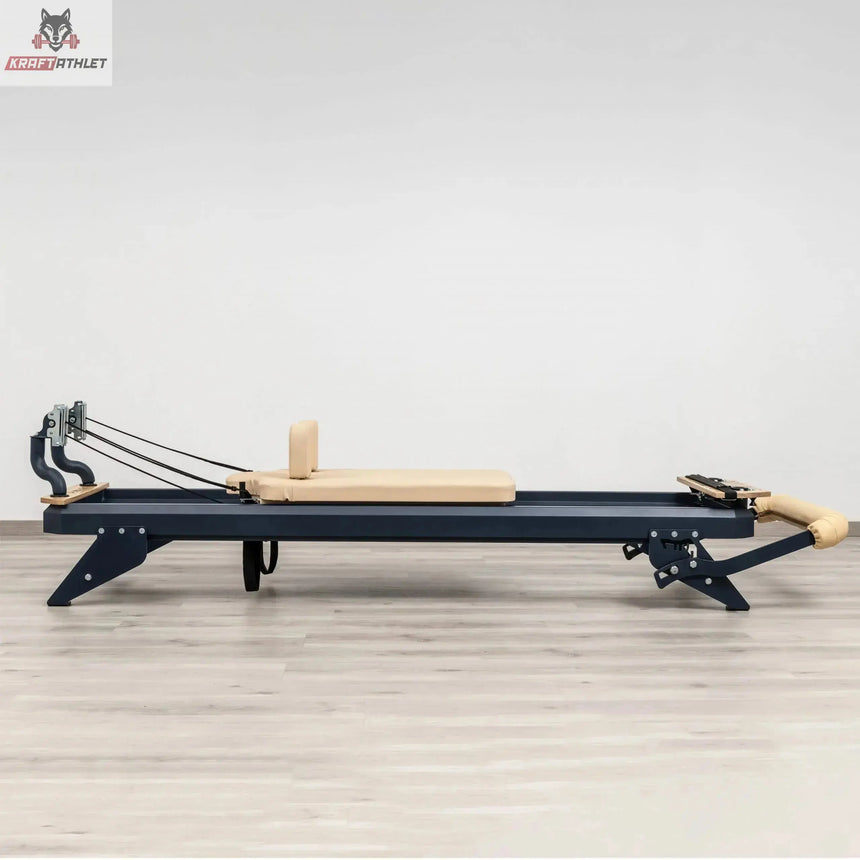
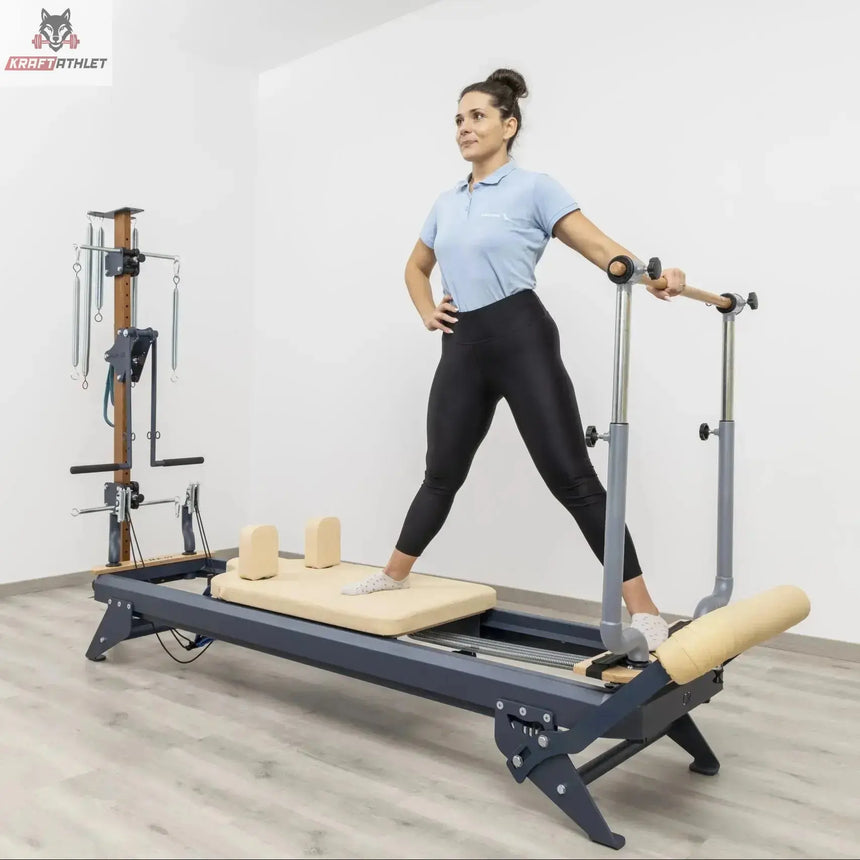
The Pilates Reformer is the centerpiece of many studios. It consists of a frame, a movable platform (carriage), and a spring system that provides resistance. The user lies, sits, or stands on the platform and performs movements while the springs require strength and stability.
Reformer Features:
-
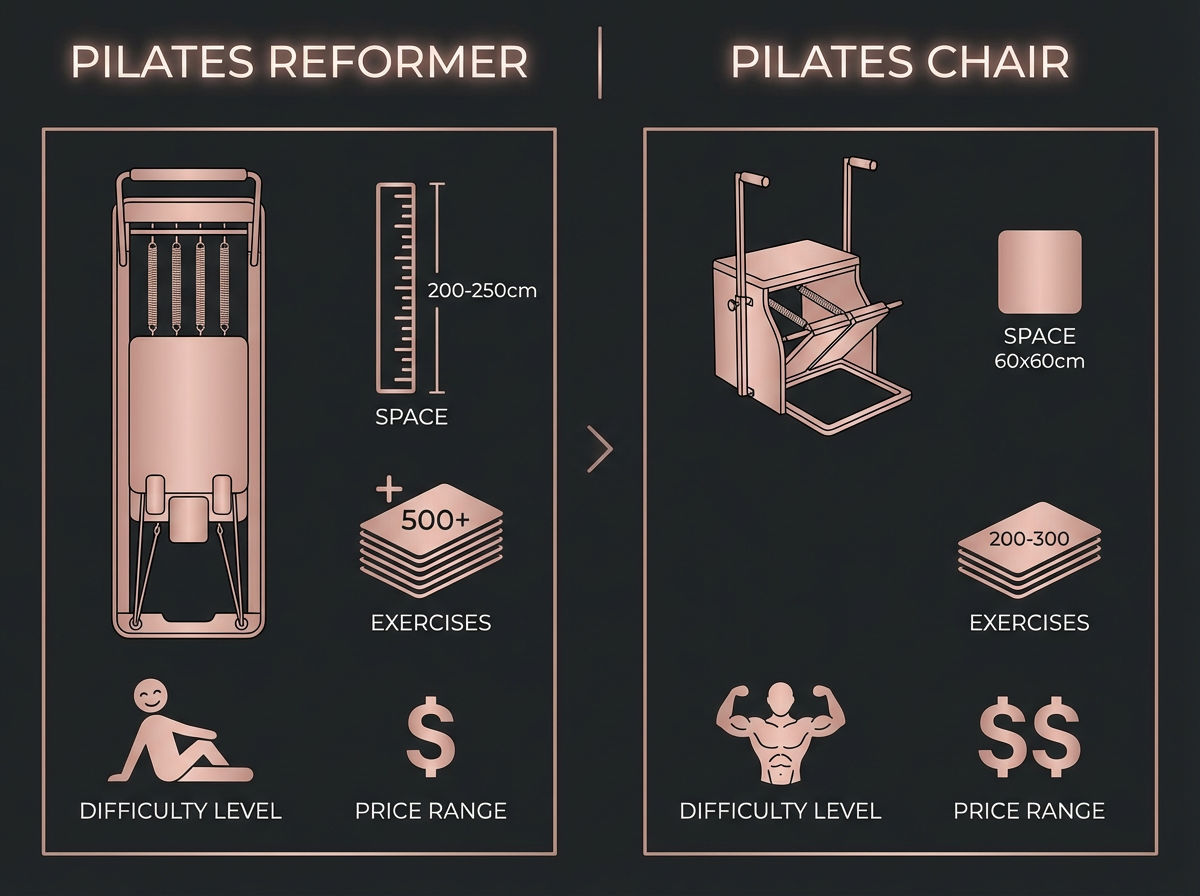
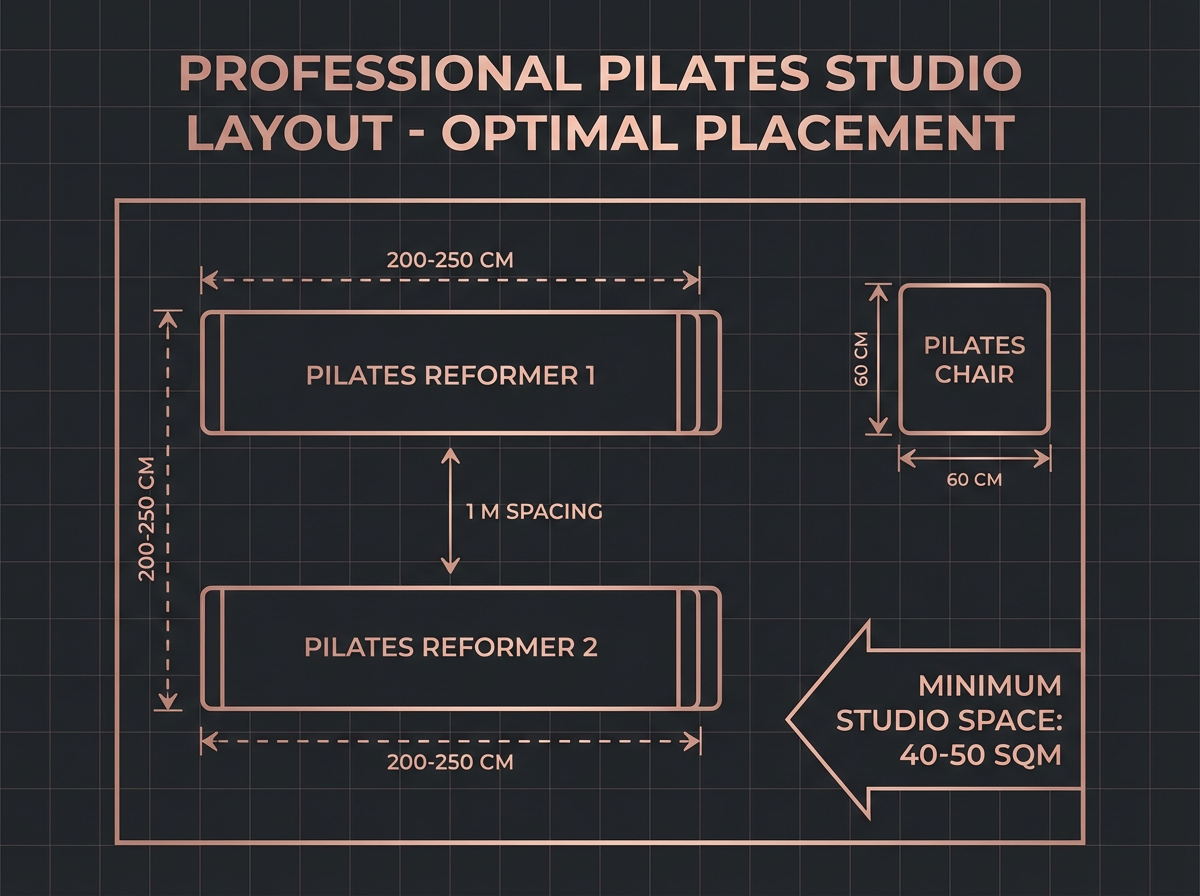
Size & Space Requirements: 200–250 cm long, about 65 cm wide. Requires a dedicated space.
-
Spring system: Typically 4–5 springs with different resistance levels. The Hegren Reformer TALMA 62 uses a 5-spring system for precise resistance adjustment.
-
Variety of Workouts: Over 500 possible exercises for a full-body workout.
-
Target audience: Beginners to advanced; ideal for comprehensive conditioning.
The Reformer is the workhorse of the studio—versatile, effective, and suitable for almost all fitness levels.
2. The Basics: What Is a Pilates Chair?
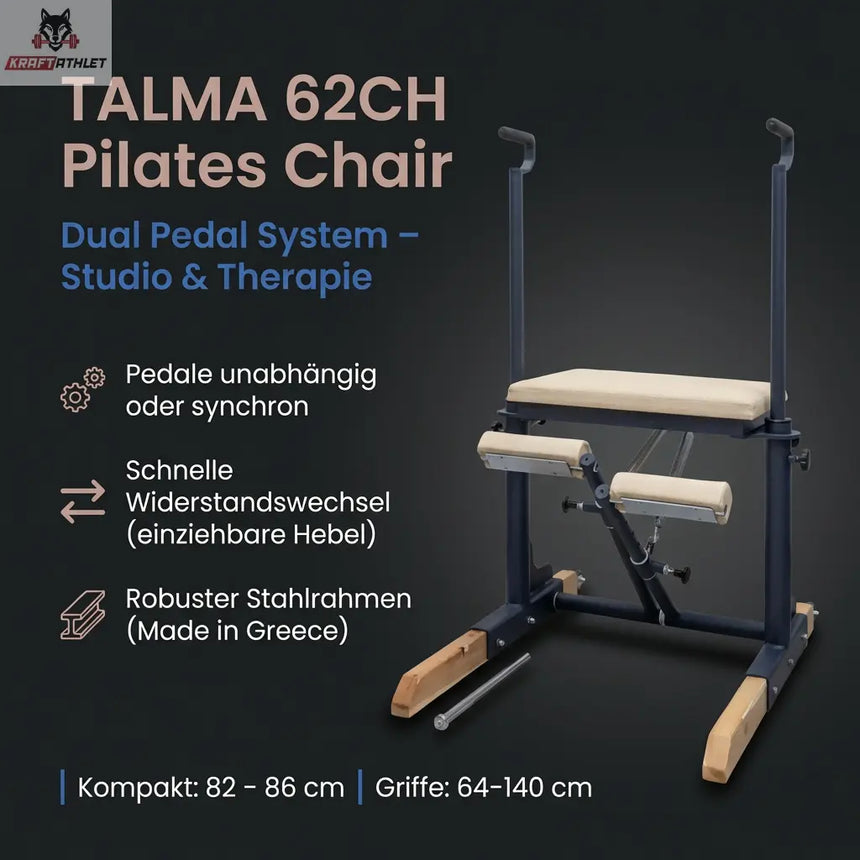
The Pilates Chair (also known as the Cadillac Chair or Wunda Chair) is compact, focused, and intense. It consists of a seat, pedals, and springs. The user sits or stands on the chair and pushes the pedals down or pulls them up—a high-intensity workout for the core, legs, and glutes.

Chair Features:
-
Dimensions & Space Requirements: Approximately 60 cm × 60 cm × 80 cm. Fits in small rooms; ideal for studios with limited space.
-
Spring system: Usually 2–4 springs with high resistance. More intense than the Reformer.
-
Variety of exercises: 200–300 exercises, with a strong focus on the lower body, core, and stability.
-
Target audience: Advanced and experienced Pilates practitioners; also suitable for rehabilitation.
The Chair is the specialist—compact, intense, and perfect for targeted training sessions.
3. Reformer vs. Chair: The Key Differences
|
Criterion |
Reformer |
Chair |
|---|---|---|
|
Space requirements |
200–250 cm × 65 cm |
60 cm × 60 cm |
|
Variety of Training |
500+ exercises |
200–300 exercises |
|
Intensity |
Moderate to high |
Very high |
|
Beginner-friendly |
Yes |
No |
|
Price |
€3,000–8,000+ |
€1,500–4,000+ |
|
Training time |
45–60 minutes |
20–30 minutes |
|
Focus |
Full body |
Lower Body/Core |
4. Reformer: When Is It the Right Choice?
Advantages:
-
Beginner-friendly: A gentle introduction to the principles of Pilates.
-
Versatility: Hundreds of exercises for every part of the body.
-
Scalable: Resistance can be easily adjusted (more or fewer springs).
-
Group Classes: Ideal for Reformer classes with 4–6 people.
-
ROI: Higher utilization rates thanks to a wide range of training options.
Disadvantages:
-
Space requirements: Requires a considerable amount of space (200+ cm in length).
-
Investment: Higher purchase price (€5,000–8,000+ for premium models such as Hegren).
-
Maintenance: More moving parts, greater maintenance requirements.
Reformer is right for you if:
-
You're setting up a comprehensive Pilates program.
-
You want to train both beginners and advanced students.
-
You have space for a length of 200+ cm.
-
You're planning group classes.
5. Chair: When is it the right choice?
Advantages:
-
Compact: Ideal for small studios or as an add-on.
-
Intensity: Highly effective workout in a short amount of time (20–30 min).
-
Specialization: Perfect for core, leg, and glute workouts.
-
Premium positioning: Chair classes justify higher prices (€40–60 per hour).
-
Variety: Complements Reformer classes perfectly.
Disadvantages:
-
Barrier for Beginners: Not suitable for beginners.
-
Limited variety: Fewer exercise options than on a Reformer.
-
Specialized: Focus on the lower body and core; fewer upper-body options.
Chair is right for you if:
-
You want to offer specialized, intensive courses.
-
Your studio has limited space.
-
You already offer Reformer classes and would like to expand your offerings.
-
Your target audience is knowledgeable and performance-oriented.
6. The Ideal Combination: Reformer + Chair for Maximum Studio Success
The best strategy? Combine both devices. Here's why:
Complementarity in Training:
The Reformer offers versatility and is beginner-friendly. The Chair offers intensity and specialization. Together, they cater to all fitness levels and training preferences.
Example of Course Offerings:
-
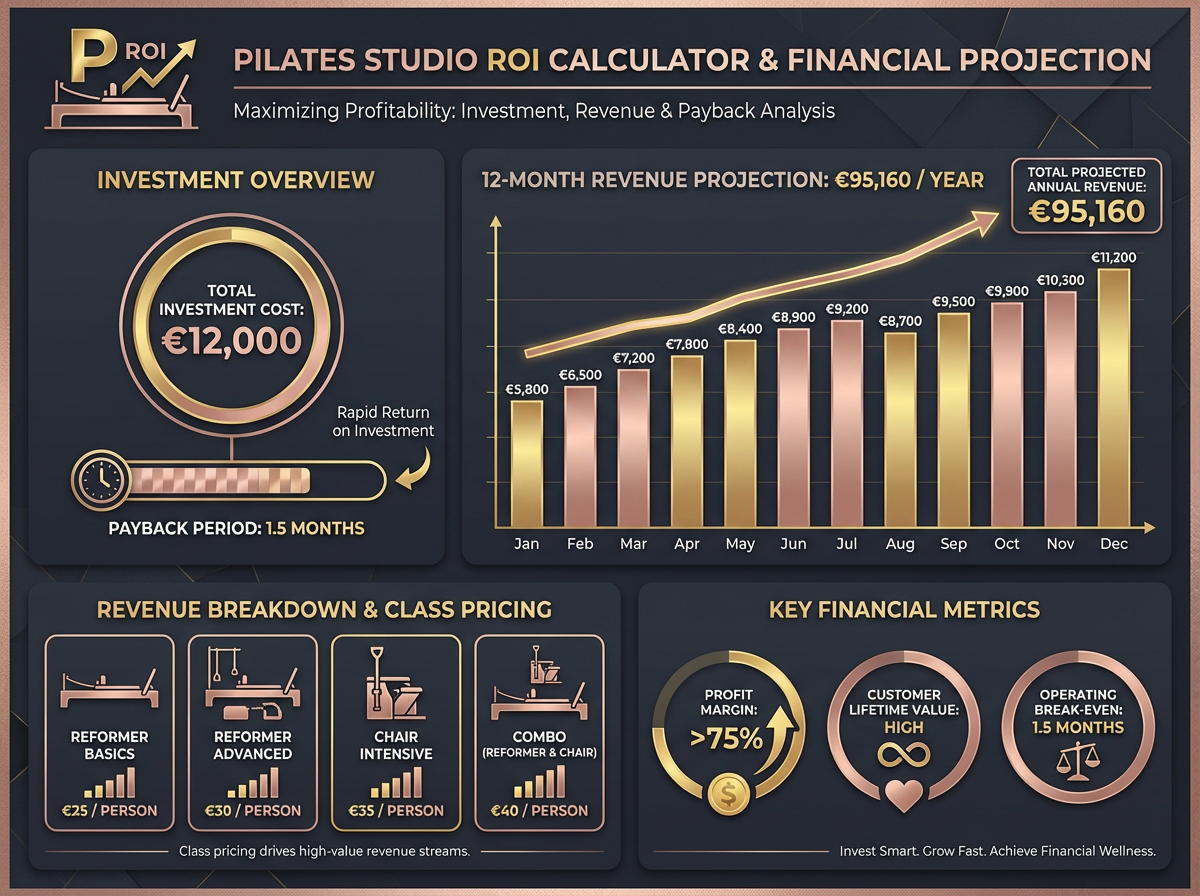
Reformer Basics: Beginners, 45 min, €25 per person
-
Reformer Advanced: Advanced, 50 min, €30 per person
-
Chair Intensive: For experienced participants, 30 min, €35 per person
-
Reformer + Chair Combo: Full Body, 60 min, €40 per person
ROI Benefit:
With Reformer + Chair, you can:
-
Offer more types of classes (to increase attendance).
-
Justify higher prices for Chair courses.
-
Reach out to different target audiences.
-
Increase customer loyalty through variety.
Hegren TALMA 62 Pilates Reformer + Cadillac/Tower:
The Hegren Reformer TALMA 62 is a premium reformer with a steel frame, a 5-spring system, and a length of 245 cm. The Hegren Cadillac/Tower is a complete system featuring a trapeze, bars, and a pedal mechanism—a combination of the Chair and expanded capabilities.
Why this combination is ideal:
-
Stability & Quality: Hegren- Steel frames with a long-term warranty.
-
Precision: The 5-spring system allows for extremely fine resistance adjustment.
-
Modularity: The Cadillac/Tower expands the Reformer's capabilities to include intense, chair-like exercises.
-
Professional Standards: Both devices meet studio requirements (durability, safety, aesthetics).
With this combination, you're offering a complete Pilates ecosystem.
7. Costs & ROI Calculation
Capital expenditures:
-
Reformers (Premium, e.g., Hegren): €5,000–8,000
-
Chair (Premium, e.g., Hegren , Cadillac): €2,500–4,000
-
Combination: €7,500–12,000
ROI Example (12 Months):
Scenario: 2 Reformers + 1 Chair
-
Reformer Classes: 12 classes/week × €25 × 4 people = €1,200/week = €62,400/year
-
Chair Courses: 6 courses/week × €35 × 3 people = €630/week = €32,760/year
-
Total income: €95,160/year
-
Investment: €12,000
-
Payback period: ~1.5 months
With " Hegren" devices: Higher quality = greater justification for the price = better ROI.
Use our Pilates Studio ROI Calculator to calculate your specific numbers: Enter your occupancy rate, prices per class, and number of machines, and see your payback period right away.
8. Frequently Asked Questions (FAQ)
Q: Can I start with just one Chair?
A: Yes, but with limitations. A Chair is only suitable for experienced practitioners. For a full studio, you'll need at least one Reformer to accommodate beginners.
Q: Which machine requires more maintenance?
A: The Reformer has more moving parts (carriage, springs, headrest). The Chair is easier to maintain. However, Hegren machines come with a long-term warranty and support.
Q: Can I combine the Reformer and Chair in a single class?
A: Yes, but it requires experience. Ideal for advanced groups (e.g., 30 min Reformer + 15 min Chair).
Q: How much space do I need?
A: For 2 Reformers + 1 Chair: at least 40–50 m². Reformers require space between them (at least 1 m between each machine).
Q: Which Hegren models do you recommend?
A: The Hegren Reformer TALMA 62 is our top model for studios. The Hegren Cadillac/Tower is the premium choice for chair training and advanced exercises.
Q: How long does an Hegren unit last?
A: With regular maintenance, 10+ years. Hegren offers replacement parts and support for all models.
9. Your Next Steps
-
Measuring a room: How much space do you have available?
-
Define the target audience: Beginners, advanced learners, or both?
-
Developing a Course Concept: What courses would you like to offer?
-
Calculate ROI: Use our calculator with your specific numbers.
-
Test devices: Book a demo with us using Hegren devices.
-
Request a consultation: Our team will help you make your selection.
Ready to plan your gym? Contact us for a free consultation. We'll help you find the right combination of equipment for your gym—based on your space, budget, and fitness goals.
Contact & Consultation: Request a Free Studio Consultation