

Last updated: October 14, 2023
Written by Sherbil Abu Aqsa, CEO of Kraftathlet , with over 5 years of experience in the premium fitness equipment industry.
Setting up a successful physical therapy practice is so much more than just choosing the right furniture. It’s the foundation upon which therapeutic success and your patients’ satisfaction are built. At the end of the day, it defines your workflows and reflects what makes your practice unique. This guide provides a practical walkthrough of all the steps that really matter.
How to Set Your Practice Up for Success from the Very Beginning
A well-designed physical therapy practice is the crucial first step toward establishing your position in a highly competitive market. The environment you create directly influences patients’ healing process and the team’s efficiency. Strategic planning based on a clear vision and tailored to your target audience transforms your therapeutic approach into measurable success and clearly sets you apart from the competition.
A well-thought-out design is your first, crucial step toward clearly positioning yourself in an increasingly crowded market. The environment you create has a direct impact on your patients’ healing process, as well as on the efficiency and well-being of your team. In this guide, Sherbil Abu Aqsa, CEO of Kraftathlet, shares his practical insights gained from years of experience in equipping healthcare facilities.
Strategic planning is becoming increasingly important in this context. Let’s look at the numbers: According to a key data study by the Central Association of Health Insurance Funds (GKV), there are approximately 50,888 licensed physical therapy practices in Germany (Source: GKV-Spitzenverband, Key Data 2022). For anyone starting a practice, this means they’re entering a market that’s significantly more competitive today than it was ten years ago. Naturally, this has a direct impact on how practices are set up today and which investments are worthwhile.
Laying the Foundation for Growth
The success of your practice begins long before the first patient walks through the door. It is rooted in a crystal-clear concept that is precisely tailored to the needs of your target audience. The interior design must then bring this vision to life—whether through highly specialized equipment for sports physical therapy or a particularly soothing, almost home-like atmosphere for patients with pain.
This infographic summarizes the journey from idea to successful implementation.
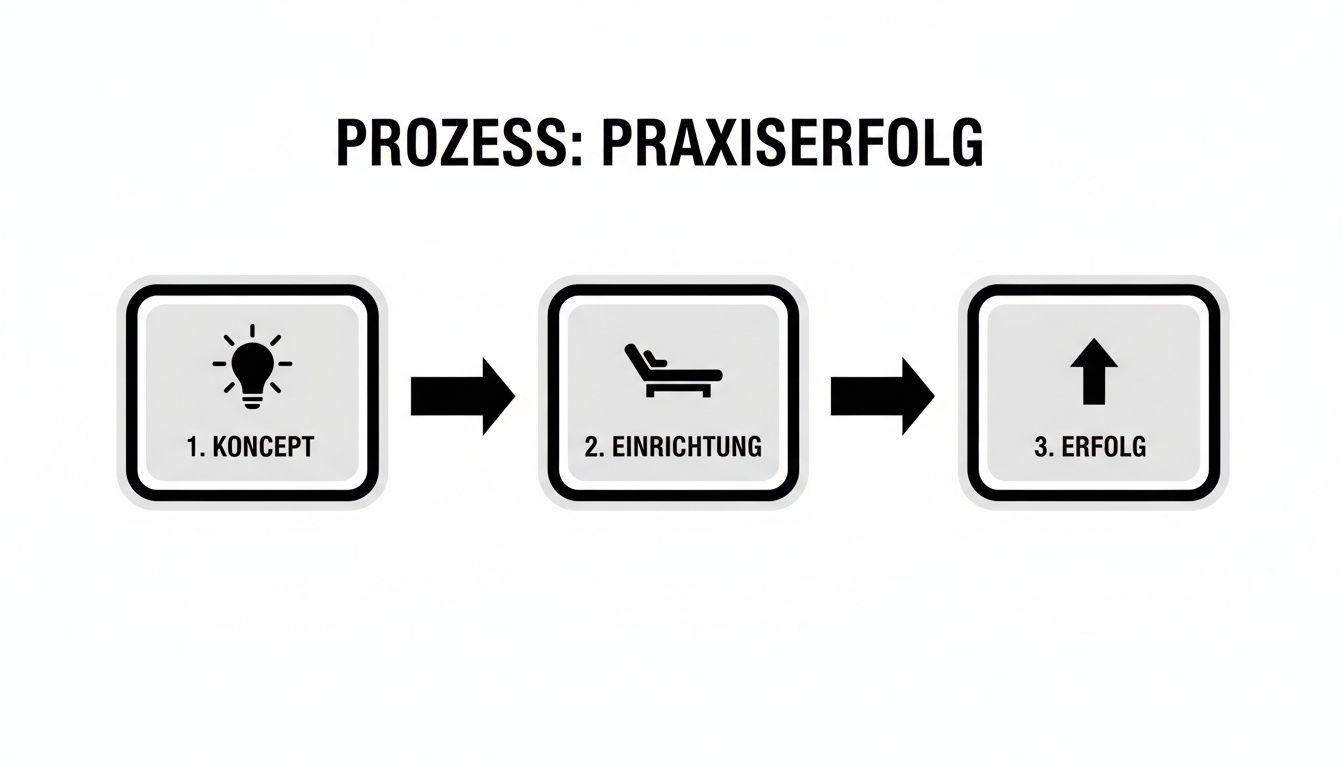
The chart makes it clear: A well-planned facility is the bridge that transforms your therapeutic approach into measurable success.
“Every practice starts with a vision. It’s not just about being self-employed, but about the value you create for your patients and what your practice should stand for. The practice’s design is the physical manifestation of that vision.”
– Sherbil Abu Aqsa, CEO of Kraftathlet
By the way, a crucial step in attracting the right patients from the start and building your online visibility is creating a Google Business Profile. This ensures that people in your area can find you right away. Ultimately, the goal is to create an environment that promotes healing and well-being and clearly sets you apart from the competition.
Your practice concept as the basis for equipping your practice
The most important foundation for setting up your physical therapy practice is a clear concept that is defined before you purchase any equipment. This strategic roadmap answers the questions of who your patients are and what your area of specialization is. Conducting a needs assessment early on prevents costly mispurchases and ensures that your equipment is perfectly aligned with your therapeutic goals.
This early analysis is worth its weight in gold. It prevents costly mistakes when purchasing equipment and ensures that your setup will truly align with your therapeutic goals down the line. Your vision sets the tone for everything else—from the floor plan down to the smallest therapy tool.

Analysis of Their Target Patient Group and Areas of Focus
It all starts with a thorough needs assessment. Without it, you’re essentially investing blindly. Take the time to refine your profile by answering these questions:
- Who are my ideal patients? Do I mainly treat seniors who have had joint replacement surgery, young athletes with injuries, or perhaps patients with neurological conditions, such as those who have had a stroke?
- Which treatments are most commonly requested? Should I focus on manual therapy, equipment-based physical therapy (KGG), or rather on specialized approaches such as Bobath or Vojta?
- What makes my practice unique (USP)? Do I perhaps offer innovative therapies, such as Pilates on the Reformer, that go beyond the standard offerings? Or do I specialize in workplace health promotion and working with elite athletes?
The answers to these questions result in a very specific list of requirements. After all, a practice specializing in orthopedics requires entirely different equipment than one that focuses on pediatrics.
From the vision to a concrete list of requirements
Once you’ve defined your target audience and key priorities, it’s time to get down to business: you’ll translate your vision into very specific spatial and material requirements. This step makes everything tangible and allows you to plan your budget.
A real-world example: If your focus is clearly on sports physical therapy, then plan for a spacious training area dedicated to functional training and performance assessment right from the start. Equipment such as the Titanium Strength Air Runner or strength training machines designed for explosive movements will quickly become indispensable here.
In stark contrast, a practice specializing in neurology requires much more space for accessible treatment rooms, special therapy tables, and various mobility aids.
A well-thought-out practice concept is like a good recipe: It not only lists the ingredients, but also specifies their quantities and how they interact. Only then can a harmonious and successful outcome be achieved.
It quickly becomes clear just how different the requirements can be depending on a practice’s area of focus when you compare them side by side.
A Comparison of the Requirements for Different Areas of Practice
This table compares the typical equipment requirements for practices specializing in orthopedic, neurological, and sports physical therapy to facilitate conceptual planning.
| Equipment Category | Orthopedic Focus (e.g., after knee surgery) | Neurological Focus (e.g., after a stroke) | Focus on Sports Physical Therapy (e.g., performance assessment) |
|---|---|---|---|
| Training Area | KGG-certified strength training equipment, cable machines, leg presses, free weights. | Gait analysis systems, motorized gait trainers, tilt tables, and large, open areas for balance exercises. | Performance testing systems (lactate, spiroergometry), sprint tracks, plyo boxes, specialized strength training machines. |
| Treatment Rooms | Adjustable therapy tables, fascia tools, electrotherapy devices. | Wide, height-adjustable Bobath tables, positioning aids, tactile stimulation materials. | Specialized tables for manual therapy, shock wave devices, ultrasound, and compression systems. |
| Special Features | Isokinetic testing systems, cold and heat therapy. | Footrests, lifting systems, sensorimotor training equipment. | Elina Pilates Core stability trainers, cryotherapy chambers for recovery, EMS systems. |
This comparison makes it clear that it’s virtually impossible to make a blanket recommendation regarding equipment—it all depends on your individual plan.
Define "must-haves" and "nice-to-haves"
With this clear list of requirements, you can now take the decisive step: prioritizing. Make a clear distinction between the essential basic features and the optional extras.
- Must-Haves: These are the items without which you simply cannot offer your core services. They include certified treatment tables, a solid basic set of small appliances, and, of course, the necessary practice management software.
- Nice-to-Haves: These include equipment or services that enhance your profile but aren't absolutely necessary to get started. A state-of-the-art Pilates Reformer or a specialized diagnostic tool would be a classic example.
This prioritization protects your budget from impulsive spending. It allows you to invest strategically in the equipment that promises the greatest benefit for your patients and the highest return on investment for your practice. Start with the essentials and expand your services strategically once your practice is up and running.
Smart Space Planning for Optimal Workflows
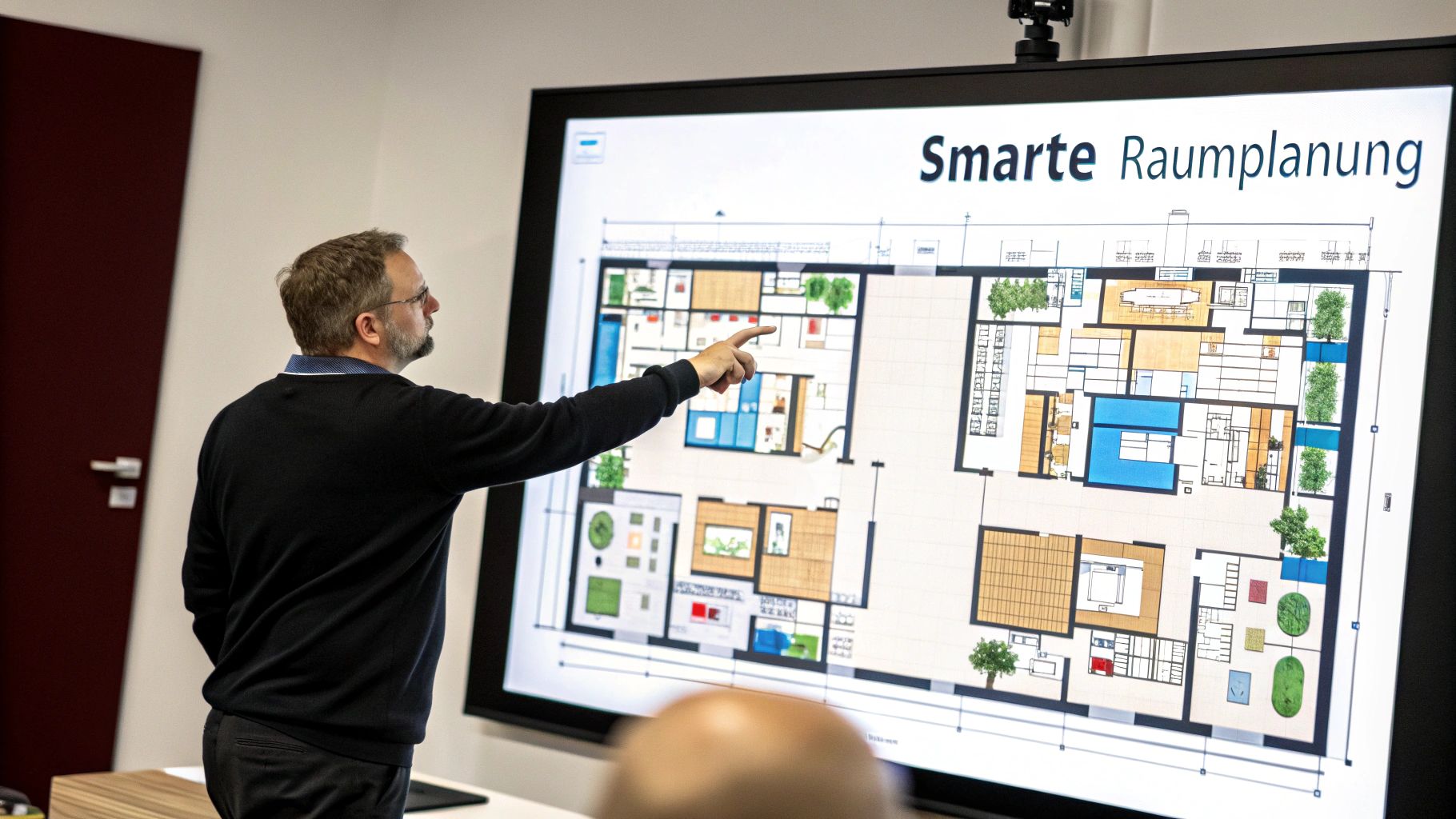
A well-designed floor plan is the foundation for the efficiency of your physical therapy practice. Thoughtful space planning minimizes walking distances for therapists, ensures privacy, and creates a comfortable atmosphere. Defining clear zones—public, therapy, and staff areas—optimizes workflows, reduces wait times, and creates a professional environment for patients and staff.
The key is to define clear zones that meet the various requirements. This prevents the active training area from disrupting the quiet atmosphere of individual therapy sessions or administrative tasks from interfering with patient care. A smart workflow based on the floor plan has been shown to simplify scheduling and significantly reduce wait times.
Functional Zones for a Smooth Daily Practice Routine
Organizing your practice into logical areas is the first crucial step toward optimization. Think in terms of functional zones rather than just individual rooms. Each of these areas should serve a clear purpose and flow seamlessly into the next.
In practice, three core zones have proven effective:
- The public area: This includes the reception area, waiting area, and restrooms. This area is your practice’s calling card—it must be inviting, clean, and well-organized. Make sure there is plenty of seating and an atmosphere that inspires trust from the very first moment.
- The therapy area: This is the heart of your work. This is where individual treatments and, if applicable, small-group training sessions take place. The layout of the space must ensure maximum privacy while also providing efficient working conditions for the therapists.
- The internal area: This includes offices, staff rooms, storage areas, and, ideally, a break room for your team. This area should be clearly separated from patient traffic to allow for undisturbed work and the necessary rest.
Consistently separating these zones prevents unnecessary disruptions and creates a thoroughly professional environment.
Patient Flow as a Benchmark for Planning
Think it through for a moment: What does a typical patient’s journey through your practice look like, from the moment they enter until they leave? This “patient flow” is the most important criterion for effective space planning. The goal must be to make this journey as logical, short, and pleasant as possible.
In practice, an optimal workflow often looks like this:
- Arrival & Reception: The patient walks in and finds the registration desk immediately, without having to go out of their way.
- Waiting Area: From the reception desk, you'll go directly into a well-organized and quiet waiting area.
- Changing Room & Therapy: The therapist picks up the patient and takes him or her by the shortest route to the changing room or treatment room.
- Conclusion & Scheduling: After the treatment, the path leads back to the reception area, where you can easily schedule your next appointment and leave the office.
Optimized patient flow isn't a luxury—it's a real efficiency booster. Shorter distances mean less time wasted between appointments, which ultimately allows for more treatment time per day.
When planning the layout of your physical therapy practice, don’t forget to consider your therapists’ walking routes. Supplies, equipment, and documents must be easily accessible without having to constantly cross through the patient area.
Integrating Legal Requirements and Accessibility
In addition to pure functionality, you must strictly comply with legal requirements. These are non-negotiable and should be incorporated into the planning from the very beginning; otherwise, you risk costly and stressful corrective work later on.
The most important regulations include:
- Accessibility (DIN 18040): This is absolutely essential in a healthcare facility. It pertains to door widths, clear spaces for movement within rooms and restrooms, as well as step-free access to the practice itself. (Source: German Institute for Standardization e. V.)
- Requirements of the German Workers' Compensation Association (BGW): The BGW sets clear requirements for workplace safety, lighting, indoor climate, and hygiene. Be sure to familiarize yourself with these requirements well in advance.
- Health Insurance Company Requirements: To be authorized to bill statutory health insurance companies, medical practices must demonstrate that their treatment rooms meet certain minimum size requirements (often at least 8 m²) and that they have a separate room for heat therapy.
Even if your space is limited, there are clever solutions. Even in smaller practices, you can achieve a lot with multifunctional furniture and a well-thought-out layout. If you’re facing this exact challenge, you’ll find valuable tips in our guide to fitness equipment for small spaces —tips that can also be applied to therapy rooms. Proper planning ensures that you make the most of every square meter while complying with all regulations—creating a productive and safe environment for everyone.
Choosing the Right Therapy and Exercise Equipment
Selecting therapy and exercise equipment is a strategic decision that directly impacts treatment outcomes and cost-effectiveness. It is an investment in your practice concept that enables efficient workflows and creates attractive options for self-pay patients. The right equipment supports your philosophy, enables a wide range of treatments, and gives you a clear competitive edge.
The key is to view equipment not as individual items on a shopping list, but as an integral part of your overall practice concept. The right equipment supports your therapeutic philosophy, makes versatile treatment approaches possible, and gives you a clear competitive edge.

Medical Devices Act and KGG – The Legal Basis
The foundation of any professional practice is equipment that meets strict legal requirements. In Germany, Austria, and Switzerland, compliance with the EU Medical Device Regulation (MDR) is the key legal framework. It ensures that all devices intended for therapeutic use are safe and effective. Whenever making a purchase, be sure to check for the appropriate certification—this is non-negotiable.
Health insurance companies have even more specific requirements for equipment-based physical therapy (KGG). In order to bill for KGG, the strength and resistance training equipment used must meet very specific criteria. These include, for example, very fine weight increments or the ability to precisely limit ranges of motion. Specialized brands such as Titanium Strength offer certified product lines designed specifically for this rehabilitation application.
The Synergy of Rehabilitation, Strength Training, and Functional Training
Today, a modern practice should be able to provide holistic care for patients—from the acute phase through to full recovery. The ideal equipment can be broadly divided into four key, interrelated areas:
- Certified rehabilitation equipment: The absolute foundation. Without it, billing health insurance companies and ensuring safe therapy—especially postoperatively—is not possible.
- Modern strength and cardio equipment: Essential for the KGG, but also the cornerstone of preventive training programs and self-pay services. Multifunctionality is what matters most here.
- Innovative functional systems: Equipment such as the Pilates Reformer bridges the gap between traditional rehabilitation and functional training, which challenges and strengthens the entire body.
- High-end recovery technologies: Systems such as cryotherapy or compression boots are clear unique selling points. They attract a discerning, affluent clientele and position your practice in the premium segment.
With this range of services, you can seamlessly support your patients through every stage of their recovery and build lasting relationships with them.
A modern device portfolio is more than just a collection of machines. It is a modular system that allows you to have exactly the right tool on hand for every patient and every phase of treatment.
One issue that directly influences equipment selection is the pervasive shortage of skilled workers. According to an analysis by the Federal Employment Agency, open positions in physical therapy remain unfilled for an average of 280 days. This forces us, as practice owners, to prioritize maximum efficiency. Multifunctional equipment that a therapist can use flexibly for various exercises or even small groups is an extremely smart investment in this context. The IFK has analyzed this dramatic trend in detail and highlights how the shortage of skilled workers in physical therapy is continuing to worsen.
This table provides an overview of the most important categories of equipment, their primary uses, typical costs, and recommended brands to help inform investment decisions.
An Overview of Essential Equipment Categories for the Modern Practice
| Device Category | Primary Benefit | Typical Investment | Recommended Brands (Examples) |
|---|---|---|---|
| MDR-certified rehabilitation devices | Safe treatment, billing to health insurance companies, postoperative care | €1,500 – €8,000 per unit | Gymna, Chattanooga |
| KGG Strength Training Equipment | Pay-as-you-go physical therapy using exercise equipment, targeted strength training | €2,000 – €10,000 per station | Titanium Strength, Technogym |
| Pilates Equipment (Reformer, Cadillac) | Functional Training, Core Stability, Self-Pay Classes | €2,500 – €9,000 per unit | Elina Pilates, Balanced Body |
| Recovery Technologies (Cryotherapy, Compression) | Unique Selling Proposition, Regeneration, Premium Offers | €3,000 – €25,000 per system | Reboots, Game Ready |
The table clearly shows that a well-thought-out combination of basic equipment and specialized systems provides the greatest added value for patients and the practice.
Pilates reformer: a valuable addition that pays off
Pilates Reformers have proven to be an incredibly valuable addition to physical therapy practices, particularly in the area of functional training. These machines are not just a fad—Joseph Pilates originally developed them for the rehabilitation of injured soldiers. They are therefore perfectly designed for a full-body workout that is both gentle on the joints and highly intense.
As an authorized partner of Elina PilatesKraftathlet , we see every day how physical therapy practices successfully integrate these devices. They’re excellent for improving core stability, mobility, and body control—all key goals in nearly every physical therapy treatment. The best part: They open up an extremely lucrative market for small-group classes paid for out-of-pocket. If you’d like to delve deeper into the topic, you’ll find all the important information in our ultimate guide to the best Pilates Reformer for your needs.
The Right Balance Between Specialization and Versatility
Ultimately, choosing the right equipment is about finding the perfect balance for your practice. Highly specialized equipment is unbeatable for certain medical conditions, while multifunctional equipment guarantees flexibility and high utilization rates.
A practical tip: Start with a rock-solid foundation of MDR-certified devices for insurance billing. Then supplement this with one or two “flagship devices” that highlight your unique practice concept. This could be a state-of-the-art Elina Pilates Reformer, an isokinetic testing system, or a cryochamber. This way, you’ll create clear added value for your patients right from the start and set yourself apart from the competition—without immediately blowing your budget.
Costs, Financing, and the Inevitable Regulations
Sound financial planning is the backbone of your practice and is key to its financial success. A detailed breakdown of costs, smart financing strategies such as leasing, and compliance with legal requirements (health insurance accreditation, hygiene standards, GDPR) are essential for minimizing financial risks and getting off to a strong start.
The initial investment, in particular, can quickly add up to a considerable sum. A detailed calculation not only protects you from unpleasant surprises—it’s also your ticket to any serious discussion with a bank.
Cost Breakdown: What's Really on the Bill
To create a realistic budget, you really need to account for every potential expense. The best way to do this is to break it down into one-time investments and ongoing operating costs.
Let's take a look at a sample cost estimate for a medium-sized practice with about 120 m²:
- Basic equipment: This includes treatment tables, positioning aids, various small devices, and the essentials for your reception area. Plan to spend at least €10,000–€15,000 on these items.
- The KGG training area: Are you looking for a certified facility equipped with the necessary strength and pulling machines? If so, depending on the scope and manufacturer, you should budget an additional €15,000–€30,000.
- IT & Practice Software: You can’t do without it. Expect to spend approximately €3,000–€7,000 on computers, a printer, a point-of-sale system, and professional practice management software.
- Remodeling & Renovation: Depending on the condition of the property, costs can quickly add up to between €5,000 and €25,000. This is often underestimated.
- Operating costs: Rent, salaries, insurance, marketing, and supplies must definitely be factored in as a buffer for the first few months.
Of course, these figures are only a rough guide. The actual costs depend heavily on your location in Germany, Austria, or Switzerland, your practice concept, and the quality standards you choose.
Smart Financing: How to Preserve Your Cash Flow
Very few entrepreneurs can cover an investment like this entirely out of their own pocket. Fortunately, there are now flexible financing models tailored specifically to the needs of business customers.
- Traditional bank loan: The conventional approach. It can often be combined effectively with KfW Bank’s funding programs, but requires an absolutely compelling business plan.
- Equipment Leasing: An extremely attractive alternative to purchasing. Instead of paying a huge lump sum, you pay manageable monthly installments, which frees up your cash flow for unforeseen expenses. A major advantage: Lease payments are immediately tax-deductible as business expenses.
- Flexible payment providers: Rent-to-own and leasing models for business customers can be particularly helpful when purchasing or adding individual devices, as they allow costs to be spread out into smaller installments.
"Leasing is the smartest option for many practice founders. Instead of tying up capital in equipment for the long term, it remains freely available for marketing, staffing, and those crucial first few months. This significantly minimizes the financial risk."
– Sherbil Abu Aqsa, CEO of Kraftathlet
Choosing the right model directly affects how financially flexible you remain. The principles are always similar: In our guide, we’ll show you how to finance premium fitness equipment smartly without racking up debt— and this approach applies directly to equipping your practice.
Regulations and Approvals: What You Need to Know
In addition to all the numbers, there’s also the legal side of things, which you need to have under control from the very beginning. That’s the only way you’ll get approved by health insurance providers and be able to operate in compliance with the law. That’s the framework within which you operate.
Here is an overview of the key points:
- Licensing requirements of the GKV umbrella organizations: These organizations set clear requirements for the premises. These include minimum sizes for treatment rooms (often 8 m² per room) and, of course, the qualifications of your staff.
- Hygiene Regulations: A detailed hygiene plan is absolutely mandatory. The public health department monitors compliance and regulates everything—from hand sanitization to the sterilization of therapy equipment.
- Data Protection (GDPR): The handling of sensitive patient data is subject to the strictest rules. Ensure secure data storage and complete documentation. There is no room for compromise here.
- GoBD Compliance: The “Principles for the Proper Maintenance and Retention of Books, Records, and Documents in Electronic Form” are mandatory for your accounting and invoicing. This applies above all to audit-proof, GoBD-compliant document management, ensuring that you are on the safe side during tax audits.
If you familiarize yourself with these regulations early on, you’ll not only save yourself the cost of expensive corrections. It’s simply a prerequisite for a smooth approval process and professional operation from day one.
Logistics, Maintenance, and Future-Proofing Your Equipment
The period following the purchase of your physical therapy practice equipment is crucial: Professional delivery, installation, and training ensure a smooth start. A proactive maintenance plan (weekly checks, monthly routines, annual inspections) maximizes the lifespan and safety of your equipment. Invest in modular and scalable systems so you can respond flexibly to future trends.
A professional partner is worth its weight in gold here. It’s not just a matter of having the equipment delivered to your doorstep. A true “white-glove experience”—as we at Kraftathlet understand it, based on our more than 500 satisfied customers—means that everything is installed on site and your team is thoroughly trained on how to operate it. This is the only way to ensure that everything runs smoothly and is used safely from day one.
Predictive Maintenance for Maximum Service Life
Regular maintenance isn’t just a burdensome expense—it’s a strategic investment in the longevity and safety of your equipment. A sudden breakdown isn’t just frustrating; it leads to immediately canceled appointments and, consequently, a loss of revenue. A proactive maintenance plan is therefore absolutely essential.
A well-maintained device is a reliable device. Schedule regular maintenance appointments in your calendar just as you would an important patient appointment. This ensures your practice remains operational and protects your investment in the long run.
Set clear maintenance intervals based on the manufacturer's recommendations and your actual frequency of use. A solid plan usually looks like this:
- Weekly Checks: Simple visual inspections of all equipment to check for loose screws, tears in the padding, or damaged cables. Your team can easily handle this on their own.
- Monthly routines: Lubricating moving parts and performing a thorough cleaning, especially for KGG equipment that is subject to heavy use.
- Annual Inspection: A comprehensive technical inspection performed by a certified professional. During this inspection, wear parts are replaced and the equipment is recalibrated.
Document every single maintenance task meticulously. This is not only important for any potential warranty claims, but also serves as crucial proof of safety for the workers' compensation association.
Future-Proofing Through Modular and Scalable Concepts
The world of physical therapy is constantly evolving. What is considered a modern treatment method today may be outdated in just five years. Your practice should therefore be flexible enough to keep pace with new trends and the growth of your practice. The key to this lies in modular and scalable equipment.
Instead of investing in rigid, single-purpose systems, you should opt for equipment that can be expanded later on. Classic examples include cable machines or functional training towers, which you can later supplement with additional stations. When making your selection, make sure the manufacturer will still be offering compatible add-ons or software updates years down the line.
This way, your valuable physical therapy practice equipment will continue to serve as a strong foundation for your therapeutic success in the future and can adapt to new requirements—without requiring a complete replacement right away.
Are you ready to put your practice concept into action? Request a no-obligation quote for your desired equipment now, or schedule a free consultation on practice planning with our experts at Kraftathlet.
Frequently Asked Questions About Dental Practice Setup
When setting up a practice, the same questions always come up. Here, we provide answers drawn directly from our years of experience equipping countless practices—honest, practical, and to the point.
What costs should I expect for the initial setup?
That’s the key question, and the answer, of course, depends heavily on the size and concept of your practice. As a rough estimate, for a medium-sized practice with approximately 120 m² of floor space, you can expect to budget at least €25,000 to €50,000 just for basic furnishings and equipment.
This amount generally covers treatment tables, certified KGG equipment, and other necessary practice equipment. Keep in mind, however, that this is only half the battle. Costs for renovations, IT infrastructure, and ongoing operating expenses are still on top of that.
Which devices are truly essential when you're just starting out?
To start, focus on the essentials you need for day-to-day operations. MDR-certified treatment tables, various positioning aids, and small equipment such as foam rollers or Therabands are absolutely essential. Basic equipment for heat therapy is also part of this.
Are you planning to offer equipment-based physical therapy (KGG) from the very beginning? If so, you’ll need a set of certified strength and cable machines. Only with these can you bill health insurance companies for your services.
How long does it take for the equipment to be delivered and set up?
An important point to keep in mind for your schedule! With a professional partner like Kraftathlet , you can expect fast delivery—just 3–5 business days —for in-stock items within the DACH region.
The actual installation and setup by our technical specialists usually takes one to two days, depending on the scope of the equipment. You should definitely factor this time buffer into your schedule before celebrating the grand opening. Nothing is more frustrating than opening a practice without equipment that’s ready to use.