

Abstract
- The most important factor to consider when making a purchase is the hole size: 50 mm (Olympic) for barbells and gyms, and 30 mm (standard) only for light dumbbell sets.
- Cast plates are the most affordable and space-saving option; rubber-coated plates protect the floor and your ears; solid rubber bumper plates are impact-resistant for Olympic lifting and CrossFit.
- Make sure the weight tolerance is within the competition range (±10 g), the inner diameter is a uniform 50.4 mm, and it has a sturdy metal core instead of a hollow cast core.
- For the gym, durability and impact resistance are key; for a home gym, a rubberized set plus a few bumpers is often enough for the basic exercises.
If you want to buy weight plates, the first thing to decide is the hole size: 50 mm (Olympic) fits any standard barbell and is the norm in gyms, while 30 mm (standard) is only practical for light beginner dumbbells. Next comes the question of material—cast iron, rubber-coated, or bumper plates—and that depends on whether you plan to drop the plates, how much space you have, and your budget.
This guide categorizes the three types of weight plates according to clear criteria, explains the most important standards, and shows you which combination is right for a gym and which is right for a home gym—so you don't end up buying the same thing twice.
What types of weight plates are there?
Essentially, there are three different types. They all weigh the same, but they behave completely differently during training, when dropped, and over the years.
Cast-iron discs (classic, affordable, space-saving)
Cast iron is the classic weight material: dense, hard, and very thin relative to its weight. This means you can fit more kilograms on the barbell—an advantage if you want to do heavy compound exercises like deadlifts or squats. Cast iron is the most affordable per kilogram, but it’s loud, can damage floors, and rusts on unprotected edges. Dropping it is a big no-no.
Rubber-coated discs (quiet, gentle on the floor)
Rubber-coated plates have a cast iron or steel core covered with a solid layer of rubber. They’re quieter, protect the floor and equipment, and look more upscale in the gym. They’re slightly thicker and more expensive than solid cast iron, but they’re the best all-around choice for weight benches, dumbbells, and moderate barbell training. They can withstand being set down gently, but they are not designed to be dropped from overhead height.
Bumper Plates (Solid rubber, drop-proof, for Olympic lifting)
Bumper plates are made entirely of solid rubber with a metal inner ring. They are designed so that you can drop them from overhead height—a requirement for snatches, cleans, and jerks, as well as for CrossFit. All bumper plates have the same outer diameter, whether they weigh 10 or 25 kg, so that the barbell always sits at the same height. The downside: Bumper plates are thicker, so fewer plates can fit on the bar, and they’re more expensive per kilogram than cast iron plates.
Punch size: 50 mm (Olympic) vs. 30 mm (standard)
The hole size is the most common and costly mistake. 50 mm (Olympic) is the professional standard: These plates fit any Olympic barbell and rotate with the bar. 30 mm (standard) is only found on inexpensive beginner dumbbells and older sets—they aren’t backward-compatible and will limit you when you switch to a proper barbell. Our clear recommendation: If you’re planning for the long term, buy 50 mm.
Cast vs. Rubber vs. Bumper – A Head-to-Head Comparison
| Criterion | Cast iron | Rubber-coated | Bumper Plate |
|---|---|---|---|
| Letting Go | No | Just a brief pause | Yes, from above head height |
| Volume | High | Low | Low (dead bounce) |
| Spot on the pole | Very good (thin) | Good | Limited (thick) |
| Soil Conservation | Low | High | Very high |
| Price per kilo | Low | Medium | Higher |
| Ideal for | Heavy Powerlifting, Budget | All-Around, Home Gym, Gym | Olympic Lifting, CrossFit |
Load Capacity, Mass, and Standards
Quality is evident in the details of the standards. Competition bumpers from the International Weightlifting Federation (IWF) have a uniform outer diameter of 450 mm and an inner diameter (bore) of 50.4 mm, so that they fit exactly onto the 50 mm bar sleeve. The color coding is standardized internationally: 10 kg green, 15 kg yellow, 20 kg blue, 25 kg red. Competition plates maintain a very tight weight tolerance of approximately ±10 g, and high-quality bumper plates achieve a controlled, flat “dead bounce” rather than a dangerous rebound due to their hardness (around 94 Shore on the durometer) (Source: IWF Technical & Competition Rules).
For regular gym and home workouts, you don't necessarily need this competition-level precision—but these specifications are a good indicator of quality. Look for a cleanly finished metal inner ring (not a bare cast hole that's warped), uniform thickness, and—for rubber-coated discs—low-odor, non-staining rubber.
Buying Guide: Which Lenses for Which Purpose?
The right choice depends less on your budget than on your training goal. Here are three typical scenarios:
- Home Gym, Muscle Building & Strength: A set of 50 mm rubber-coated plates is the best all-around foundation—quiet, gentle on the floor, and durable. If you occasionally perform heavy deadlifts, add a pair of 20 kg bumper plates.
- Olympic Lifting / CrossFit: Bumper plates are the best choice because you can drop them in a controlled manner. A set of technical plates (light bumper plates in 5–10 kg) helps with technique training at full bar height.
- Studio / Commercial: What matters here are impact resistance, consistent dimensions, and durability over thousands of uses. Opt for sturdy bumpers for the lifting zones and rubberized pads on the machines and benches.
In our Weight Plates category, you’ll find cast iron, rubber-coated, and bumper plates in 50 mm; matching dumbbells and sets are available under Dumbbells, and our entire product range can be found under Strength Training. As an authorized dealer offering a manufacturer’s warranty, we’ll advise you before your purchase on the right combination for your space and your goals.
Common Mistakes When Buying Weight Plates
- Wrong hole size. 30-mm plates don't fit on Olympic barbells. If you want to build muscle, start with 50 mm right away.
- Buy only based on price per kilo. Cheap uncoated cast iron is noisy, ruins floors, and is unusable when moving it into the shared living room.
- Do not drop cast plates. Cast plates and many rubber-coated plates are not designed to withstand drops—that is reserved for bumper plates.
- Too many large plates, not enough small ones. For progressive training, you need small weight increments (1.25 / 2.5 kg); otherwise, your progress will plateau.
- Ignore the core. A bare, poorly secured hole will eventually wear out and cause the rod to wobble.
Frequently Asked Questions
Are bumper plates better than cast iron?
Not in general—they’re different. Bumper plates are essential if you want to drop the barbell (Olympic lifting, CrossFit). For classic strength training without dropping the barbell, rubber-coated cast iron plates are often the more practical and affordable choice because you can fit more weight on the bar.
What type of hole punch do I need?
Almost always 50 mm (Olympic). Only very inexpensive entry-level dumbbells use 30 mm. If you own or plan to buy a barbell, stick exclusively to 50 mm.
How much weight should I buy to start with?
To get started, 2 × 20, 2 × 10, 2 × 5, 2 × 2.5, and 2 × 1.25 kg are often enough—that covers most basic exercises and allows for gradual increases. You can always add more later.
Why are tinted windows more expensive?
Color-coded competition bumpers (green/yellow/blue/red) comply with the IWF standard, featuring tight tolerances and a uniform diameter of 450 mm. This precision and the high-quality rubber come at a higher cost—but weights that are immediately recognizable during training offer a significant convenience.
Do rubber-coated windows rust?
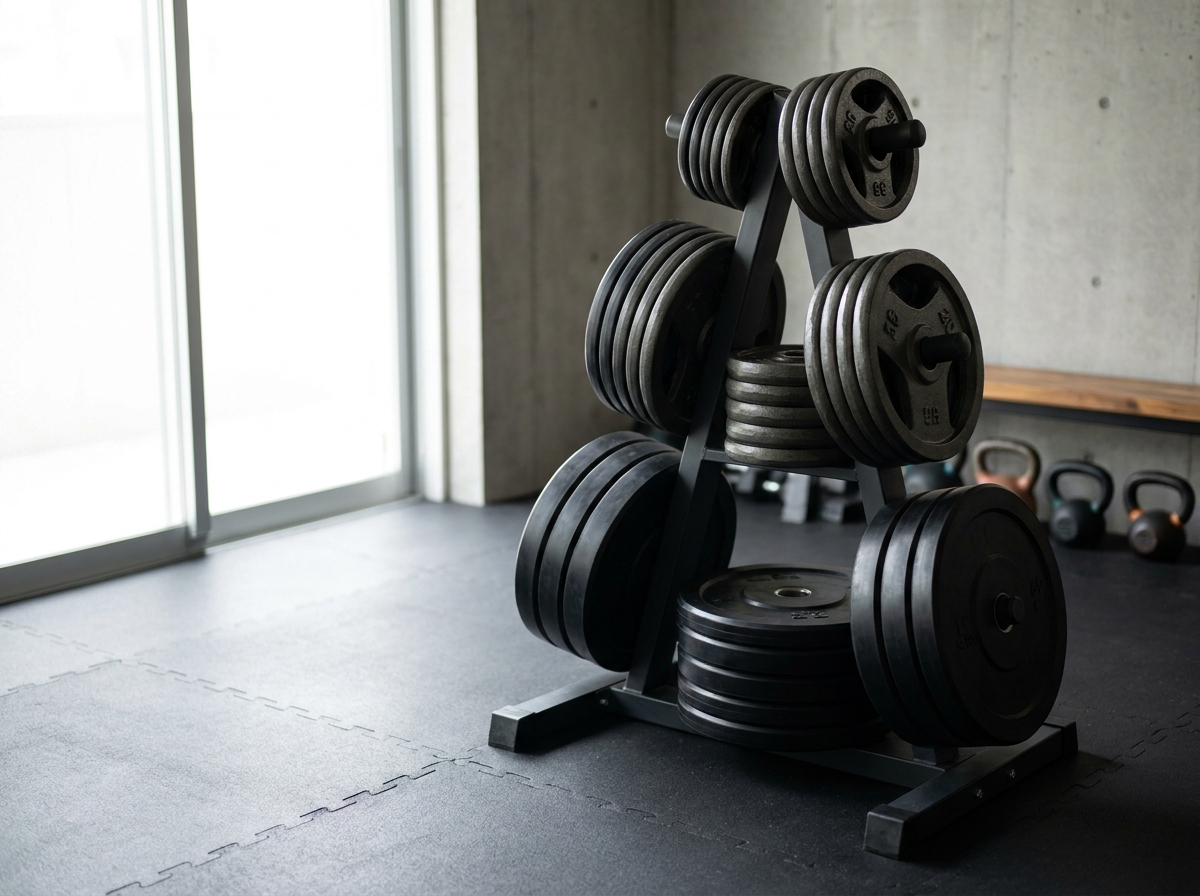
The rubber layer itself does not. Only the inner ring and exposed edges can develop mold when exposed to moisture. Storing them in a dry place and keeping them on a disc stand significantly extends their service life.
Conclusion
You only need to buy weight plates once—and do it right: Start with 50 mm holes as a base, then choose the material based on your training goals—cast iron for a budget-friendly option and heavy lifting without dropping the plates, rubber-coated for a quiet all-around option, and bumper plates for Olympic lifting and CrossFit. If you’re starting small, look for precise weight increments and a clean metal core; that way, your set will grow with you.
Not sure which combination is right for your space, floor, and training style? Contact our team —we'll put together a weight plate set that works for you today and grows with you tomorrow.