

- Finnish sauna: 80–100 °C, steam infusion, intense sweating, 8–15 min. per session – strongest evidence for cardiovascular health and longevity.
- Infrared sauna: 35–50 °C, deep heat, 20–45 min., gentler—popular for recovery, muscle soreness, and sensitive circulation.
- Good to know: Finnish saunas usually require high-voltage power (6–9 kW), while infrared saunas often run on a standard household outlet (1.5–2 kW).
- Rule of thumb: Cardiovascular exercise and sauna ritual → Finnish. Quick recovery in a small space → infrared.
Buying a Sauna: Infrared or Finnish Sauna—Which One Is Right for You?
A widely cited Finnish long-term study (Laukkanen et al., University of Eastern Finland) linked 4 to 7 sauna sessions per week with significantly lower cardiovascular mortality than just one session per week. So a sauna is much more than just relaxation. But before you can buy a sauna, there’s the most important question: infrared or Finnish? The short answer: For the classic heat ritual and the strongest health evidence, go with a Finnish sauna. If you’re looking for gentle recovery in a small space, the infrared cabin is the better choice. We’ll go over the rest in detail now.
Infrared vs. Finnish: The Key Difference
Both systems will make you sweat—but in completely different ways. That's the crux of any purchasing decision.
The Finnish Sauna
The traditional Finnish sauna heats the air to 80 to 100 °C. A sauna stove heats stones, and you can add moisture by pouring water over them. The hot air acts on the body from the outside; a session typically lasts 8 to 15 minutes. Sweating is intense, and it puts a heavy strain on the circulatory system.
The Infrared Sauna
The infrared cabin operates at temperatures ranging from 35 to 50 °C. Instead of heating the air, infrared heaters emit heat directly to the body, where it penetrates deeper into the tissue. A session lasts 20 to 45 minutes. It places less strain on the circulatory system—which makes infrared therapy particularly appealing to older adults, beginners, and anyone with a sensitive circulatory system.
Infrared vs. Finnish Sauna: A Direct Comparison
The key differences at a glance:
| Characteristic | Finnish Sauna | Infrared Sauna |
|---|---|---|
| Temperature | 80–100 °C | 35–50 °C |
| Principle of Heat | hot air, acts from the outside | Radiation penetrates deeper into the tissue |
| Duration per course | 8–15 minutes | 20–45 minutes |
| Power Requirements | 6–9 kW (high-voltage current) | 1.5–2 kW (household outlet) |
| Warm-up time | 30–45 minutes | 10–15 minutes |
| Strongest evidence | Cardiovascular Health, Longevity | Recovery, Muscle Soreness |
| Ideal for | Sauna ritual, plenty of space | Small spaces, gentle use |
The table makes it clear: There is no overall winner. The Finnish sauna scores high in terms of intensity and long-term effects on the cardiovascular system, while the infrared cabin excels in terms of suitability for everyday use, quick setup, and low energy consumption. Make your decision based on your main goal—and on the actual space you have available. A common practical tip: If you’re unsure and have limited space, start with an infrared cabin and upgrade later once your sauna ritual has become a regular habit.
What does science say?
The evidence varies depending on the type of sauna. For the Finnish sauna, the body of research on cardiovascular health and longevity is the most robust—regular, intense exposure to heat trains the vascular system in a manner similar to moderate exercise. In studies, the infrared sauna is more frequently cited in the context of muscle recovery, pain relief, and post-workout recovery.
For you as an athlete, this means that both systems support recovery. If your primary goal is long-term cardiovascular health, the Finnish sauna has the edge. If quick recovery after intense workouts is your priority, infrared really shines. Important to note: A sauna is not a substitute for exercise or medical treatment—it complements your recovery. If you have an existing cardiovascular condition, it’s best to consult your doctor before using one.
How much does a sauna cost? Purchase and operating costs
The price depends heavily on the type, size, and model. These guidelines for the DACH market will help you get a general idea:
| Type | Purchase (at home) | Power per gear | Ideal for |
|---|---|---|---|
| Portable Infrared Sauna | starting at about 250 € | approx. €0.30–0.50 | Getting in, limited space |
| Freestanding Infrared Sauna (1–2 people) | approx. 1,000–3,000 € (up to 6,500 €) | approx. €0.30–0.50 | Daily Life, Recovery |
| Finnish Home Sauna (Kit) | approx. 1,500–5,000 € (luxury > 15,000 €) | about 3–4 € | Complete Sauna Ritual |
| Commercial Sauna (Studio) | starting at approximately 6,000 € and up | higher, depending on capacity utilization | Studio & Spa |
The message is clear: Infrared saunas are significantly cheaper to operate—a 40-minute session often costs less than 50 cents, while a session in a Finnish sauna with a 7.5-kW stove can easily run around €3.50. The decision to purchase depends less on the type than on the size and the quality of the wood. Be sure to budget for installation and, if necessary, a high-voltage power connection as additional expenses.
Tell us your goal, your space, and your budget—we’ll recommend the right equipment for you, with a manufacturer’s warranty and 0% financing through Klarna. Request a no-obligation quote now →
Which sauna is right for you?
For Home
Technology is often the deciding factor here. A Finnish sauna usually requires a high-voltage power connection (6–9 kW) and more floor space. An infrared cabin often runs on a standard household outlet (1.5–2 kW), is ready for use more quickly, and fits even in smaller rooms. If you have the space and power connection and want the full sauna experience, go for the Finnish sauna—if you’re looking for a simple, energy-efficient way to relax, choose an infrared cabin. Also keep in mind ventilation and a moisture-resistant floor covering—both are often overlooked when making a purchase, but they’re crucial for the longevity and hygiene of your sauna.
For Studios and Practices (B2B)
In a commercial setting, the sauna becomes a revenue driver. A well-designed recovery zone featuring a sauna, ice bath, and compression therapy enhances member value and creates a premium offering. Key factors here include durability in continuous operation, easy cleaning and maintenance, and a manufacturer that offers commercial warranties. Gyms with an ambitious recovery offering combine saunas, ice baths, and equipment such as the Aerify compression therapy into a bookable premium package—an area that generates additional revenue rather than just taking up space. Especially in metropolitan areas like Munich, Vienna, or Zurich, recovery is increasingly becoming a deciding factor when choosing a gym.
Recovery Zone at the Gym: What Pays Off
For gym and fitness studio owners, the sauna is rarely an end in itself—it’s part of a recovery program that enhances member value. By combining a sauna, ice bath, and compression therapy into a well-designed zone, you can create a premium segment that can be marketed as an add-on package or a higher-tier membership.
Three factors determine profitability: utilization (a sauna that’s only open in the evenings is less profitable), operating costs (this is where infrared technology’s low energy consumption really pays off), and location. Especially in competitive markets like Munich, Vienna, or Zurich, a credible recovery offering is increasingly becoming the reason why a member chooses your studio over the chain next door. Plan the zone from the start with its own dedicated space, ventilation, and hygiene concept—adding these features later is expensive.
Tell us your goal, your space, and your budget—we’ll recommend the right equipment for you, with a manufacturer’s warranty and 0% financing through Klarna. Request a no-obligation quote now →
Buying Guide: What to Look for When Buying a Sauna
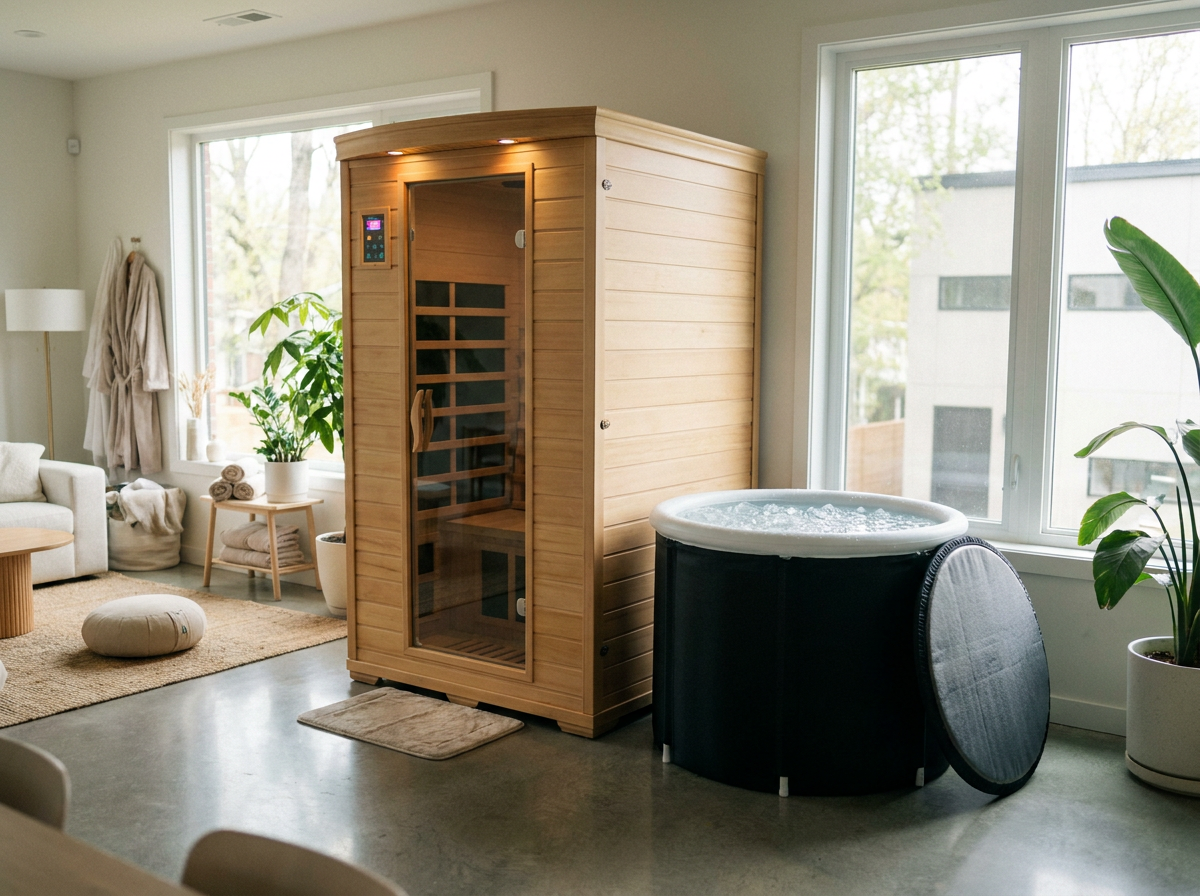
Pay attention to the quality of the wood (hemlock, cedar, or Nordic spruce), the performance and distribution of the heating elements, intuitive controls, and—especially for commercial use—the warranty and availability of replacement parts. In our selection of saunas, you’ll find models for home and studio use. If you’re planning a complete recovery zone, combine the sauna with an SwedishCold ice bath or other cold therapy options to create a contrast between heat and cold.
Here at Kraftathlet , we’re an authorized dealer offering a manufacturer’s warranty and free advice to help you find the right solution—including carbon-neutral shipping and a 30-day return policy. Over 5,000 satisfied customers and a rating of ★ 4.88/5 speak for the quality of our advice. Just let us know whether the sauna will be used for personal or commercial purposes, how much space you have available, and what type of electrical connection is available—with these three details, we’ll quickly narrow down the suitable models for you and honestly tell you which option is truly worth it in your case.
How to Incorporate the Sauna into Your Recovery Routine
A sauna only delivers its full benefits when used regularly and properly. By following a few simple rules, you can get the most out of it.
Sauna after a workout
Plan your sauna session after endurance or light workouts rather than immediately after heavy strength training—immediately after intense sets, intense heat can temporarily interfere with muscle recovery. The benefits are greatest on non-training days or some time after your workout. Be sure to drink plenty of fluids before and after each session, as you’ll lose a noticeable amount of fluid.
The Contrast Between Heat and Cold
The transition from heat to cold is at the heart of many recovery rituals. A sauna session is followed by a cold shower, a plunge pool, or an ice bath. This contrast stimulates the blood vessels and is found to be invigorating by many athletes. Start off gently and work your way up, rather than jumping right into ice-cold water.
Frequency and Duration
To get started, two to three sauna sessions per week, each consisting of two to three rounds, are sufficient. Stick to the recommended durations—8 to 15 minutes for a Finnish sauna, 20 to 45 minutes for an infrared sauna—and listen to your body. More isn’t necessarily better: It’s the consistency over several weeks that brings the benefits, not a single extra-long session.
Common Mistakes When Buying a Sauna
- Overlooking the electrical connection: A Finnish sauna without the proper high-voltage electrical connection becomes an expensive mistake. Make sure the electrical setup is in order before you buy.
- Bought too small: It’s better to plan for one more spot—especially in a studio, where capacity determines how full it gets.
- Inexpensive Heating Elements: With infrared heating, the quality of the emitter is what matters. Inexpensive panel heaters distribute heat unevenly.
- Maintenance is often underestimated: Wood and machinery both require care. Make sure replacement parts are available before you make a decision.
Frequently Asked Questions
Infrared or Finnish sauna—which is better?
It depends on your goal. For the classic heat ritual and the strongest cardiovascular benefits, the Finnish sauna is better. For gentle recovery in a small space and with low energy consumption, the infrared cabin is the better choice.
How much electricity does a sauna use?
A Finnish sauna typically requires 6–9 kW and a high-voltage power connection. An infrared cabin often uses only 1.5–2 kW and can be plugged into a standard household outlet.
How often should you use the sauna?
Studies on the Finnish sauna suggest that 4 to 7 sauna sessions per week provide the greatest health benefits. For beginners, 2 to 3 sessions per week is a good starting point.
Is a home sauna a good idea?
Yes, if you use it regularly to recharge. An infrared cabin is space-saving and energy-efficient, while a Finnish sauna offers the full experience—both save you money on gym or spa fees in the long run.
Can I combine a sauna and an ice bath?
Absolutely. Alternating between heat and cold is a proven recovery ritual. Many people combine a sauna with an ice bath or a cold chamber to create a complete recovery zone.
Conclusion
When buying a sauna, there’s no one-size-fits-all “better” option—there’s only the one that fits your goals, your space, and your power connection. A Finnish sauna is ideal for an intense ritual and offers the strongest cardiovascular benefits, while an infrared sauna provides gentle, energy-efficient recovery suitable for everyday use in a small space. In your gym, both can be part of a recovery zone that creates real added value for your members and generates additional revenue. For a free consultation on the right sauna for you, reach out to us via WhatsApp or our contact form.