

A power rack without a cable stack limits your class offerings: lat pulldowns, cable rows, and triceps work would otherwise require a second station, for which studios often lack both space and budget. Instead of replacing the entire frame, you retrofit the existing rack with a suitable cable stack module, allowing you to perform these exercises directly on the same machine.
- A cable stack kit only fits the exact same rack model – the frame width and bolt pattern must match.
- The Force USA G3 V2 & G4 Upgrade Kit retrofits exactly these two racks with lat pulldowns and cable rows.
- If no kit fits, a complete machine like the Force USA G4 is the safer alternative for 2026.
- Anchor points and ceiling height matter before ordering, not after.
- A retrofitted cable stack covers lat pulldowns, cable rows, and triceps presses using the same weight stack.
Why this matters for studio operations
A class room with only a power rack covers squats, bench presses, and pull-ups, but not lat pulldowns or cable rows. Customers then resort to free weights, or the studio has to set up a separate cable stack station – additional floor space that is scarce in most boutique studios.
A retrofit kit solves this without modifying the base frame. For studios expanding their equipment fleet in 2026 without increasing their floor space, this is often the more affordable option compared to a second freestanding cable stack tower. The G3 V2 & G4 Upgrade Kit from Force USA is designed exactly for this purpose: it fits the two namesake rack series and adds lat pulldowns and cable rows.
Before you start
- Model designation and year of manufacture of your rack (check the nameplate or invoice) – cable stack kits are series-specific, not universal.
- Measure the ceiling height and wall clearance at the installation site, including the space required for the pulley above the pull-up bar.
- Condition of the floor anchoring: a rack that was only anchored for squats does not automatically withstand the dynamic pulling load of a cable stack; retrofit with load-bearing anchors.
The pitfall that catches studios most often: A cable stack kit for the Force USA G3 V2 does not fit the similarly looking G3 from the previous generation or racks from other manufacturers. Frame width, bolt pattern, and mounting points must match exactly – this is usually only stated in the compatibility list, not in the product image.
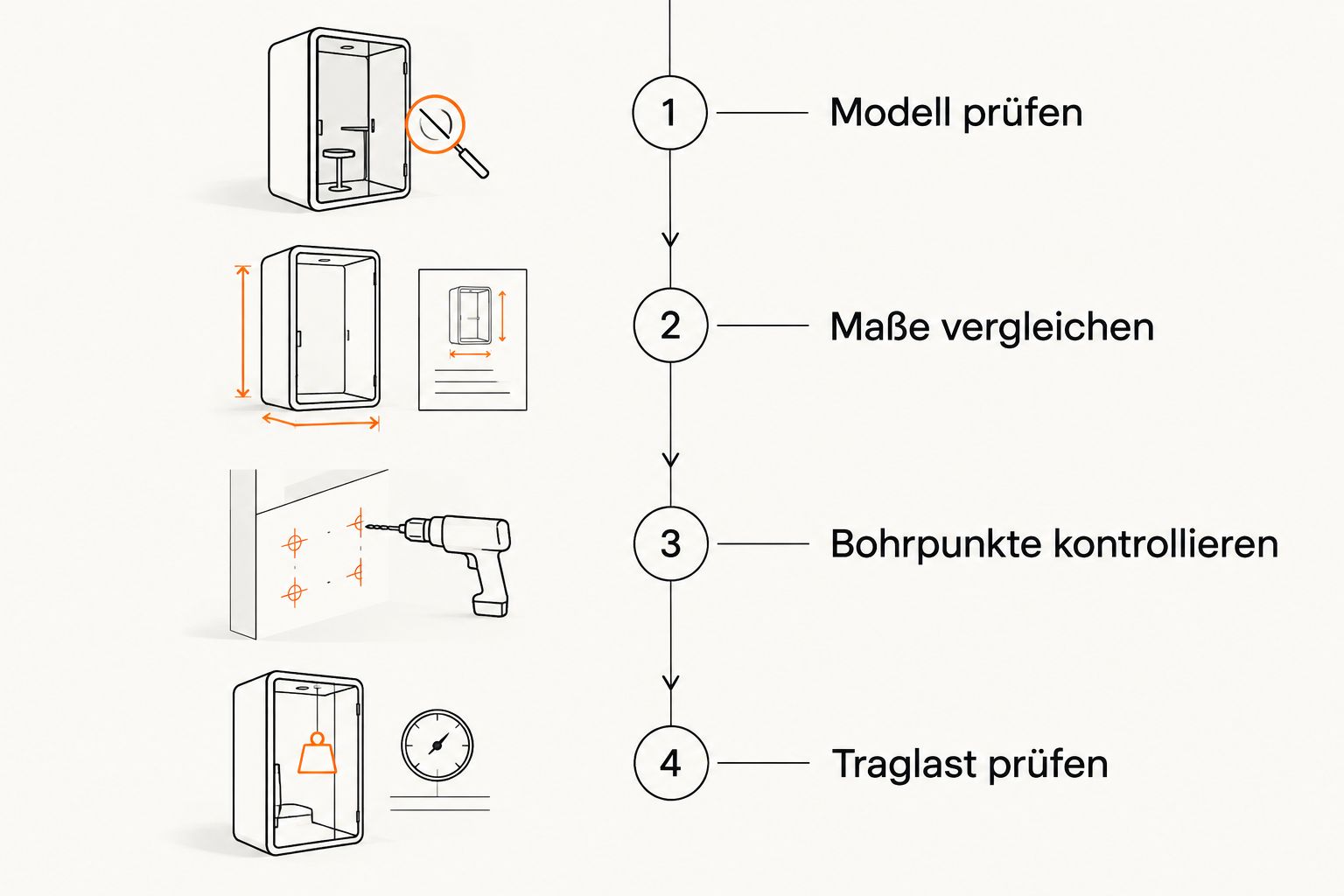
Check compatibility and connection points
- Locate the nameplate on the back of the upright and note the model and serial number.
- Compare the frame width, the outside dimension between the two uprights, with the manufacturer's kit specifications – down to the millimeter.
- Check whether your rack already has pre-drilled mounting points for a pulley or if new holes need to be drilled.
- Check the rack's load rating – a cable stack with a weight stack adds dynamic pulling load that exceeds pure free-weight operation.
Expected result: You will know whether your existing rack is suitable for a retrofit kit or whether a complete machine is the more practical solution.
Mounting the cable stack kit
- Assemble the weight stack frame on the designated side of the upright and secure it with the included bolts.
- Mount the upper pulley on the pull-up bar or the designated crossbar.
- Route the steel cable from the upper pulley through the lower pulley to the weight stack and check that it runs straight without rubbing on the guide rail.
- Insert the weight stack safety pin and test the full range of motion once without additional weight.
Expected result: The cable runs smoothly over both pulleys, and the weight stack lifts cleanly in the first third of the range of motion.
Adjusting the weight stack and safety stops
- Set the top and bottom end stops so that the stack does not strike the housing cover or the floor.
- Check the handle height for lat pulldowns: the bench or knee pads must align with the upper pulley.
- Test lat pulldowns, cable rows, and triceps presses once with low weight before releasing the machine for class use.
Expected result: All three basic exercises run without the cable pulling at an angle and without the stack slamming into the stop.
Alternative: complete switch to an all-in-one trainer
If the compatibility check shows that the frame width or bolt pattern does not fit, a retrofit kit is not an option – and a DIY conversion voids the manufacturer's warranty. In this case, a complete machine like the Force USA G4 All-in-One Trainer replaces the old rack: Smith machine, rack, and dual cable stack in one frame, including 154 kg of Olympic weights.
“A cable stack kit is only worth it if the frame width and bolt pattern match the existing rack exactly – otherwise, a complete machine is the safer choice for 2026.”
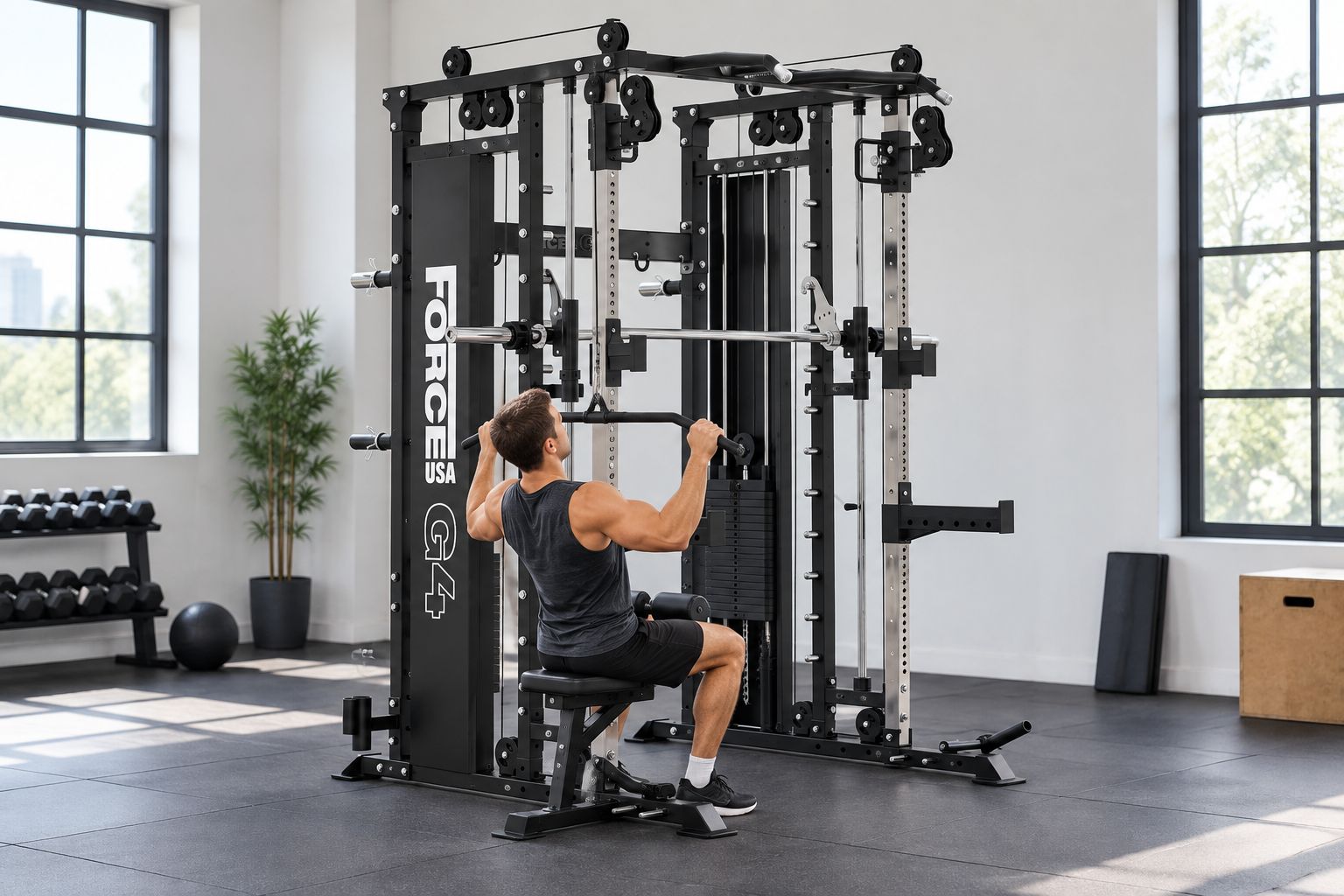
For studios that need to replace two machines anyway, this is often more economical than a kit plus the maintenance of two systems. Kraftathlet delivers these all-in-one trainers including on-site assembly, making the timeline for a studio opening in 2026 more predictable than a DIY retrofit project.
Alternatively, a dual adjustable cable stack station with Smith machine covers lat pulldowns, cable rows, and free bench presses in one station when two people are meant to work the cable at the same time.
Typical problems when retrofitting
- Cable runs at an angle or rubs against the guide rail – usually a poorly mounted upper pulley; recheck the alignment according to the manufacturer's diagram.
- Weight stack strikes the frame – end stops are not set to the actual range of motion of the respective rack.
- Anchor points loosen after a few weeks of training – the floor anchoring was designed for static loads, not the dynamic pull on the cable; retrofit with load-bearing anchors.
- Fractional plates do not fit on the kit's axle – not every retrofit kit is compatible with fractional weights; check the data sheet before purchase.
- Ceiling height is insufficient for the pull-up bar plus upper pulley – measure the ceiling height at the planned location with a tape measure before ordering, not by eye.
Expanding the cable stack setup
Once lat pulldowns and cable rows are working, the station can be expanded with a few add-ons: a footplate for low-cable exercises, a cable adapter for a different ratio, or a handle change for triceps work. A cable ratio of 2:1 or 4:1, as offered by individual Force USA trainers, noticeably changes how heavy an exercise feels – this is especially worthwhile for studios with mixed performance levels. Before placing the first order, it is worth looking at the entire cable stack range for the final equipment list of a class room.


Lat pulldown attachments and other rack accessories can be found in the Handles, Attachments & Rack Accessories category.
FAQ
Can I retrofit any power rack with a cable stack kit?
No, a retrofit kit only fits racks with the same frame width and bolt pattern as the original machine. If the dimensions differ, the only option is to switch to a complete machine with an integrated cable stack.
How much does it cost to retrofit a power rack with lat pulldowns?
The cost depends on the selected kit and the on-site assembly effort. The current price list for retrofit kits and complete machines is available directly on the respective product page.
Is a retrofit kit or a new all-in-one machine more worthwhile?
A retrofit kit is worthwhile if the frame width and bolt pattern match exactly and the rack is still like new. If the compatibility does not match, a complete machine like a Force USA All-in-One Trainer is the more practical and lower-maintenance long-term solution.
How much ceiling height is needed for a power rack with a cable stack?
In addition to the height of the rack itself, the upper pulley needs additional clearance above the pull-up bar so that the cable runs freely. Measure the ceiling height at the planned location before ordering a kit, not after.
Is a cable kit suitable for commercial studio use or only for home use?
Kits designed for series such as the Force USA G3 V2 or G4 are intended for studio use with multiple users per day. For very high utilization in continuous class operation in 2026, a dedicated complete machine with a dual cable system is often the more durable choice.
Which exercises does an added lat pulldown on a power rack cover?
Lat pulldowns, cable rows, triceps pushdowns, and with a suitable handle change, bicep curls and side cable raises all run over the same pulley and the same weight stack. This covers the majority of cable exercises that would otherwise require a separate machine.
Do I need to adjust the floor anchoring when retrofitting?
Yes, a rack that has only been anchored for static training often cannot withstand the dynamic tensile load of a cable machine. Check the anchor points before assembly and upgrade to tension-rated wall plugs if necessary.
One more thing
Anyone retrofitting in 2026 should design the wall anchor for the highest tensile load of the kit right away, not for the current load. Replacing an anchor plate later requires more effort than the initial installation with the stronger version – and this exact rework is the most common reason why a retrofitting appointment requires a second on-site visit.