

In 2026, the capacity of a cold plunge tub in a studio is determined by bookable time slots, not by water volume. For the opening, initially plan for only one person per tub per time slot, and account for transitions, cleaning, and non-bookable operating times. Only actual bookings will show whether you need more time slots or another tub.
- Studio cold plunge tub capacity means: plan bookable time slots instead of liters.
- For the start, one person per tub and time slot is the clear booking rule.
- Transition time, maintenance windows, and buffers belong in the calendar, not just usage.
- Kraftathlet is suitable for studios planning a cold plunge tub together with installation and operating procedures.
How do you plan the capacity and bookings for a cold plunge tub in a studio?
First, determine what a booking includes. An appointment does not only occupy the tub during use. It also requires time for the transition between guests and for the work that arises before the next appointment. The basis for studio cold plunge tub capacity is therefore the calendar with its actually bookable slots.
| Booking model | Capacity in the calendar | Advantage | Limitation |
|---|---|---|---|
| Individual booking | One person occupies one tub per time slot | Clear responsibility and simple process | Free tub time between appointments cannot be sold retroactively |
| Booking following a course | A separate appointment is reserved after the course | Demand can be assigned to an existing offer | If courses end at the same time, a queue arises |
| Open usage without reservation | No fixed promised time slot | Less appointment management | Utilization and waiting times cannot be reliably planned in advance |
For the studio launch, individual booking is the best planning standard. It makes visible which times are in demand and when the tub is not available despite the studio being open. Open usage may make sense later; however, it does not provide you with a reliable commitment for guests. If you determine the equipment and operating procedures together, the planning of cold plunge tubs and chillers in the studio should also be included.
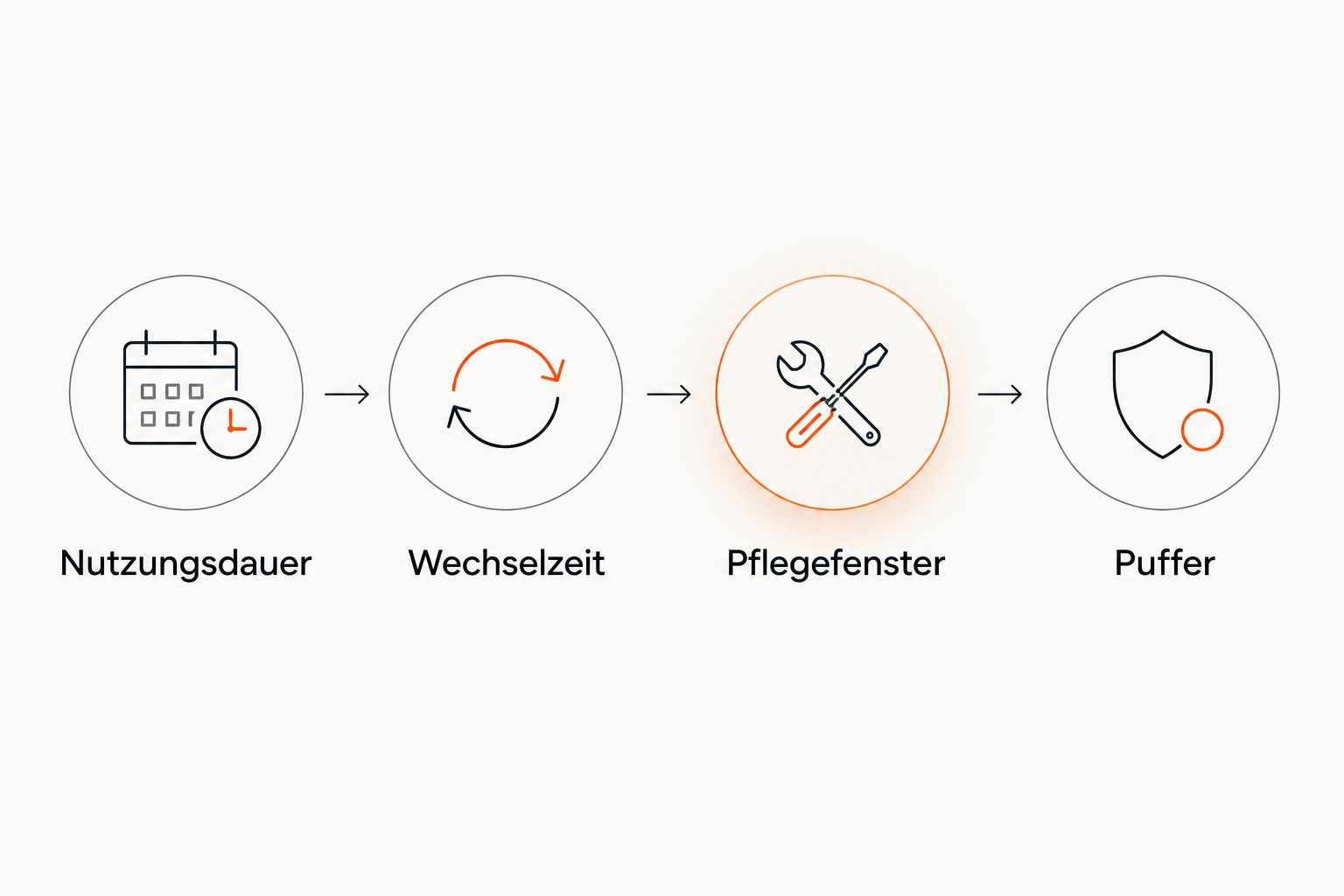
How a bookable time slot is created
- Determine the duration of use. Define how long a guest occupies the tub in the booking system. This is your operating decision, not a property of the tub.
- Add transition time. Plan the walk to the tub, the exit, and the handover to the next guest as part of the appointment.
- Block maintenance windows. Reserve times for the checks and work required by your operating concept. Do not sell these times as guest appointments.
- Enter buffers. Leave room for delays and deviations from the planned process. Check after the launch based on the bookings whether the buffer is sufficient.
An hour has 60 minutes. How many appointments fit in it still depends on your self-determined usage and transition times. First enter the complete process into the calendar and then count the free booking slots. A calculation based solely on the time spent in the water overestimates the sellable capacity.
Why this matters for your studio opening
A cold plunge tub does not only require floor space. It changes routes, staff workflows, and the sequence of appointments. Anyone who only considers the possible usage per hour overlooks exactly the times when the tub is present but not ready for the next guest.
This becomes particularly clear when the tub is connected to a course room, a training area, or a wellness area. There, the timing of demand decides: An empty morning does not compensate for a rush immediately after a well-booked course. Therefore, plan with the times when guests actually want to use the offer, instead of averaging free hours over the entire day.
For 2026, a reliable draft calendar is sufficient as a first decision: Which appointments can guests book, which times remain internally blocked, and who frees the tub again? You can answer these questions before you forecast utilization. For a forecast without your own booking data, however, the basis is missing.
Individual booking or course follow-up: What suits your business?
With an individual booking, the guest chooses their own time slot. This is suitable if you want to commit to appointments and see the occupancy directly. The disadvantage is the administrative effort: cancellations, late arrivals, and free gaps need clear rules.
With a course follow-up, a guest reserves a separate tub slot after an existing appointment. This makes the offer easily discoverable for Pilates or training studios. However, it does not increase the capacity of the tub. If several guests want to book after the same course, you must limit the available slots or distribute the demand to other times.
Open usage foregoes a fixed reservation. It keeps access simple as long as no one is waiting. As soon as you want to promise guests reliable usage after their workout, it is the weakest basis: The calendar shows neither a free spot nor a promised appointment. Do not choose it because of a supposedly higher throughput; without bookings, you cannot verify this throughput.
You can combine models for different parts of the day. What matters is a single, understandable rule per section for guests and the team. A slot shown as free must not simultaneously be intended for maintenance or a course follow-up. Separate these occupancies visibly in the booking system.
Why the capacity of a cold plunge tub varies
The studio cold plunge tub capacity is an operating size. Even with an unchanged tub, it changes if you change the calendar or the process. Check these factors before releasing appointments:
- Duration of use: It determines how long the tub is blocked for a booking. Set it as a rule for your studio.
- Transition time: Without a planned transition, the next appointment collides with the previous guest.
- Maintenance windows: Operating checks and work require blocked calendar times; which ones arise belongs in your operating concept.
- Demand peaks: Courses and other fixed appointments bundle guests. Free slots outside these peaks do not replace free slots immediately after them.
- Support and routes: Who prepares the area, organizes access, and releases appointments influences the process.
- Actual occupancy: Booked, canceled, and unused slots show after the start whether your initial time planning is sustainable.
The list is not a promise of a specific throughput. Rather, it separates decisions that you control yourself from demand that you only see in operation. Document every change to the booking rules. Otherwise, you will later compare utilization figures from time slots of different lengths or different availability.
What does the tub volume say about capacity?
The volume describes the water content, not guests per hour. The Swedish Cold Generation 5 ice bath is stated at 568 L; its product specification also states 0–8 °C. None of these specifications determine how many bookings your studio can accept per day. For that, you need the appointment length and the blocked operating times.
The Swedish Cold Generation 5 ice bath from Kraftathlet is suitable for studios that select a tub for daily use and plan its operation separately. The advantage for your pre-selection is the concrete specification of volume and temperature range. The limitation of these specifications: They answer neither the question of simultaneously usable spots nor the distance between bookings. Do not treat them as a substitute for an occupancy release or an operating concept.
Therefore, ask separately about product properties and operating requirements when selecting equipment. Product properties help you compare the equipment. For the calendar, you must additionally determine who gets access, when the tub is ready, and when it cannot be booked. This separation protects you from making an unbooked capacity commitment from a technical specification.
How do you check the booking plan before purchase?
Draw a typical studio day as a calendar before you make appointments publicly available. Enter courses, staff times, and internal blocked windows. Then place individual tub bookings in the places where guests would actually expect them. If no free slot remains immediately after a course, that is a planning problem – even if there is space at other times of the day.
Go through the path of a guest mentally: from the end of their previous appointment to the handover of the tub to the next person. At which point does waiting time arise? Who recognizes that an appointment is finished? A time slot is only sustainable when you can organize this handover in everyday life.
Also check what the calendar shows in case of disruptions. If a slot falls out, further bookings must still be clearly assigned. A plan without a buffer is tighter on paper, but harder to maintain in operation. Plan after the handover between guests, not according to the theoretically shortest usage.
For 2026, this is the more sensible purchase order: first determine the usage model and peak times, then check the intended area and the equipment. Kraftathlet can coordinate the equipment selection, delivery, and on-site assembly with your studio opening. The booking rule remains a decision of your business; it cannot be read from a product sheet.
When do you need another tub?
Another tub becomes relevant when demanded time slots are regularly unavailable, although your existing calendar is sensibly organized. A single full course hour does not prove this yet. It first shows that you should check the distribution of the appointments.
For this, compare the demand for concrete times with actually booked slots. Also look at whether promised appointments fall out due to internal blocked times or whether guests accept another available slot. Only this distinction shows whether more tub time arises from a different planning or whether the available tub time itself is the limitation.
An additional tub does not automatically multiply the number of your bookings. You also need space, a feasible operating process, and clear responsibilities for each piece of equipment. Therefore, for an expansion in 2026, the same calendar check should apply as for the first purchase: demand at peak times, complete time slots, and blocked operating times first.
How many people can you book at the same time?
Initially plan for one person per tub and time slot. This is a conservative booking rule for your start, not a manufacturer specification derived from volume. If you want to plan a different operating mode, clarify it based on the concrete equipment documents and your processes before you promise it to guests.
What matters is the difference between a booking and a person in the area. Further guests can stay in the studio for later appointments without the tub simultaneously offering more spots. Therefore, only show the occupancy of the tub in the booking system, not a general room capacity.
You can find ice baths and cold plunges with cooling technology in the category Ice Baths & Cold Plunges.
FAQ
How do I calculate the cold plunge tub capacity in the studio?
Count the actually bookable time slots after you have entered the duration of use, transition time, maintenance windows, and buffers. The water volume is not a specification for bookings per hour.
How many people should I plan for per cold plunge tub appointment?
For the start, plan one person per tub and time slot. Another mode requires a check on the concrete equipment and a corresponding operating process.
Are 568 L equivalent to a higher booking capacity?
No. 568 L designates the stated water volume of the Swedish Cold Generation 5 ice bath, not the number of possible appointments or simultaneously usable spots.
Should I offer the cold plunge tub after a course without a reservation?
A reservation gives guests a binding time slot after a course. Without a reservation, waiting time cannot be promised in advance in case of simultaneous demand.
Which times should I not release as tub appointments?
Block times that your process provides for transitions, checks, maintenance, or a necessary buffer. Only free and operationally usable slots belong in the booking calendar.
When is a second cold plunge tub in the studio worth it?
A second tub becomes relevant when guests regularly do not receive an appointment at demanded times and the existing slots cannot be distributed more sensibly. For this, check actual booking data instead of only the theoretical daily capacity.
Can I determine the capacity exactly before the studio opening?
You can set a complete booking schedule for 2026, but you cannot yet measure actual demand. Review the time slots after opening based on bookings, cancellations, and wait times.
One last decision before going live
The first bottleneck is often not the pool, but an unclear handover between appointments. Only make time slots available for guests in 2026 that your team can actually manage from access to the next booking. An open slot in the calendar is only capacity if the pool is available at that time.